
 中国人文社会科学核心期刊
Journal of East China Normal University(Educationa ›› 2025, Vol. 43 ›› Issue (6): 99-115.doi: 10.16382/j.cnki.1000-5560.2025.06.007
Previous Articles Next Articles
Lili Liu, Qinghao Li, Hongying Bao
Online:2025-06-01
Published:2025-05-19
Lili Liu, Qinghao Li, Hongying Bao. Principal Leadership Enhancement: Personality Traits or Organizational Environment?[J]. Journal of East China Normal University(Educationa, 2025, 43(6): 99-115.
"
"
| 变量 | 操作化定义 | 均值 | 标准差 | |
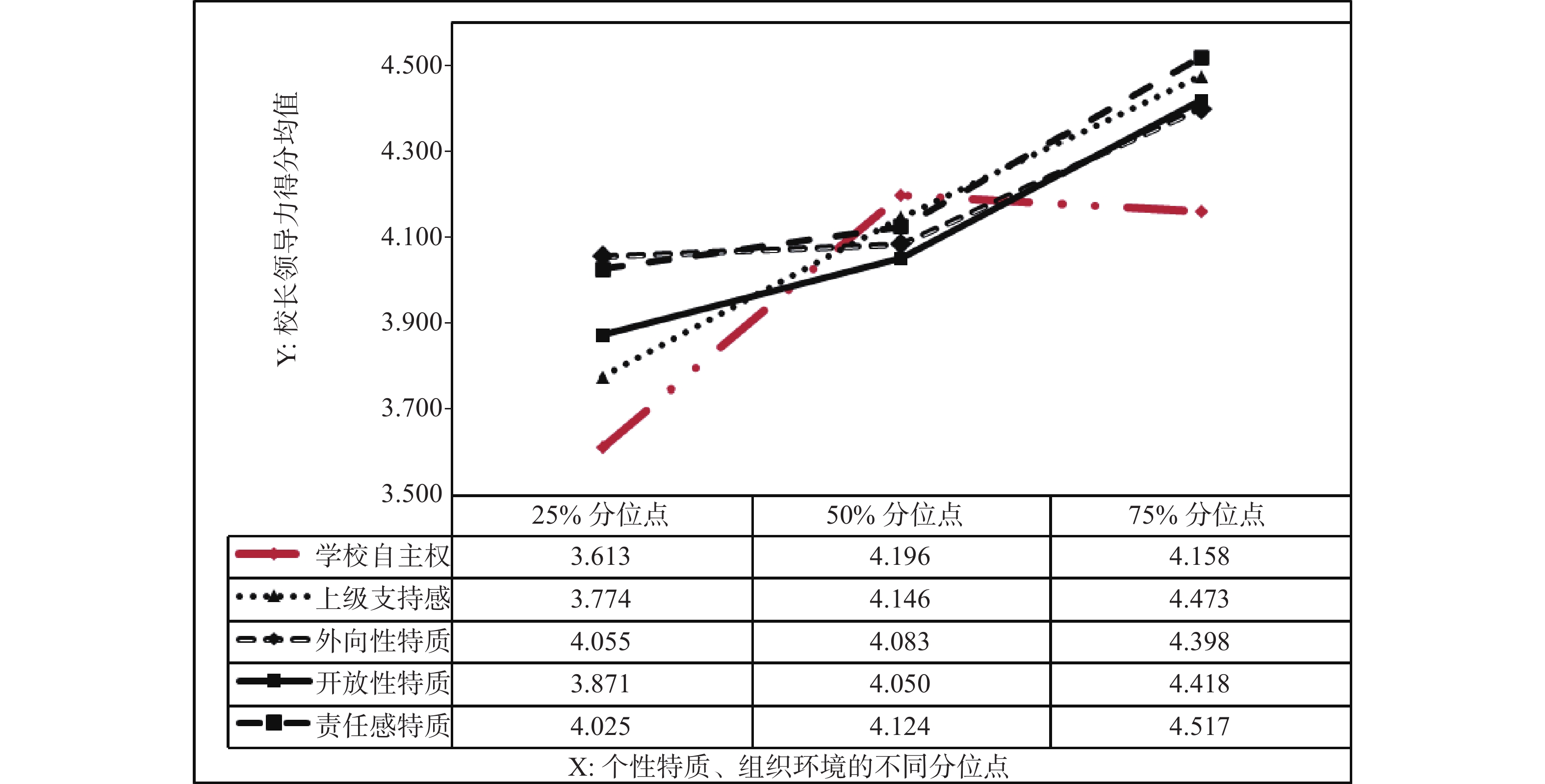
| 自变量 | 上级支持感 | 采用李克特五级量表 分数越高,表示校长对于组织环境的感知越显著 | 3.864 | 0.734 |
| 办学自主权 | 3.692 | 0.750 | ||
| 外向性特质 | 采用李克特五级量表 分数越高,表明校长相应人格特质表现越明显 | 3.935 | 0.723 | |
| 开放性特质 | 4.022 | 0.723 | ||
| 责任感特质 | 3.970 | 0.732 | ||
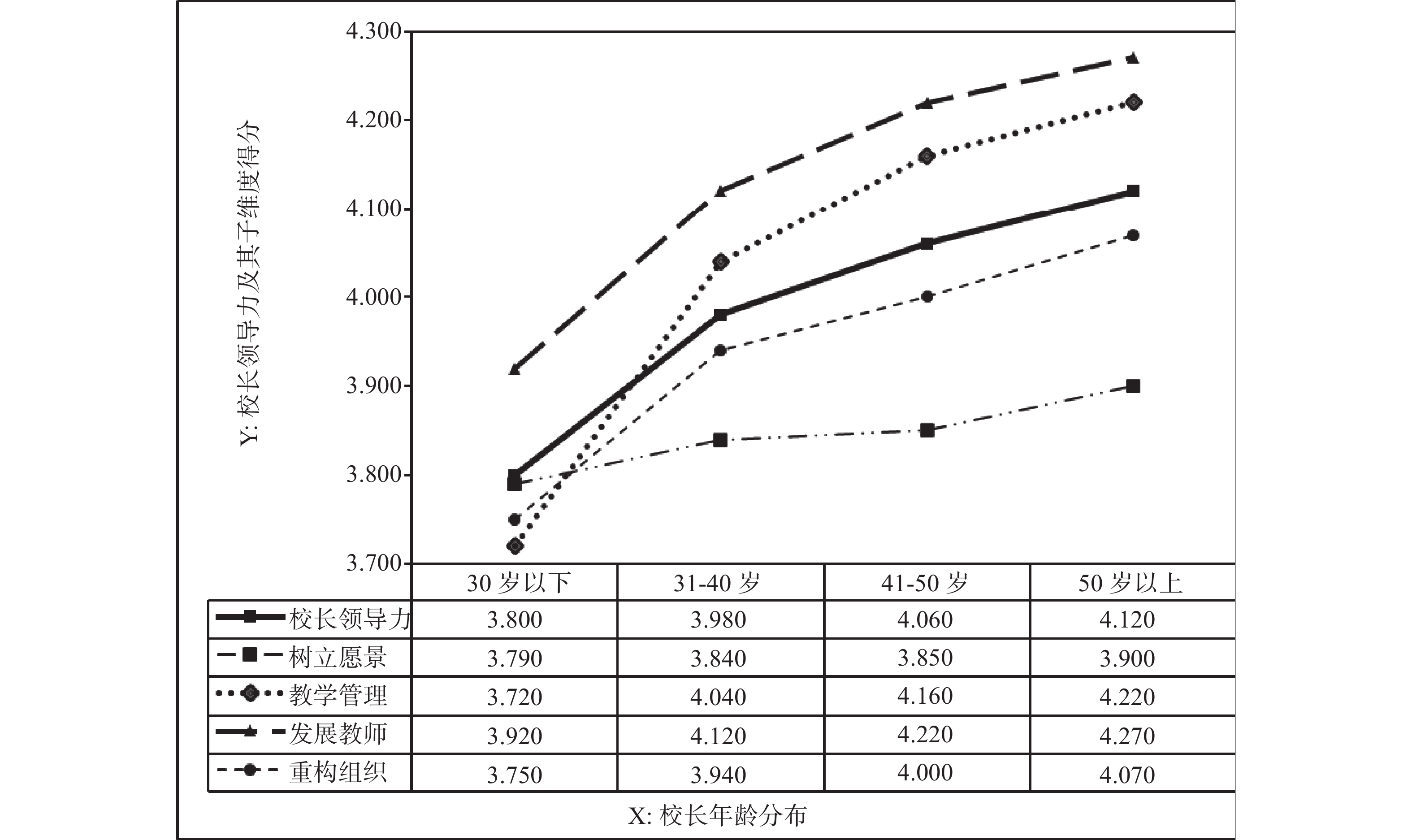
| 因变量 | 校长领导力 | 树立愿景、发展教师、重构组织和教学管理 4个分维度分值加总取均值 | 4.059 | 0.656 |
| 因变量 子维度 | 树立愿景 | 采用李克特五级量表 分数越高,表明校长在该维度的领导力表现越好 | 3.863 | 0.783 |
| 发展教师 | 4.217 | 0.732 | ||
| 重构组织 | 4.008 | 0.708 | ||
| 教学管理 | 4.149 | 0.750 | ||
| 控制变量 | 性别:男性赋值为1,女性赋值为2 | 1.370 | —— | |
| 年龄:分别赋值-30岁以下赋值为1;31—40岁赋值为2;41—50岁赋值为3; 50岁以上赋值为4 | 3.120 | —— | ||
| 受教育水平:分别赋值-大专及以下赋值为1;本科赋值为2; 硕士赋值为3;博士赋值为4 | 2.018 | —— | ||
| 学段:分别赋值-小学赋值为1;初中赋值为2;九年一贯制赋值为3; 高中赋值为4;完全中学赋值为5 | 2.053 | —— | ||
| 学校位置:分别赋值-市区赋值为1;县城赋值为2; 乡镇赋值为3;农村赋值为4 | 1.953 | —— | ||
| 名校长工作室情况:分别赋值-名校长工作室成员赋值为1; 名校长工作室主持人赋值为2;未加入名校长工作室赋值为3 | 2.510 | —— | ||
"
| 变量 | 题目信度STD | 多元相关平方SMC | 组合信度CR值 | 平均方差萃取AVE | 内部一致性系数 |
| 校长领导力 | 0.742-0.907 | 0.550-0.823 | 0.955 | 0.590 | 0.968 |
| 上级支持感 | 0.906-0.924 | 0.529-0.776 | 0.928 | 0.682 | 0.926 |
| 学校自主权 | 0.833-0.942 | 0.465-0.792 | 0.794 | 0.567 | 0.896 |
| 外向性特质 | 0.774-0.832 | 0.633-0.793 | 0.869 | 0.689 | 0.865 |
| 开放性特质 | 0.808-0.881 | 0.603-0.812 | 0.888 | 0.726 | 0.886 |
| 责任感特质 | 0.721-0.846 | 0.491-0.816 | 0.851 | 0.657 | 0.842 |
"
"
"
| 自变量 | 模型(1) | 模型(2) | 模型(3) | 模型(4) | 模型(5) | 模型(6) | 模型(7) | 模型(8) |
| 校长领导力 | 校长领导力 | 校长领导力 | 校长领导力 | 树立愿景 | 教学管理 | 发展教师 | 重构组织 | |
| 控制变量 | ||||||||
| 性别 | 0.089 | 0.108*** | 0.099*** | 0.036 | 0.177*** | 0.161*** | 0.022 | |
| (0.059) | (0.038) | (0.037) | (0.064) | (0.051) | (0.046) | (0.040) | ||
| 年龄 | 0.056 | 0.061*** | 0.058*** | 0.012 | 0.095*** | 0.069** | 0.055** | |
| (0.034) | (0.022) | (0.022) | (0.034) | (0.032) | (0.028) | (0.022) | ||
| 受教育水平 | 0.155*** | 0.017 | 0.009 | 0.015 | 0.042 | −0.000 | −0.019 | |
| (0.056) | (0.045) | (0.045) | (0.079) | (0.071) | (0.051) | (0.045) | ||
| 学段 | 0.051** | 0.012 | 0.006 | 0.011 | −0.005 | 0.020 | −0.002 | |
| (0.022) | (0.014) | (0.013) | (0.025) | (0.017) | (0.017) | (0.015) | ||
| 名校长 工作室 | −0.108*** | −0.002 | −0.007 | 0.004 | 0.010 | −0.020 | −0.020 | |
| (0.031) | (0.022) | (0.021) | (0.036) | (0.032) | (0.024) | (0.020) | ||
| 学校位置 | −0.072** | −0.030* | −0.029* | −0.053* | −0.056** | −0.016 | 0.009 | |
| (0.031) | (0.018) | (0.017) | (0.030) | (0.024) | (0.022) | (0.018) | ||
| 个性特质 | ||||||||
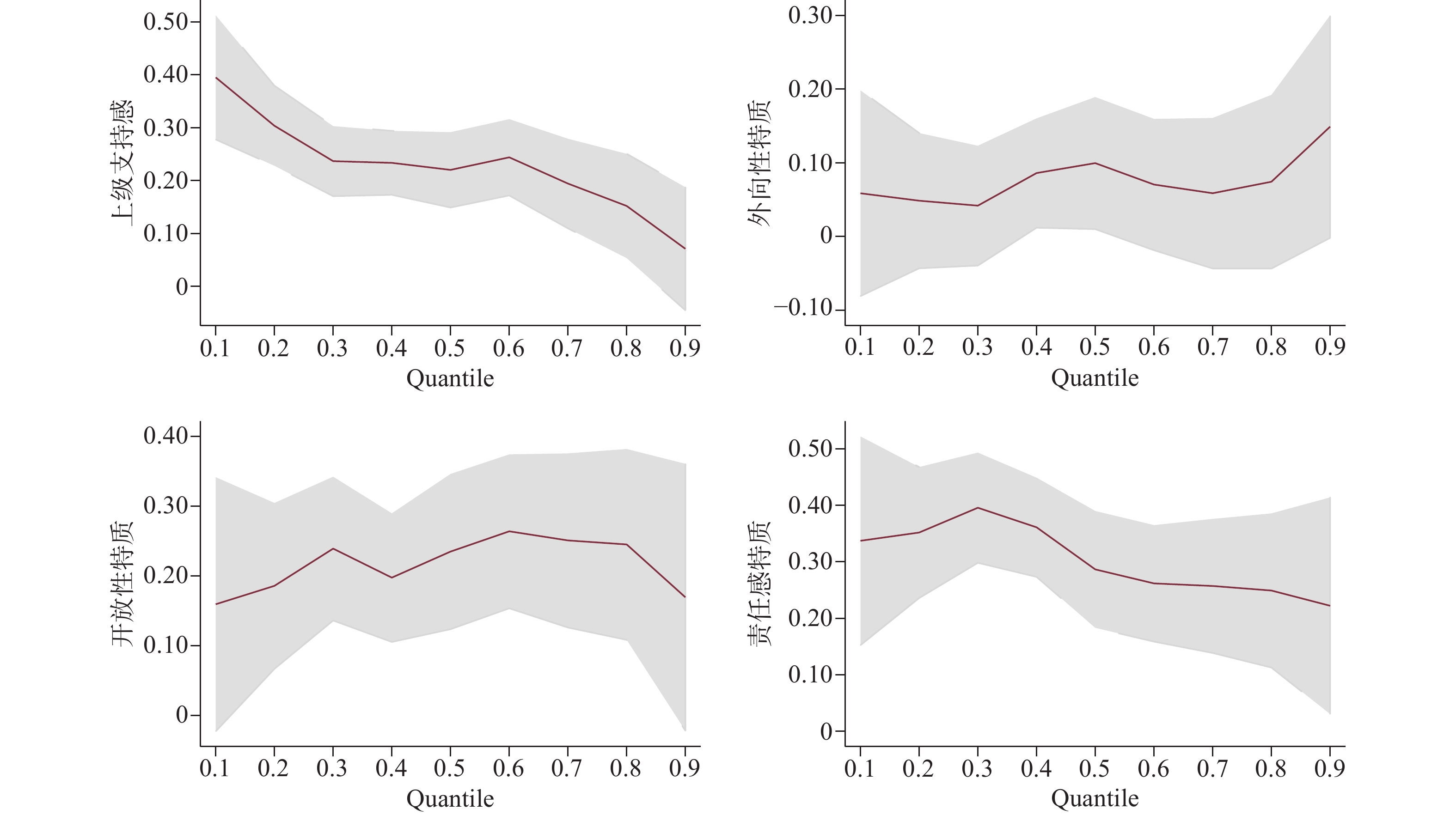
| 外向性特质 | 0.129*** | 0.096** | 0.091** | 0.073 | 0.079 | 0.087* | 0.145*** | |
| (0.043) | (0.039) | (0.040) | (0.064) | (0.055) | (0.045) | (0.045) | ||
| 开放性特质 | 0.252*** | 0.212*** | 0.212*** | 0.181** | 0.247*** | 0.256*** | 0.165*** | |
| (0.053) | (0.049) | (0.050) | (0.074) | (0.068) | (0.061) | (0.059) | ||
| 责任感特质 | 0.360*** | 0.314*** | 0.328*** | 0.339*** | 0.287*** | 0.306*** | 0.322*** | |
| (0.050) | (0.050) | (0.050) | (0.078) | (0.061) | (0.058) | (0.057) | ||
| 组织环境 | ||||||||
| 上级支持感 | 0.222*** | 0.221*** | 0.162*** | 0.216*** | 0.235*** | 0.275*** | ||
| (0.041) | (0.042) | (0.055) | (0.049) | (0.046) | (0.045) | |||
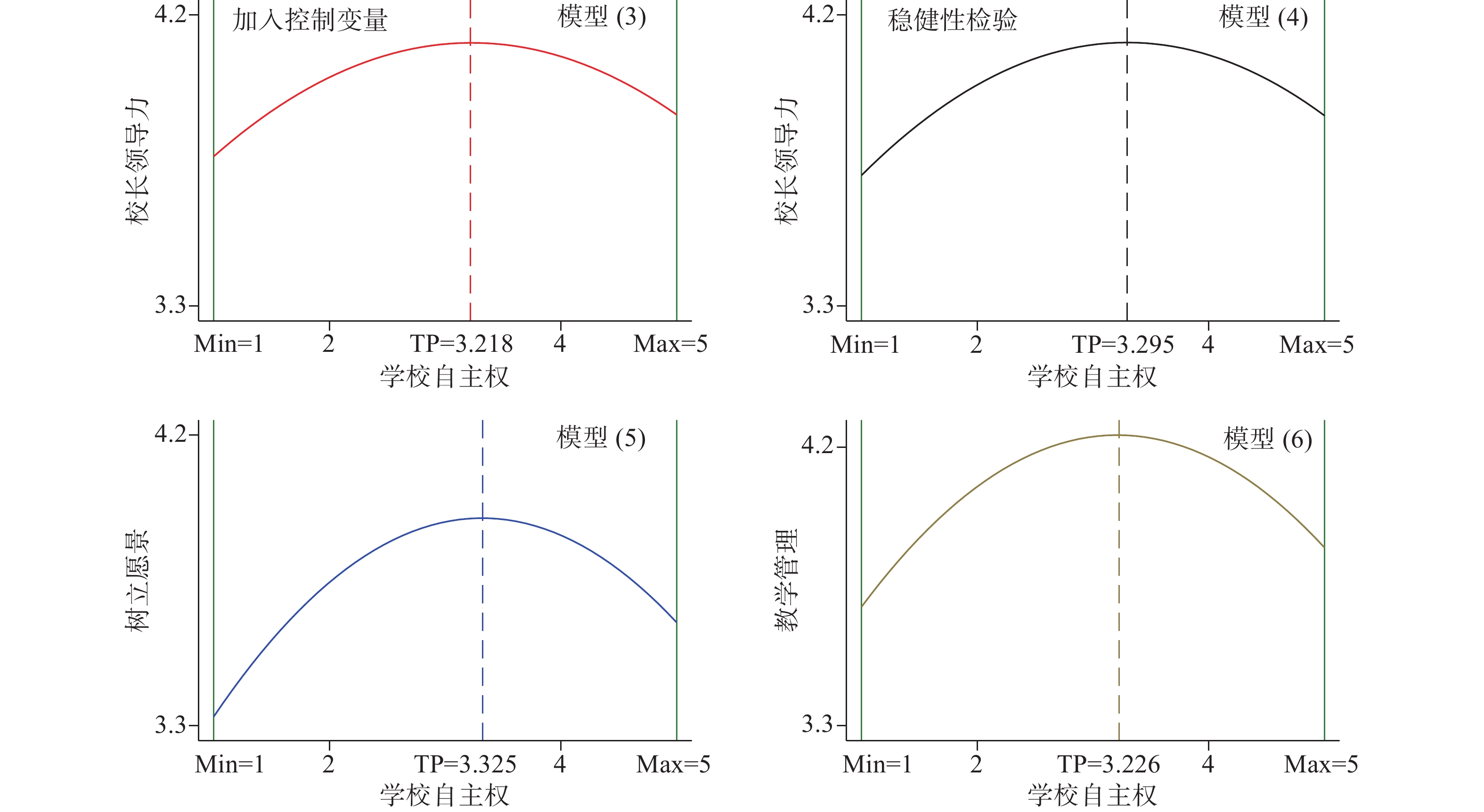
| 学校自主权 | 0.457** | 0.514*** | 0.758** | 0.729*** | 0.340 | 0.002 | ||
| (0.186) | (0.187) | (0.346) | (0.277) | (0.257) | (0.170) | |||
| 学校 自主权平方 | −0.071*** | −0.078*** | −0.114** | −0.113*** | −0.056 | 0.001 | ||
| (0.026) | (0.026) | (0.048) | (0.039) | (0.035) | (0.022) | |||
| 常数项 | 3.759*** | 0.776*** | −0.231 | −0.097 | −0.346 | −0.736 | −0.125 | 0.283 |
| (0.230) | (0.218) | (0.377) | (0.344) | (0.685) | (0.574) | (0.509) | (0.363) | |
| 观测值 | 552 | 552 | 552 | 552 | 552 | 552 | 552 | 552 |
| 0.077 | 0.635 | 0.674 | 0.662 | 0.381 | 0.500 | 0.595 | 0.712 | |
| F检验 | 7.598*** | 276.570*** | 26.808*** | —— | ||||
"
"
"
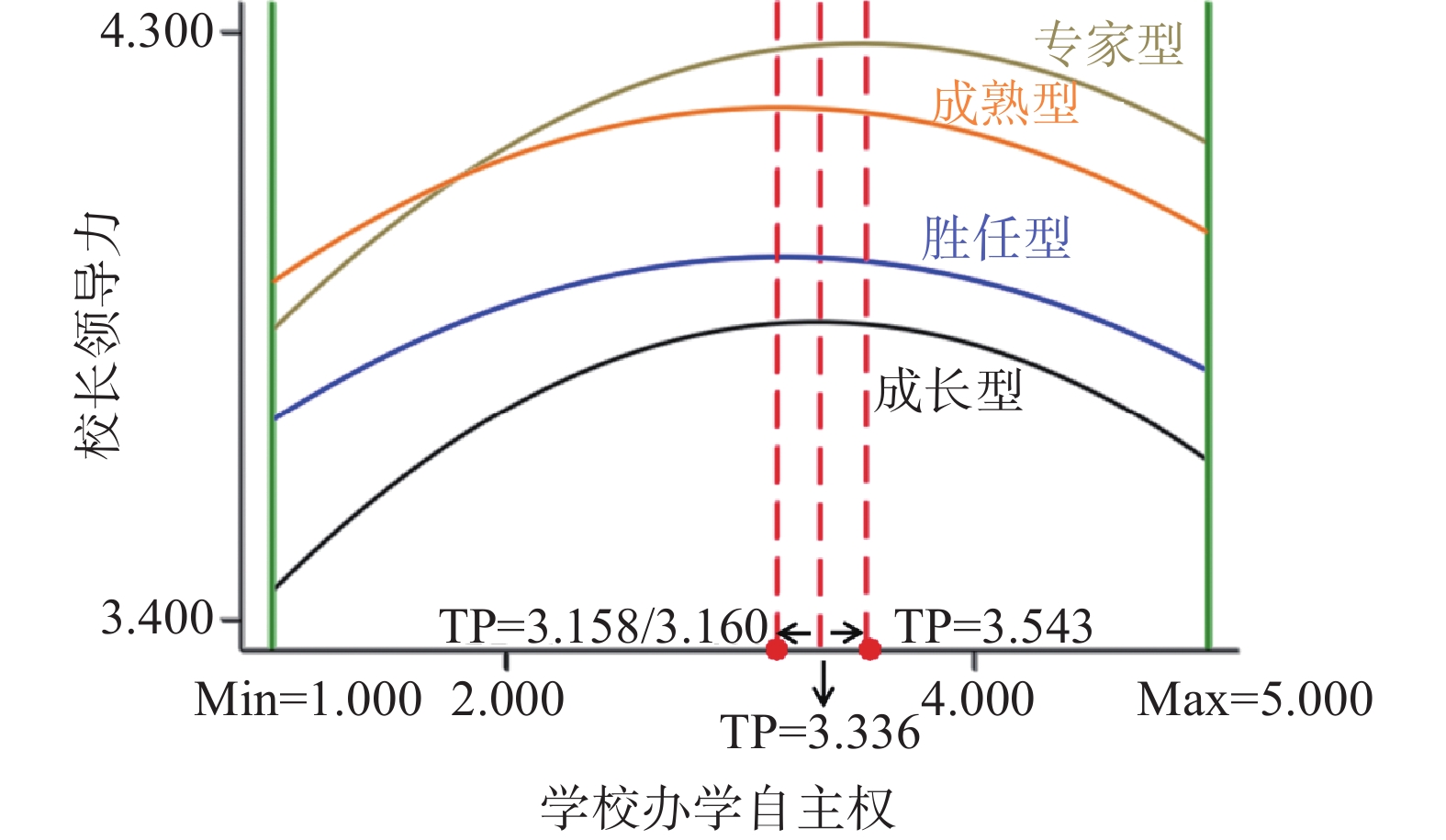
"
| 变量 | 校长领导力 | ||||
| Shapley值 | Shapley值 分解贡献率 | 位次 | Owen值分解群组贡献率 | ||
| 个性特质 | 外向性特质 | 0.104 | 15.42% | 4 | 71.19% |
| 开放性特质 | 0.174 | 25.88% | 2 | ||
| 责任感特质 | 0.201 | 29.89% | 1 | ||
| 组织环境 | 上级支持感 | 0.139 | 20.62% | 3 | 23.95% |
| 学校自主权 | 0.014 | 3.33% | 5 | ||
| 个体特征 控制变量 | 性别 | 0.008 | 1.13% | 4.86% | |
| 年龄 | 0.008 | 1.21% | |||
| 受教育水平 | 0.002 | 0.30% | |||
| 学段 | 0.001 | 0.21% | |||
| 名校长工作室情况 | 0.004 | 0.55% | |||
| 学校位置 | 0.010 | 1.46% | |||
"
| 蔡茹, 张新平, 姚继军, 周世科. (2024). 校长积极领导力何以重要?——论其在学校背景与学生成绩之间的中介效应. 华东师范大学学报(教育科学版), (02), 92- 108. | |
| 陈东平. (2008). 以中国文化为视角的霍夫斯泰德跨文化研究及其评价. 江淮论坛, (01), 123- 127. | |
| 程钰琳, 张万朋. (2017). 国际视域下初中校长分布式领导的表现及影响因素——基于TALIS 2013数据的实证分析. 当代教育论坛, (06), 48- 60. | |
| 杜玲毓, 孙健敏, 尹奎 & 彭坚. (2017). 变革型领导从何而来?变革型领导的形成机理. 中国人力资源开发, (11), 87- 97. | |
| 冯大鸣. (2018). 我国义务教育学校办学自主权的实证分析. 中国教育学刊, (10), 55- 60. | |
| 甘韵文. (2019). 教育行政力量何以制约中学校长领导力的提升.南京: 南京师范大学硕士学位论文. | |
| 高婧, 胡中锋. (2016). 教师教学效能感与校长教学领导力的相关有多大?. 中小学管理, (05), 49- 52. | |
| 胡天助. (2022). 成功的校长领导力: 领导模式及其特征——以ISSPP为例. 外国教育研究, (09), 64- 83. | |
| 黄声华, 尹弘飚. (2024). 青少年社会情感能力发展现状及其相关因素研究: 学生减负之后的“加法”问题初探. 中国人民大学教育学刊, (03), 96- 109+182. | |
| 雷万鹏, 马丽. (2019). 赋权与增能: 中小学校长课程领导力提升路径. 教育研究与实验, (03), 68- 72. | |
| 李剑萍, 张涛. (2006). 山东省普通高中校长领导行为的调查研究. 当代教育科学, (16), 14- 19. | |
| 李玲, 王建平 , 何怀金. (2016). 学校分布式领导与教师变革承诺的关系研究. 教育学报, (06), 40- 52. | |
| 李小土, 刘明兴, 安雪慧. (2008). 西部农村教育财政改革与人事权力结构变迁. 北京大学教育评论, (04), 62- 77+189—190. | |
| 刘莉莉, 孔曼. (2020). 变革型领导力与教师组织承诺的关系研究——教师自我效能感的中介效应分析. 华东师范大学学报(教育科学版), (07), 97- 105. | |
| 刘莉莉, 李晓华. (2021). 卓越校长工作人格特质对其胜任力的影响实证研究——上级支持感的中介作用. 全球教育展望, (12), 77- 89. | |
| 刘莉莉. (2024). 名校长成“名”的底层逻辑及价值旨归. 中小学管理, (01), 27- 30. | |
| 芦青, 宋继文, 夏长虹. (2011). 道德领导的影响过程分析: 一个社会交换的视角. 管理学报, (12), 1802- 1812. | |
| 马丽, 牛君霞, 唐海康. (2020). 校长自我效能感、学习投入、办学自主权对校长领导力的影响——基于5省15市的实证调查. 教育与教学研究, (11), 86- 98. | |
| 蒲蕊. (2019). 新中国基础教育管理体制70年: 历程、经验与展望. 中国教育学刊, (10), 48- 53. | |
| 施久铭. (2019). 校长的品格、人格决定一所学校的气质——访江苏省苏州市吴江区盛泽实验小学教育集团总校长薛法根. 人民教育, (12), 41- 46. | |
| 唐京, 程正方, 应小平. (1999). 校长领导行为与校长类型. 心理学探新, (03), 43- 46+58. | |
| 王凤佐. (2004). 员工对上级的社会支持的感知及对其工作压力感的影响.大连: 大连理工大学硕士学位论文. | |
| 王淑华, 王以宁. (2021). 人格特质与校长信息化领导力的关系: 组织氛围的中介效应. 现代远距离教育, (01), 89- 96. | |
| 姚计海, 黄心怡, 吴小益. (2023). 领导支持对校长职业倦怠的影响: 心理授权和上级满意度的中介作用. 心理学探新, (05), 455- 462. | |
| 袁玉婷, 汪雅霜. (2024). 出国留学对博士生能力发展的影响——基于Nature全球调查数据的分析. 重庆高教研究, (03), 97- 110. | |
| 张佳, 顾建民. (2022). 校长轮岗对义务教育学校发展有影响吗?. 全球教育展望, (02), 77- 92. | |
| 张佳, 傅锐杰, 邵兴江. (2021). 轮岗对校长领导力提升存在“黄金频次”效应——基于对校长多维领导力发展的实证调查. 基础教育, (05), 39- 50. | |
| Ausubel, D. P., & Robinson, F. G. (1969). School learning: An introduction to educational psychology. Holt, Rinehart Winston. | |
| Bandura, A. (1977). Self-efficacy: toward a unifying theory of behavioral change. Psychological review, 84 (2), 191. | |
| Barrick, M. R., Mount, M. K., & Judge, T. A. (2001). Personality and performance at the beginning of the new millennium: What do we know and where do we go next?. International Journal of Selection and assessment, 9 (1‐2), 9- 30. | |
| Bossert, S. T., Dwyer, D. C., Rowan, B., & Lee, G. V. (1982). The instructional management role of the principal. Educational administration quarterly, 18 (3), 34- 64. | |
| Bishop, J. H., & Wößmann, L. (2004). Institutional effects in a simple model of educational production. Education Economics, 12 (1), 17- 38. | |
| Braun, A., Ball, S. J., Maguire, M., & Hoskins, K. (2011). Taking context seriously: Towards explaining policy enactments in the secondary school. Discourse: Studies in the cultural politics of education, 32 (4), 585- 596. | |
| Cheng, Y. C., & Walker, A. (2008). When reform hits reality: The bottleneck effect in Hong Kong primary schools. School Leadership and Management, 28 (5), 505- 521. | |
| Clarke, S., & O’donoghue, T. (2017). Educational leadership and context: A rendering of an inseparable relationship. British journal of educational studies, 65 (2), 167- 182. | |
| Day, C., Sammons, P., Leithwood, K., Hopkins, D., Gu, Q., Brown, E. J., & Ahtaridou, E. (2011). School leadership and student outcomes: Building and sustaining success. McGraw-Hill Education. | |
| Derue, D. S., Nahrgang, J. D., Wellman, N. E., & Humphrey, S. E. (2011). Trait and behavioral theories of leadership: An integration and meta‐analytic test of their relative validity. Personnel psychology, 64 (1), 7- 52. | |
| Finnigan, K. S. (2007). Charter school autonomy: The mismatch between theory and practice. Educational Policy, 21 (3), 503- 526. | |
| Fornell, C., & Larcker, D. F. (1981). Evaluating structural equation models with unobservable variables and measurement error. Journal of marketing research, 18 (1), 39- 50. | |
| Hallinger, P. (2018). Bringing context out of the shadows of leadership. Educational management administration & leadership, 46 (1), 5- 24. | |
| Israeli, O. (2007). A Shapley-based decomposition of the R-square of a linear regression. The Journal of Economic Inequality, 5, 199- 212. | |
| Judge, T. A., Bono, J. E., Ilies, R., & Gerhardt, M. W. (2002). Personality and leadership: A qualitative and quantitative review. Journal of Applied Psychology, 87 (4), 765- 780. | |
| Kirkpatick, S. A., & Locke, E. A. (1991). Leadership: do traits matter?. Academy of management perspectives, 5 (2), 48- 60. | |
| Kite, M. E. (1996). Age, gender, and occupational label: A test of social role theory. Psychology of Women Quarterly, 20 (3), 361- 374. | |
| Koenker, R., & Bassett Jr, G. (1978). Regression quantiles. Econometrica: journal of the Econometric Society, 33—50. | |
| Lakomski, G., & Evers, C. W. (2022). The importance of context for leadership in education. Educational Management Administration & Leadership, 50 (2), 269- 284. | |
| Lazaridou, A. (2021), Personality and resilience characteristics of preschool principals: an iterative study, INTERNATIONAL JOURNAL OF EDUCATIONAL MANAGEMENT, 35 (1) , pp. 29—46. | |
| Leithwood, K., Harris, A., & Hopkins, D. (2008). Seven strong claims about successful school leadership. School leadership and management, 28 (1), 27- 42. | |
| MacBeath, J. (2005), "Leadership as distributed: a matter of practice", SchoolLeadership and Management, Vol. 25 No. 4, pp. 349—366. | |
| Meng, Y., Yu, B., Li, C., & Lan, Y. (2021). Psychometric properties of the Chinese version of the organization big five scale. Frontiers in Psychology, 12, 781369. | |
| Nicolaidou, M., & Petridou, A. (2011). Evaluation of CPD programmes: challenges and implications for leader and leadership development. School effectiveness and school improvement, 22 (1), 51- 85. | |
| Noman, M., Awang Hashim, R., & Shaik Abdullah, S. (2018). Contextual leadership practices: The case of a successful school principal in Malaysia. Educational Management Administration & Leadership, 46 (3), 474- 490. | |
| Owens, R. G. (2004). Organizational behavior in education: Adaptive leadership and school reform Boston. Massachusetts: Pearson. | |
| Peterson, R. S., Smith, D. B., Martorana, P. V., & Owens, P. D. (2003). The impact of chief executive officer personality on top management team dynamics: one mechanism by which leadership affects organizational performance. Journal of applied Psychology, 88 (5), 795. | |
| Pfeffer, J., & Salancik, G. (2015). External control of organizations—Resource dependence perspective. In Organizational behavior 2 (pp. 355-370). Routledge. | |
| Sweller, J. (1988). Cognitive load during problem solving: Effects on learning. Cognitive science, 12 (2), 257- 285. | |
| Yang, F., Liu, J., Huang, X., Qian, J., Wang, T., Wang, Z., & Yu, H. (2018). How supervisory support for career development relates to subordinate work engagement and career outcomes: The moderating role of task proficiency. Human Resource Management Journal, 28 (3), 496- 509. | |
| Yin, H., & Zheng, X. (2018). Facilitating professional learning communities in China: Do leadership practices and faculty trust matter?. Teaching and Teacher Education, 76, 140- 150. |
| [1] | Jing Zhang. IQ or EQ: Which is More Important for Students’ Learning ? [J]. Journal of East China Normal University(Educational Sciences), 2022, 40(11): 69-79. |
| [2] | Zhan Zhongle, Jin Lantao. Retrospect and Prospect of Educational Administrative Disputes and Their Resolution in China—Taking “Top Ten Administrative Disputes in Promoting the Rule of Law in Education” as Examples [J]. Journal of East China Normal University(Educational Sciences), 2020, 38(2): 1-18. |
| Viewed | ||||||
|
Full text |
|
|||||
|
Abstract |
|
|||||
