
 中国人文社会科学核心期刊
Journal of East China Normal University(Educationa ›› 2025, Vol. 43 ›› Issue (7): 96-107.doi: 10.16382/j.cnki.1000-5560.2025.07.008
Previous Articles Next Articles
Manqi Qu1, Baomin Li2, Lingling Gong1
Accepted:2025-02-24
Online:2025-07-01
Published:2025-06-28
Manqi Qu, Baomin Li, Lingling Gong. A Study of the Mechanisms Influencing the Development of Teachers’ Curriculum Leadership in the Context of Digital Transformation[J]. Journal of East China Normal University(Educationa, 2025, 43(7): 96-107.
"
| 研究维度 | 研究问题与对应研究假设 | |
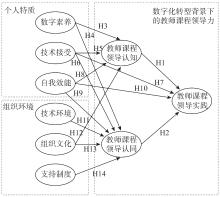
| 内部结构 | 数字化转型背景下的教师课程领导认知和课程领导认同是否会影响教师课程领导实践,影响程度如何? | |
| H1 | 教师课程领导认知对教师课程领导实践力有显著且正向的影响。 | |
| H2 | 教师课程领导认同对教师课程领导实践力有显著且正向的影响。 | |
| 个人特质 | 教师个人特质(数字素养、技术接受度、技术整合下的自我效能)是否会影响数字化转型背景下教师课程领导力(教师课程领导认知、教师课程领导认同、教师课程领导实践),影响程度如何,影响路径是什么? | |
| H3 | 数字素养对教师课程领导认知有显著且正向的影响。 | |
| H4 | 数字素养对教师课程领导认同有显著且正向的影响。 | |
| H5 | 技术接受度对教师课程领导认知有显著且正向的影响。 | |
| H6 | 技术接受度对教师课程领导认同有显著且正向的影响。 | |
| H7 | 技术接受度对教师课程领导实践有显著且正向的影响。 | |
| H8 | 技术整合下的自我效能感对教师课程领导认知有显著且正向的影响。 | |
| H9 | 技术整合下的自我效能感对教师课程领导认同有显著且正向的影响。 | |
| H10 | 技术整合下的自我效能感对教师课程领导实践有显著且正向的影响。 | |
| 组织环境 | 教师组织环境(技术环境、组织文化、支持制度)是否会影响数字化转型背景下教师课程领导力(教师课程领导认知、教师课程领导认同、教师课程领导实践),影响程度如何,影响路径是什么? | |
| H11 | 技术环境对教师课程领导认同有显著且正向的影响。 | |
| H12 | 组织文化对教师课程领导认知有显著且正向的影响。 | |
| H13 | 组织文化对教师课程领导认同有显著且正向的影响。 | |
| H14 | 支持制度对教师课程领导认同有显著且正向的影响。 | |
"
"
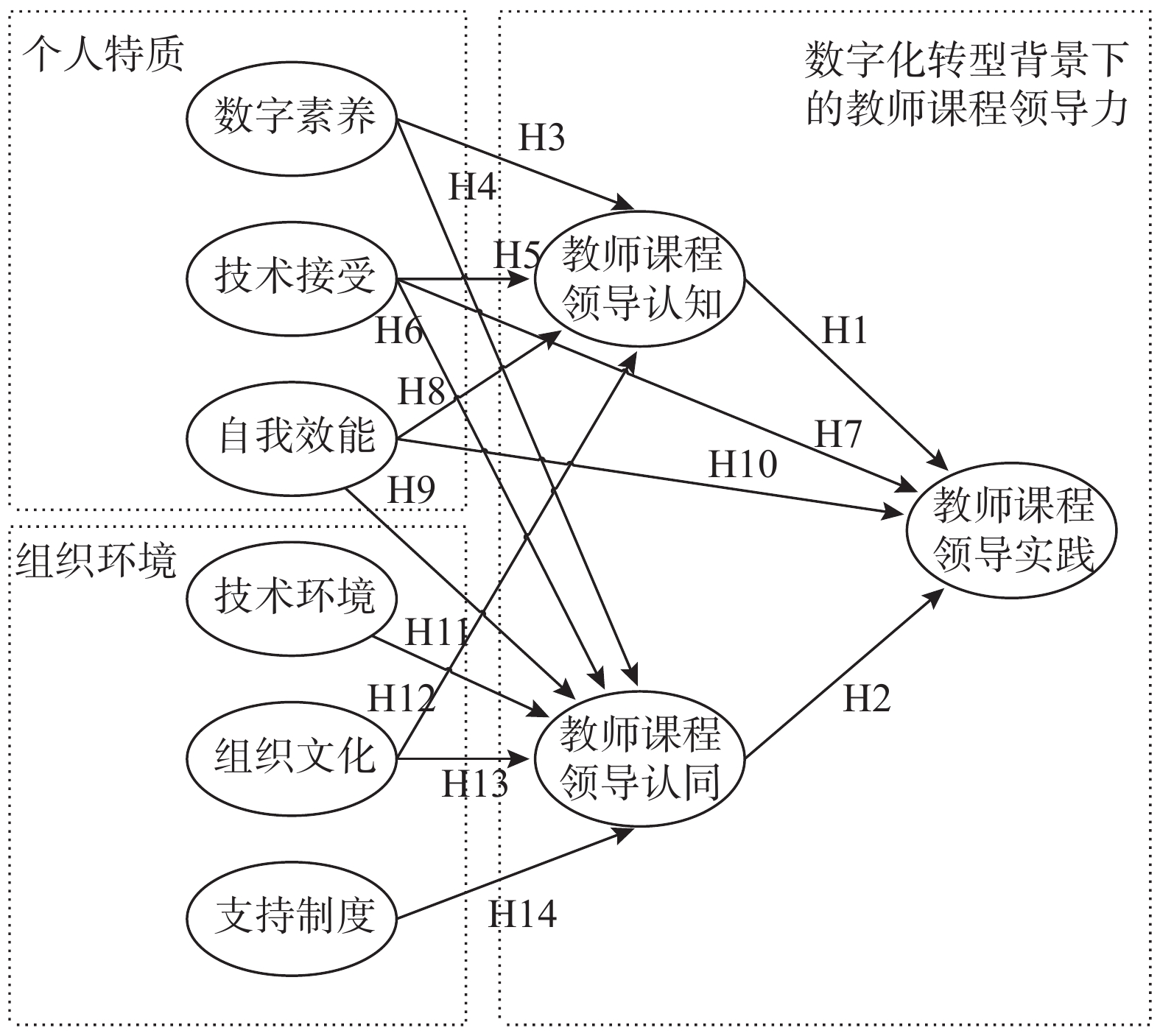
| 假设 | 假设路径 | B | β | S.E. | T | P-Value | 结果 |
| H1 | CLV->CLP | 0.412 | 0.353 | 0.144 | 2.857 | 0.004 | 支持 |
| H2 | CLI->CLP | 0.827 | 0.798 | 0.194 | 4.26 | *** | 支持 |
| H3 | DL->CLV | 0.261 | 0.379 | 0.072 | 3.609 | *** | 支持 |
| H4 | DL->CLI | 0.313 | 0.403 | 0.077 | 4.049 | *** | 支持 |
| H5 | TA->CLV | 0.38 | 0.476 | 0.1 | 3.801 | *** | 支持 |
| H6 | TA->CLI | 0.345 | 0.383 | 0.095 | 3.613 | *** | 支持 |
| H7 | TA->CLP | −0.045 | −0.048 | 0.076 | −0.592 | 0.554 | 不支持 |
| H8 | SE->CLV | −0.24 | −0.328 | 0.1 | −2.397 | 0.017 | 不支持 |
| H9 | SE->CLI | 0.021 | 0.025 | 0.101 | 0.209 | 0.834 | 不支持 |
| H10 | SE->CLP | −0.123 | −0.144 | 0.085 | −1.449 | 0.147 | 不支持 |
| H11 | TE->CLI | 0.122 | 0.175 | 0.04 | 3.025 | 0.002 | 支持 |
| H12 | GC->CLV | 0.277 | 0.448 | 0.049 | 5.64 | *** | 支持 |
| H13 | GC->CLI | 0.265 | 0.38 | 0.097 | 2.735 | 0.006 | 支持 |
| H14 | SS->CLI | −0.128 | −0.216 | 0.079 | −1.623 | 0.105 | 不支持 |
"
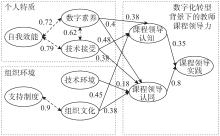
| 路径 | B | β | S.E. | t | P-Value |
| SE<->DL | 0.367 | 0.722 | 0.050 | 7.313 | *** |
| SE<->TA | 0.348 | 0.794 | 0.048 | 7.196 | *** |
| DL<->TA | 0.290 | 0.624 | 0.045 | 6.449 | *** |
| SS<->GC | 0.711 | 0.905 | 0.095 | 7.518 | *** |
"
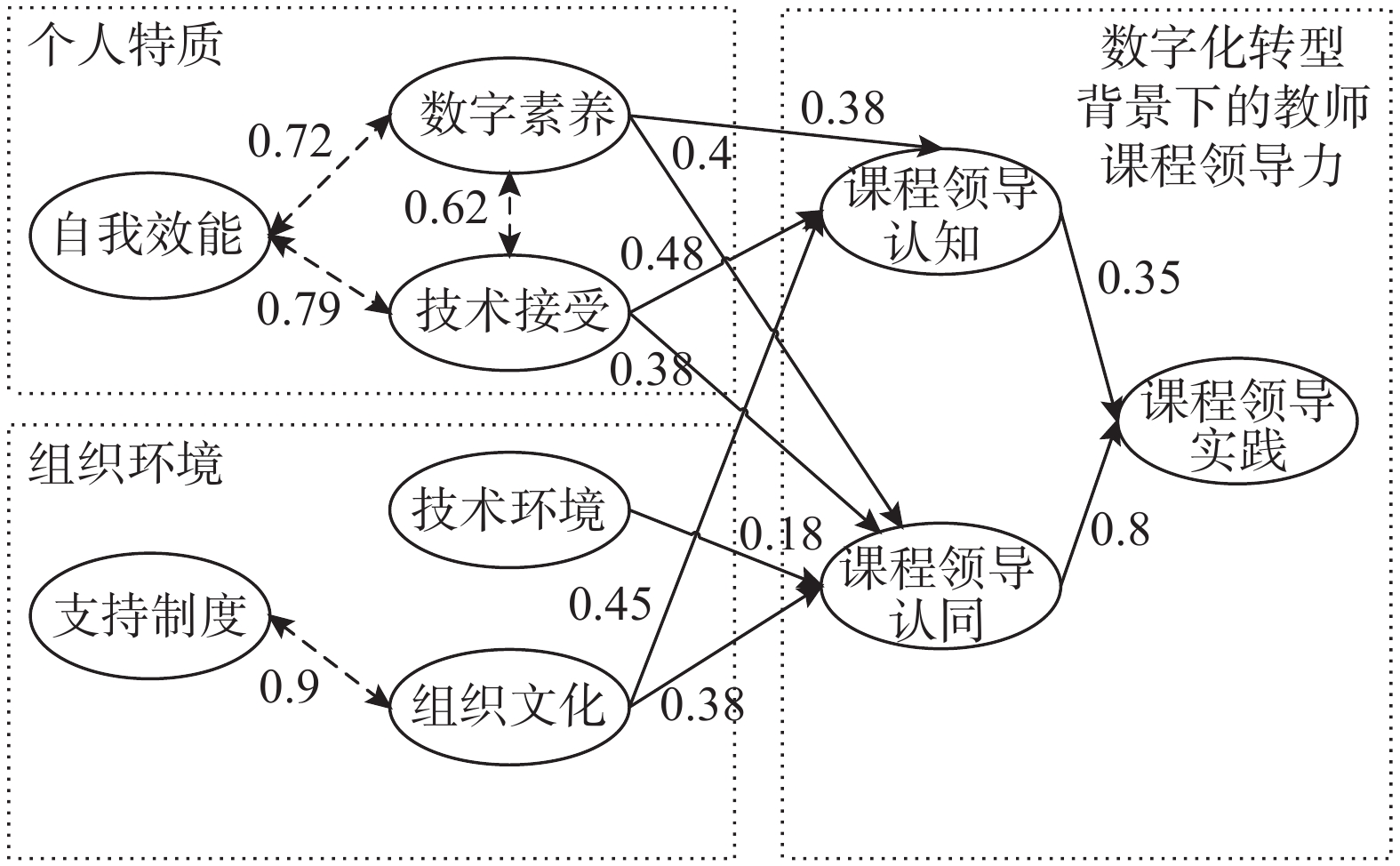
"
| 路径 | 中介效应 | Pointestimate | Bootstrap5000time95%CI | 中介类型 | |||
| Biascorrected | Percentile | ||||||
| DL->CLV->CLP | 间接效应 | 0.508*** | 0.368 | 0.687 | 0.356 | 0.672 | 完全中介 |
| 直接效应 | 0.043 | −0.077 | 0.175 | −0.079 | 0.174 | ||
| 总效应 | 0.551*** | 0.387 | 0.71 | 0.382 | 0.706 | ||
| DL->CLI->CLP | 间接效应 | 0.738*** | 0.495 | 1.13 | 0.485 | 1.1 | 完全中介 |
| 直接效应 | −0.193 | −0.502 | 0.031 | −0.506 | 0.03 | ||
| 总效应 | 0.545*** | 0.396 | 0.697 | 0.389 | 0.69 | ||
| TA->CLV->CLP | 间接效应 | 0.629*** | 0.475 | 0.843 | 0.467 | 0.834 | 完全中介 |
| 直接效应 | 0.005 | −0.153 | 0.153 | −0.158 | 0.148 | ||
| 总效应 | 0.635*** | 0.46 | 0.849 | 0.451 | 0.839 | ||
| TA->CLI->CLP | 间接效应 | 0.831*** | 0.605 | 1.197 | 0.585 | 1.16 | 完全中介 |
| 直接效应 | −0.194 | −0.488 | −0.01 | −0.454 | 0.005 | ||
| 总效应 | 0.637*** | 0.47 | 0.842 | 0.463 | 0.831 | ||
| TE->CLI->CLP | 间接效应 | 0.428*** | 0.272 | 0.653 | 0.259 | 0.633 | 完全中介 |
| 直接效应 | 0.042 | −0.107 | 0.215 | −0.123 | 0.199 | ||
| 总效应 | 0.471*** | 0.338 | 0.619 | 0.323 | 0.602 | ||
| GC->CLV->CLP | 间接效应 | 0.556*** | 0.407 | 0.758 | 0.398 | 0.745 | 完全中介 |
| 直接效应 | 0.054 | −0.097 | 0.196 | −0.091 | 0.202 | ||
| 总效应 | 0.611*** | 0.457 | 0.793 | 0.456 | 0.788 | ||
| GC->CLI->CLP | 间接效应 | 0.562*** | 0.412 | 0.786 | 0.383 | 0.736 | 完全中介 |
| 直接效应 | 0.035 | −0.112 | 0.188 | −0.094 | 0.212 | ||
| 总效应 | 0.596*** | 0.445 | 0.777 | 0.442 | 0.773 | ||
| 鲍东明. (2020). 校长课程领导:价值与策略. 北京:教育科学出版社. | |
| 尹弘飚, 李子建. (2007). 论课程改革中的教师改变. 教育研究, (03), 23- 29. | |
| 尹后庆, 祝智庭, 顾建军等. (2022). 教育数字化背景下的未来教育与基础教育学建设(上). 基础教育, 19 (04), 14- 38. | |
| 王淑芬. (2020). 教师课程领导力研究框架探析. 社会科学战线, (305), 274- 280. | |
| 许锋华, 陈俊源. (2021). 核心素养视域下的K-VPI教师课程领导力: 模型建构与内涵阐释. 南京社会科学, (409), 149- 158. | |
| 安桂清. (2023). 课堂形态分析及其重构: 范式转换的视角. 教育发展研究, 43 (04), 48- 55. | |
| 邢西深, 胡佳怡, 管佳. (2022). 新时代的基础教育数字化: 发展动因、基本特征和实践进路. 中国电化教育, (12), 107- 113. | |
| 王绯烨, 萨莉·扎帕达. (2017). 骨干教师领导力影响因素的实证研究. 湖南师范大学教育科学学报, 16 (03), 83- 88. | |
| 鲁宏飞等. (2007). 学校文化建设与管理研究. 上海: 华东师范大学出版社. | |
| 胡贵勇, 刘艳, 李明刚. (2015). 教师的教学自信及其形成. 山东社会科学, (S1), 114- 115. | |
| Abbitt, J. T. (2011). An investigation of the relationship between self-efficacy beliefs about technology integration and technological pedagogical content knowledge (TPACK) among preservice teachers. Journal of digital learning in teacher education, 27 (4), 134- 143. | |
| Badia, A., Meneses, J., Sigalés, C., & Fàbregues, S. (2014). Factors affecting school teachers’ perceptions of the instructional benefits of digital technology. Procedia-Social and Behavioral Sciences, 141, 357- 362. | |
| Bagozzi, R. P., & Yi, Y. (1988). On the evaluation of structural equation models. Journal of The Academy of Marketing Science, 16 (1), 74- 94. | |
| Becker, H. J., & Ravitz, J. (1999). The influence of computer and Internet use on teachers' pedagogical practices and perceptions. Journal of research on computing in education, 31, 356- 384. | |
| Chen, J., Yang, Y., Xu, F., Xu, W., Zhang, X., Wang, Y., & Zhang, Y. (2021). Factors influencing curriculum leadership of primary and secondary school teachers from the perspective of field dynamic theory: An empirical investigation in china. Sustainability, 13 (21), 12007. | |
| Davis, N., Preston, C., & Sahin, I. (2009). ICT teacher training: Evidence for multilevel evaluation from a national initiative. British Journal of Educational Technology, 40 (1), 135- 148. | |
| Elliott, B., Brooker, R., Macpherson, I., & McInman, A. (1999). Curriculum leadership as mediated action. Teachers and Teaching, 5 (2), 171- 185. | |
| Fabrigar, L. R., Wegener, D. T., MacCallum, R. C., & Strahan, E. J. (1999). Evaluating the use of exploratory factor analysis in psychological research. Psychological methods, 4 (3), 272. | |
| Fornell, C., & Larcker, D. F. (1981). Evaluating structural equation models with unobservable variables and measurement error. Journal of Marketing Research, 18 (1), 39- 50. | |
| Goos, M. (2014). Technology integration in secondary school mathematics: the development of teachers’ professional identities. The mathematics teacher in the digital era: An international perspective on technology focused professional development, 139—161. | |
| Hall, B. C. (2008). Investigating the relationships among computer self-efficacy, professional development, teaching experience, and technology integration of teachers (Doctoral dissertation, University of Cincinnati). | |
| Handler, B. (2010). Teacher as curriculum leader: A consideration of the appropriateness of that role assignment to classroom-based practitioners. International Journal of Teacher Leadership, 3 (3), 32- 42. | |
| Holden, H., & Rada, R. (2011). Understanding the influence of perceived usability and technology self-efficacy on teachers' technology acceptance. Journal of research on technology in education, 43 (4), 343- 367. | |
| Hu, P. J. H., Clark, T. H., & Ma, W. W. (2003). Examining technology acceptance by school teachers: A longitudinal study. Information & management, 41 (2), 227- 241. | |
| Inan, F. A., & Lowther, D. L. (2010). Factors affecting technology integration in K-12 classrooms: A path model. Educational technology research and development, 58, 137- 154. | |
| Kezar, A., & Lester, J. (2009). Supporting faculty grassroots leadership. Research in Higher Education, 50, 715- 740. | |
| Korthagen, F. A. (2004). In search of the essence of a good teacher: Towards a more holistic approach in teacher education. Teaching and teacher education, 20 (1), 77- 97. | |
| Korthagen, F., & Vasalos, A. (2005). Levels in reflection: Core reflection as a means to enhance professional growth. Teachers and teaching, 11 (1), 47- 71. | |
| Law, E. H. F., Galton, M., & Wan, S. W. Y. (2007). Developing curriculum leadership in schools: Hong Kong perspectives. Asia‐Pacific Journal of Teacher Education, 35 (2), 143- 159. | |
| Moursund, D. , & Bielefeldt, T. (1999). Will new teachers be prepared to teach in a digital age? A national survey on information technology in teacher education. | |
| Mumtaz, S. (2000). Factors affecting teachers' use of information and communications technology: a review of the literature. Journal of information technology for teacher education, 9 (3), 319- 342. | |
| Nair, I., & Das, V. M. (2012). Using Technology Acceptance Model to assess teachers’ attitude towards use of technology as teaching tool: A SEM Approach. International Journal of Computer Applications, 42 (2), 1- 6. | |
| Nguyen, D., Harris, A., & Ng, D. (2020). A review of the empirical research on teacher leadership (2003–2017) Evidence, patterns and implications. Journal of educational administration, 58 (1), 60- 80. | |
| Perrotta, C. (2013). Do school‐level factors influence the educational benefits of digital technology? A critical analysis of teachers' perceptions. British Journal of Educational Technology, 44 (2), 314- 327. | |
| Rogers, E. M. , Singhal, A. , & Quinlan, M. M. (2014). Diffusion of innovations. In An integrated approach to communication theory and research. Routledge. 2014: 432—448. | |
| Sánchez-Cruzado, C., Santiago Campión, R., & Sánchez-Compaña, M. T. (2021). Teacher digital literacy: The indisputable challenge after COVID-19. Sustainability, 13 (4), 1858. | |
| Schermelleh-Engel, K., Moosbrugger, H., & Müller, H. (2003). Evaluating the fit of structural equation models: Tests of significance and descriptive goodness-of-fit measures. Methods of psychological research online, 8 (2), 23- 74. | |
| Teo, T. (2011). Factors influencing teachers’ intention to use technology: Model development and test. Computers & Education, 57 (4), 2432- 2440. | |
| Venkatesh, V. , Morris, M. G. , Davis, G. B. , & Davis, F. D. (2003). User acceptance of information technology: Toward a unified view. MIS quarterly, 425—478. | |
| Wang, L., Ertmer, P. A., & Newby, T. J. (2004). Increasing preservice teachers’ self-efficacy beliefs for technology integration. Journal of research on technology in education, 36 (3), 231- 250. | |
| Wenner, J. A., & Campbell, T. (2017). The theoretical and empirical basis of teacher leadership: A review of the literature. Review of educational research, 87 (1), 134- 171. | |
| Yeşilyurt, E. , & Vezne, R. (2023). Digital literacy, technological literacy, and internet literacy as predictors of attitude toward applying computer-supported education. Education and Information Technologies, 1—27. | |
| Yeşilyurt, E., Ulaş, A. H., & Akan, D. (2016). Teacher self-efficacy, academic self-efficacy, and computer self-efficacy as predictors of attitude toward applying computer-supported education. Computers in human Behavior, 64, 591- 601. |
| [1] | Yuqiang Zhang, Qi Li, Xuehui Yin. Primary and Secondary School Teachers’ Test Item Development Ability: Current Situation Analysis, Improvement Path and Overall Support [J]. Journal of East China Normal University(Educationa, 2025, 43(6): 81-98. |
| [2] | Hua Chen, Gangping Wu. On Administrative and Professional Attributes of School Curriculum Leadership [J]. Journal of East China Normal University(Educational Sciences), 2024, 42(8): 104-113. |
| [3] | Xin Yang. Algorithmic Power and Its Regulation in the Digital Transformation of Education [J]. Journal of East China Normal University(Educational Sciences), 2024, 42(1): 114-126. |
| [4] | Huan Song, Jianjian Wu. The Generation Mechanism of the Primary and Secondary School Teachers’ Workload in China [J]. Journal of East China Normal University(Educational Sciences), 2023, 41(9): 16-37. |
| [5] | Xiaohong Tian, Yilong Ji, Yueliang Zhou. Reconstruction of Teachers’ Competencies: A Key Support for the Digital Transformation of Education [J]. Journal of East China Normal University(Educational Sciences), 2023, 41(3): 91-100. |
| [6] | Junjie Shang, Xiuhan Li. The Difficulties and Corresponding Strategies of Educational Digital Transformation [J]. Journal of East China Normal University(Educational Sciences), 2023, 41(3): 72-81. |
| [7] | Yu Shengquan. The Key Stages of Digital Transformation in Education [J]. Journal of East China Normal University(Educational Sciences), 2023, 41(3): 62-71. |
| [8] | Bo Jiang, Yingwen Ding, Yuang Wei. The Core Technology Engine of Digital Transformation in Education: Trustworthy Education Artificial Intelligence [J]. Journal of East China Normal University(Educational Sciences), 2023, 41(3): 52-61. |
| [9] | Tong Jin, Yafen Li. Understanding the School Public Space in the Digital Age:Practical Problems of Digital Transformation of Education [J]. Journal of East China Normal University(Educational Sciences), 2023, 41(3): 45-51. |
| [10] | Lianyu Cai, Mingfei Jin, Yueliang Zhou. The Essence of Education Digital Transformation: From Technology Integration to Human-machine Fusion [J]. Journal of East China Normal University(Educational Sciences), 2023, 41(3): 36-44. |
| [11] | Yonghe Wu, Qiuxuan Xu, Zhuzhu Wang. A Maturity Model for Digital Transformation in Education [J]. Journal of East China Normal University(Educational Sciences), 2023, 41(3): 25-35. |
| [12] | Zhiting Zhu, Ling Dai. Digital Transformation of Education Driven by Design Wisdom: The Goal Orientation, Guiding Principles and Practical Approaches [J]. Journal of East China Normal University(Educational Sciences), 2023, 41(3): 12-24. |
| [13] | Haiwei Li, Gong Wang, Meichen Lu. Exploration of the Path of Digital Education Transformation and Practice in Shanghai [J]. Journal of East China Normal University(Educational Sciences), 2023, 41(3): 110-120. |
| [14] | Zhenguo Yuan. Digital Transformation in Education: What to Turn and How? [J]. Journal of East China Normal University(Educational Sciences), 2023, 41(3): 1-11. |
| [15] | Guangbin Zhang, Kexun Xue. The Underlying Logic and Construction Path of Digital Pedagogy: On the Construction of Chinese Digital Pedagogy [J]. Journal of East China Normal University(Educational Sciences), 2023, 41(11): 67-84. |
| Viewed | ||||||
|
Full text |
|
|||||
|
Abstract |
|
|||||
