
 中国人文社会科学核心期刊
Journal of East China Normal University(Educationa ›› 2025, Vol. 43 ›› Issue (11): 74-85.doi: 10.16382/j.cnki.1000-5560.2025.11.007
Previous Articles Next Articles
Wenjie Huang, Zhuoren Shao
Accepted:2025-07-27
Online:2025-11-01
Published:2025-11-03
Wenjie Huang, Zhuoren Shao. Understanding Students’ Resistance to Personal Information Collection in Universities: An Analysis by fsQCA Methods[J]. Journal of East China Normal University(Educationa, 2025, 43(11): 74-85.
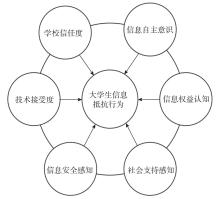
"
"
| 前因变量 | 测量题项 | 参考文献 |
| 信息权益认知 | 我知道自己对个人信息享有哪些权利。(IR1) 我了解国家个人信息保护法律的主要内容。(IR2) | 隐私意识 ( |
| 信息自主意识 | 我有时会担心自己的个人信息被他人滥用。(IA1) 我希望能掌握自己的个人信息被使用的情况。(IA2) 我认为自己有权利了解学校如何使用我的个人信息。(IA3) | 隐私关注度( |
| 学校信任度 | 我相信学校会妥善地使用和保管我的个人信息。(ST1) 我相信我的学校不会将我的信息用于其他不合理的用途。(ST2) 我认为学校收集学生个人信息是为了更好地服务我们。(ST3) | 制度信任( |
| 技术接受度 | 我能接受在校园管理中使用刷脸门禁、指纹验证等新的信息技术。(TA1) 我认为使用上述新技术可以让校园生活和校园管理更便捷。(TA2) 我愿意尝试学校推出的需要采集个人信息的校园服务方式。(TA3) 我认为应用上述新的信息技术可以使校园生活更有安全感。(TA4) | 技术接受度( |
| 社会支持感知 | 我觉得身边的大多数同学都对学校的个人信息采集行为抱持正面的态度。(PS1) 我觉得自己的亲密朋友与家人都鼓励我配合学校的个人信息采集行为。(PS2) | 社群影响( |
| 信息安全感知 | 学校使用人脸识别等新型信息技术可能存在隐私风险。(IS1) 学校通过监控、人脸识别、手机应用等方式收集过多的个人信息会带来安全隐患。(IS2) | 风险感知( |
"
| 结果变量 | 选择题项 | 行为分类 |
| 学生信息抵抗行为 | 与同学私下吐槽或抱怨这种情况;在私密社交圈表达不满;故意拖延提交个人信息;故意提供不完整或模糊的信息;选择性忽略学校某些信息收集的通知 | 低强度抗争行为 |
| 在公开社交媒体发表对信息收集的质疑;在班级/年级大群表达异议;向辅导员询问信息收集的必要性和依据;向学校相关部门提出质疑和建议 | 中强度抗争行为 | |
| 一些场合下会完全拒绝提供任何个人信息;向教育主管部门、相关监管机构反映问题;联系其他同学发起联名抵制;收集证据准备提起行政诉讼;会寻求法律援助或咨询;联系媒体曝光学校的违规行为;组织或参与校园集会表达抗议 | 高强度抗争行为 |
"
| 变量 | 题项 | 因子载荷量 | Cronbach’s α | CR | AVE |
| 信息权益认知 | IR1 | 0.901 | 0.839 | 0.818 | 0.694 |
| IR2 | 0.759 | ||||
| 信息自主意识 | IA1 | 0.516 | 0.748 | 0.730 | 0.481 |
| IA2 | 0.748 | ||||
| IA3 | 0.786 | ||||
| 学校信任度 | ST1 | 0.724 | 0.873 | 0.837 | 0.638 |
| ST2 | 0.975 | ||||
| ST3 | 0.661 | ||||
| 技术接受度 | TA1 | 0.842 | 0.878 | 0.838 | 0.566 |
| TA2 | 0.776 | ||||
| TA3 | 0.681 | ||||
| TA4 | 0.698 | ||||
| 社会支持感知 | PS1 | 0.697 | 0.808 | 0.657 | 0.489 |
| PS2 | 0.701 | ||||
| 信息安全感知 | IS1 | 0.738 | 0.756 | 0.731 | 0.576 |
| IS2 | 0.780 |
"
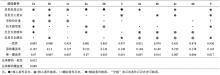
| 一致性 | 覆盖率 | |
| 信息权益认知 | ||
| ~ 信息权益认知 | ||
| 信息自主意识 | ||
| ~ 信息自主意识 | ||
| 学校信任度 | ||
| ~ 学校信任度 | ||
| 技术接受度 | ||
| ~ 技术接受度 | ||
| 社会支持感知 | ||
| ~ 社会支持感知 | ||
| 信息安全感知 | ||
| ~ 信息安全感知 |
"
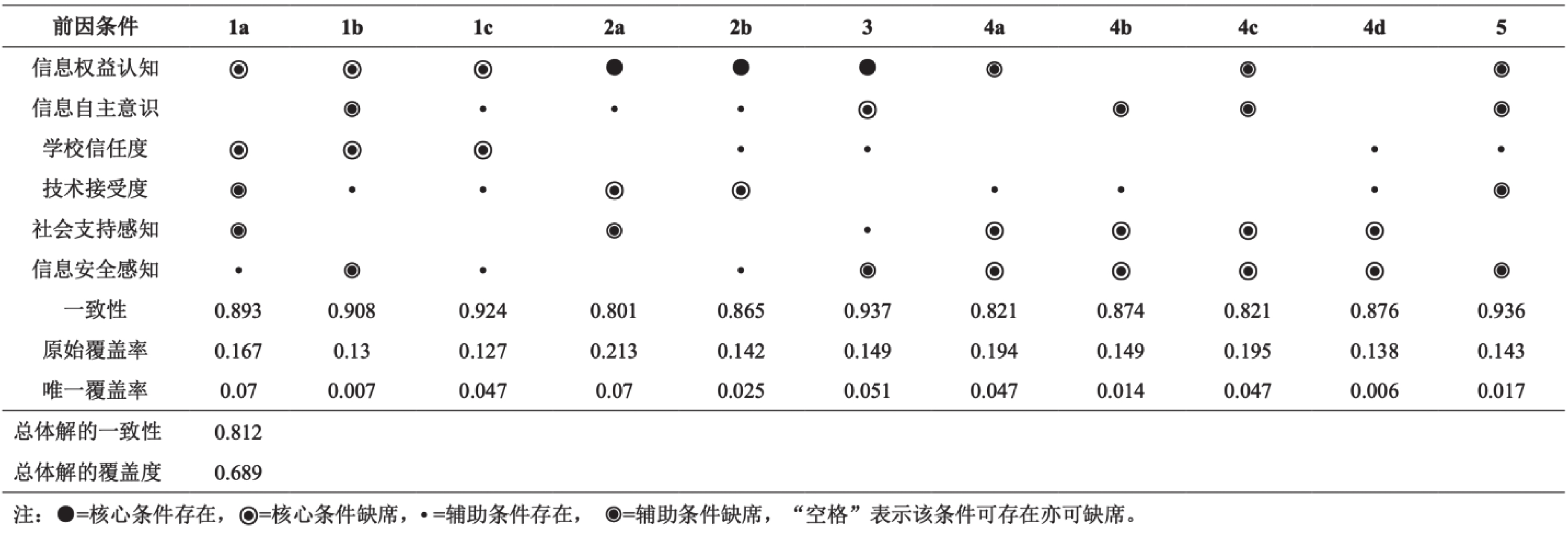
| 陈昊, 张嵩, 吕途. (2022). 智能系统用户隐私意识与隐私保护意愿研究. 情报理论与实践, 45 (2), 168- 175. | |
| 成伯清. (2007). “风险社会”视角下的社会问题. 南京大学学报(哲学社会科学版), 2, 129- 135. | |
| 成俊会, 赵金楼. (2015). 基于信息风险感知的社交网络舆情传播模型研究. 情报杂志, 34 (1), 134- 138. | |
| 程啸. (2019). 民法典编纂视野下的个人信息保护. 中国法学, 4, 26- 43. | |
| 邓琬心. (2020). 高校学生个人信息法律保护的现状及优化. 学校党建与思想教育, 18, 67- 69. | |
| 杜运周, 贾良定. (2017). 组态视角与定性比较分析(QCA): 管理学研究的一条新道路. 管理世界, 6, 155- 167. | |
| 冯湘君. (2018). 大学生个人数字存档行为与意愿研究. 档案学通讯, 5, 13- 17. | |
| 胡明鑫. (2023). 用户如何走向抵抗?——从数字依赖到数字排毒的人技互动关系. 新闻记者, 6, 86- 100. | |
| 黄莹. (2018). 语境消解、隐私边界与“不联网的权利”: 对朋友圈“流失的使用者”的质性研究. 新闻界, 4, 72- 79. | |
| 焦媛媛, 闫鑫, 李智慧. (2023). 新产品扩散视域下的同侪影响: 维度厘定与量表开发——基于社交网络情境. 管理工程学报, 37 (2), 11- 21. | |
| 康健, 张秋予, 杨三. (2024). 公共服务数字化转型下的公众数字负担感知: 事实特征与生成逻辑. 电子政务, 7, 29- 40. | |
| 李瑛琦. (2022). “永久在线、永久连接”: 网络社会何以引发“人的自主性”危机?——基于“技术自主性”的审思. 新闻界, 6, 65- 74. | |
| 李卓卓, 蒋雨萌. (2024). 信息隐私量表对象、指标和应用的研究与展望. 情报理论与实践, 47 (10), 41- 52. | |
| 吕伞, 袁勤俭. (2022). 隐私计算理论及其在信息系统研究领域的应用及展望. 现代情报, 42 (9), 169- 176. | |
| 骆意. (2017). 基于TAM的大学生移动健身App使用影响因素的实证研究. 首都体育学院学报, 29 (1), 72- 77. | |
| 孟博, 刘茂, 李清水, 王丽. (2010). 风险感知理论模型及影响因子分析. 中国安全科学学报, 20 (10), 59- 66. | |
| 孟玺. (2024). 算法意识对社交媒体用户自我隐瞒行为的影响机制研究. 现代情报, 44 (11), 52- 66. | |
| 戚玉觉, 杨东涛, 何玉梅. (2018). 组织中的制度信任: 概念、结构维度与测量. 经济管理, 40 (2), 192- 208. | |
| 申琦. (2015). 自我表露与社交网络隐私保护行为研究——以上海市大学生的微信移动社交应用(APP)为例. 新闻与传播研究, 22 (4), 5- 17,126. | |
| 宋宗宇, 林传琳. (2021). 个人信息保护的公法应对: 引入预防原则的构想证成. 社会科学研究, 5, 84- 94. | |
| 宛玲, 张月. (2020). 国内外隐私素养研究现状分析. 图书情报工作, 64 (12), 144- 150. | |
| 王炳成, 赵静怡, 崔梦洁. (2024). 消费者创新抗拒的形成路径与应对策略——以社交新零售商业模式为例. 经济管理, 46 (8), 88- 105. | |
| 王成. (2019). 个人信息民法保护的模式选择. 中国社会科学, 6, 124- 146,207. | |
| 王飞飞, 张生太. (2018). 移动社交媒体用户生成内容行为研究——以微信为例. 图书馆学研究, 5, 43- 50. | |
| 王世涛, 鉴恩惠, 李枫. (2021). 基于技术接受模型的户外智慧健身房使用意愿研究. 吉林体育学院学报, 37 (6), 10- 15,34. | |
| 谢卫红, 樊炳东, 李忠顺, 曲静静. (2019). 电子商务环境下网络隐私顾虑维度的评估与测量. 现代情报, 39 (1), 137- 147. | |
| 谢毅, 高充彦, 童泽林. (2020). 消费者隐私关注研究述评与展望. 外国经济与管理, 42 (6), 111- 125. | |
| 徐冠群, 朱珊. (2023). 媒介技术的抵抗: 青年“数字极简主义者”的生活实践——基于豆瓣话题小组的田野调查. 传媒观察, 8, 93- 103. | |
| 许可, 程华. (2022). 算法悖论与制度因应——基于用户算法应用感知的实证研究. 山东大学学报(哲学社会科学版), 6, 84- 96. | |
| 张明, 杜运周. (2019). 组织与管理研究中QCA方法的应用: 定位、策略和方向. 管理学报, 16 (9), 1312- 1323. | |
| 张晓娟, 田馨滦. (2020). 移动社交媒体用户隐私悖论现象的产生路径研究——基于fsQCA的实证分析. 情报理论与实践, 43 (11), 92- 97. | |
| 赵德余. (2010). 制度与信任形成的微观机制: 兼评房莉杰《制度信任的形成过程》. 社会, 30 (6), 202- 220. | |
| 朱侯. (2016). 社交媒体用户隐私关注的心理机制研究. 图书情报知识, 2, 75- 82. | |
| Bélanger, F. , & Crossler, R. E. (2011). Privacy in the digital age: A review of information privacy research in information systems. MIS quarterly, 1017—1041. | |
| Bonabeau, E. (2004). The perils of the imitation age. Harvard business review, 82 (6), 45- 54. | |
| Chen, H., & Li, W. (2017). Mobile device users’ privacy security assurance behavior: A technology threat avoidance perspective. Information & Computer Security, 25 (3), 330- 344. | |
| Cheung, C., Lee, Z. W., & Chan, T. K. (2015). Self-disclosure in social networking sites: The role of perceived cost, perceived benefits and social influence. Internet Research, 25 (2), 279- 299. | |
| Cheung, C. M., & Lee, M. K. (2010). A theoretical model of intentional social action in online social networks. Decision support systems, 49 (1), 24- 30. | |
| Chung, K. -C. , Chen, C. -H. , Tsai, H. -H. , & Chuang, Y. -H. (2021). Social media privacy management strategies: A SEM analysis of user privacy behaviors. Computer communications, 174, 122—130. | |
| Davis, F. D. (1989a). Perceived usefulness, perceived ease of use, and user acceptance of information technology. MIS quarterly, 319—340. | |
| Featherman, M. S., & Pavlou, P. A. (2003). Predicting e-services adoption: A perceived risk facets perspective. International journal of human-computer studies, 59 (4), 451- 474. | |
| Kelman, H. C. (2017). Further thoughts on the processes of compliance, identification, and internalization. | |
| Kim, S. S., Agarwal, J., & Agarwal, J. (2004). Internet users’ information privacy concerns (IUIPC): The construct, the scale, and a casual model. Information Systems Research, 15 (4), 336- 355. | |
| Krasnova, H., Spiekermann, S., Koroleva, K., & Hildebrand, T. (2010). Online social networks: Why we disclose. Journal of Information Technology, 25 (2), 109- 125. | |
| Luhmann, N. (2000). Familiarity, confidence, trust: Problems and alternatives. Trust: Making and breaking cooperative relations, 6 (1), 94- 107. | |
| Milberg, S. J., Smith, H. J., & Burke, S. J. (2000). Information privacy: Corporate management and national regulation. Organization Science, 11 (1), 35- 57. | |
| Phelps, J., Nowak, G., & Ferrell, E. (2000a). Privacy concerns and consumer willingness to provide personal information. Journal of Public Policy & Marketing, 19 (1), 27- 41. | |
| Ragin, C.C. (2009). Redesigning social inquiry: Fuzzy sets and beyond. University of Chicago Press. | |
| Rieks, A. R., Dedrick, J., & Stanton, J. (2020). Risks, benefits, and control of information: Two studies of smart electric meter privacy. Journal of the Association for Information Science and Technology, 71 (9), 1060- 1073. | |
| Rihoux, B. , & Ragin, C. C. (2009). Configurational comparative methods: Qualitative comparative analysis. SAGE Publications, Inc. | |
| Sheehan, K. B., & Hoy, M. G. (2000). Dimensions of privacy concern among online consumers. Journal of Public Policy & Marketing, 19 (1), 62- 73. | |
| Slovic, P. (1987). Perception of risk. science, 236 (4799), 280- 285. | |
| Smith, H. J. , Milberg, S. J. , & Burke, S. J. (1996). Information privacy: Measuring individuals’ concerns about organizational practices. MIS Quarterly, 167–196. | |
| Verstrynge, K. (2019). Unplug Your Life: Digital Detox Through a Kierkegaardian Lens. | |
| Watjatrakul, B. (2013). Intention to use a free voluntary service: The effects of social influence, knowledge and perceptions. Journal of Systems and Information Technology, 15 (2), 202- 220. | |
| Westin, A. F. (1968). Privacy and freedom. Washington and Lee Law Review, 25 (1), 166. | |
| Xiao, B., & Benbasat, I. (2018). An empirical examination of the influence of biased personalized product recommendations on consumers’ decision making outcomes. Decision Support Systems, 110, 46- 57. | |
| Zhao, K., Stylianou, A. C., & Zheng, Y. (2018). Sources and impacts of social influence from online anonymous user reviews. Information & Management, 55 (1), 16- 30. | |
| Zucker, L. G. (1986). Production of trust: Institutional sources of economic structure, 1840–1920. Research in organizational behavior. |
| No related articles found! |
| Viewed | ||||||
|
Full text |
|
|||||
|
Abstract |
|
|||||
