
 中国人文社会科学核心期刊
Journal of East China Normal University(Educationa ›› 2026, Vol. 44 ›› Issue (2): 75-92.doi: 10.16382/j.cnki.1000-5560.2026.02.005
Previous Articles Next Articles
Yongmei Hu1, Ping Zhao2
Accepted:2025-08-29
Online:2026-02-01
Published:2026-01-26
Yongmei Hu, Ping Zhao. Survey on Fertility Motivation and Cohort Disparities Among Highly-Educated Women[J]. Journal of East China Normal University(Educationa, 2026, 44(2): 75-92.
"
| 样本 | 中国人口普查年鉴2020 | |||||
| 频数 | 比例(%) | 频数 | 比例(%) | |||
| 有无婚姻经历 | 未婚 | 410 | 39.8 | 38.0 | ||
| 有婚姻经历 | 620 | 60.2 | 62.0 | |||
| 出生世代 | 75后 | 64 | 6.2 | 13.7 | ||
| 80后 | 172 | 16.7 | 20.7 | |||
| 85后 | 298 | 28.9 | 24.3 | |||
| 90后 | 352 | 34.2 | 30.7 | |||
| 95后 | 144 | 14.0 | 10.5 | |||
| 地区 | 东部地区 | 566 | 55.0 | 59.6 | ||
| 中部地区 | 219 | 21.3 | 16.1 | |||
| 西部地区 | 164 | 15.9 | 16.8 | |||
| 东北地区 | 81 | 7.9 | 7.5 | |||
| 受教育程度 | 在读博士生 | 414 | 40.2 | 33.4 | ||
| 博士 | 616 | 59.8 | 66.6 | |||
| 总体 | 100 | − | 100 | |||
"
"
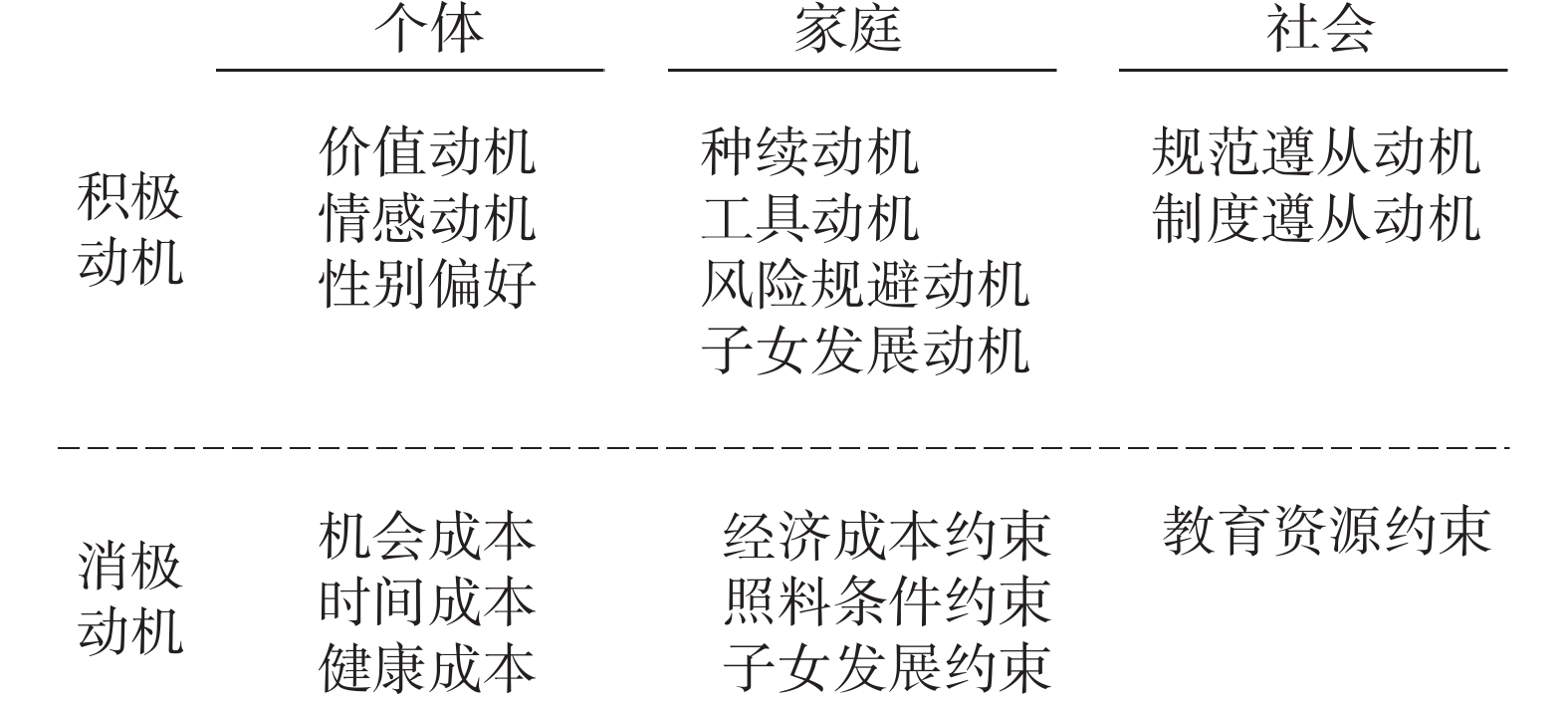
| 变量类型 | 变量名称 | 变量说明 | |
| 生育动机 | |||
| 积极生育动机 | 个体 | 价值动机 | 通过“希望有更完整的人生体验”等选项测量 |
| 情感动机 | 通过“喜欢孩子”等选项测量 | ||
| 性别偏好动机 | 通过“希望儿女双全”测量 | ||
| 家庭 | 种续动机 | 通过“为了延续家族的香火”等选项测量 | |
| 工具动机 | 通过“为了老年时,有自家孩子照料”等选项测量 | ||
| 风险规避动机 | 通过“担心只培养一个孩子有风险”等选项测量 | ||
| 子女发展动机 | 通过“希望大宝有个伴”等选项测量 | ||
| 社会 | 文化规范遵从动机 | 通过“周围的人都生了孩子,我为了和他们一样,也要有孩子”等选项测量 | |
| 制度遵从动机 | 通过“响应国家政策号召,为国家做贡献”等选项测量 | ||
| 消极生育动机 | 个体 | 机会成本 | 通过“对本人就业或职业发展的影响”等选项测量 |
| 时间成本 | 通过“工作和养育孩子的时间精力难以平衡”等选项测量 | ||
| 健康成本 | 通过“身体条件不合适”等选项测量 | ||
| 家庭 | 经济成本约束 | 通过“养育孩子的经济压力大”等选项测量 | |
| 照料成本约束 | 通过“没有老人帮助照看,对保姆又不放心”等选项测量 | ||
| 子女发展约束 | 通过“考虑一孩的心理感受”等选项测量 | ||
| 社会 | 教育资源约束 | 通过“对优质的托育幼儿园教育资源的可获得性的担忧”等选项测量 | |
| 出生世代 | 出生世代 | “75后”(1975-1979年)、“80后”(1980-1984年)、“85后”(1985-1989年)、“90后”(1990-1994年)、“95后”(1995-1999年),以“80后”为参照组 | |
| 其他控制变量 | 受教育状态 | 0=在读博士生,1=博士 | |
| 健康状况 | 0=良好,1=一般,2=差 | ||
| 是否独生子女 | 0=否,1=是 | ||
| 是否少数民族 | 0=否,1=是 | ||
| 婚姻状态 | 0=无婚姻经历,1=有婚姻经历 | ||
| 居住地类型 | 0=县城,1=城市 | ||
| 居住地区 | 0=东部,1=中部,2=西部,3=东北 |
"
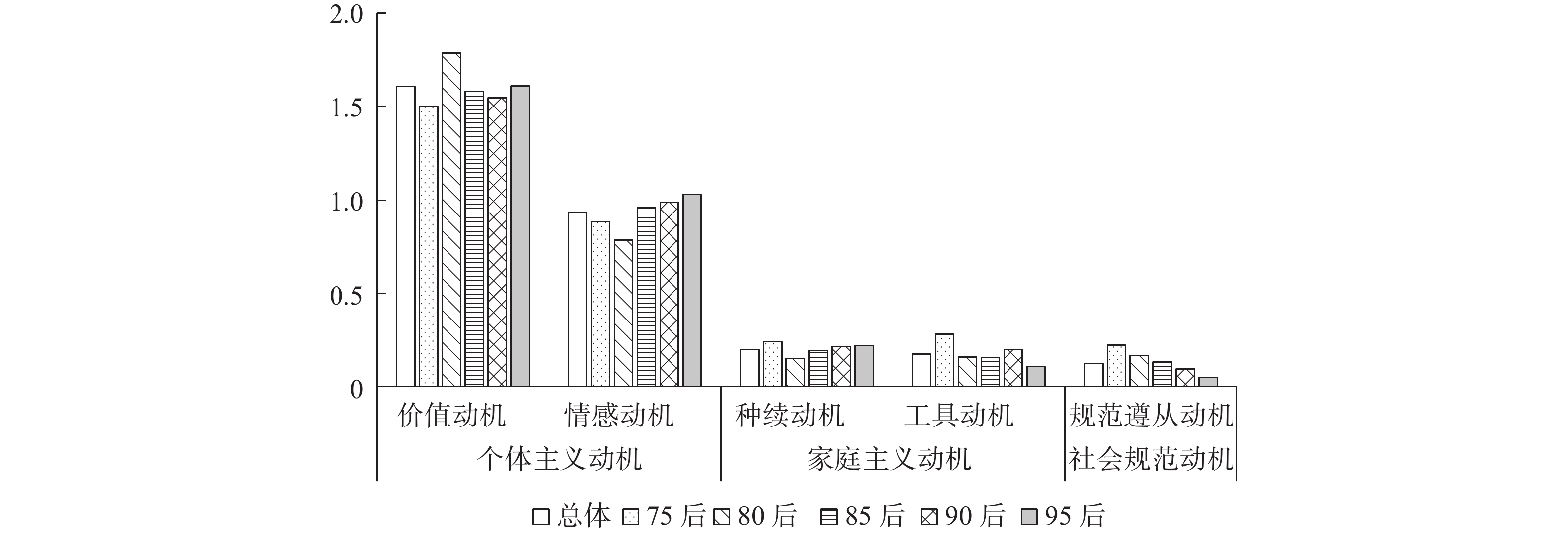
"
| (1) | (2) | (3) | (4) | (5) | |
| 价值动机 | 情感动机 | 种续动机 | 工具动机 | 规范遵从 动机 | |
| 参照组80后 | |||||
| 75后 | −0.285* | 0.028 | 0.122 | 0.136 | 0.078 |
| (0.113) | (0.073) | (0.118) | (0.090) | (0.067) | |
| 85后 | −0.213** | 0.166** | 0.052 | −0.010 | −0.031 |
| (0.038) | (0.041) | (0.031) | (0.050) | (0.016) | |
| 90后 | −0.216* | 0.178* | 0.069* | −0.032 | −0.064* |
| (0.086) | (0.060) | (0.023) | (0.022) | (0.024) | |
| 95后 | −0.102 | 0.197 | 0.069 | −0.205* | −0.111** |
| (0.173) | (0.121) | (0.067) | (0.068) | (0.025) | |
| 博士 | 0.018 | 0.023 | −0.005 | 0.016 | −0.032 |
| (0.020) | (0.070) | (0.039) | (0.062) | (0.028) | |
| 健康状况一般 | 0.021 | −0.133* | 0.018 | 0.041** | 0.041* |
| (0.024) | (0.049) | (0.015) | (0.010) | (0.014) | |
| 健康状况差 | 0.107 | −0.391** | 0.127 | 0.044 | 0.099** |
| (0.095) | (0.098) | (0.086) | (0.043) | (0.031) | |
| 独生子女 | −0.018 | −0.171** | 0.101** | 0.071 | 0.027 |
| (0.018) | (0.035) | (0.026) | (0.046) | (0.019) | |
| 少数民族 | 0.120 | −0.051 | −0.012 | −0.074* | −0.005 |
| (0.094) | (0.033) | (0.074) | (0.027) | (0.025) | |
| 婚姻状态 | 0.057 | −0.056 | 0.022 | −0.152* | 0.035 |
| (0.085) | (0.088) | (0.047) | (0.062) | (0.030) | |
| 城市 | −0.031 | 0.134** | −0.055** | −0.053 | −0.071*** |
| (0.042) | (0.036) | (0.013) | (0.038) | (0.012) | |
| 中部地区 | 0.100*** | −0.136*** | 0.016 | −0.046** | 0.039** |
| (0.007) | (0.018) | (0.008) | (0.010) | (0.009) | |
| 西部地区 | 0.021 | −0.110*** | 0.043* | 0.035* | 0.046*** |
| (0.016) | (0.014) | (0.018) | (0.012) | (0.007) | |
| 东北地区 | −0.088** | −0.085*** | 0.066* | 0.054** | 0.024*** |
| (0.026) | (0.011) | (0.024) | (0.012) | (0.003) | |
| 常数项 | 1.701*** | 0.903*** | 0.114* | 0.301** | 0.167** |
| (0.136) | (0.114) | (0.042) | (0.090) | (0.035) | |
| R2 | 0.029 | 0.053 | 0.025 | 0.035 | 0.032 |
| N | 832 | 832 | 832 | 832 | 832 |
"
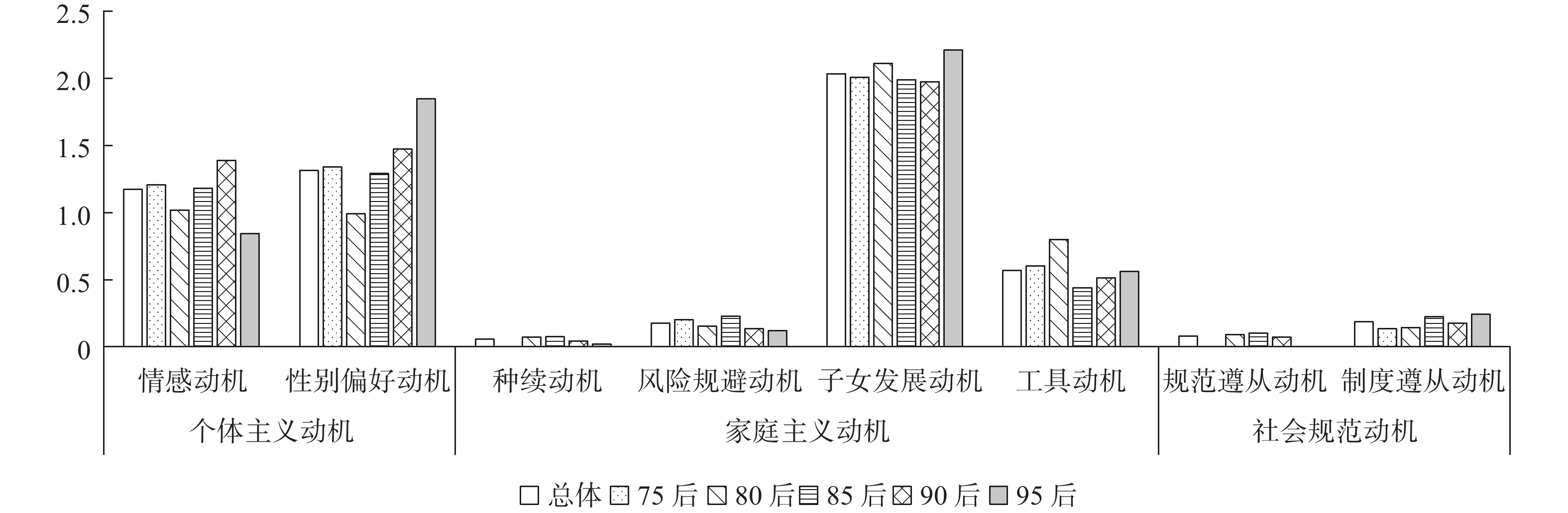
"
| (1) | (2) | (3) | (4) | (5) | (6) | (7) | (8) | |
| 情感 动机 | 性别偏 好动机 | 种续 动机 | 风险规 避动机 | 子女发 展动机 | 工具 动机 | 规范遵 从动机 | 制度遵 从动机 | |
| 参照组80后 | ||||||||
| 75后 | 0.136 | 0.326 | −0.065** | 0.068 | −0.096 | −0.253 | −0.054** | −0.035 |
| (0.548) | (0.197) | (0.015) | (0.078) | (0.397) | (0.182) | (0.015) | (0.097) | |
| 85后 | 0.128 | 0.315* | 0.007 | 0.073* | −0.078 | −0.408* | 0.020 | 0.064 |
| (0.112) | (0.130) | (0.010) | (0.025) | (0.090) | (0.166) | (0.054) | (0.048) | |
| 90后 | 0.190 | 0.521** | −0.000 | −0.021 | −0.019 | −0.351** | 0.015 | −0.018 |
| (0.190) | (0.092) | (0.009) | (0.080) | (0.204) | (0.099) | (0.027) | (0.116) | |
| 95后 | −0.499 | 0.868** | −0.009 | −0.058 | 0.285 | −0.265 | −0.031 | 0.030 |
| (0.387) | (0.152) | (0.004) | (0.025) | (0.272) | (0.251) | (0.089) | (0.049) | |
| 博士 | 0.122* | 0.081 | −0.045* | −0.011 | −0.066 | 0.095 | −0.086* | 0.070* |
| (0.049) | (0.094) | (0.016) | (0.035) | (0.078) | (0.130) | (0.030) | (0.029) | |
| 健康状况一般 | −0.030 | −0.149 | −0.067** | −0.001 | 0.094 | 0.205* | 0.014 | −0.106** |
| (0.175) | (0.087) | (0.019) | (0.021) | (0.132) | (0.073) | (0.067) | (0.020) | |
| 健康状况差 | −0.025 | 0.399 | −0.084* | 0.041 | −0.413 | −0.134 | 0.185 | 0.013 |
| (0.488) | (0.376) | (0.028) | (0.125) | (0.223) | (0.198) | (0.145) | (0.072) | |
| 独生子女 | −0.282** | −0.253*** | 0.002 | 0.143 | 0.019 | 0.063 | −0.030 | −0.010 |
| (0.055) | (0.030) | (0.015) | (0.083) | (0.090) | (0.028) | (0.059) | (0.036) | |
| 少数民族 | −0.059 | −0.516 | −0.061 | −0.007 | 0.200 | 0.169 | 0.048 | 0.006 |
| (0.475) | (0.249) | (0.032) | (0.054) | (0.152) | (0.074) | (0.132) | (0.114) | |
| 婚姻状态 | −0.344* | −0.057 | 0.095* | 0.036 | 0.215 | −0.222* | 0.079** | −0.078 |
| (0.138) | (0.056) | (0.031) | (0.041) | (0.120) | (0.074) | (0.017) | (0.122) | |
| 城市 | −0.119 | 0.118 | 0.009 | −0.117 | 0.088 | 0.130 | −0.060 | 0.014 |
| (0.237) | (0.093) | (0.011) | (0.070) | (0.093) | (0.161) | (0.043) | (0.058) | |
| 中部地区 | −0.388*** | −0.026 | −0.028*** | 0.104*** | −0.012 | 0.216*** | 0.066*** | −0.018 |
| (0.015) | (0.023) | (0.002) | (0.010) | (0.025) | (0.010) | (0.010) | (0.015) | |
| 西部地区 | −0.236*** | 0.234*** | −0.062*** | 0.132*** | 0.221*** | −0.109** | −0.101** | 0.014 |
| (0.015) | (0.037) | (0.003) | (0.009) | (0.025) | (0.033) | (0.020) | (0.008) | |
| 东北地区 | 0.272*** | 0.289** | −0.047*** | −0.048 | 0.035 | −0.085** | −0.073** | −0.187** |
| (0.042) | (0.067) | (0.007) | (0.023) | (0.035) | (0.018) | (0.017) | (0.033) | |
| 常数项 | 0.057 | 0.092 | 0.065 | 0.068 | 0.030 | 0.068 | 0.056 | 0.030 |
| 312 | 312 | 312 | 312 | 312 | 312 | 312 | 312 | |
| R2 | 0.057 | 0.092 | 0.065 | 0.068 | 0.030 | 0.068 | 0.056 | 0.030 |
| N | 312 | 312 | 312 | 312 | 312 | 312 | 312 | 312 |
"
"
"
| (1) | (2) | (3) | (4) | (5) | (6) | (7) | |
| 机会成本约束 | 时间成本约束 | 健康成本约束 | 经济成本约束 | 照料成本约束 | 子女发展约束 | 教育资源约束 | |
| 参照组80后 | |||||||
| 75后 | −0.201 | −0.146* | 0.293 | −0.287 | 0.140* | 0.229 | 0.118 |
| (0.091) | (0.051) | (0.242) | (0.142) | (0.054) | (0.113) | (0.100) | |
| 85后 | 0.405* | 0.137 | −0.562** | −0.158 | −0.115* | 0.139 | 0.129 |
| (0.145) | (0.071) | (0.172) | (0.115) | (0.043) | (0.067) | (0.105) | |
| 90后 | 0.256 | 0.011 | −0.941*** | 0.198 | −0.211** | 0.194 | 0.116 |
| (0.124) | (0.063) | (0.139) | (0.093) | (0.060) | (0.127) | (0.134) | |
| 95后 | 0.346 | −0.062 | −1.166** | 0.360** | −0.242** | 0.338 | −0.065 |
| (0.353) | (0.078) | (0.278) | (0.085) | (0.051) | (0.166) | (0.129) | |
| 博士 | −0.024 | −0.077 | −0.111 | 0.118 | −0.060 | 0.003 | 0.095 |
| (0.136) | (0.119) | (0.209) | (0.139) | (0.035) | (0.025) | (0.083) | |
| 健康状况一般 | 0.097 | −0.059 | 0.403*** | 0.045 | −0.010 | −0.089 | −0.081 |
| (0.237) | (0.054) | (0.025) | (0.023) | (0.028) | (0.043) | (0.056) | |
| 健康状况差 | 0.147 | −0.271* | 0.623* | 0.092 | −0.007 | 0.023 | −0.087 |
| (0.316) | (0.100) | (0.252) | (0.139) | (0.015) | (0.109) | (0.087) | |
| 独生子女 | −0.067 | 0.017 | −0.015 | −0.005 | −0.000 | 0.179** | −0.203 |
| (0.167) | (0.070) | (0.137) | (0.046) | (0.038) | (0.055) | (0.123) | |
| 少数民族 | −0.044 | 0.068 | −0.137* | 0.035 | 0.036 | 0.006 | −0.092 |
| (0.187) | (0.035) | (0.054) | (0.191) | (0.092) | (0.136) | (0.070) | |
| 婚姻状态 | −0.191 | 0.056 | −0.190 | −0.178 | 0.144** | 0.229* | −0.112 |
| (0.196) | (0.120) | (0.284) | (0.146) | (0.038) | (0.088) | (0.056) | |
| 城市 | 0.413 | 0.288* | −0.150 | −0.278** | −0.031 | −0.120 | −0.015 |
| (0.220) | (0.100) | (0.306) | (0.076) | (0.044) | (0.081) | (0.025) | |
| 中部地区 | 0.167** | 0.081* | 0.018 | −0.136* | 0.045** | 0.056 | −0.150** |
| (0.035) | (0.027) | (0.071) | (0.055) | (0.012) | (0.024) | (0.046) | |
| 西部地区 | 0.170*** | 0.102 | 0.109* | −0.194** | −0.094*** | −0.035 | 0.167*** |
| (0.016) | (0.046) | (0.046) | (0.041) | (0.016) | (0.035) | (0.021) | |
| 东北地区 | 0.079 | −0.040 | 0.404*** | −0.222*** | −0.226*** | 0.141** | 0.290*** |
| (0.055) | (0.018) | (0.031) | (0.032) | (0.005) | (0.026) | (0.032) | |
| 常数项 | 0.349 | 0.882** | 1.282*** | 1.198*** | 0.546*** | 0.006 | 0.279* |
| (0.246) | (0.203) | (0.204) | (0.187) | (0.068) | (0.180) | (0.116) | |
| R2 | 0.043 | 0.062 | 0.150 | 0.115 | 0.089 | 0.051 | 0.078 |
| N | 407 | 407 | 407 | 407 | 407 | 407 | 407 |
| 保虎. (2017). “痛”不欲“生”: 80/90后女青年“二孩生育”问题反思——以上海“高知”女青年为例. 中国青年研究, (10), 15- 22. | |
| 陈蓉, 顾宝昌. (2020). 实际生育二孩人群分析——基于上海市的调查. 中国人口科学, (05), 116- 125+128. | |
| 陈滔, 胡安宁. (2020). 个体主义还是家庭主义?——不同生育动机对生育行为的影响效应分析. 江苏社会科学, (02), 28- 38. | |
| 迟明, 解斯棋. (2022). 21世纪以来欧洲生育率反弹成因分析及其对中国的启示. 人口学刊, 44 (04), 80- 90. | |
| 董辉. (1992). 中国农民家庭功能及成员活动社会化与生育行为的思考. 社会学研究, (01), 102- 107. | |
| 风笑天, 张青松. (2002). 二十年城乡居民生育意愿变迁研究. 市场与人口分析, (05), 21- 31. | |
| 风笑天. (2018). 给孩子一个伴: 城市一孩育龄人群的二孩生育动机及其启示. 江苏行政学院学报, (04), 57- 65. | |
| 甘雪慧, 风笑天, 甘月文. (2021). 育龄知识分子二孩生育意愿的实证研究——以内蒙古自治区为例. 中国青年社会科学, 40 (02), 79- 87. | |
| 蒋耒文. (2002). “欧洲第二次人口转变”理论及其思考. 人口研究, (03), 45- 49. | |
| 靳永爱, 沈小杰. (2022). 中国城市地区女性社会经济地位、生育动机与二孩生育计划. 人口研究, 46 (06), 88- 102. | |
| 李建民. (2009). 中国的生育革命. 人口研究, 33 (01), 1- 9. | |
| 李婷. (2023). 当代青年生育观的多重向度. 人民论坛, (15), 22- 27. | |
| 刘爽, 卫银霞, 任慧. (2012). 从一次人口转变到二次人口转变——现代人口转变及其启示. 人口研究, 36 (01), 15- 24. | |
| 孟宪东. (1994). 市场经济下生育心理变化分析——我国7省区部分人口调查. 人口研究, (05), 44- 47. | |
| 穆光宗, 陈俊杰. (1996). 中国农民生育需求的层次结构. 人口研究, (02), 25- 33. | |
| 阮荣平, 焦万慧, 郑风田. (2021). 社会养老保障能削弱传统生育偏好吗?. 社会, 41 (04), 216- 240. | |
| 盛禾, 李建新. (2023). 生育动机的世代与性别差异分析——基于CFPS2020数据. 社会, 43 (03), 187- 212. | |
| 史毅, 韩润霖. (2023). 生育支持政策体系构建: 内涵、价值与路径. 北京行政学院学报, (06), 116- 126. | |
| 宋健, 张晓倩. (2021). 从人口转变到家庭转变: 一种理论分析思路. 探索与争鸣, (01), 129- 136+180. | |
| 宋健, 范文婷. (2016). 中国城市家庭的代际情感交流——基于独生子女生命历程视角的实证分析. 南方人口, 31 (02), 26- 35+80. | |
| 宋健, 胡波. (2022). 中国育龄人群的生育动机与生育意愿. 人口与经济, (06), 1- 16. | |
| 锁箭, 范一迪, 李先军. (2022). 少子老龄化背景下劳动力供给政策优化的国际经验及启示. 改革, (11), 130- 143. | |
| 王一帆, 罗淳. (2021). 促进还是抑制? 受教育水平对生育意愿的影响及内在机制分析. 人口与发展, 27 (05), 72- 82+23. | |
| 杨宝琰, 吴霜. (2021). 从“生育成本约束”到“幸福价值导向”——城市“70后”、“80后”和“90后”的生育观变迁. 西北人口, 42 (06), 36- 46. | |
| 杨菁, 章娟. (2005). 未婚女研究生的理想生育观研究. 中南民族大学学报(人文社会科学版), (05), 123- 127. | |
| 於嘉, 谢宇. (2019). 中国的第二次人口转变. 人口研究, 43 (05), 3- 16. | |
| 虞积生, 林春. (1992). 国人生育行为与生育观的初步研究. 心理学动态, (01), 64. | |
| 张洋, 李灵春. (2023). 生育支持政策何以有效: 性别平等视角下的27国生育支持政策组合与生育率反弹. 人口研究, 47 (04), 3- 19. | |
| 赵凤, 陈李伟, 桂勇. (2023). 青年群体生育意愿的十年变迁(2012~2021)——基于年龄、时期和世代分析. 西北人口, 44 (02), 54- 66. | |
| 周长洪, 徐长醒. (1998). 农民生育意愿与动机及其成因的调查分析. 人口与经济, (06), 18- 23. | |
| 朱荟, 陆杰华. (2021). 现金补贴抑或托幼服务?欧洲家庭政策的生育效应探析. 社会, 41 (03), 213- 240. | |
| Bongaarts, J. , Population Council, & Conference on Global Fertility Transition. (1998). Fertility and reproductive preferences in post-transitional societies. New York, NY: The Population Council, Policy Research Division. | |
| Ajzen, I. (1991). The theory of planned behavior. Organizational Behavior and Human Decision Processes, 50 (2), 179- 211. | |
| Becker, G. S., & Tomes, N. (1976). Child endowments and the quantity and quality of children. Journal of Political Economy, 84 (4), 143- 162. | |
| Becker, G. S., & Lewis, H. G. (1973). On the interaction between the quantity and quality of children. The Journal of Political Economy, 81 (2), S279- S288. | |
| Billari, F. C., Philipov, D., & Testa, M. R. (2009). Attitudes, norms and perceived behavioural control: Explaining fertility intentions in Bulgaria. European Journal of Population, 25 (4), 439- 465. | |
| Blossfeld, H. -P. , & Huinink, J. (1991). Human capital investments or norms of role transition?: How women’s schooling and career affect the process of family formation. The American Journal of Sociology, 97(1), 143—168. | |
| Bowen, H. (Ed. ). (1996). Investment in Learning: The Individual and Social Value of American Higher Education (1st ed. ). Routledge. | |
| Dupray, A., & Pailhé, A. (2018). Does employment uncertainty particularly impact fertility of children of North African immigrants in France? A gender perspective. Journal of Ethnic and Migration Studies, 44 (3), 401- 424. | |
| Ermisch, J. F. (1989). Purchased child care, optimal family size and mother’s employment: Theory and econometric analysis. Journal of Population Economics, 2 (2), 79- 102. | |
| Goldin, C. A. (2014). Grand gender convergence: Its last chapter. American Economic Review, 104 (4), 1091- 1119. | |
| Ji, Y., Wang, H., Liu, Y., Xu, R., & Zheng, Z. (2020). Young women’s fertility intentions and the emerging bilateral family system under China’s two-child family planning policy. China Review, 20 (2), 113- 142. | |
| Miller, W. B. (1994). Childbearing motivations, desires, and intentions: A theoretical framework. Genetic, Social, and General Psychology Monographs, 120(2), 223–258. | |
| Miller, W. B. (1995). Childbearing motivation and its measurement. Journal of Biosocial Science, 27 (4), 473- 487. | |
| Miller, W. B., & Pasta, D. J. (1993). Motivational and nonmotivational determinants of child-number desires. Population and Environment, 15 (2), 113- 138. | |
| Pavolini, E. , & Van Lancker, W. (2018). The Matthew effect in childcare use: A matter of policies or preferences? Journal of European Public Policy, 25(6), 878—893. | |
| Rondinelli, C., Aassve, A., & Billari, F. C. (2010). Women’s wages and childbearing decisions: Evidence from Italy. Demographic Research, 22, 549- 578. | |
| Su‐Russell, C., & Sanner, C. (2023). Chinese childbearing decision‐making in mainland China in the post‐one‐child‐policy era. Family Process, 62 (1), 302- 318. | |
| Tang, Z. (1995). Confucianism, Chinese culture, and reproductive behavior. Population and Environment, 16 (3), 269- 284. | |
| Testa, M. R. (2014). On the positive correlation between education and fertility intentions in Europe: Individual- and country-level evidence. Current Perspectives on Aging and the Life Cycle, 21, 28- 42. | |
| Van de Kaa, D. J. (1987). Europe’s second demographic transition. Population Bulletin, 1—59. | |
| Zhang, C., Wei, L., Zhu, Y., Teng, L., Zhang, W., Xu, J., Qin, M., Jiang, N., Alias, H., & Wong, L. P. (2022). Fertility intentions among young people in the era of China’s three–child policy: A national survey of university students. BMC Pregnancy and Childbirth, 22 (1), 1- 637. |
| No related articles found! |
| Viewed | ||||||
|
Full text |
|
|||||
|
Abstract |
|
|||||
