
 中国人文社会科学核心期刊
Journal of East China Normal University(Educationa ›› 2025, Vol. 43 ›› Issue (7): 43-58.doi: 10.16382/j.cnki.1000-5560.2025.07.004
Previous Articles Next Articles
Yangjie Huang, Ying Xu, Lingli Weng
Accepted:2025-04-07
Online:2025-07-01
Published:2025-06-28
Yangjie Huang, Ying Xu, Lingli Weng. How Do University Innovation Resources Drive the Development of Students’ Critical Thinking:A Mediating Analysis Based on Learning Approaches[J]. Journal of East China Normal University(Educationa, 2025, 43(7): 43-58.
"
| 变量 | 类别 | 频数 | 百分比 |
| 性别 | 男 | 40.84% | |
| 女 | 59.16% | ||
| 年级 | 二年级 | 53.72% | |
| 三年级 | 32.05% | ||
| 四年级 | 14.23% | ||
| 学校类型 | “双一流”高校 | 30.54% | |
| 公办普通本科院校 | 69.46% | ||
| 总计 | 100.00% |
"
| 变量名称 | 题项说明 |
| 高校创新资源 投入 | UI1我校给学生提供充足的科研经费 |
| UI2我校能为学生多渠道提供科研所需的实验室或设备 | |
| UI3我校提供丰富的研究资源,如文献数据库、软件等支持 | |
| UI4我校提供培养学生创新思维和实践能力的创新教育相关课程和培训 | |
| UI5我校为学生提供导师和指导资源 | |
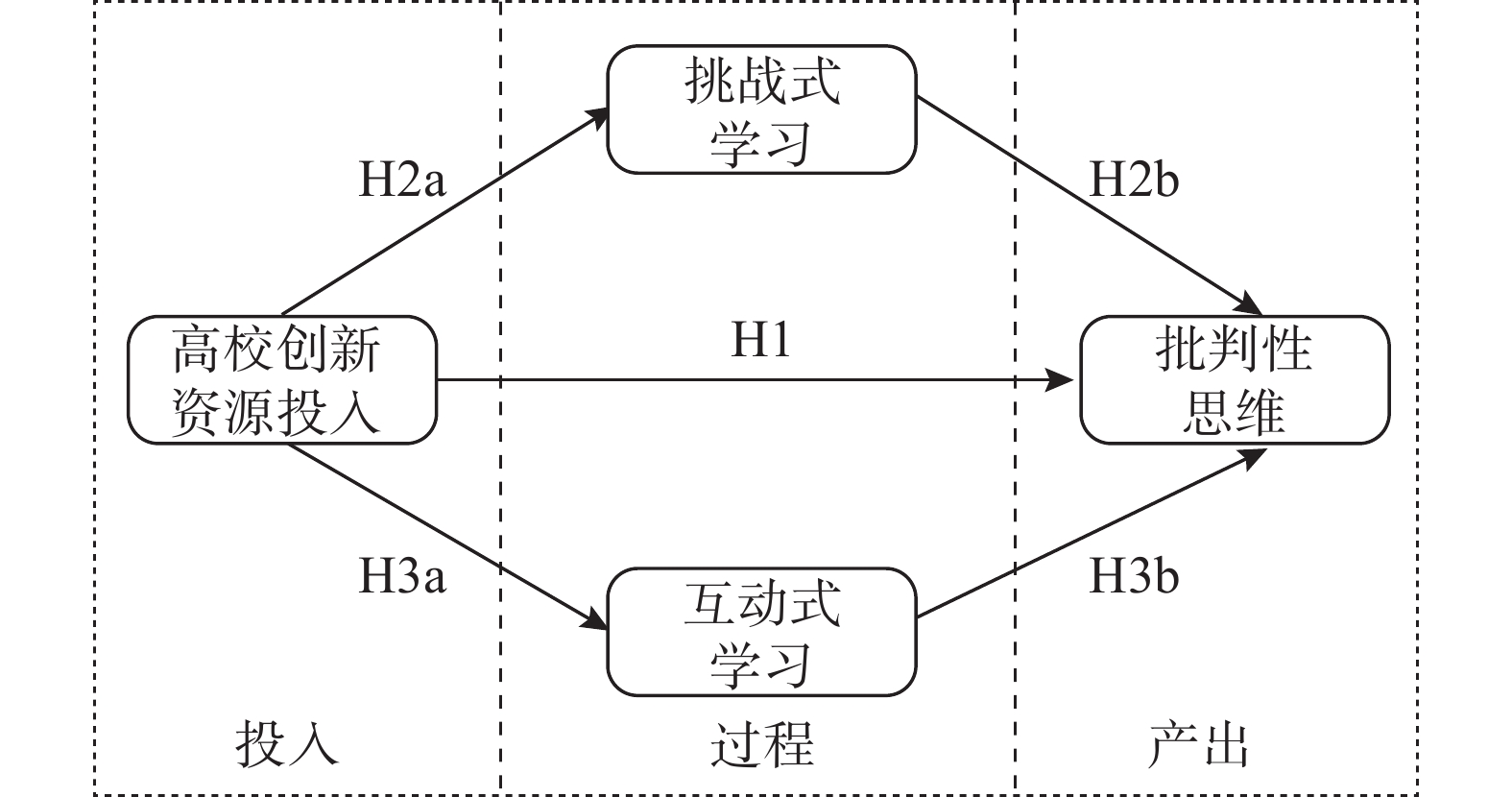
| 挑战式学习 | CBL1多数老师经常要求我演示课堂中的专业概念在实际问题中的应用 |
| CBL2多数老师经常会引导我质疑课程中的基本观点 | |
| CBL3多数老师经常会在课堂中进一步追问我的想法 | |
| CBL4多数老师经常会在课堂上引导我用新思路去解决问题 | |
| 互动式学习 | IL1课堂外,老师与我的互动对我的个人成长、态度和价值观产生了积极影响 |
| IL2课堂外,老师与我的互动对我的学业志向和兴趣产生了积极影响 | |
| IL3课堂外,我至少与一位任课老师交流频繁 | |
| 批判性思维 | CT1我会在决策前收集适量的数据来佐证判断 |
| CT2我会在决策中通过问询来整合信息、完善构思 | |
| CT3我会在决策中审视并调整分析信息的过程 | |
| CT4针对同一问题我会提出多个解决方案 | |
| CT5我明白我的决定会带来哪些结果 | |
| CT6我会经常对自己的工作进行评估反馈 | |
| CT7我会尝试扩展我所在专业领域的知识 | |
| CT8在明确如何解决问题后,我一定会执行解决方案 | |
| CT9我能有条理地组织好有价值的信息 | |
| CT10如果我的工作中有任何不足,我会尽力改进 | |
| CT11我知悉我的行为对他人的影响 | |
| CT12我能对所获得的信息进行深入思考和分析 |
"
"
| 变量 | 题项 | 均值 | Variance Inflation Factor (VIF) 方差膨胀因子 | Factor Loading 因子载荷数 | Composite Reliability (CR) 组合信度 | Cronbach’s Alpha (CA) 克朗巴哈α系数 | Average Variance Extracted (AVE) 平均变异萃取量 |
| 高校创新 资源投入 | UI1 | 4.04 | 2.890 | 0.851 | 0.943 | 0.924 | 0.767 |
| UI2 | 4.17 | 3.827 | 0.896 | ||||
| UI3 | 4.29 | 3.084 | 0.882 | ||||
| UI4 | 4.27 | 3.505 | 0.877 | ||||
| UI5 | 4.33 | 3.479 | 0.873 | ||||
| 挑战式 学习 | CBL1 | 3.98 | 2.134 | 0.849 | 0.924 | 0.890 | 0.752 |
| CBL2 | 3.77 | 2.050 | 0.818 | ||||
| CBL3 | 3.96 | 3.187 | 0.906 | ||||
| CBL4 | 4.10 | 2.802 | 0.893 | ||||
| 互动式 学习 | IL1 | 4.13 | 3.599 | 0.926 | 0.919 | 0.868 | 0.793 |
| IL2 | 4.11 | 3.750 | 0.934 | ||||
| IL3 | 3.72 | 1.668 | 0.806 | ||||
| 批判性 思维 | CT1 | 4.17 | 4.738 | 0.877 | 0.973 | 0.970 | 0.750 |
| CT2 | 4.17 | 4.777 | 0.882 | ||||
| CT3 | 4.16 | 4.958 | 0.888 | ||||
| CT4 | 4.06 | 3.458 | 0.855 | ||||
| CT5 | 4.12 | 3.575 | 0.864 | ||||
| CT6 | 4.11 | 3.638 | 0.868 | ||||
| CT7 | 4.16 | 3.481 | 0.864 | ||||
| CT8 | 4.12 | 3.491 | 0.859 | ||||
| CT9 | 4.12 | 3.897 | 0.875 | ||||
| CT10 | 4.25 | 3.434 | 0.850 | ||||
| CT11 | 4.14 | 3.214 | 0.838 | ||||
| CT12 | 4.15 | 3.860 | 0.868 |
"
| 挑战式学习 | 互动式学习 | 批判性思维 | 高校创新资源投入 | |
| 挑战式学习 | 0.867 | |||
| 互动式学习 | 0.776 | 0.890 | ||
| 批判性思维 | 0.562 | 0.607 | 0.866 | |
| 高校创新资源投入 | 0.625 | 0.640 | 0.683 | 0.876 |
"
| 变量 | 均值 | 标准差 | 均值 | 标准差 | ||
| 男 | 女 | |||||
| CBL | 3.93 | 0.87 | 3.97 | 0.79 | ||
| IL | 4.01 | 0.90 | 3.98 | 0.83 | ||
| UI | 4.21 | 0.77 | 4.23 | 0.71 | ||
| CT | 4.16 | 0.72 | 4.13 | 0.69 | ||
| “双一流”高校 | 公办普通本科院校 | |||||
| CBL | 3.97 | 0.83 | 3.94 | 0.82 | ||
| IL | 4.03 | 0.86 | 3.97 | 0.86 | ||
| UI | 4.34 | 0.68 | 4.17 | 0.75 | ||
| CT | 4.24 | 0.66 | 4.11 | 0.71 | ||
| 二年级 | 三年级 | 四年级 | ||||
| CBL | 3.96 | 0.83 | 3.96 | 0.82 | 3.91 | 0.82 |
| IL | 3.97 | 0.86 | 3.99 | 0.86 | 4.06 | 0.85 |
| UI | 4.24 | 0.73 | 4.20 | 0.74 | 4.22 | 0.73 |
| CT | 4.14 | 0.70 | 4.14 | 0.70 | 4.18 | 0.69 |
"
| 变量 | 类别 | 频数 | 平均值 | 标准差 | 检验统计量(T/F) |
| 性别 | 男 | 4.16 | 0.72 | 4.645***(T) | |
| 女 | 4.13 | 0.69 | |||
| 学校类型 | “双一流”高校 | 4.24 | 0.66 | 19.961***(T) | |
| 公办普通本科院校 | 4.11 | 0.71 | |||
| 年级 | 二年级 | 4.14 | 0.70 | 12.556***(F) | |
| 三年级 | 4.14 | 0.70 | |||
| 四年级 | 4.18 | 0.69 |
"
| 变量 | 年级 | 年级 | 平均值差值 | 标准 误差 | 显著性 | 95% 置信区间 | |
| 下限 | 上限 | ||||||
| 大学生批判性思维 | 二年级 | 三年级 | 0.003 | 0.007 | 0.678 | −0.011 | 0.016 |
| 四年级 | −0.043 | 0.009 | <0.001 | −0.061 | −0.025 | ||
| 三年级 | 二年级 | −0.003 | 0.007 | 0.678 | −0.016 | 0.011 | |
| 四年级 | −0.046 | 0.010 | <0.001 | −0.065 | −0.027 | ||
| 四年级 | 二年级 | 0.043 | 0.009 | <0.001 | 0.025 | 0.061 | |
| 三年级 | 0.046 | 0.010 | <0.001 | 0.027 | 0.065 | ||
"
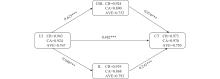
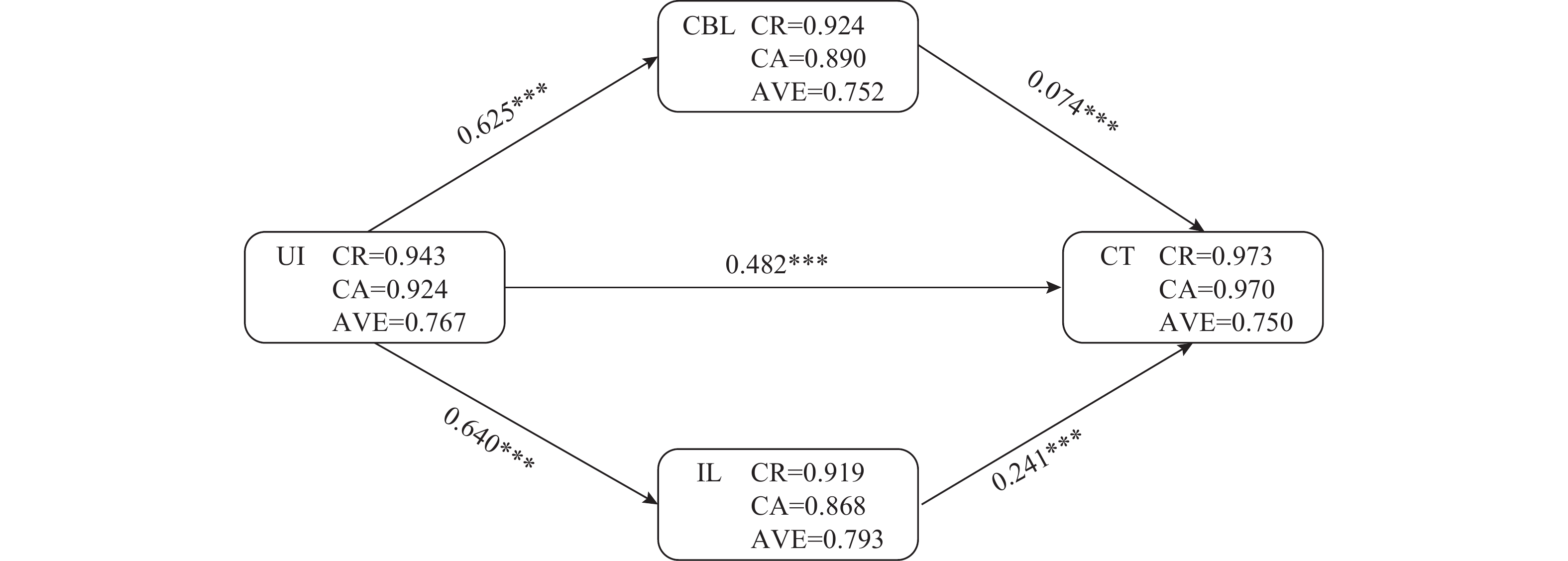
| 路径类型 | 具体路径 | 标准化系数(β) | T统计量 (|O/STDEV|) |
| 路径系数 | CBL -> CT | 0.074 | 12.494*** |
| IL -> CT | 0.241 | 39.328*** | |
| UI -> CBL | 0.625 | 180.123*** | |
| UI -> CT | 0.482 | 89.276*** | |
| UI -> IL | 0.640 | 184.698*** | |
| 总间接效应 | UI -> CT | 0.200 | 53.920*** |
| 特定间接效应 | UI -> IL -> CT | 0.154 | 38.801*** |
| UI -> CBL -> CT | 0.046 | 12.515*** |
"
| 陈鹏, 黄荣怀, 年智英. (2021). 面向创新人才培养的大学“金课”实践研究: 设计思维视角. 中国电化教育, (02), 75- 82. | |
| 陈廷柱. (2021). 建设高质量的服务全民终身学习体系. 教育发展研究, 41 (17), 3- 3. | |
| 陈振华. (2014). 批判性思维培养的模式之争及其启示. 高等教育研究, (09), 56- 63. | |
| 董毓. (2017). 批判性思维的探究本质和对创新的作用. 工业和信息化教育, (05), 27- 36. | |
| 范福兰, 雷雪英, 王建书, 王思雨, 麦迪努尔·买合木提. (2024). 基于张量表示的大学生批判性思维多模态测评. 现代远程教育研究, (04), 104- 112. | |
| 冯向东. (2023). 批判性思维教育融入大学创新型人才培养的机理、理念和路径. 高等教育研究, 44 (10), 57- 63. | |
| 高江勇. (2020). 高质量本科教学的发生——为何需要及何以实现互动式教学. 高等教育研究, 41 (01), 84- 90. | |
| 谷羽, 刘芝庆, 谷木荣. (2021). 以辩论游戏提升大学生批判性思维能力——以新闻传播学课堂实践为例. 高教发展与评估, (02), 105- 114+120. | |
| 郭建鹏, 杨凌燕, 史秋衡. (2013). 大学生课堂体验对学习方式影响的实证研究——基于多水平分析的结果. 教育研究, 34 (02), 111- 119. | |
| 郭建如, 邓峰. (2020). 高校人才培养改革对大学生创新能力的影响. 高等教育研究, 41 (07), 70- 77. | |
| 洪玫, 严斌宇, 余静. (2022). 面向学生能力培养的课程教学设计——以软件工程专业为例. 中国大学教学, (07), 39- 44. | |
| 黄福涛. (2024). 创新人才培养与研究型教育模式论略. 高等教育研究, (05), 54- 63. | |
| 黄兆信, 谢海霞. (2024). 科技自立自强背景下我国高校创新体系构建的八大关系——基于深度访谈的分析. 教育发展研究, (21), 9- 16. | |
| 简成熙. (2021). 证成批判思维——兼回应批判思维只适用自由社会吗. 华东师范大学学报(教育科学版), (01), 78- 93. | |
| 焦豪, 张睿, 马高雅. (2022). 国外创新生态系统研究评述与展望. 北京交通大学学报(社会科学版), (04), 100- 112. | |
| 李立国, 田浩然. (2024). 城市群高等教育资源配置优化与世界重要人才中心和创新高地建设. 高等教育研究, (02), 1- 12. | |
| 李曼丽, 苏芃, 吴凡, 张晓蕾. (2019). “基础学科拔尖学生培养计划”的培养与成效研究. 清华大学教育研究, (01), 31- 39+96. | |
| 李曼丽, 王金羽, 郑泉水, 徐芦平. (2022). 新时期本科教育拔尖创新人才培养模式探索——一项关于清华“钱班”12年试点的质性研究. 华东师范大学学报(教育科学版), (08), 31- 43. | |
| 李木洲, 曾思鑫. (2024). 新高考背景下高中教师适应性模型研究——以个人-环境匹配理论为视角. 华东师范大学学报(教育科学版), 42 (03), 26- 37. | |
| 李宁. (2024). 生成式人工智能驱动教育变革的路径探索. 教育科学研究, (12), 5- 11. | |
| 李瑞春. (2023). “挑战式教学”视域下的“西方文艺理论”教学. 中国大学教学, (06), 21- 27. | |
| 李硕豪. (2019). 教学方式与“拔尖计划”学生学习能力发展的相关分析. 国家教育行政学院学报, (08), 66- 72. | |
| 李伟, 李品林, 姜孟雪. (2022). 高校辅导员参与批判性思维教育的价值意蕴、实践逻辑与行动路向. 高等教育研究, (05), 86- 93. | |
| 李文平, 沈红. (2020). 学习性投入能带来批判性思维能力增值吗?——来自“2016全国本科生能力测评”的证据. 复旦教育论坛, (04), 64- 71. | |
| 李一飞, 史静寰. (2014). 生师互动对大学生教育收获和教育满意度的影响. 教育学术月刊, (08), 71- 79. | |
| 林崇德. (2024). 探索创新心智规律促进创新人才发展. 教育研究, (08), 4- 14. | |
| 林健. (2020). 面向“六卓越一拔尖”人才培养的挑战性学习. 清华大学教育研究, (02), 45- 58. | |
| 刘振天, 李婧芸. (2023). 论批判性思维的特性及高校教学因应策略. 北京大学教育评论, 21 (04), 160- 175. | |
| 马莉萍, 冯沁雪. (2022). 本科生批判性思维能力及高影响力教育实践的影响——基于某所“双一流”建设高校的实证研究. 中国高教研究, (05), 72- 79. | |
| 戚佳, 徐艳茹, 刘继安, 等. (2024). 生成式人工智能工具使用对高校学生批判性思维与自主学习能力的影响. 电化教育研究, 45 (12), 67- 74. | |
| 秦西玲, 吕林海. (2022). 拔尖学生的学习参与及其批判性思维发展——基于全国12所“拔尖计划”高校的实证研究. 江苏高教, (01), 73- 82. | |
| 任学柱, 贾玉洁. (2023). 我国高校批判性思维教学的现状、成效及其影响因素——基于20年来全国高校批判性思维教学研究的元分析. 高等教育研究, 44 (10), 64- 76. | |
| 任永功, 贾佳, 多召军. (2022). 批判性思维测评的核心要素与技术演变趋势. 现代教育技术, 32 (06), 81- 88. | |
| 沈霞娟, 胡航, 张宝辉, 等. (2021). 大学生批判性思维与学习方式的发展现状及关系探究. 现代教育技术, 31 (02), 48- 57. | |
| 史秋衡, 孙昕妍. (2024). 大学生学习方式的理实之路——基于“国家大学生学情调查”(NCSS)追踪研究. 教育科学, 40 (02), 1- 8. | |
| 苏华. (2019). 工程基础课程批判性思维培养的探析. 高等工程教育研究, (02), 98- 104. | |
| 眭依凡, 王雅. (2024). 中国式现代化背景下高等教育治理现代化的紧迫性及其大学行动. 中国高教研究, (11), 4- 9+60. | |
| 田社平, 王力娟, 邱意弘. (2018). 问题式教学法对工科大学生批判性思维倾向影响的实证研究. 高等工程教育研究, (06), 156- 160. | |
| 谢晓宇, 赵文霞. (2024). 世界一流大学本科生批判性思维培养研究——以斯坦福大学为例. 外国教育研究, 51 (10), 75- 85. | |
| 谢晓宇. (2024). 思维的版图: 东西方学生批判性思维的差异分析. 现代大学教育, (01), 43- 49. | |
| 许敏, 余灵, 王慧敏. (2023). 高校科技创新绩效的驱动因素与提升路径研究——基于中国28个省(区、市)的模糊集定性比较分析. 科技管理研究, (03), 96- 103. | |
| 阎光才. (2023). 高校有组织科研与科学英才的独特作用——兼及拔尖创新人才的培育议题. 高等教育研究, 44 (02), 10- 19. | |
| 袁建林, 张亮亮. (2020). 教育教学中的互动何以影响大学生能力发展——院校归属感的中介作用分析. 大学教育科学, (04), 105- 112. | |
| 张留华. (2021). 批判性思维教育的一个议题: 教人论证, 还是教人探究?——罗素、杜威和图尔敏. 华东师范大学学报(教育科学版), (06), 71- 81. | |
| 张学文. (2019). “更高水平的人才培养体系”需要怎样的质量评价观?——基于排行性评价视角的哲学省思. 华东师范大学学报(教育科学版), 37 (04), 84- 93. | |
| 张应强, 张怡乐. (2023). 我国本科教育人才培养目标的历史演进及其基本特征——基于政策文本的分析. 江苏高教, (10), 13- 21. | |
| 张应强. (2022). 中国高校教师评价理念的反思与改革. 高等教育评论, 10 (02), 20- 32. | |
| 赵必华. (2018). 生师互动何以影响大学生学习结果——学业挑战性与学校归属感的中介效应. 中国高教研究, (03), 61- 67. | |
| 钟秉林, 南晓鹏. (2021). 后疫情时代我国高等教育发展的宏观思考. 教育研究, 42 (05), 108- 116. | |
| 郑兰琴, 高蕾, 黄梓宸. (2024). 基于生成式人工智能技术的对话机器人能促进在线协作学习绩效吗?. 电化教育研究, 45 (03), 70- 76+84. | |
| 朱柏铭, 王晓莹. (2020). 以互动式教学培养研究生的怀疑精神. 研究生教育研究, (04), 47- 52. | |
| 朱永新, 约翰·库奇. (2020). 技术如何释放终身学习者的潜能?——朱永新与约翰·库奇关于未来教育与学习升级的对话. 华东师范大学学报(教育科学版), 38 (03), 1- 15. | |
| Anggraeni, D. M., Prahani, B. K., Suprapto, N., Shofiyah, N., & Jatmiko, B. (2023). Systematic review of problem-based learning research in fostering critical thinking skills. Thinking Skills and Creativity, 49, 101334. | |
| Bamford, J., Moschini, E. Co-creation of connected and relational learning spaces: a digital and gamified approach in higher education. Higher Education Research & Development, 2025, 44(1), 205—221. | |
| Bock, C., Dilmetz, D, Selznick, B. S. (2021). et al. How the university ecosystem shapes the innovation capacities of undergraduate students–evidence from Germany. Industry and Innovation, 28 (3), 307- 342. | |
| Buehl, D. (2023). Classroom strategies for interactive learning. Routledge. | |
| Cai, C., Zhu, G., Ma, M. (2024). A systemic review of AI for interdisciplinary learning: Application contexts, roles, and influences. Education and Information Technologies, 1—47. | |
| Cai, W., & Sankaran, G. (2015). Promoting critical thinking through an interdisciplinary study abroad program. Journal of International Students, 5 (1), 38- 49. | |
| Dobransky, N. D, Frymier, A. B. (2004). Developing teacher‐student relationships through out of class communication. Communication Quarterly, 52 (3), 211- 223. | |
| Dwyer, C. P, Hogan, M. J., Stewart, I. (2014). An integrated critical thinking framework for the 21st century. Thinking Skills and Creativity, 12, 43- 52. | |
| Elhay, A. A. Hershkovitz, A. (2019). Teachers’ perceptions of out-of-class communication, teacher-student relationship, and classroom environment. Education and Information Technologies, 24, 385- 406. | |
| Ennis, R H. (1987). Critical thinking and the curriculum. Thinking skills instruction: Concepts and techniques, 40- 48. | |
| . (1987). . 40- 48. | |
| Fan, K. (2024). Can the infusion teaching of critical thinking improve Chinese secondary students’ critical thinking and academic attainment? Findings from a randomised controlled trial. Thinking Skills and Creativity, 53, 101597. | |
| Fan, K., See, B. H. (2022). How do Chinese students’ critical thinking compare with other students? A structured review of the existing evidence. Thinking Skills and Creativity, 46, 101145. | |
| . (2022). . 46, 101145. | |
| Fornell, C., & Larcker, D. F. (1981). Evaluating structural equation models with unobservable variables and measurement error. Journal of Marketing Research, 18 (1), 39- 50. | |
| Gallagher, S. E., & Savage, T. (2023). Challenge-based learning in higher education: An exploratory literature review. Teaching in Higher Education, 28 (6), 1135- 1157. | |
| Hair, J. F., Hult, G. T. M., Ringle, C. M., et al. (2017). Mirror, mirror on the wall: a comparative evaluation of composite-based structural equation modeling methods. Journal of the academy of marketing science, 45, 616- 632. | |
| Hair, J. F., Howard, M. C., & Nitzl, C. (2020). Assessing measurement model quality in PLS-SEM using confirmatory composite analysis. Journal of Business Research, 109, 101- 110. | |
| Hou, H. T., Sung, Y. T., Chang, K. E. (2009). Exploring the behavioral patterns of an online knowledge-sharing discussion activity among teachers with problem-solving strategy. Teaching and Teacher Education, 25 (1), 101- 108. | |
| Kager, K., Jurczok, A., Bolli, S., et al. (2022). “We were thinking too much like adults”: Examining the development of teachers’ critical and collaborative reflection in lesson study discussions. Teaching and Teacher Education, 113, 103683. | |
| Kristof-Brown, A., & Guay, R. P. (2011). Person–environment fit. Journal of Business and Psychology, 25 (1), 45- 56. | |
| Lamnina, M., Chase, C. C. (2019). Developing a thirst for knowledge: How uncertainty in the classroom influences curiosity, affect, learning, and transfer. Contemporary Educational Psychology, 59, 101785. | |
| Laosirihongthong, T., Prajogo, D. I., & Adebanjo, D. (2014). The relationships between firm’s strategy, resources and innovation performance: Resources-based view perspective. Production Planning & Control, 25 (15), 1231- 1246. | |
| Loyalka, P., Liu, O. L., Li, G., Kardanova, E., Chirikov, I. et al. (2021). Skill levels and gains in university STEM education in China, India, Russia and the United States. Nature Human Behaviour, 5 (7), 892- 904. | |
| Mayhew, M. J., Rockenbach, A. N., Bowman, N. A., Seifert, T. A., & Wolniak, G. C. (2016). How college affects students: 21st century evidence that higher education works (Vol. 1). John Wiley & Sons. | |
| Mayhew, M. J., Simonoff, J. S., Baumol, W. J., et al. (2012). Exploring innovative entrepreneurship and its ties to higher educational experiences. Research in Higher Education, 53 (8), 831- 859. | |
| Membrillo-Hernández, J. J., Ramírez-Cadena, M., Martínez-Acosta, M., et al. (2019). Challenge based learning: the importance of world-leading companies as training partners. International Journal on Interactive Design and Manufacturing (IJIDeM), 13, 1103- 1113. | |
| Neter, J., Johnson, J. R., & Leitch, R. A. (1985). Characteristics of dollar-unit taints and error rates in accounts receivable and inventory. Accounting Review, 60 (03), 488- 499. | |
| Parmaxi, A. (2023). Virtual reality in language learning: A systematic review and implications for research and practice. Interactive Learning Environments, 31 (1), 172- 184. | |
| Qureshi, M. A., Khaskheli, A., Qureshi, J. A., Raza, S. A., & Yousufi, S. Q. (2023). Factors affecting students’ learning performance through collaborative learning and engagement. Interactive Learning Environments, 31 (4), 2371- 2391. | |
| Semerci, N. (2016). The development of critical thinking disposition scale (CTHD): Study on the revision of validity and reliability. Turkish Studies, 11 (9), 725- 740. | |
| Siegel, H. (1988). Educating reason: Rationality, critical thinking, and education. New York: Routledge. | |
| Suriano. R, , Plebe, A., Acciai, A., et al. (2025). Student interaction with ChatGPT can promote complex critical thinking skills. Learning and Instruction, 95, 102011. | |
| Tinto, V. (2012). Leaving college: Rethinking the causes and cures of student attrition. University of Chicago Press. | |
| Van den Beemt, A., van de Watering, G., Bots, M. (2023) Conceptualising variety in challenge-based learning in higher education: The CBL-compass. European Journal of Engineering Education, 48(1), 24—41. | |
| Wang, Q., Woo, H. L., & Zhao, J. (2009). Investigating critical thinking and knowledge construction in an interactive learning environment. Interactive Learning Environments, 17 (1), 95- 104. | |
| Wang, X., Sun, X., Huang, T., He, R., Hao, W., & Zhang, L. (2019). Development and validation of the critical thinking disposition inventory for Chinese medical college students (CTDI-M). BMC Medical Education, 19, 1- 14. | |
| Xie, Y., Huang, Y., Luo, W., et al. (2023). Design and effects of the teacher-student interaction model in the online learning spaces. Journal of Computing in Higher Education, 35 (1), 69- 90. | |
| Zomer, T. T. S., Neely, A., & Martinez, V. (2020). Digital transforming capability and performance: A microfoundational perspective. International Journal of Operations & Production Management, 40 (7-8), 1095- 1128. |
| [1] | Liuhua Zhang. An Issue of Teaching Critical Thinking: Argument or Inquiry?Insights from Russell, Dewey and Toulmin [J]. Journal of East China Normal University(Educational Sciences), 2021, 39(6): 71-81. |
| [2] | Cheng-Hsi Chen. Justification of Critical Thinking: A Response to Whether Critical Thinking Only Applies to Free Society? [J]. Journal of East China Normal University(Educational Sciences), 2021, 39(1): 78-93. |
| [3] | Andreas Schleicher. Educating Students for Their Future, Rather than Our Past [J]. Journal of East China Normal University(Educational Sciences), 2020, 38(5): 1-21. |
| [4] | Ma Lihong, Wei Rui, Liu Jian, Ma Mingyan, Liu Yan, Gan Qiuling, Kang Cuiping, Xu Guanxing. Critical Thinking: Part II of the 5Cs Framework for Twenty-first Century Key Competences [J]. Journal of East China Normal University(Educational Sciences), 2020, 38(2): 45-56. |
| Viewed | ||||||
|
Full text |
|
|||||
|
Abstract |
|
|||||
