
 中国人文社会科学核心期刊
Journal of East China Normal University(Educationa ›› 2026, Vol. 44 ›› Issue (2): 32-42.doi: 10.16382/j.cnki.1000-5560.2026.02.002
Previous Articles Next Articles
Ji Liu1, Lin Qiu2
Accepted:2025-08-29
Online:2026-02-01
Published:2026-01-26
Ji Liu, Lin Qiu. Evolutionary Conformity of World Education, Technology and Talent Centers: A Cohort Analysis of 200, 000 Scientists[J]. Journal of East China Normal University(Educationa, 2026, 44(2): 32-42.
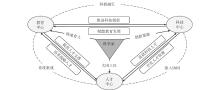
"
"
| 变量 | 均值 | 标准差 | 最大值 | 最小值 | 国家或地区数 |
| 人均GDP(万美元) | 9.135 | 1.517 | 12.392 | 5.557 | 168 |
| 教育指数(分) | 6.060 | 0.139 | 6.355 | 5.728 | 168 |
| 科技指数(分) | 3.438 | 0.370 | 4.214 | 2.526 | 168 |
| 人才指数(分) | 4.623 | 2.785 | 12.571 | 1.048 | 168 |
| 人口增长率(%) | 0.819 | 1.767 | 3.687 | −14.257 | 168 |
"
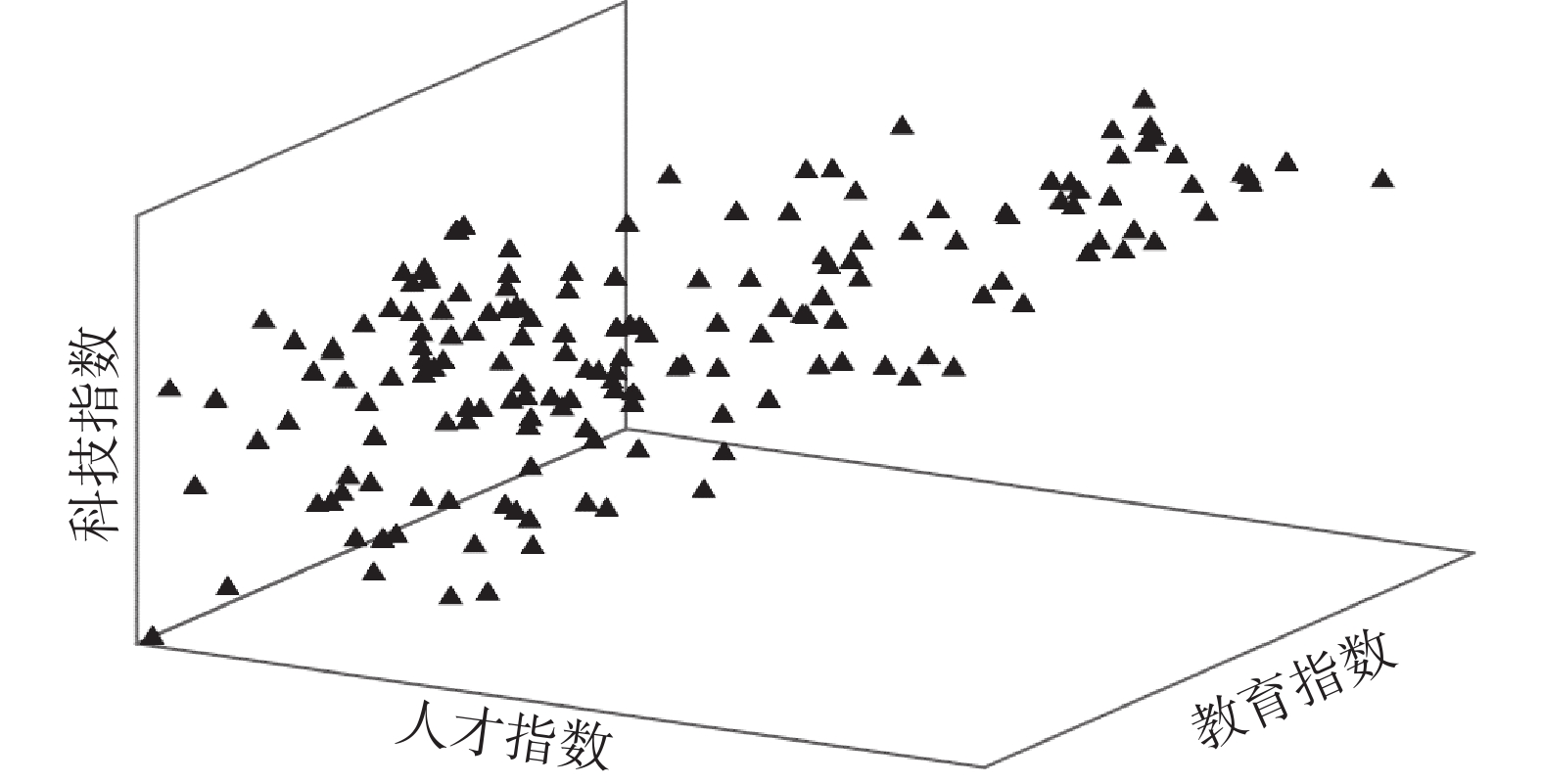
"
| 变量 | 主成分 特征值 | 方差 贡献率 | 累计方差 贡献率 | 主成分权重 |
| 教育指数 | 0.527 | 10.56% | 10.56% | 11.92% |
| 科技指数 | 0.881 | 17.63% | 28.19% | 19.90% |
| 人才指数 | 3.018 | 60.38% | 88.57% | 68.18% |
| 人均GDP | 0.311 | 6.22% | 94.79% | - |
| 人口增长率 | 0.261 | 5.21% | 100% | - |
"
| 因变量 | 人均GDP | 科技指数 | 教育指数 | |||
| 模型 | (1) | (2) | (3) | (4) | (5) | (6) |
| 滞后1期 | 滞后1期 | 滞后1期 | ||||
| 人才指数 | 0.041** | 0.038** | 0.054*** | 0.050*** | 0.013*** | 0.011*** |
| (0.016) | (0.017) | (0.007) | (0.008) | (0.002) | (0.003) | |
| 收入水平 | √ | √ | √ | √ | √ | √ |
| 地理特征 | √ | √ | √ | √ | √ | √ |
| 人口特征 | √ | √ | √ | √ | √ | √ |
| 常数项 | 7.877*** | 7.856*** | 3.156*** | 3.135*** | 5.987*** | 5.985*** |
| (0.157) | (0.160) | (0.068) | (0.073) | (0.027) | (0.028) | |
| 样本量 | 168 | 168 | 168 | 168 | 168 | 168 |
| R2 | 0.890 | 0.889 | 0.634 | 0.615 | 0.599 | 0.587 |
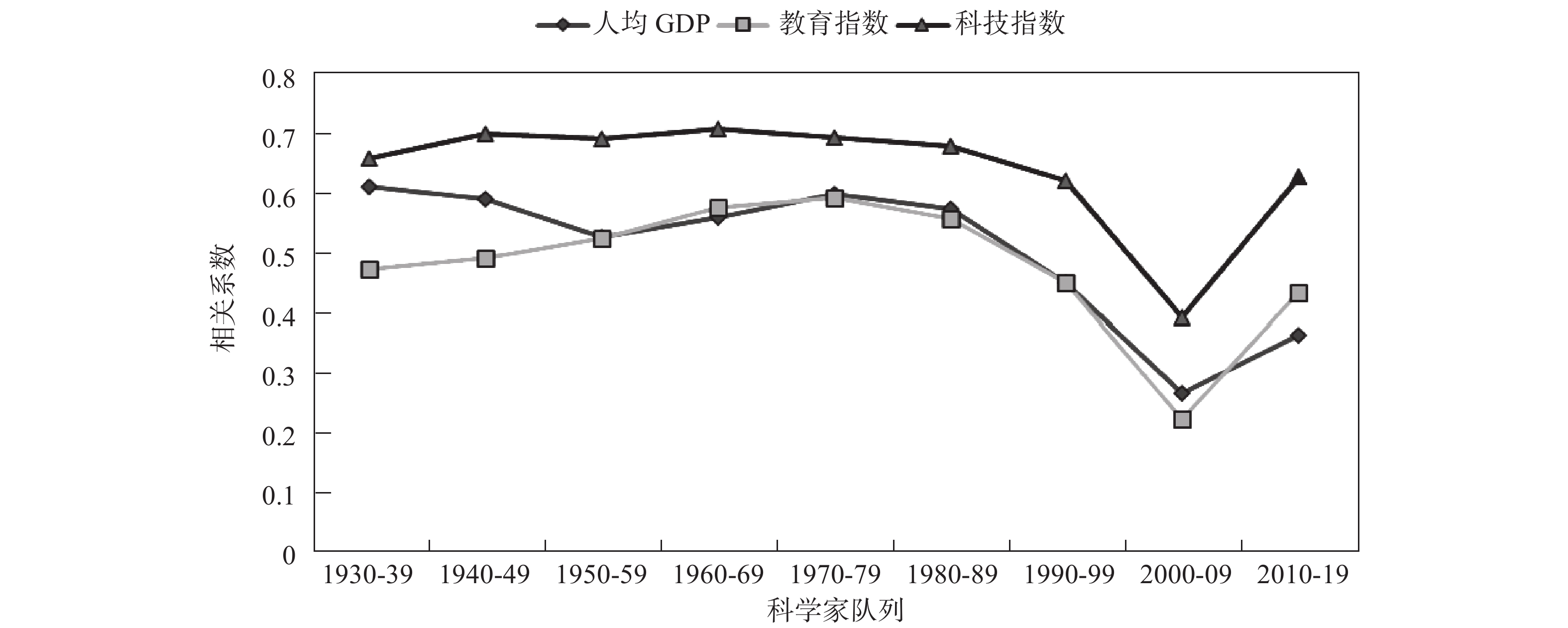
"
"
| 高书国. (2023). 世界教育强国的形成与发展——以英、法、德、美为例. 教育研究, 44 (02), 15- 29. | |
| 侯纯光, 杜德斌, 覃雄合, 李祺祥. (2025). 全球顶尖科学家跨国流动与世界科学中心的时空格局演化——基于诺贝尔自然科学类获奖者的分析. 地理研究, 44 (02), 321- 341. | |
| 黄宝印, 陈建伟. (2025). 建设具有全球影响力的重要教育中心: 演进逻辑与实践路径. 教育研究, 46 (02), 15- 26. | |
| 李立国. (2023). 以人才培养结构优化助力高等教育强国建设. 高等教育研究, 44 (03), 8- 15. | |
| 祁占勇, 桑晓鑫. (2024). 世界教育中心的变迁与中国教育强国建设的战略选择. 云南师范大学学报(哲学社会科学版), 56 (05), 104- 114. | |
| 宋永辉, 袁蕾涵, 李春东, 马廷灿, 岳名亮. (2023). 中国卓越青年科学家成长特征与科研产出规律研究——来自“科学探索奖”获得者的证据. 科学管理研究, 41 (04), 105- 116. | |
| 田浩然, 李立国. (2024). 高等教育集聚布局及其对区域创新的影响——基于中美数据的实证研究. 教育研究, 45 (07), 92- 107. | |
| 阎光才. (2024). 学校教育与创新人才培养——基于心智结构的视角. 教育研究, 45 (01), 52- 66. | |
| 约瑟夫·本·戴维. (1988). 科学家在社会中的角色. 成都: 四川人民出版社. | |
| 周洪宇, 李宇阳. (2024). 中国成为世界重要教育中心: 何以必要、何以可能与何以可为. 新疆师范大学学报(哲学社会科学版), 45 (01), 127- 138. | |
| 朱晶, 姜雪峰. (2024). 科学教育中科学家的角色与功能. 华东师范大学学报(教育科学版), 42 (08), 50- 63. | |
| Alvarez, M., & Royuela, V. (2022). The effect of labor‐market differentials on interregional migration in Spain: A meta‐regression analysis. Journal of Regional Science, 62 (4), 913- 937. | |
| Angrist, N., et al. (2021). Measuring human capital using global learning data. Nature, 592 (7854), 403- 408. | |
| Ben—David, J. (1970). The rise and decline of France as a scientific centre. Minerva, 8(2), 160—179. | |
| Ben—David, J. (1980). US science in international perspective. Scientometrics, 2 (5-6), 411- 421. | |
| Bernal, J. D. (1954). Science in History(Volume4): The Social Sciences: Conclusion. Middlesex: Penguin Books. | |
| Bozeman, B., &Corley, E. (2004). Scientists’collaboration strategies: Implications for scientific and technical human capital. Research Policy, 33 (4), 599- 616. | |
| Bozeman, B., Dietz, J. S., &Gaughan, M. (2001). Scientific and technical human capital: An alternative model for research evaluation. International Journal of Technology Management, 22 (7-8), 716- 740. | |
| Brown, P. , Green, A. , &Lauder, H. (2001). High Skills: Globalization, Competitiveness, and Skill Formation. Oxford: Oxford University Press. | |
| Castells, M. &Hall, P. (1994). Technopoles of the World: The Making of 21st Century Industrial Complexes. London: Routledge. | |
| Cunha, F., Heckman, J. J., Lochner, L., &Masterov, D. V. (2006). Interpreting the evidence on life cycle skill formation. Handbook of the Economics of Education, 1, 697- 812. | |
| Franck, E., &Nüesch, S. (2010). The effect of talent disparity on team productivity in soccer. Journal of Economic Psychology, 31 (2), 218- 229. | |
| Glennon, B. (2024). Skilled immigrants, firms, and the global geography of innovation. Journal of Economic Perspectives, 38 (1), 3- 26. | |
| Hanushek, E. A., &Woessmann, L. (2008). The role of cognitive skills in economic development. Journal of Economic Literature, 46 (3), 607- 668. | |
| Hirsch, J. E. (2005). An index to quantify an individual's scientific research output. Proceedings of the National Academy of Sciences, 102 (46), 16569- 16572. | |
| Ioannidis, J. P., Klavans, R., &Boyack, K. W. (2016). Multiple citation indicators and their composite across scientific disciplines. PLoS Biology, 14 (7), e1002501. | |
| Jones, C. I., & Romer, P. M. (2010). The new Kaldor facts: ideas, institutions, population, and human capital. American Economic Journal: Macroeconomics, 2 (1), 224- 245. | |
| Jöns, H. (2015). Talent mobility and the shifting geographies of Latourian knowledge hubs. Population, Space and Place, 21(4), 372—389. | |
| Knight, J. (2011). Education hubs: A fad, a brand, an innovation?. Journal of Studies in International Education, 15 (3), 221- 240. | |
| Knight, J. (2022). Knowledge Diplomacy in International Relations and Higher Education. Cham: Springer. | |
| Lee, C., Park, G., &Kang, J. (2018). The impact of convergence between science and technology on innovation. Journal of Technology Transfer, 43 (2), 522- 544. | |
| Luo, Y., & Van Assche, A. (2023). The rise of techno-geopolitical uncertainty: Implications of the United States CHIPS and Science Act. Journal of International Business Studies, 54(8), 1423—1440. | |
| Lippi, G., &Mattiuzzi, C. (2017). Scientist impact factor(SIF): A new metric for improving scientists’ evaluation?. Annals of Translational Medicine, 5 (15), 303. | |
| Makkonen, T., &vanderHave, R. P. (2013). Benchmarking regional innovative performance: Composite measures and direct innovation counts. Scientometrics, 94 (1), 247- 262. | |
| Moak, K. (2017). Developed Nations and the Economic Impact of Globalization. London: Palgrave Macmillan. | |
| Okabe, A., Satoh, T., &Sugihara, K. (2009). A kernel density estimation method for networks, its computational method and a GIS—based tool. International Journal of Geographical Information Science, 23 (1), 7- 32. | |
| Peri, G. (2005). Determinants of knowledge flows and their effect on innovation. Review of Economics and Statistics, 87 (2), 308- 322. | |
| Phillipson, S. N. , Stoeger, H. , &Ziegler, A. (2013). Exceptionality in East Asia. London: Routledge. | |
| Pritchett, L. (2001). Where has all the education gone?. The World Bank Economic Review, 15 (3), 367- 391. | |
| Schreiber, M. (2008). A modification of the h—index: The hm—index accounts for multi—authored manuscripts. Journal of Informetrics, 2 (3), 211- 216. | |
| Schultz, T. W. (1961). Investment in human capital. American Economic Review, 51 (1), 1- 17. | |
| Shantal, M., Othman, Z., &Bakar, A. A. (2023). A novel approach for data feature weighting using correlation coefficients and min–max normalization. Symmetry, 15 (12), 2185. | |
| Trippl, M. (2013). Scientific mobility and knowledge transfer at the interregional and intraregional level. Regional Studies, 47 (10), 1653- 1667. | |
| Welter, F. &Urbano, D. (2020). How to Make your Doctoral Research Relevant. Northampton: Edward Elgar Publishing. | |
| Zuckerman, H. (1977). Scientific Elite: Nobel Laureates in the United States. New York: The Free Press. |
| [1] | Mei Li, Wenjie Ruan. Global Mobility of Scientists in the Era of Big Science:A Content Analysis on the Selected Articles in Web of Sciences’ Journals [J]. Journal of East China Normal University(Educationa, 2025, 43(8): 51-65. |
| [2] | Zhichen Xia, Fan Yang. Big Science and the Role of University Scientists :Take SLAC National Accelerator Laboratory as an Example [J]. Journal of East China Normal University(Educationa, 2025, 43(8): 105-117. |
| [3] | Yan Cao, Kailin Wu, Lan Yang. A Study of Organizational Structures for Interdisciplinary Talent Cultivation: Theoretical Construction and Empirical Examination [J]. Journal of East China Normal University(Educationa, 2025, 43(11): 35-47. |
| [4] | Jing Zhu, Xuefeng Jiang. The Roles and Functions of Scientists Engaging in Science Education [J]. Journal of East China Normal University(Educational Sciences), 2024, 42(8): 50-63. |
| [5] | Ting Zhao, Yuting Hu, Dongsheng Xu. Building a Discipline System for Charity Education in China [J]. Journal of East China Normal University(Educational Sciences), 2024, 42(7): 42-52. |
| Viewed | ||||||
|
Full text |
|
|||||
|
Abstract |
|
|||||
