
 中国人文社会科学核心期刊
Journal of East China Normal University(Educationa ›› 2026, Vol. 44 ›› Issue (2): 93-111.doi: 10.16382/j.cnki.1000-5560.2026.02.006
Previous Articles Next Articles
Wei Bao1,2, Chen Zhou3, Changhong Xu2
Online:2026-02-01
Published:2026-01-26
Wei Bao, Chen Zhou, Changhong Xu. The Impact of Graduate Education Choices on College Students’ Future Marriage and Fertility Intentions[J]. Journal of East China Normal University(Educationa, 2026, 44(2): 93-111.
"
| 类型 | 名称 | 指标 | 操作化 | 均值 | 标准差 |
| 因变量 | 婚姻 意愿 | 婚姻意愿 | 有=1,无=0 | 0.832 | 0.374 |
| 预期初婚年龄 | 有序分类变量,预期初婚年龄分为22岁及以下、23—25岁、 26—29岁和30岁及以上4个区间 | 3.036 | 0.569 | ||
| 生育 意愿 | 生育意愿 | 有=1,无=0 | 0.763 | 0.425 | |
| 预期生育子女数 | 计数型变量,预期生育的子女数量 | 1.100 | 0.795 | ||
| 自变量 | 研究生 教育选择 | 本科毕业后 是否读研 | 读研=1(包括国内读研和海外留学),就业=0 (包括就业和创业) | 0.418 | 0.493 |
| 控制 变量 | 个体 特征 | 性别 | 女性=1,男性=0 | 0.438 | 0.496 |
| 家庭社会经济地位 | 家庭经济收入 | 连续变量,学生家庭年收入(万元),对数化处理 | 15.912 | 18.112 | |
| 职业预期 | 保留工资 | 连续变量,学生毕业后可接受的最低起薪(万元), 对数化处理 | 0.763 | 0.928 | |
| 外部压力感知 | 求职压力感知 | 对于未来求职难度的主观认知:低压力=1,中等压力=2, 高压力=3 | 2.554 | 0.541 | |
| 生育成本感知 | 对于生育成本压力的主观认知:低压力=1,中等压力=2, 高压力=3 | 2.689 | 0.493 | ||
| 学科 特征 | 专业门类 | 人文、社会科学、理学、工学4大门类(虚拟变量, 以人文类为基准项) | ---- | ---- |
"
"
| 变量 | 婚姻意愿 (二元logit回归) | 预期初婚年龄 (有序logit回归) |
| 读研 | −0.278*** | 0.452*** |
| (0.057) | (0.050) | |
| 家庭经济收入 (对数化) | −0.097*** | 0.028 |
| (0.031) | (0.028) | |
| 求职压力感知 | −0.190*** | 0.031 |
| (0.053) | (0.049) | |
| 女性 | −0.492*** | −0.107** |
| (0.062) | (0.054) | |
| 专业固定效应 | 控制 | 控制 |
| 常数项 | 2.544*** | — |
| (0.177) | — | |
| Pseudo R² | 0.018 | 0.007 |
| Chi-square | 156.70*** | 97.52*** |
| N |
"
| 变量 | 生育意愿 (二元logit回归) | 预期生育子女数 (泊松回归) |
| 读研 | −0.108** | −0.040*** |
| (0.051) | (0.015) | |
| 保留工资 (对数化) | −0.169*** | −0.010 |
| (0.047) | (0.014) | |
| 生育成本感知 | −0.636*** | −0.172*** |
| (0.059) | (0.014) | |
| 女性 | −0.811*** | −0.252*** |
| (0.058) | (0.016) | |
| 专业固定效应 | 控制 | 控制 |
| 常数项 | 3.177*** | 0.664*** |
| (0.184) | (0.044) | |
| Pseudo R² | 0.044 | 0.012 |
| Chi-square | 377.73*** | 480.87*** |
| N |
"
| 变量 | ⑴ 婚姻意愿 | ⑵ 预期初婚年龄 | ⑶ 生育意愿 | ⑷ 预期生育子女数 |
| 读研 | −0.332*** | 0.457*** | −0.115** | −0.045*** |
| (0.061) | (0.053) | (0.054) | (0.016) | |
| 控制变量 | 控制 | 控制 | 控制 | 控制 |
| 专业固定效应 | 控制 | 控制 | 控制 | 控制 |
| 常数项 | 2.567*** | — | 3.256*** | 0.661*** |
| (0.188) | — | (0.196) | (0.047) | |
| Pseudo R² | 0.022 | 0.007 | 0.046 | 0.012 |
| Chi-square | 167.77*** | 88.50*** | 345.41*** | 426.34*** |
| N |
"
| 变量 | 样本 | 平均值 | 偏差 (%) | 偏差减幅(%) | t值 | p>|t| | |
| 处理组 | 对照组 | ||||||
| 女性 | 匹配前 | 0.573 | 0.555 | 3.6 | 1.73* | 0.084 | |
| 匹配后 | 0.573 | 0.570 | 0.6 | 82.2 | 0.28 | 0.776 | |
| 家庭经济收入 (对数化) | 匹配前 | 2.516 | 2.175 | 37.1 | 17.77*** | 0.000 | |
| 匹配后 | 2.516 | 2.489 | 2.9 | 92.2 | 1.27 | 0.203 | |
| 求职压力感知 | 匹配前 | 2.602 | 2.519 | 15.5 | 7.36*** | 0.000 | |
| 匹配后 | 2.602 | 2.599 | 0.6 | 96.0 | 0.28 | 0.779 | |
| 专业门类:社科类 | 匹配前 | 0.344 | 0.368 | −5.1 | −2.42** | 0.015 | |
| 匹配后 | 0.344 | 0.340 | 0.7 | 85.5 | 0.33 | 0.743 | |
| 专业门类:理学类 | 匹配前 | 0.074 | 0.055 | 8.0 | 3.86*** | 0.000 | |
| 匹配后 | 0.074 | 0.071 | 1.3 | 84.3 | 0.53 | 0.598 | |
| 专业门类:工学类 | 匹配前 | 0.448 | 0.417 | 6.1 | 2.92*** | 0.003 | |
| 匹配后 | 0.448 | 0.455 | −1.5 | 75.6 | −0.66 | 0.511 | |
"
| ⑴婚姻意愿 | ⑵预期初婚年龄 | ⑶生育意愿 | ⑷预期生育子女数 | |||||
| 核匹配 | 半径匹配 | 核匹配 | 半径匹配 | 核匹配 | 半径匹配 | 核匹配 | 半径匹配 | |
| ATT | −0.038*** | −0.039*** | 0.119*** | 0.118*** | −0.016* | −0.015* | −0.039** | −0.037** |
| 标准误 | 0.008 | 0.008 | 0.013 | 0.013 | 0.009 | 0.009 | 0.017 | 0.017 |
| t值 | −4.63 | −4.72 | 8.90 | 8.90 | −1.68 | −1.64 | −2.26 | −2.16 |
| 匹配成功的样本数 | ||||||||
| 样本总数 | ||||||||
"
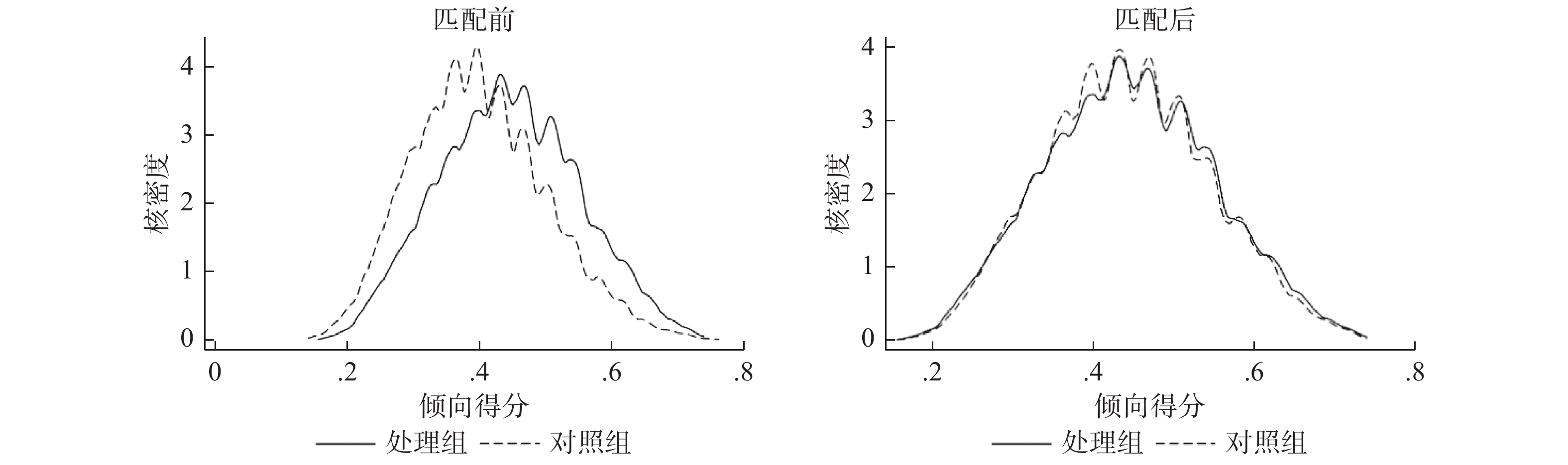
"
| 变量 | ⑴婚姻意愿 | ⑵预期初婚年龄 | |||||
| 低收入家庭 | 中等收入家庭 | 高收入家庭 | 低收入家庭 | 中等收入家庭 | 高收入家庭 | ||
| 读研 | −0.293*** | −0.287*** | 0.018 | 0.433*** | 0.480*** | 0.199 | |
| (0.085) | (0.081) | (0.251) | (0.069) | (0.076) | (0.246) | ||
| 女性 | −0.582*** | −0.425*** | −0.321 | −0.196** | −0.047 | 0.351 | |
| (0.092) | (0.089) | (0.262) | (0.076) | (0.080) | (0.252) | ||
| 求职压力感知 | −0.093 | −0.334*** | 0.116 | 0.116* | −0.061 | −0.106 | |
| (0.075) | (0.079) | (0.224) | (0.067) | (0.070) | (0.220) | ||
| 专业固定效应 | 控制 | 控制 | 控制 | 控制 | 控制 | 控制 | |
| 常数项 | 2.294*** | 2.490*** | 1.269* | — | — | — | |
| (0.235) | (0.241) | (0.679) | — | — | — | ||
| Pseudo R² | 0.017 | 0.019 | 0.005 | 0.007 | 0.009 | 0.007 | |
| Chi-square | 68.04*** | 76.57*** | 2.01 | 56.39*** | 45.96*** | 3.54 | |
| N | 432 | 347 | |||||
"
| 变量 | ⑴生育意愿 | ⑵预期生育子女数 | |||||
| 低水平 保留工资 | 中等水平 保留工资 | 高水平 保留工资 | 低水平 保留工资 | 中等水平 保留工资 | 高水平 保留工资 | ||
| 读研 | −0.186** | −0.042 | −0.025 | −0.051** | −0.021 | −0.037 | |
| (0.075) | (0.092) | (0.111) | (0.022) | (0.027) | (0.033) | ||
| 女性 | −0.743*** | −0.874*** | −0.857*** | −0.221*** | −0.281*** | −0.285*** | |
| (0.086) | (0.106) | (0.117) | (0.022) | (0.029) | (0.039) | ||
| 生育成本感知 | −0.664*** | −0.563*** | −0.668*** | −0.196*** | −0.119*** | −0.181*** | |
| (0.082) | (0.111) | (0.134) | (0.019) | (0.026) | (0.031) | ||
| 专业固定效应 | 控制 | 控制 | 控制 | 控制 | 控制 | 控制 | |
| 常数项 | 3.457*** | 2.907*** | 3.202*** | 0.723*** | 0.488*** | 0.748*** | |
| (0.255) | (0.351) | (0.401) | (0.059) | (0.087) | (0.098) | ||
| Pseudo R² | 0.039 | 0.051 | 0.050 | 0.011 | 0.013 | 0.014 | |
| Chi-square | 164.71*** | 131.61*** | 94.77*** | 240.63*** | 152.91*** | 102.15*** | |
| N | 1958 | 1958 | |||||
"
| 变量 | ⑴婚姻意愿 | ⑵预期初婚年龄 | ⑶生育意愿 | ⑷预期生育子女数 | |||||||
| 男性 | 女性 | 男性 | 女性 | 男性 | 女性 | 男性 | 女性 | ||||
| 读研 | −0.348*** | −0.238*** | 0.437*** | 0.468*** | 0.008 | −0.162** | −0.018 | −0.058** | |||
| (0.097) | (0.071) | (0.073) | (0.069) | (0.089) | (0.063) | (0.020) | (0.023) | ||||
| 家庭经济收入(对数化) | −0.097* | −0.096** | −0.039 | 0.085** | — | — | — | — | |||
| (0.052) | (0.038) | (0.042) | (0.038) | ||||||||
| 求职压力感知 | −0.225*** | −0.173** | 0.020 | 0.043 | — | — | — | — | |||
| (0.086) | (0.067) | (0.071) | (0.067) | ||||||||
| 保留工资 (对数化) | — | — | — | — | −0.133* | −0.196*** | 0.010 | −0.046* | |||
| (0.071) | (0.065) | (0.017) | (0.025) | ||||||||
| 生育成本感知 | — | — | — | — | −0.354*** | −0.804*** | −0.129*** | −0.223*** | |||
| (0.093) | (0.074) | (0.019) | (0.020) | ||||||||
| 专业固定效应 | 控制 | 控制 | 控制 | 控制 | 控制 | 控制 | 控制 | 控制 | |||
| 常数项 | 2.347*** | 2.062*** | — | — | 1.988*** | 2.920*** | 0.524*** | 0.542*** | |||
| (0.289) | (0.211) | — | — | (0.285) | (0.220) | (0.069) | (0.060) | ||||
| Pseudo R² | 0.014 | 0.007 | 0.007 | 0.009 | 0.013 | 0.026 | 0.003 | 0.006 | |||
| Chi-square | 45.04*** | 34.20*** | 45.94*** | 64.78*** | 44.12*** | 149.15*** | 57.15*** | 150.87*** | |||
| N | |||||||||||
"
| 变量 | ⑴ 婚姻意愿 | ⑵ 预期初婚年龄 | ⑶ 生育意愿 | ⑷ 预期生育子女数 | |
| 研究生教育选择 | 总体 | − | + | − | − |
| 男 | − | + | × | × | |
| 女 | − | + | − | − | |
| 低收入家庭 | − | + | / | / | |
| 中等收入家庭 | − | + | / | / | |
| 高收入家庭 | × | × | / | / | |
| 低水平保留工资 | / | / | − | − | |
| 中等水平保留工资 | / | / | × | × | |
| 高水平保留工资 | / | / | × | × | |
| 鲍威. (2010). 未完成的转型——普及化阶段首都高等教育的人才培养与学生发展. 北京大学教育评论, 8 (1), 27- 43. | |
| 陈强. (2014). 高级计量经济学及stata应用. 北京: 高等教育出版社. | |
| 陈卫. (2021). 中国的低生育率与三孩政策——基于第七次全国人口普查数据的分析. 人口与经济, (5), 25- 35. | |
| 葛润, 黄家林. (2020). 大学扩招是否影响了结婚与生育?. 经济学报, 3 (3), 168- 201. | |
| 李长安, 李艳. (2024). 教育对生育意愿影响的性别差异及机制分析. 人口与经济, (3), 1- 18. | |
| 李春玲. (2023). 大学生就业选择的趋同与分化——理性选择与社会分化. 北京大学教育评论, 21 (03), 51- 68. | |
| 连玉君, 彭方平, 苏治. (2010). 融资约束与流动性管理行为. 金融研究, (10), 158- 171. | |
| 刘伯凡, 刘叶. (2018). 高等教育的婚姻效应: 推迟结婚还是选择不婚?——来自合成控制法的新证据. 上海财经大学学报, 20 (03), 93- 109. | |
| 孙俊华, 万洋. (2023). 规模扩张下的高等教育机会不平等测度——兼论高校扩招的教育代际流动效应. 教育与经济, 39 (3), 53- 63. | |
| 唐骏瑶. (2024). 高等教育是否降低了个体的生育水平——基于高校扩招的准实验研究. 教育学报, 20 (06), 166- 179. | |
| 汪永涛. (2024). 新家庭主义与当代青年婚育行为研究. 思想战线, 50 (3), 62- 72. | |
| 王军, 李向梅. (2021). 中国三孩政策下的低生育形势、人口政策困境与出路. 青年探索, (4), 50- 61. | |
| 王磊. (2023). 高学历女青年的婚姻、生育与家庭结构研究——基于北京东城区人口普查数据(2010-2020)的比较分析. 扬州大学学报(人文社会科学版), 27 (05), 93- 107. | |
| 王志华, 李夏培, 樊增增. (2024). 收入差距与生育意愿: 促进还是抑制? 人口与发展, 30(06), 13—26. | |
| 巫锡炜, 曹增栋, 武翰涛. (2022). 高等教育扩张与小家庭崛起——来自大学扩招政策的证据. 社会学研究, 37 (03), 92- 114. | |
| 杨菊华. (2019). 生育支持与生育支持政策: 基本意涵与未来取向. 山东社会科学, (10), 98- 107. | |
| 叶华, 吴晓刚. (2011). 生育率下降与中国男女教育的平等化趋势. 社会学研究, (5), 153- 177. | |
| 于欣晔, 冯永琦. (2023). 家庭负债、生育成本与二孩生育决策. 人口学刊, 45 (05), 31- 42. | |
| 育娲人口研究团队. (2024). 中国生育成本报告2024版. 取自: https://news.qq.com/rain/a/20241121A00LN500. | |
| 岳昌君, 冯沁雪, 辛晓佳, 邱文琪. (2023). 中国高校毕业生就业趋势研究报告: 来自2003-2021年调查数据. 华东师范大学学报(教育科学版), 43 (9), 138- 154. | |
| 张银锋, 侯佳伟. (2016). 当前中国高等教育人口现状及发展趋势分析. 中国青年研究, (02), 52- 59. | |
| 张现苓, 盛亦男. (2023). 1990-2020年中国的婚育推迟: 变化趋势与典型特征. 人口研究, 47 (5), 88- 101. | |
| 中共中央国务院. (2021). 中共中央国务院关于优化生育政策促进人口长期均衡发展的决定. 取自: http://www.gov.cn/zhengce/2021-07/20/content_5626727.htm. | |
| 周晓蒙, 裴星童. (2022). 高等教育对女性生育水平的影响机制研究. 人口与发展, 28 (06), 46- 58. | |
| Arnett, J. J. (2000). Emerging adulthood: A theory of development from the late teens through the twenties. American Psychologist, 55 (5), 469. | |
| Axinn, W. G., & Thornton, A. (1992). The influence of parental resources on the timing of the transition to marriage. Social Science Research, 21 (3), 261- 285. | |
| Becker, G. S. (1991). A treatise on the family. Cambridge: Harvard University Press. | |
| Becker, G. S., & Lewis, H. G. (1973). On the interaction between the quantity and quality of children. Journal of Political Economy, 81 (2), S279- S288. | |
| Becker, G. S., Murphy, K. M., & Tamura, R. (1990). Human capital, fertility, and economic growth. Journal of Political Economy, 98 (5), S12- S37. | |
| Black, S. E., Devereux, P. J., & Salvanes, K. G. (2008). Staying in the classroom and out of the maternity ward? The effect of compulsory schooling laws on teenage births. The Economic Journal, 118 (530), 1025- 1054. | |
| Bloom, D. E., & Bennett, N. G. (1990). Modeling American marriage patterns. Journal of the American Statistical Association, 85 (412), 1009- 1017. | |
| Brady, S., Miller, J. B., et al. (2019). Retiring and caregiving in the age of student loans: The impact of student debt on retirement and longevity planning. Innovation in Aging, 3 (S1), 42. | |
| Choi, S. (2018). Fewer mothers with more colleges? The impacts of expansion in higher education on first marriage and first childbirth. Demographic Research, 39, 593- 634. | |
| Dhami, M. V., Ogbo, F. A., Diallo, T. M. O., et al. (2021). Infant and young child feeding practices among adolescent mothers and associated factors in India. Nutrients, 13 (7), 2376. | |
| Goldscheider, F., Bernhardt, E., & Lappegård, T. (2014). The gender revolution: A framework for understanding changing family and demographic behavior. Population and Development Review, 40 (1), 105- 130. | |
| Gottard, A., Mattei, A., & Vignoli, D. (2015). The relationship between education and fertility in the presence of a time varying frailty component. Journal of the Royal Statistical Society, 178 (4), 863- 881. | |
| Goyal, B., & Jain, C. (2022). Post COVID-19 effect on the working ability of women with reference to Indore City. Central European Management Journal, 30 (4), 982- 989. | |
| Hall, D. B. (2000). Zero‐inflated Poisson and binomial regression with random effects: a case study. Biometrics, 56 (4), 1030- 1039. | |
| Harvard Medical School. (2018). Housing for Married Students or Students with Children. Retrieved from https://medstudenthandbook.hms.harvard.edu/805-housing-married-students-or-students-children. | |
| Hoem, J. M. (1986). The impact of education on modern family-union initiation. European Journal of Population, 2 (2), 113- 133. | |
| Karney, B. R. (2021). Socioeconomic status and intimate relationships. Annual Review of Psychology, 72 (1), 391- 414. | |
| Kasarda, J. D. (1971). Economic structure and fertility: A comparative analysis. Demography, 8 (3), 307- 317. | |
| Kallio, R. E. (1993). The college choice decision of graduate students (Doctoral dissertation, University of Michigan). Retrieved from https://deepblue.lib.umich.edu/handle/2027.42/129129. | |
| Kravdal, Ø., & Rindfuss, R. R. (2008). Changing relationships between education and fertility: A study of women and men born 1940 to 1964. American Sociological Review, 73 (5), 854- 873. | |
| Lakomý, M. (2017). The role of values and of socioeconomic status in the education-fertility link among men and women. Vienna Yearbook of Population Research, 15, 121- 141. | |
| Lundberg, S., Pollak, R. A., & Stearns, J. (2016). Family inequality: Diverging patterns in marriage, cohabitation, and childbearing. Journal of Economic Perspectives, 30 (2), 79- 102. | |
| Lundborg, P., Plug, E., & Rasmussen, A. W. (2017). Can women have children and a career? IV evidence from IVF treatments. The American Economic Review, 107 (6), 1611- 1637. | |
| Mortensen, D. T. (2003). Wage dispersion: Why are similar workers paid differently? Journal of Economic Perspectives, 17(1), 163—180. | |
| Neyer, G. , & Andersson, G. (2008). Consequences of family policies on childbearing behavior: Effects or artifacts? Population and Development Review, 34(4), 699—724. | |
| Oppenheimer, V. K. (1988). Women's employment and the gain to marriage: The specialization and trading model. American Journal of Sociology, 94 (3), 431- 453. | |
| Oppenheimer, V. K. (1994). Women’s rising employment and the future of the family in industrial societies. Population and Development Review, 20 (2), 293- 342. | |
| Oreopoulos, P., & Salvanes, K. G. (2011). Priceless: The nonpecuniary benefits of schooling. Journal of Economic Perspectives, 25 (1), 159- 184. | |
| QAA. (2020). Characteristics statement-masters degrees. Retrieved from https://www.qaa.ac.uk/en/the-quality-code/characteristics-statements/characteristics-statement-masters-degrees. | |
| Rindfuss, R. R., Morgan, S. P., & Offutt, K. (1996). Education and the changing age pattern of American fertility: 1963–1989. Demography, 33 (3), 277- 290. | |
| Sohn, H., & Lee, S. W. (2019). Causal impact of having a college degree on women’s fertility: Evidence from regression kink designs. Demography, 56, 969- 990. | |
| Spandorfer, S. D., Avrech, O. M., Colombero, L. T., et al. (1998). Effect of parental age on fertilization and pregnancy characteristics in couples treated by intracytoplasmic sperm injection. Human Reproduction, 13 (2), 334- 338. | |
| Stivers, A., & Berman, E. P. (2020). Parents, partners, plans and promises: The relational work of student loan borrowing. Socius: Sociological Research for a Dynamic World, 6, 1- 13. | |
| Thornton, A., Axinn, W. G., & Teachman, J. D. (1995). The influence of school enrollment and accumulation on cohabitation and marriage in early adulthood. American Sociological Review, 60 (5), 762- 774. | |
| University of California, Berkeley. (2025). Family Student Housing and Financial Support Policies. Retrieved from https://housing.berkeley.edu/family-housing. | |
| Van Bavel, J. (2012). The reversal of gender inequality in education, union formation and fertility in Europe. Vienna Yearbook of Population Research, 10, 127- 154. | |
| Woo, H. B. (2009). The impact of educational attainment on first marriage formation: Marriage delayed or marriage forgone? Korea Journal of Population Studies, 32(1), 25—50. |
| [1] | Xiangmei Chen, Bentao Ning. Does the “Double Reduction” Policy Affect Parents’ Willingness to Have More Children: A Survey Based on 29 Provinces Across China [J]. Journal of East China Normal University(Educational Sciences), 2024, 42(6): 75-85. |
| [2] | Qiuheng Shi, Kexin Ren. The Connotation and Influencing Factors of Employment Ability of College Students in China:Based on the Comparison Between Applied Universities and Research Universities [J]. Journal of East China Normal University(Educational Sciences), 2023, 41(8): 1-12. |
| [3] | Wei Bao, Dechun Chen, Linnan Tong. Can Virtue Be Taught: Research on the Influence of Higher Education on the Development of College Students’ Moral Cognition [J]. Journal of East China Normal University(Educational Sciences), 2023, 41(4): 56-71. |
| [4] | Tao Chen, Yan Zhang, Haiping Xue. Towards Reinvention: The Dual Effects of Intergenerational Transmission of Family Education of the First Generation College Students [J]. Journal of East China Normal University(Educational Sciences), 2023, 41(4): 111-126. |
| [5] | Chunjin Chen. Spatial Spillover Effects of Public Education Expenditure under the Vision of Common Prosperity [J]. Journal of East China Normal University(Educational Sciences), 2023, 41(10): 80-91. |
| [6] | Boshen Wan, Weifang Min. An Empirical Study on the Role of Education in Promoting Urbanization [J]. Journal of East China Normal University(Educational Sciences), 2023, 41(10): 40-52. |
| [7] | Yin Hongbiao, Shi Lian, Yang Liu. The Empirical Research into College Students’ Learning and Development in China (2015—2019): Themes, Methods and Commentary [J]. Journal of East China Normal University(Educational Sciences), 2020, 38(9): 179-199. |
| [8] | Chen Wuyuan, Jia Wenjun. Research on Contributing Factors of University Students’ Online Learning Experience [J]. Journal of East China Normal University(Educational Sciences), 2020, 38(7): 42-53. |
| [9] | Lin Gang, Wang Chengchun. Research on the Relationship Between Entrepreneurial Values and Mental Health of College Students [J]. Journal of East China Normal University(Educational Sciences), 2020, 38(12): 76-84. |
| [10] | GUO Fei, ZHAO Lin, LIAN Zhixin. Reliability of Self-reported Data in College Student Engagement Surveys: Social Desirability Bias in Self-reported Survey [J]. Journal of East China Normal University(Educationa, 2018, 36(4): 53-61+163. |
| [11] | ZHU Lin. An Investigation of the Types and Causes of College Students’Online Anomie Behavior [J]. Journal of East China Normal University(Educationa, 2016, 34(2): 88-95. |
| [12] | YANG Qiguang. Family Involvement in Current American Higher education: Context, Impact and Institutional Strategies [J]. Journal of East China Normal University(Educationa, 2015, 33(2): 103-109. |
| [13] | XIONG Meng,YE Yi-duo. The Concept, Measurement, Influencing Factors and Effects of Psychological Capital [J]. Journal of East China Normal University(Educationa, 2014, 32(3): 84-92. |
| Viewed | ||||||
|
Full text |
|
|||||
|
Abstract |
|
|||||
