
 中国人文社会科学核心期刊
Journal of East China Normal University(Educationa ›› 2026, Vol. 44 ›› Issue (9): 85-100.doi: 10.16382/j.cnki.1000-5560.2026.09.008
Previous Articles Next Articles
Dilihumaer Aizizi1,3, Xuemin Zhang2
Online:2026-09-01
Published:2026-08-29
Dilihumaer Aizizi, Xuemin Zhang. Reengineering the CIPP Evaluation System for Undergraduate Talent Cultivation Quality in the Intelligent Era: A Multidimensional Thematic Demand Analysis Based on Python Crawler Technology[J]. Journal of East China Normal University(Educationa, 2026, 44(9): 85-100.

"


"
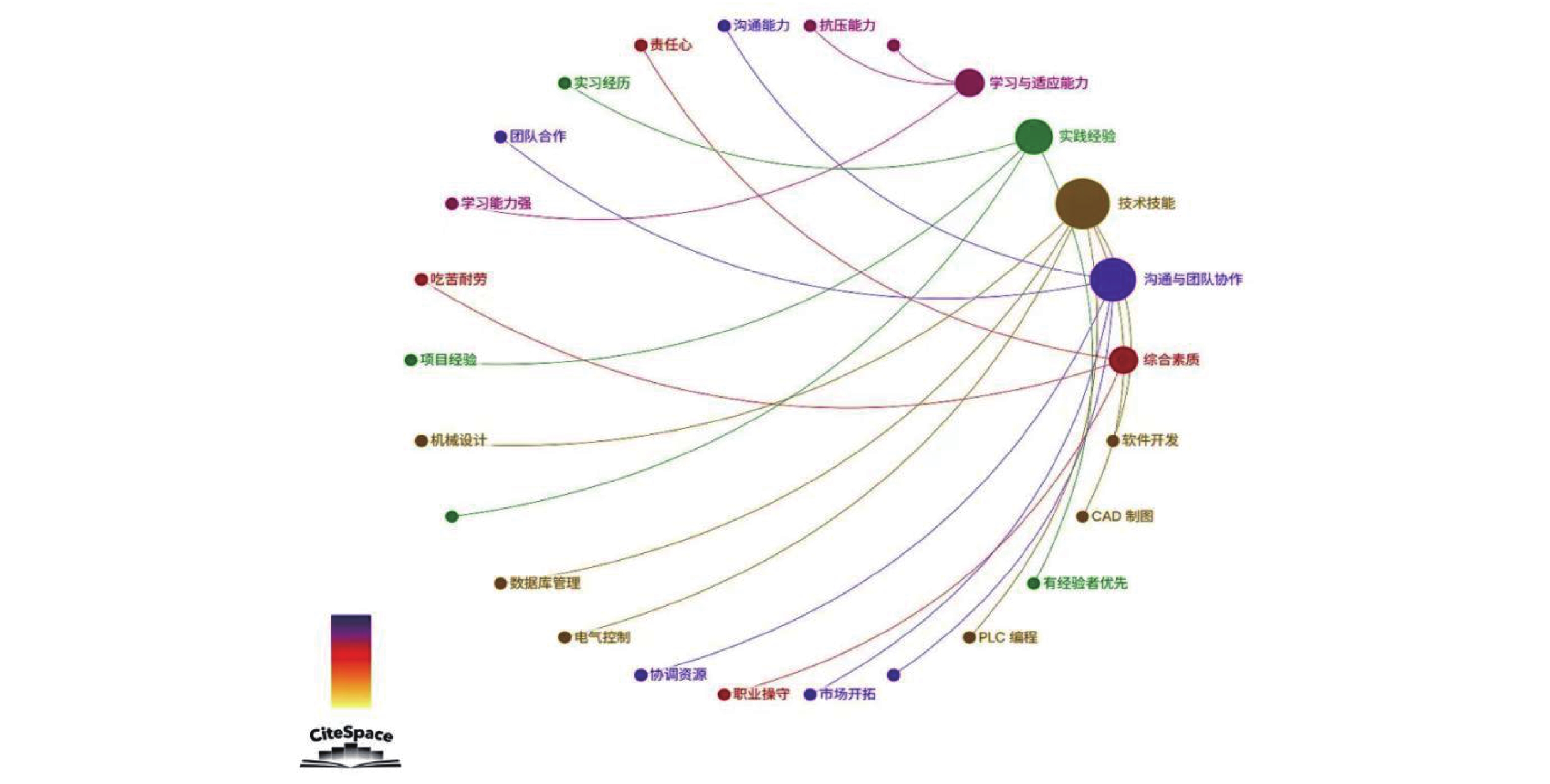
| 能力维度 | 核心关键词示例 | 频次 | 占比 (%) | 需求内涵解析 |
| 专业技术能力 | CAD制图、PLC编程、机械设计、 电气控制、软件开发、数据分析 | 368 | 22.5 | 强调工具应用与解决复杂工程问题的硬性技术指标 |
| 协同交互能力 | 沟通能力、团队合作、客户维护、 资源协调、跨部门协作 | 598 | 28.2 | 在人机协同与多部门联动场景下的沟通与协作素养 |
| 职业发展潜质 | 项目经验、实习经历、责任心、抗压能力、 自主学习、创新思维 | 475 | 26.1 | 侧重于从业者的职业态度、持续学习意愿及 实战转化能力 |
| 跨文化适应力 | 英语读写、多语言能力、国际标准、 海外出差、跨文化交流 | 420 | 23.2 | 适应全球化竞争与国际技术标准所需的开放性视野 |
"
"
| 核心范畴 (选择性编码) | 权重占比* | 主轴编码 (二级范畴) | 典型开放式编码示例 (频次) | CIPP模型映射 维度 |
| 技术应用与资源支撑 | 43.16% | 教材与资源 | 经常更新教材(6)、活页式教材(2)、实习标准入教材(2)、 了解特殊产业线(7) | 输入评价 |
| 课程结构 | 了解人工智能(10)、编程技术(6)、项目制教学(5)、 职业资格证书(7) | 过程评价 | ||
| 师资与教学 | 推广双师型教学(6)、深入浅出(3)、跟随导师做项目(2) | 输入/过程 | ||
| 综合素养与跨界融合 | 32.24% | 跨学科学习条件 | 综合应用多种知识(7)、复合型人才(3)、学科掌握要全面(5) | 过程评价 |
| 实践场所 | 实践设施与场所(5)、多动手操作(6)、解决实际问题(7) | 输入评价 | ||
| 价值情怀 | 社会贡献精神(7)、职业规划(3)、共同体意识(1) | 背景/结果 | ||
| 人机协同与持续发展 | 24.60% | 人机共生 | 读懂机器语言(6)、机器换人适应力(5)、工作环境智能化(1) | 结果评价 |
| 团队协作 | 合作意识(6)、团队沟通(5)、接触新场景(3) | 结果评价 | ||
| 自我进化 | 个人学习能力(6)、可持续发展(4)、抗压能力(2) | 结果评价 |
"
| 政策工具类型 | 占比 | 核心关键词/高频词 | 政策内涵解析 | 对CIPP评价指标的启示 |
| 环境面工具 | 49.96% | 机制体制、法规管制、战略规划、产教融合、评价改革、 协同治理 | 强调通过制度建设为人才培养创造良好的外部生态, 特别是产教融合机制的建立 | 映射背景评价:需考核学校办学定位与区域产业规划的契合度; 映射过程评价:校企协同机制的完备性 |
| 供给面工具 | 36.93% | 资金投入、基础设施、信息建设、师资培训、学科建设、 技术引进 | 政府侧重于通过直接的财力、物力与人力投入来保障教育供给的硬件基础 | 映射输入评价:必须包含“生均经费”“数智化教学设施”“双师型队伍”等硬指标 |
| 需求面工具 | 13.11% | 国际交流、海外引进、政府采购、服务外包、岗位标准、 市场配置 | 关注人才的国际化流动及市场配置, 但整体占比较低, 说明市场端引导不足 | 映射结果评价:鉴于政策引导较弱, 评价体系需补位, 强化“国际视野”与“就业质量”的权重 |
"
| 工作性质 | 人数 | 职称 | 学位/学历 |
| 教学管理人员 | 7 | 教授3人, 副教授1人, 讲师3人 | 博士4人, 硕士1人,本科2人 |
| 企业人力资源高管 | 6 | 硕士5人、本科1人 | |
| 专家学者 | 7 | 教授4人, 副教授3人 | 博士7人 |
"
| 轮次 | 判断依据(Ca) | 熟悉程度(Cs) | 权威系数(Cr) |
| 第1轮 | 0.752 | 0.749 | 0.746 |
| 第2轮 | 0.762 | 0.817 | 0.789 |
"
| 咨询 轮次 | 指标数量变化 | 典型调整内容 (删除/合并/新增) | 调整理由/ 专家意见摘要 | 专家共识度 (Kendall's W) |
| 初始模型 | 55项 | (基于爬虫与访谈初步拟定) | - | - |
| 第一轮 筛选 | 删除7项 合并4项 保留44项 | [删除] “生源性别比”“生源地结构” [删除] “校园绿化率”“宿舍满意度” [合并] 将“小组讨论频次”与“自发探究” 合并为“探究式学习活跃度” | 缺乏评价效度:专家指出人口学特征属背景变量, 非质量指标 关联度弱:与智能人才培养核心目标关联不强 语义重叠:观测点内涵存在交叉 | 0.209 (P<0.05) 共识度一般 |
| 第二轮 优化 | 删除2项 新增2项 修改3项 最终42项 | [新增] “数字伦理与安全意识” [新增] “跨文化交流意愿” [修改] 将 “计算机等级考试” 改为 “专业技能证书获取率” | 政策响应:依据最新科技伦理政策补充缺项 目标导向:强化国际化人才的胜任力考察 行业适配:原指标过于陈旧, 需对接行业标准 | 0.297 (P<0.01) 共识度较高 |
"
| 一级指标 | 二级指标 | 三级观测点 | 指标来源与依据 | 理论依据 |
| A01 背景评价 (Context) | B01 目标适应性 | C01 区域产业发展匹配度 C02 办学定位清晰度 C03 培养方案动态调整机制 | [政策文本] 响应环境面政策中“规划对接”要求 [高校访谈] 解决“目标定位失准”问题 | 组织适应理论: 强调组织目标必须随外部环境变化而动态调整, 以保持生存合法性( |
| B02 生源基础 | C04 生源知识结构适配度 C05 学习动机与自我发展意愿 C06 数字化素养基础 | [高校访谈] 关注学生“自我发展”意愿 | 建构主义学习理论: 强调学习者原有的知识经验和内驱力是知识建构的起点( | |
| B03 需求识别 | C07 企业需求调研频次 C08 行业标准引入程度 C09 利益相关者参与机制 | [企业爬虫] 解决“供需错配”痛点 [政策文本] 响应“协同治理”导向 | 利益相关者理论: 强调高等教育质量需满足企业、政府等多方主体的价值诉求( | |
| A02 输入评价 (Input) | B04 师资队伍 | C10 双师型教师比例 C11 教师数字化素养水平 C12 教师企业实践经历时长 | [高校访谈] 对应“双师型队伍”编码 [政策文本] 响应“师资培训”投入 | 人力资本理论: 视高素质、双师型教师为提升教育产出效率的核心资本要素 ( |
| B05 课程资源 | C13 教材内容更新率 C14 跨学科课程开设占比 C15 数字化课程资源总量 | [高校访谈] 对应“教材滞后” 痛点 [企业爬虫] 对应“复合 能力”需求 | 知识半衰期理论: 针对智能时代知识迭代加速, 强调课程内容的敏捷更新与跨界融合( | |
| B06 硬件支撑 | C16 智慧教室覆盖率 C17 虚拟仿真实验室建设 C18 产教融合实训基地数 | [政策文本] 响应“新型基础设施”投入 [高校访谈] 对应“实践场所”编码 | 资源依赖理论: 强调获取关键性办学资源(如数字化设施)对组织发展的支撑作用( | |
| A03 过程评价 (Process) | B07 教学模式 | C19 项目制教学(PBL)实施度 C20 混合式教学应用频次 C21 过程性考核占比 | [高校访谈] 对应“项目制教学”编码 [企业爬虫] 对应“解决实际问题”能力 | 行动导向教学论: 主张通过完整的行动过程(如PBL)来培养学生的职业行动能力( |
| B08 产教融合 | C22 企业导师授课课时 C23 顶岗实习实质化程度 C24 校企共建课程数量 | [政策文本] 响应“协同治理”机制 [高校访谈] 解决“实习走过场”问题 | 情境学习理论: 认为知识内嵌于情境, 真实的职业实践是能力生成的必要条件 ( | |
| B09 创新实践 | C25 学科竞赛参与覆盖面 C26 创新创业项目立项数 C27 学生自发研究小组活跃度 | [高校访谈] 对应“以赛促学” 编码 | 体验式学习理论: 强调通过直接经验和反思性观察(如竞赛、双创)来构建知识 ( | |
| A04 结果评价 (Product) | B10 技术硬实力 | C28 专业技能证书获取率 C29 复杂工程问题解决能力 C30 编程与工具应用能力 | [企业爬虫] 对应聚类1“技术能力” (CAD, Python, PLC等) | 能力本位教育理论: 以从事特定职业所需的专项胜任力作为评价教育结果的首要标准( |
| B11 软实力素养 | C31 团队协作能力 C32 职场沟通效率 C33 抗压与环境适应能力 | [企业爬虫] 对应聚类2“协同能力” (沟通, 团队, 抗压) | 冰山模型理论: 强调冰山之下的隐性素养(沟通、抗压)对高绩效行为的关键作用( | |
| B12 国际视野 | C34 外语应用能力 C35 国际行业标准认知 C36 跨文化交流意愿 | [企业爬虫] 对应聚类4“国际视野” [政策文本] 响应“教育对外开放” | 全球胜任力框架: 强调在跨文化环境中有效互动及理解国际规则的能力 ( | |
| B13 社会贡献 | C37 就业与专业对口率 C38 雇主满意度 C39 服务区域经济贡献度 | [政策文本] 响应“服务区域经济”导向 | 成果导向教育理论: 以最终学习成果和社会需求满足度反向设计评价指标 ( | |
| B14 职业信念 | C40 职业认同感 C41 数字伦理与安全意识 C42 社会责任感 | [高校访谈] 对应“贡献精神情怀”编码 [政策文本] 响应“立德树人”任务 | 全人教育理论: 强调除了技能之外, 道德、伦理与责任感是完整人才不可或缺的部分( |
"
| 一级指标 | 二级指标 | 三级观测点 | 局部 权重 | 组合 权重 | 排序 |
| A01 背景评价 (0.124) | B01 目标适应性 (0.435) | C01 区域产业发展匹配度 C02 办学定位清晰度 C03 培养方案动态调整机制 | 0.442 0.358 0.200 | 0.0238 0.0193 0.0108 | 16 22 36 |
| B02 生源基础 (0.186) | C04 生源知识结构适配度 C05 学习动机与自我发展意愿 C06 数字化素养基础 | 0.315 0.342 0.343 | 0.0073 0.0079 0.0079 | 41 39 39 | |
| B03 需求识别 (0.379) | C07 企业需求调研频次 C08 行业标准引入程度 C09 利益相关者参与机制 | 0.312 0.405 0.283 | 0.0147 0.0190 0.0133 | 28 23 31 | |
| A02 输入评价 (0.238) | B04 师资队伍 (0.412) | C10 双师型教师比例 C11 教师数字化素养水平 C12 教师企业实践经历时长 | 0.405 0.292 0.303 | 0.0397 0.0286 0.0297 | 5 11 10 |
| B05 课程资源 (0.315) | C13 教材内容更新率 C14 跨学科课程开设占比 C15 数字化课程资源总量 | 0.446 0.308 0.246 | 0.0334 0.0231 0.0184 | 7 17 24 | |
| B06 硬件支撑 (0.273) | C16 智慧教室覆盖率 C17 虚拟仿真实验室建设 C18 产教融合实训基地数 | 0.245 0.348 0.407 | 0.0159 0.0226 0.0264 | 26 19 13 | |
| A03 过程评价 (0.242) | B07 教学模式 (0.308) | C19 项目制教学(PBL)实施度 C20 混合式教学应用频次 C21 过程性考核占比 | 0.455 0.302 0.243 | 0.0339 0.0225 0.0181 | 6 20 25 |
| B08 产教融合 (0.445) | C22 企业导师授课课时 C23 顶岗实习实质化程度 C24 校企共建课程数量 | 0.295 0.412 0.293 | 0.0318 0.0444 0.0316 | 8 2 9 | |
| B09 创新实践 (0.247) | C25 学科竞赛参与覆盖面 C26 创新创业项目立项数 C27 学生自发研究小组活跃度 | 0.408 0.356 0.236 | 0.0244 0.0213 0.0141 | 14 21 30 | |
| A04 结果评价 (0.396) | B10 技术硬实力 (0.362) | C28 专业技能证书获取率 C29 复杂工程问题解决能力 C30 编程与工具应用能力 | 0.296 0.415 0.289 | 0.0424 0.0595 0.0414 | 3 1 4 |
| B11 软实力素养 (0.258) | C31 团队协作能力 C32 职场沟通效率 C33 抗压与环境适应能力 | 0.355 0.338 0.307 | 0.0363 0.0345 0.0314 | 6 7 9 | |
| B12 国际视野 (0.142) | C34 外语应用能力 C35 国际行业标准认知 C36 跨文化交流意愿 | 0.410 0.385 0.205 | 0.0231 0.0216 0.0115 | 18 20 34 | |
| B13 社会贡献 (0.145) | C37 就业与专业对口率 C38 雇主满意度 C39 服务区域经济贡献度 | 0.412 0.294 0.294 | 0.0237 0.0169 0.0169 | 17 26 26 | |
| B14 职业信念 (0.093) | C40 职业认同感 C41 数字伦理与安全意识 C42 社会责任感 | 0.405 0.295 0.300 | 0.0149 0.0109 0.0110 | 29 35 33 |
| 别敦荣. (2022). 学术本科、应用本科和职业本科概念释义、办学特点与教育要求. 中国高教研究, (8), 61- 68+75. | |
| 蔡艳青, 常晓然. (2024). 我国新型研发机构政策注意力与政策工具探析——基于长三角与珠三角地区的政策量化研究. 科技与经济, 37 (1), 36- 40. | |
| 邓素怡, 胡劲松. (2022). 企业、学校和政府三元耦合: 发展私立职业教育的“德国方案”. 职业技术教育, 43 (25), 72- 79. | |
| 董梦如, 王国新, 鲁金直, 等. (2024). 基于WordCloud技术的MBSE发展态势研究. 系统工程与电子技术, 46 (2), 534- 548. | |
| 杜丽群, 王欢. (2021). 家庭经济学视角下人力资本理论研究进展. 经济学动态, (5), 129- 145. | |
| 段宏广, 王宝钧, 陈志刚. (2018). 新建地方本科院校转型发展面临的问题及对策. 教育与职业, (7), 58- 62. | |
| 符强, 方绪军. (2025). 职业本科毕业论文“去留”之思——能力本位视域下职业本科毕业设计评价体系的重塑探赜. 中国职业技术教育, (14), 102- 112. | |
| 郭岩. (2018). 地方本科院校服务区域经济转型发展的路径选择与对策. 现代教育管理, (2), 56- 60. | |
| 胡拥军, 关乐宁. (2022). 数字经济的就业创造效应与就业替代效应探究. 改革, (4), 42- 54. | |
| 霍力岩, 孙蔷蔷, 胡恒波. (2019). 中国学前教育指标体系的理论构想与适用性考察. 教育研究, 40 (2), 50- 61. | |
| 李姗姗, 黄群慧. (2023). 组织适应理论视角下创业企业组织韧性的培育模式研究. 当代财经, (8), 83- 94. | |
| 李晓虹, 张婷婷, 王梓宁. (2024). 我国高等教育数字化转型建设路径的定性比较分析. 远程教育杂志, 42 (1), 32- 40. | |
| 刘国清, 高利红, 郑国芳, 等. (2025). 新工科背景下基于成果导向教育理念的小规模限制性在线课程混合教学模式在物理化学实验课程中的构建与应用. 应用化学, 42 (2), 256- 263. | |
| 陆先亮. (2019). 新工科背景下应用型本科院校师资队伍建设. 教育与职业, (5), 78- 81. | |
| 卢东祥, 曹莹莹, 于建江. (2021). 应用型本科院校大学生创新创业能力培养的路径探索. 江苏高教, (7), 85- 88. | |
| 欧阳日辉, 李晓壮. (2025). 具身智能产业发展的机理分析与推进策略. 改革, (9), 47- 63. | |
| 彭拥军. (2020). 质量观演进与高等教育评价的耦合. 江苏高教, (10), 8- 15. | |
| 钱乃余, 王家敏. (2013). 基于职业教育能力本位的教育观. 职教论坛, (2), 4- 6. | |
| 秦凤梅, 莫堃. (2022). 基于CIPP模型的职业教育产教融合质量评价研究. 西南大学学报(社会科学版), 48 (3), 194- 203. | |
| 尚猛, 李辉, 申容昊. (2019). 空港经济区航空物流产业发展水平测评指标的探索性研究. 商业经济研究, (3), 87- 89. | |
| 孙典王莉, 商立媛. (2024). 人工智能赋能我国高等教育高质量发展的内涵、困境及路径. 现代教育管理, (6), 34- 42. | |
| 孙晋, 胡旨钰. (2025). 中国生成式人工智能的产业生态重塑及发展策略研究. 湖北大学学报(哲学社会科学版), 52 (3), 171- 185+197. | |
| 唐懿滢, 陈晓珊, 谭维智. (2023). 新时代教育质量观: 教育质量的内涵重塑与行动逻辑. 全球教育展望, 52 (11), 22- 30. | |
| 王明亮. (2021). 消费者食物处理行为研究—基于教师群体的扎根理论分析. 博士学位论文. 吉林大学. | |
| 王平. (2014). 高职院校公共基础课开展创业教育模式研究——基于划分人素质的“冰山模型”理论视角. 职教论坛, (26), 22- 26. | |
| 王少媛, 尹茜文. (2025). 科技创新与区域创新耦合视角下高等教育高质量发展的路径. 高等教育研究, 46 (1), 11- 18. | |
| 魏星月, 李朝有. (2024). 数智化赋能学习型社会建设与高等继续教育人才培养融通互构研究——基于全人教育理论视角. 成人教育, 44 (11), 8- 14. | |
| 文晓梅. (2016). 校企合作下的高职院校兼职教师队伍建设——以宁夏工商职业技术学院为例. 中国职业技术教育, (36), 60- 63. | |
| 温伯颖, 尹虹宇. (2020). 本科层次职业教育人才培养的现状调研——以江西省14所本科职业教育院校为例. 职教论坛, (4), 131- 137. | |
| 徐绪堪, 华士祯. (2020). “互联网+政务服务”背景下的政务APP评价——基于直觉模糊层次分析法. 情报杂志, 39 (3), 198- 207. | |
| 张杰, 潘承恩, 李海涛. (2023). 基于CIPP模型的职业院校产教融合质量评价指标构建研究. 中国职业技术教育, (15), 54- 60. | |
| 张曼, 菅利荣. (2021). 科技服务业集聚化发展关键影响因素识别——基于直觉模糊层次分析法. 科技管理研究, 41 (8), 108- 116. | |
| 张芯瑜. (2025). 高校区域国别学人才培养评价体系构建探究. 外语学刊, (4), 63- 69. | |
| 张学敏, 迪丽呼玛尔·艾孜孜. (2025). 中国人才资本对经济增长贡献的时空格局与演化——基于教育、科技、人才一体化战略的分析. 湖南师范大学教育科学报, 24 (3), 1- 11+84. | |
| 张艳琼. (2016). 我国特殊教育学学科被引半衰期分析——基于文献计量学视角. 现代特殊教育, (12), 10- 15. | |
| 张宇, 解水青, 郭卉. (2020). 应用型本科院校双元课程体系的构建路径. 教育与职业, (7), 105- 111. | |
| 赵春艳, 刘志彪. (2025). 特朗普2.0时期的产业政策特征与中国应对策略——基于Python文本爬虫方法的综合分析. 山西财经大学学报, 47 (7), 1- 15. | |
| 钟鑫, 王宇, 王刚. (2025). 基于CIPP模式的高校图书馆阅读推广成效评价指标体系构建. 图书情报工作, 69 (22), 85- 95. | |
| 中共中央, 国务院. (2025-01-20). 教育强国建设规划纲要(2024—2035年). 人民日报, 006. | |
| 周靖毅. (2017). 情境学习理论视角下教师培训模式的变革. 教育理论与实践, 37 (4), 33- 37. | |
| 周晓航, 潘黎. (2025). 法国小学教育评价体系的革新及其启示. 教学与管理, (32), 72- 76. | |
| 朱萍, 周新源. (2021). 行动导向教学在工作本位学习中的应用——以艺术设计专业为例. 中国职业技术教育, (29), 60- 65. | |
| 邹玉红, 陈俐. (2013). 基于体验式学习理论的高职艺术教育新形式探索. 教育与职业, (35), 186- 188. | |
| Aziz, S., Mahmood, M., & Rehman, Z. (2018). Implementation of CIPP model for quality evaluation at school level: A case study. Journal of Education and Educational Development, 5 (1), 189- 206. | |
| Bali, A. S., Howlett, M., Lewis, J. M., & Ramesh, M. (2021). Procedural policy tools in theory and practice. Policy and Society, 40 (3), 295- 311. | |
| Bilan, N., Negahdari, R., Hazrati, H., & Malek, A. (2021). Examining the quality of the competency-based evaluation program for dentistry based on the CIPP model: A mixed-method study. Journal of Dental Research, Dental Clinics, Dental Prospects, 15(3), 203. | |
| Chandir, H., Gorur, R., & Blackmore, J. (2025). The politics of tinkering: Developing the PISA assessment of global competence. Comparative Education, 61 (4), 548- 565. | |
| Dizon, A. G. (2023). Historical development of CIPP as a curriculum evaluation model. History of Education, 51 (2), 109- 128. | |
| Liang, Q. (2024). Construction of a sustainable training system for engineering and technological innovation talents based on CIPP model in the digital era. Journal of Information & Knowledge Management, 23 (4), 2450044. | |
| McKay, V. (2018). Literacy, lifelong learning and sustainable development. Australian Journal of Adult Learning, 58 (3), 390- 425. | |
| Pervin, S. (2026). Multi-stakeholder safety enforcement: Implications for employment and factories in Bangladesh’s export-oriented RMG industry. Safety Science, 195, 107032. | |
| Ratnay, G., Indriaswuri, R., Widayanthi, D. G. C., & Wibawa, S. C. (2022). CIPP evaluation model for vocational education: A critical review. Education Quarterly Reviews, 5 (3), 1- 8. | |
| Roundy, P. T., & Bayer, M. A. (2019). To bridge or buffer? A resource dependence theory of nascent entrepreneurial ecosystems. Journal of Entrepreneurship in Emerging Economies, 11 (4), 550- 575. | |
| Sigri, U. (2010). The paradigm shift in educational management: An evaluation of distributed learning as future approach. TOJET: The Turkish Online Journal of Educational Technology, 9(2). | |
| Stufflebeam, D. L. (2000). The CIPP model for evaluation. In D. L. Stufflebeam, G. F. Madaus, & T. Kellaghan (Eds. ), Evaluation models: Viewpoints on educational and human services evaluation (pp. 279–317). Springer Netherlands. | |
| Uden, L., & Del Vecchio, P. (2018). Transforming the stakeholders’ Big Data for intellectual capital management. Meditari Accountancy Research, 26 (3), 420- 442. | |
| Verma, R., & Chandra, S. (2021). Interval-valued intuitionistic fuzzy-analytic hierarchy process for evaluating the impact of security attributes in fog based Internet of Things paradigm. Computer Communications, 175, 35- 46. | |
| Wu, Q., Zhu, P., Ji, Q., Shi, G., Qian, M., Xu, H., . . & Zhang, Q. (2023). The effect of death education course utilizing constructivist learning theory on first grade undergraduate nursing student attitudes and coping abilities towards death: A mixed study design. Nurse Education Today, 126, 105809. |
| [1] | Jieyuan Sun. The Transformation of Curriculum Culture in the Age of Intelligence [J]. Journal of East China Normal University(Educationa, 2026, 44(9): 48-57. |
| [2] | Yunxing Li. On the Conceptual Evolution and Reconstruction of Textbook Toward the Digital and Intelligent Era [J]. Journal of East China Normal University(Educational Sciences), 2024, 42(12): 63-72. |
| [3] | Sifeng Jing, Xiwei Liu, Xiaoyan Gong, Hongxia Zhao. Study on the Relationship Between New Demands of Human Capital and Educational Reform in Intelligent Era [J]. Journal of East China Normal University(Educationa, 2022, 40(9): 10-18. |
| [4] | Liyan Huo, Qiangqiang Sun, Zhengyu Long. Research on the Construction of High-quality Early Childhood Education Indicators System in China [J]. Journal of East China Normal University(Educational Sciences), 2022, 40(1): 1-18. |
| Viewed | ||||||
|
Full text |
|
|||||
|
Abstract |
|
|||||
