Journal of East China Normal University(Educationa ›› 2026, Vol. 44 ›› Issue (8): 1-7.doi: 10.16382/j.cnki.1000-5560.2026.08.001
Zhenguo Yuan
Accepted:
Online:
Published:
Abstract:
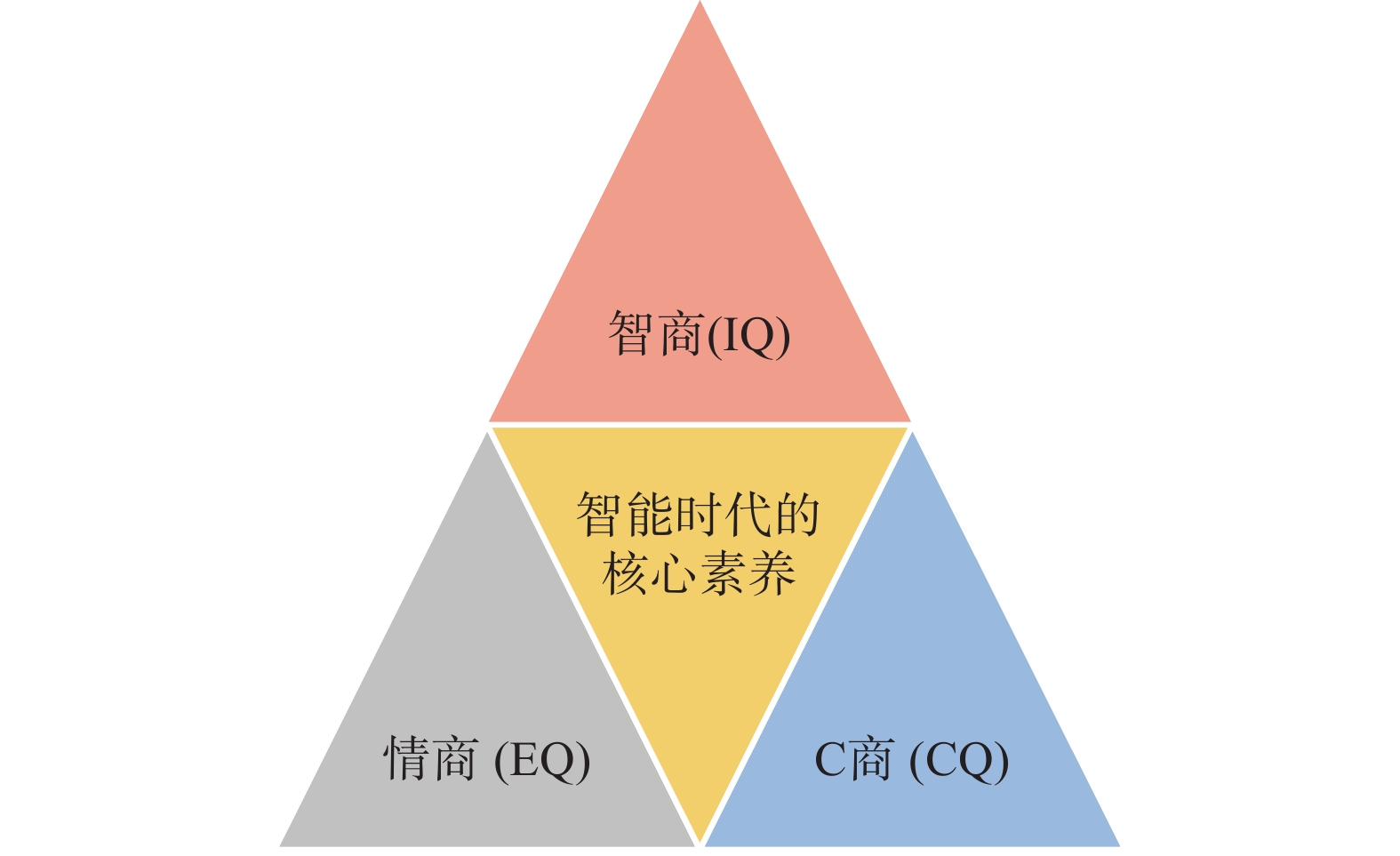
The large-scale social experiment of “AI as the First Author” has concluded, yet the reflections it has inspired are far from over. From four dimensions, namely the experiment’s impacts on academic norms and ethics, knowledge production modes and knowledge power, scientific research systems and the identification of research achievements, as well as educational systems and teacher-student relationships, this paper puts forward nine thought-provoking questions. What is the most practical challenge posed by the “AI as the First Author” experiment? What impact does it exert on knowledge production? What impact does it exert on knowledge power? What impact will knowledge equalization have on society? What impact does it have on academic papers and academic journals? How should knowledge and individuals’ academic contributions be evaluated in the future? What inevitable transformations will higher education have to undergo? What is the “core competence” that is the most difficult for AI to replace? What kind of new teacher-student relationship should be constructed? among others. This paper proposes important viewpoints and concepts including “AI hegemony”, “human guarantor system” and “value of trust”. In particular, it puts forward the concept of the Human-Machine Collaboration Quotient (C-Quotient), and holds that C-Quotient, together with Intelligence Quotient (IQ) and Emotional Quotient (EQ), will jointly constitute the core competencies of human beings in the era of artificial intelligence. It also envisions a future where carbon-based life and silicon-based life dance together on the same stage, and humans and machines co-evolve.
Key words: beyond the turing test, knowledge production, knowledge power, knowledge evaluation, human-machine collaboration quotient (CQ), in-depth transformation of higher education
Zhenguo Yuan. Beyond the Turing Test: Reflections on the Large-Scale Social Experiment of “AI as the First Author”[J]. Journal of East China Normal University(Educationa, 2026, 44(8): 1-7.
0 / / Recommend
Add to citation manager EndNote|Reference Manager|ProCite|BibTeX|RefWorks
URL: https://xbjk.ecnu.edu.cn/EN/10.16382/j.cnki.1000-5560.2026.08.001
https://xbjk.ecnu.edu.cn/EN/Y2026/V44/I8/1
"

 中国人文社会科学核心期刊