
 中国人文社会科学核心期刊
华东师范大学学报(教育科学版) ›› 2025, Vol. 43 ›› Issue (6): 99-115.doi: 10.16382/j.cnki.1000-5560.2025.06.007
刘莉莉, 李庆豪, 鲍红莹
出版日期:2025-06-01
发布日期:2025-05-19
基金资助:Lili Liu, Qinghao Li, Hongying Bao
Online:2025-06-01
Published:2025-05-19
摘要:
内生性主体养成与外生性环境塑造通常被认为是校长领导力形成的主要途径,但尚未有实证研究探讨二者对校长领导力提升的相对重要性。面向中小学校长群体开展问卷调查,探究个性特质与组织环境对校长领导力的影响效应。研究发现:个性特质是校长领导力提升的主导力量,环境的影响不到三成(23.95%),换言之,校长领导力提升与否“七分靠打拼”;外向性、开放性、责任感特质和上级支持感对校长领导力呈现正向影响;办学自主权对校长领导力发展产生“过犹不及效应”,呈“拐点偏移的倒U型”特征;上级支持感对校长领导力的影响为“雪中送炭”式,相比于专家型校长,其对成长型校长的边际效应更高;培养责任感特质有助于校长领导力实现“提低扩中”,有效缩小校长领导力发展的群体差异;强化外向性和开放性特质对校长领导力的影响为“锦上添花”式,推动专家型校长形成“优势叠加效应”,有助于其向卓越校长转变。基于此,建议从优化校长遴选标准,设计分类支持性计划,确保“放权”与“管控”的动态平衡三方面为提升校长领导力助力。
刘莉莉, 李庆豪, 鲍红莹. 校长领导力提升:个性特质与组织环境哪个更重要?[J]. 华东师范大学学报(教育科学版), 2025, 43(6): 99-115.
Lili Liu, Qinghao Li, Hongying Bao. Principal Leadership Enhancement: Personality Traits or Organizational Environment?[J]. Journal of East China Normal University(Educationa, 2025, 43(6): 99-115.
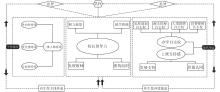
图 1
内生外塑前因模型框架图"
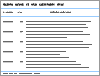
表 1
变量赋值方式与描述性统计结果"
| 变量 | 操作化定义 | 均值 | 标准差 | |
| 自变量 | 上级支持感 | 采用李克特五级量表 分数越高,表示校长对于组织环境的感知越显著 | 3.864 | 0.734 |
| 办学自主权 | 3.692 | 0.750 | ||
| 外向性特质 | 采用李克特五级量表 分数越高,表明校长相应人格特质表现越明显 | 3.935 | 0.723 | |
| 开放性特质 | 4.022 | 0.723 | ||
| 责任感特质 | 3.970 | 0.732 | ||
| 因变量 | 校长领导力 | 树立愿景、发展教师、重构组织和教学管理 4个分维度分值加总取均值 | 4.059 | 0.656 |
| 因变量 子维度 | 树立愿景 | 采用李克特五级量表 分数越高,表明校长在该维度的领导力表现越好 | 3.863 | 0.783 |
| 发展教师 | 4.217 | 0.732 | ||
| 重构组织 | 4.008 | 0.708 | ||
| 教学管理 | 4.149 | 0.750 | ||
| 控制变量 | 性别:男性赋值为1,女性赋值为2 | 1.370 | —— | |
| 年龄:分别赋值-30岁以下赋值为1;31—40岁赋值为2;41—50岁赋值为3; 50岁以上赋值为4 | 3.120 | —— | ||
| 受教育水平:分别赋值-大专及以下赋值为1;本科赋值为2; 硕士赋值为3;博士赋值为4 | 2.018 | —— | ||
| 学段:分别赋值-小学赋值为1;初中赋值为2;九年一贯制赋值为3; 高中赋值为4;完全中学赋值为5 | 2.053 | —— | ||
| 学校位置:分别赋值-市区赋值为1;县城赋值为2; 乡镇赋值为3;农村赋值为4 | 1.953 | —— | ||
| 名校长工作室情况:分别赋值-名校长工作室成员赋值为1; 名校长工作室主持人赋值为2;未加入名校长工作室赋值为3 | 2.510 | —— | ||
表 2
信效度检验结果"
| 变量 | 题目信度STD | 多元相关平方SMC | 组合信度CR值 | 平均方差萃取AVE | 内部一致性系数 |
| 校长领导力 | 0.742-0.907 | 0.550-0.823 | 0.955 | 0.590 | 0.968 |
| 上级支持感 | 0.906-0.924 | 0.529-0.776 | 0.928 | 0.682 | 0.926 |
| 学校自主权 | 0.833-0.942 | 0.465-0.792 | 0.794 | 0.567 | 0.896 |
| 外向性特质 | 0.774-0.832 | 0.633-0.793 | 0.869 | 0.689 | 0.865 |
| 开放性特质 | 0.808-0.881 | 0.603-0.812 | 0.888 | 0.726 | 0.886 |
| 责任感特质 | 0.721-0.846 | 0.491-0.816 | 0.851 | 0.657 | 0.842 |
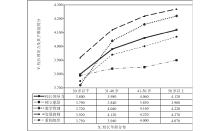
图 2
校长领导力及其各维度得分均值"
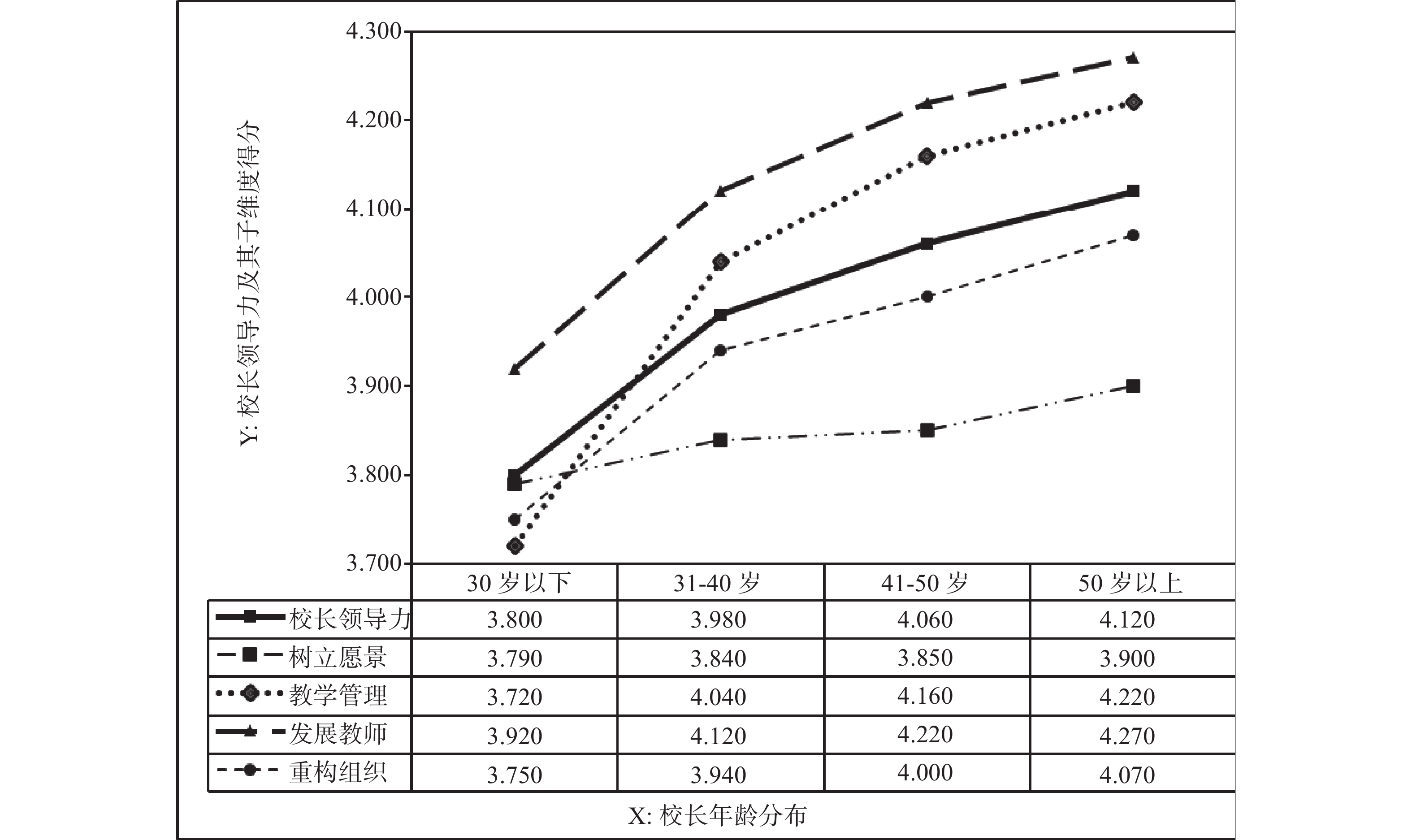
图 3
不同个性特质和组织环境下校长领导力表现"
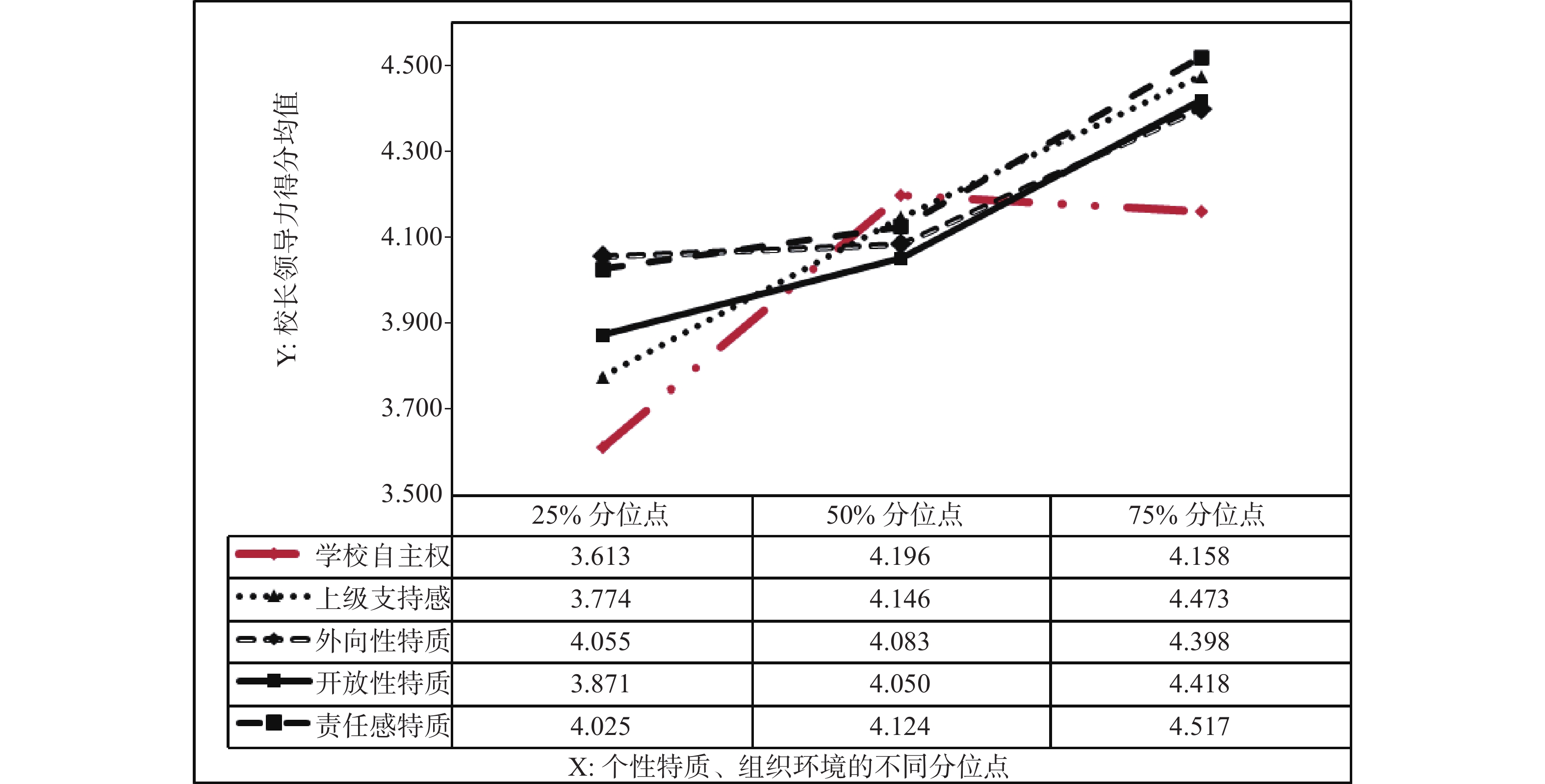
表 3
个性特质与组织环境影响校长领导力的回归分析"
| 自变量 | 模型(1) | 模型(2) | 模型(3) | 模型(4) | 模型(5) | 模型(6) | 模型(7) | 模型(8) |
| 校长领导力 | 校长领导力 | 校长领导力 | 校长领导力 | 树立愿景 | 教学管理 | 发展教师 | 重构组织 | |
| 控制变量 | ||||||||
| 性别 | 0.089 | 0.108*** | 0.099*** | 0.036 | 0.177*** | 0.161*** | 0.022 | |
| (0.059) | (0.038) | (0.037) | (0.064) | (0.051) | (0.046) | (0.040) | ||
| 年龄 | 0.056 | 0.061*** | 0.058*** | 0.012 | 0.095*** | 0.069** | 0.055** | |
| (0.034) | (0.022) | (0.022) | (0.034) | (0.032) | (0.028) | (0.022) | ||
| 受教育水平 | 0.155*** | 0.017 | 0.009 | 0.015 | 0.042 | −0.000 | −0.019 | |
| (0.056) | (0.045) | (0.045) | (0.079) | (0.071) | (0.051) | (0.045) | ||
| 学段 | 0.051** | 0.012 | 0.006 | 0.011 | −0.005 | 0.020 | −0.002 | |
| (0.022) | (0.014) | (0.013) | (0.025) | (0.017) | (0.017) | (0.015) | ||
| 名校长 工作室 | −0.108*** | −0.002 | −0.007 | 0.004 | 0.010 | −0.020 | −0.020 | |
| (0.031) | (0.022) | (0.021) | (0.036) | (0.032) | (0.024) | (0.020) | ||
| 学校位置 | −0.072** | −0.030* | −0.029* | −0.053* | −0.056** | −0.016 | 0.009 | |
| (0.031) | (0.018) | (0.017) | (0.030) | (0.024) | (0.022) | (0.018) | ||
| 个性特质 | ||||||||
| 外向性特质 | 0.129*** | 0.096** | 0.091** | 0.073 | 0.079 | 0.087* | 0.145*** | |
| (0.043) | (0.039) | (0.040) | (0.064) | (0.055) | (0.045) | (0.045) | ||
| 开放性特质 | 0.252*** | 0.212*** | 0.212*** | 0.181** | 0.247*** | 0.256*** | 0.165*** | |
| (0.053) | (0.049) | (0.050) | (0.074) | (0.068) | (0.061) | (0.059) | ||
| 责任感特质 | 0.360*** | 0.314*** | 0.328*** | 0.339*** | 0.287*** | 0.306*** | 0.322*** | |
| (0.050) | (0.050) | (0.050) | (0.078) | (0.061) | (0.058) | (0.057) | ||
| 组织环境 | ||||||||
| 上级支持感 | 0.222*** | 0.221*** | 0.162*** | 0.216*** | 0.235*** | 0.275*** | ||
| (0.041) | (0.042) | (0.055) | (0.049) | (0.046) | (0.045) | |||
| 学校自主权 | 0.457** | 0.514*** | 0.758** | 0.729*** | 0.340 | 0.002 | ||
| (0.186) | (0.187) | (0.346) | (0.277) | (0.257) | (0.170) | |||
| 学校 自主权平方 | −0.071*** | −0.078*** | −0.114** | −0.113*** | −0.056 | 0.001 | ||
| (0.026) | (0.026) | (0.048) | (0.039) | (0.035) | (0.022) | |||
| 常数项 | 3.759*** | 0.776*** | −0.231 | −0.097 | −0.346 | −0.736 | −0.125 | 0.283 |
| (0.230) | (0.218) | (0.377) | (0.344) | (0.685) | (0.574) | (0.509) | (0.363) | |
| 观测值 | 552 | 552 | 552 | 552 | 552 | 552 | 552 | 552 |
| 0.077 | 0.635 | 0.674 | 0.662 | 0.381 | 0.500 | 0.595 | 0.712 | |
| F检验 | 7.598*** | 276.570*** | 26.808*** | —— | ||||
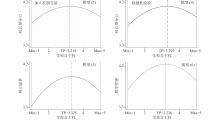
图 4
学校办学自主权与校长领导力及子维度的倒U关系图"
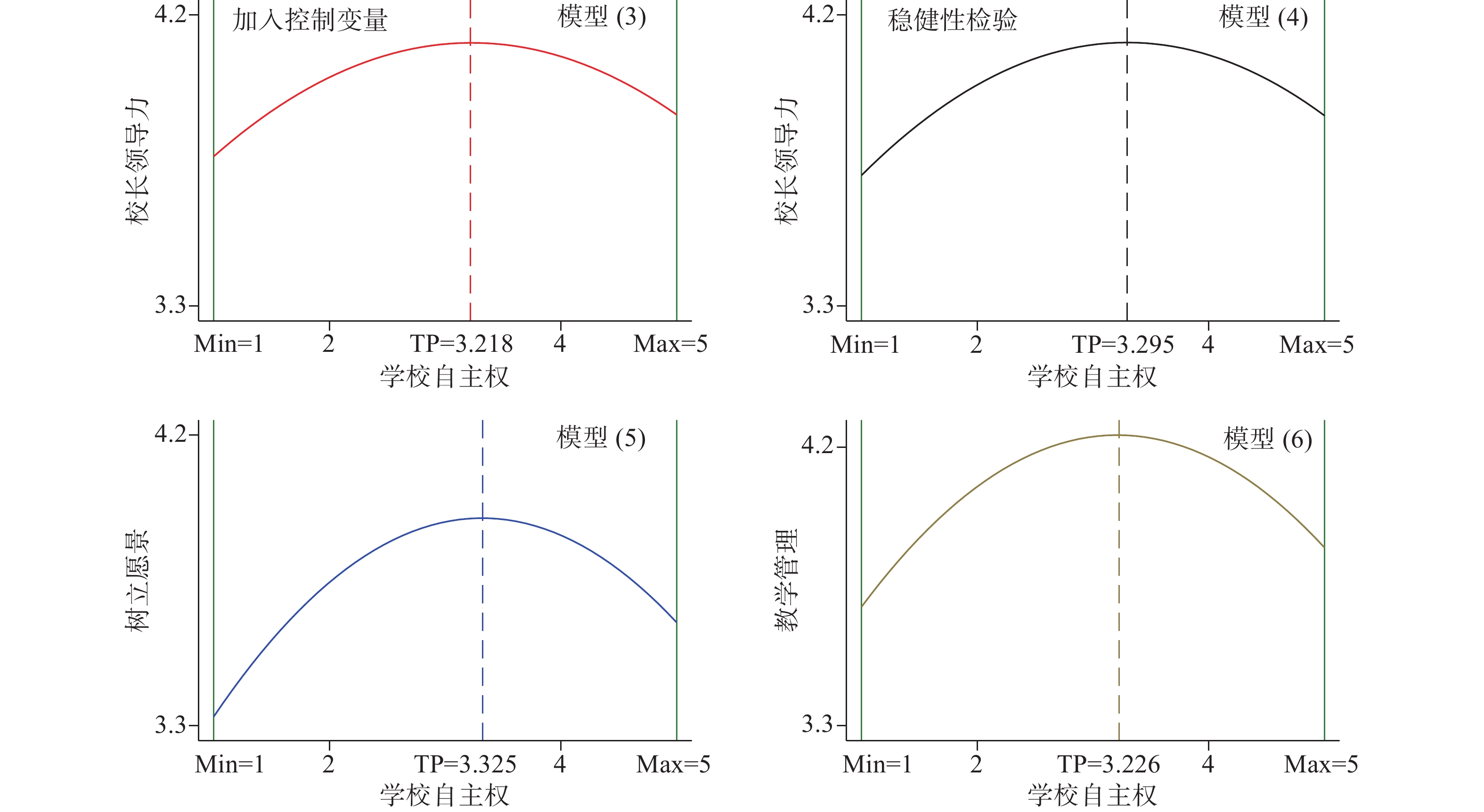
图 5
分位数回归结果"
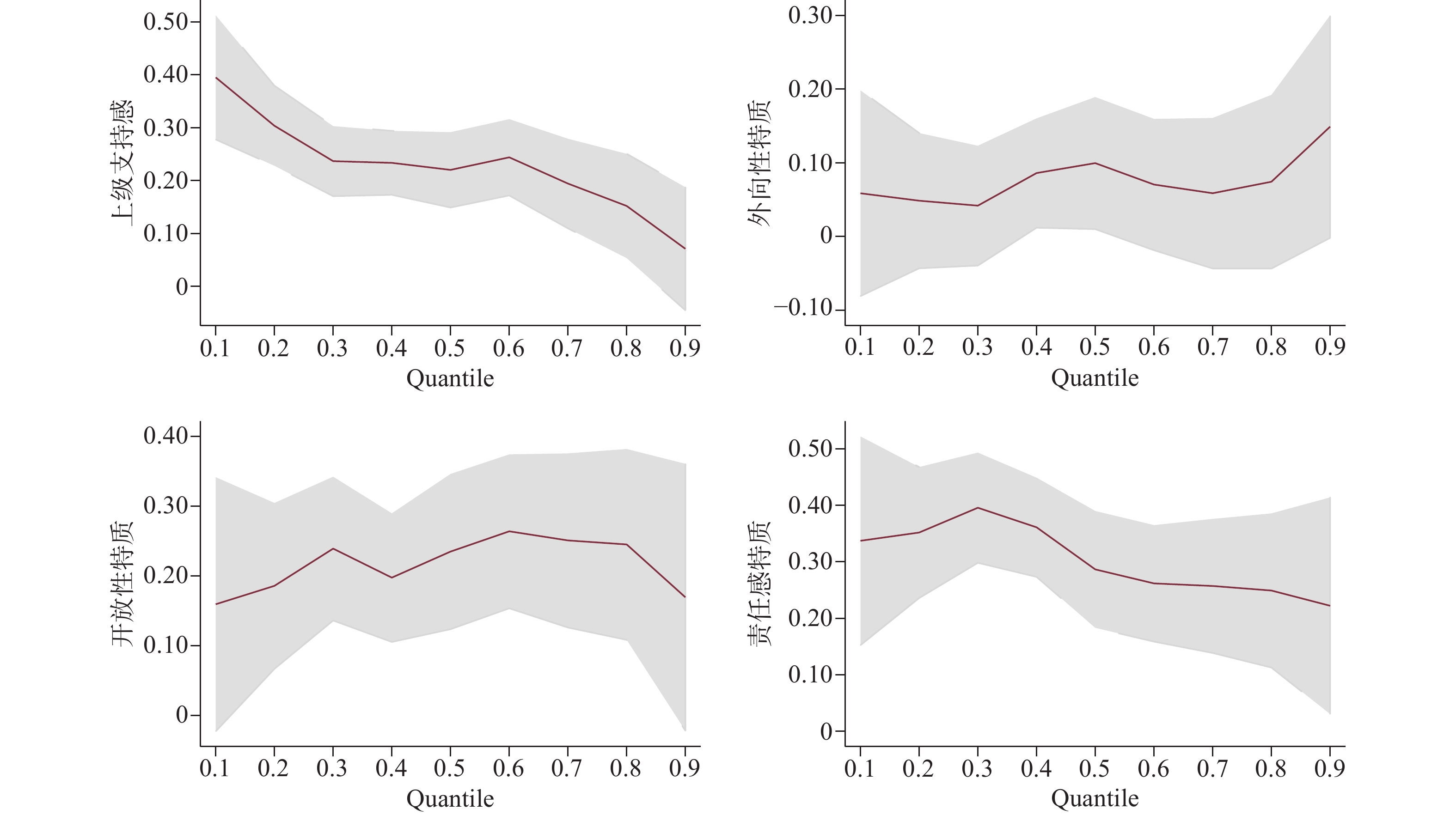
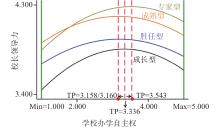
图 6
不同分位点下学校自主权和校长领导力的“倒U型”关系"
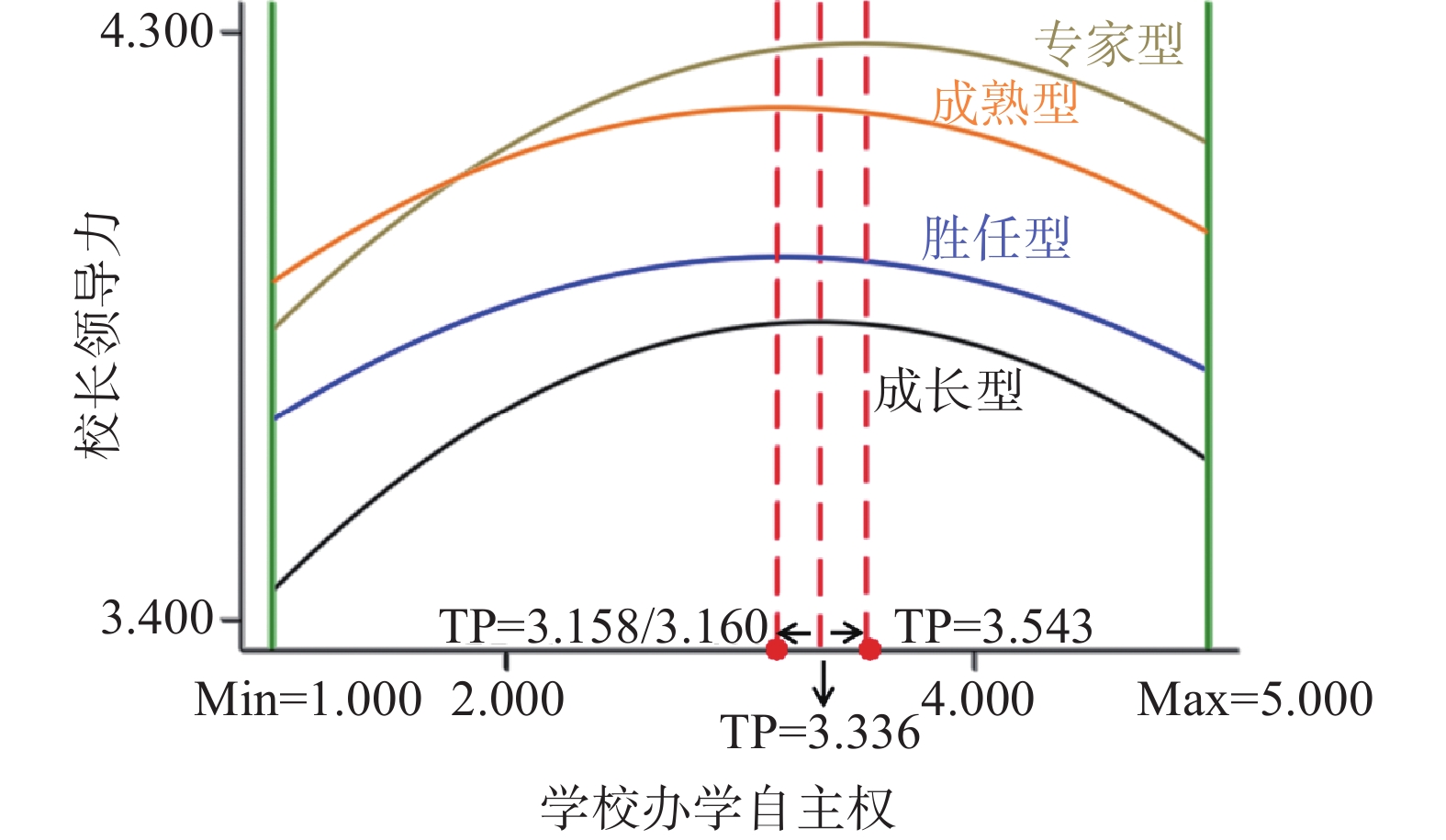
表 4
Shapley值和Owen值分解法的输出结果"
| 变量 | 校长领导力 | ||||
| Shapley值 | Shapley值 分解贡献率 | 位次 | Owen值分解群组贡献率 | ||
| 个性特质 | 外向性特质 | 0.104 | 15.42% | 4 | 71.19% |
| 开放性特质 | 0.174 | 25.88% | 2 | ||
| 责任感特质 | 0.201 | 29.89% | 1 | ||
| 组织环境 | 上级支持感 | 0.139 | 20.62% | 3 | 23.95% |
| 学校自主权 | 0.014 | 3.33% | 5 | ||
| 个体特征 控制变量 | 性别 | 0.008 | 1.13% | 4.86% | |
| 年龄 | 0.008 | 1.21% | |||
| 受教育水平 | 0.002 | 0.30% | |||
| 学段 | 0.001 | 0.21% | |||
| 名校长工作室情况 | 0.004 | 0.55% | |||
| 学校位置 | 0.010 | 1.46% | |||
图 7
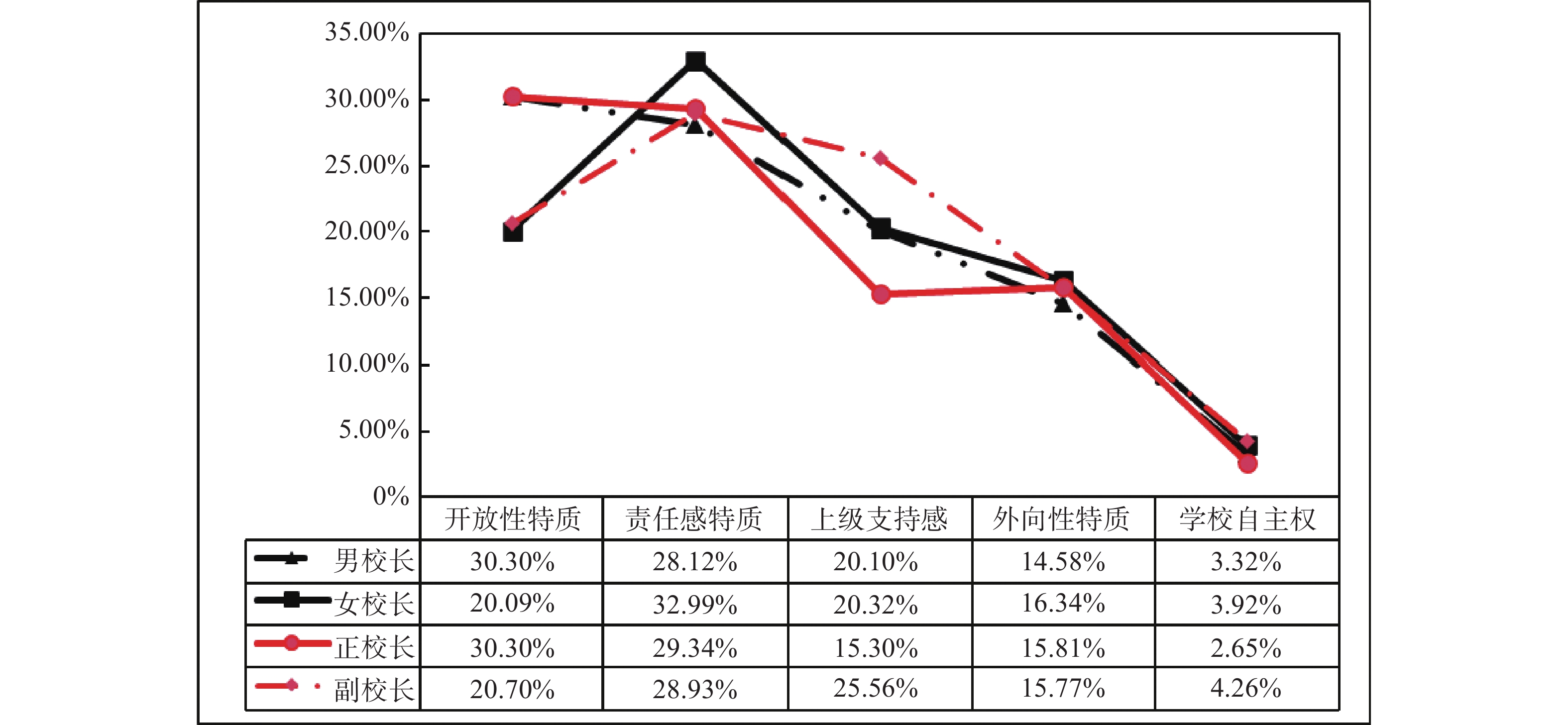
各类因素对校长领导力影响的性别异质性和职务异质性"
| 蔡茹, 张新平, 姚继军, 周世科. (2024). 校长积极领导力何以重要?——论其在学校背景与学生成绩之间的中介效应. 华东师范大学学报(教育科学版), (02), 92- 108. | |
| 陈东平. (2008). 以中国文化为视角的霍夫斯泰德跨文化研究及其评价. 江淮论坛, (01), 123- 127. | |
| 程钰琳, 张万朋. (2017). 国际视域下初中校长分布式领导的表现及影响因素——基于TALIS 2013数据的实证分析. 当代教育论坛, (06), 48- 60. | |
| 杜玲毓, 孙健敏, 尹奎 & 彭坚. (2017). 变革型领导从何而来?变革型领导的形成机理. 中国人力资源开发, (11), 87- 97. | |
| 冯大鸣. (2018). 我国义务教育学校办学自主权的实证分析. 中国教育学刊, (10), 55- 60. | |
| 甘韵文. (2019). 教育行政力量何以制约中学校长领导力的提升.南京: 南京师范大学硕士学位论文. | |
| 高婧, 胡中锋. (2016). 教师教学效能感与校长教学领导力的相关有多大?. 中小学管理, (05), 49- 52. | |
| 胡天助. (2022). 成功的校长领导力: 领导模式及其特征——以ISSPP为例. 外国教育研究, (09), 64- 83. | |
| 黄声华, 尹弘飚. (2024). 青少年社会情感能力发展现状及其相关因素研究: 学生减负之后的“加法”问题初探. 中国人民大学教育学刊, (03), 96- 109+182. | |
| 雷万鹏, 马丽. (2019). 赋权与增能: 中小学校长课程领导力提升路径. 教育研究与实验, (03), 68- 72. | |
| 李剑萍, 张涛. (2006). 山东省普通高中校长领导行为的调查研究. 当代教育科学, (16), 14- 19. | |
| 李玲, 王建平 , 何怀金. (2016). 学校分布式领导与教师变革承诺的关系研究. 教育学报, (06), 40- 52. | |
| 李小土, 刘明兴, 安雪慧. (2008). 西部农村教育财政改革与人事权力结构变迁. 北京大学教育评论, (04), 62- 77+189—190. | |
| 刘莉莉, 孔曼. (2020). 变革型领导力与教师组织承诺的关系研究——教师自我效能感的中介效应分析. 华东师范大学学报(教育科学版), (07), 97- 105. | |
| 刘莉莉, 李晓华. (2021). 卓越校长工作人格特质对其胜任力的影响实证研究——上级支持感的中介作用. 全球教育展望, (12), 77- 89. | |
| 刘莉莉. (2024). 名校长成“名”的底层逻辑及价值旨归. 中小学管理, (01), 27- 30. | |
| 芦青, 宋继文, 夏长虹. (2011). 道德领导的影响过程分析: 一个社会交换的视角. 管理学报, (12), 1802- 1812. | |
| 马丽, 牛君霞, 唐海康. (2020). 校长自我效能感、学习投入、办学自主权对校长领导力的影响——基于5省15市的实证调查. 教育与教学研究, (11), 86- 98. | |
| 蒲蕊. (2019). 新中国基础教育管理体制70年: 历程、经验与展望. 中国教育学刊, (10), 48- 53. | |
| 施久铭. (2019). 校长的品格、人格决定一所学校的气质——访江苏省苏州市吴江区盛泽实验小学教育集团总校长薛法根. 人民教育, (12), 41- 46. | |
| 唐京, 程正方, 应小平. (1999). 校长领导行为与校长类型. 心理学探新, (03), 43- 46+58. | |
| 王凤佐. (2004). 员工对上级的社会支持的感知及对其工作压力感的影响.大连: 大连理工大学硕士学位论文. | |
| 王淑华, 王以宁. (2021). 人格特质与校长信息化领导力的关系: 组织氛围的中介效应. 现代远距离教育, (01), 89- 96. | |
| 姚计海, 黄心怡, 吴小益. (2023). 领导支持对校长职业倦怠的影响: 心理授权和上级满意度的中介作用. 心理学探新, (05), 455- 462. | |
| 袁玉婷, 汪雅霜. (2024). 出国留学对博士生能力发展的影响——基于Nature全球调查数据的分析. 重庆高教研究, (03), 97- 110. | |
| 张佳, 顾建民. (2022). 校长轮岗对义务教育学校发展有影响吗?. 全球教育展望, (02), 77- 92. | |
| 张佳, 傅锐杰, 邵兴江. (2021). 轮岗对校长领导力提升存在“黄金频次”效应——基于对校长多维领导力发展的实证调查. 基础教育, (05), 39- 50. | |
| Ausubel, D. P., & Robinson, F. G. (1969). School learning: An introduction to educational psychology. Holt, Rinehart Winston. | |
| Bandura, A. (1977). Self-efficacy: toward a unifying theory of behavioral change. Psychological review, 84 (2), 191. | |
| Barrick, M. R., Mount, M. K., & Judge, T. A. (2001). Personality and performance at the beginning of the new millennium: What do we know and where do we go next?. International Journal of Selection and assessment, 9 (1‐2), 9- 30. | |
| Bossert, S. T., Dwyer, D. C., Rowan, B., & Lee, G. V. (1982). The instructional management role of the principal. Educational administration quarterly, 18 (3), 34- 64. | |
| Bishop, J. H., & Wößmann, L. (2004). Institutional effects in a simple model of educational production. Education Economics, 12 (1), 17- 38. | |
| Braun, A., Ball, S. J., Maguire, M., & Hoskins, K. (2011). Taking context seriously: Towards explaining policy enactments in the secondary school. Discourse: Studies in the cultural politics of education, 32 (4), 585- 596. | |
| Cheng, Y. C., & Walker, A. (2008). When reform hits reality: The bottleneck effect in Hong Kong primary schools. School Leadership and Management, 28 (5), 505- 521. | |
| Clarke, S., & O’donoghue, T. (2017). Educational leadership and context: A rendering of an inseparable relationship. British journal of educational studies, 65 (2), 167- 182. | |
| Day, C., Sammons, P., Leithwood, K., Hopkins, D., Gu, Q., Brown, E. J., & Ahtaridou, E. (2011). School leadership and student outcomes: Building and sustaining success. McGraw-Hill Education. | |
| Derue, D. S., Nahrgang, J. D., Wellman, N. E., & Humphrey, S. E. (2011). Trait and behavioral theories of leadership: An integration and meta‐analytic test of their relative validity. Personnel psychology, 64 (1), 7- 52. | |
| Finnigan, K. S. (2007). Charter school autonomy: The mismatch between theory and practice. Educational Policy, 21 (3), 503- 526. | |
| Fornell, C., & Larcker, D. F. (1981). Evaluating structural equation models with unobservable variables and measurement error. Journal of marketing research, 18 (1), 39- 50. | |
| Hallinger, P. (2018). Bringing context out of the shadows of leadership. Educational management administration & leadership, 46 (1), 5- 24. | |
| Israeli, O. (2007). A Shapley-based decomposition of the R-square of a linear regression. The Journal of Economic Inequality, 5, 199- 212. | |
| Judge, T. A., Bono, J. E., Ilies, R., & Gerhardt, M. W. (2002). Personality and leadership: A qualitative and quantitative review. Journal of Applied Psychology, 87 (4), 765- 780. | |
| Kirkpatick, S. A., & Locke, E. A. (1991). Leadership: do traits matter?. Academy of management perspectives, 5 (2), 48- 60. | |
| Kite, M. E. (1996). Age, gender, and occupational label: A test of social role theory. Psychology of Women Quarterly, 20 (3), 361- 374. | |
| Koenker, R., & Bassett Jr, G. (1978). Regression quantiles. Econometrica: journal of the Econometric Society, 33—50. | |
| Lakomski, G., & Evers, C. W. (2022). The importance of context for leadership in education. Educational Management Administration & Leadership, 50 (2), 269- 284. | |
| Lazaridou, A. (2021), Personality and resilience characteristics of preschool principals: an iterative study, INTERNATIONAL JOURNAL OF EDUCATIONAL MANAGEMENT, 35 (1) , pp. 29—46. | |
| Leithwood, K., Harris, A., & Hopkins, D. (2008). Seven strong claims about successful school leadership. School leadership and management, 28 (1), 27- 42. | |
| MacBeath, J. (2005), "Leadership as distributed: a matter of practice", SchoolLeadership and Management, Vol. 25 No. 4, pp. 349—366. | |
| Meng, Y., Yu, B., Li, C., & Lan, Y. (2021). Psychometric properties of the Chinese version of the organization big five scale. Frontiers in Psychology, 12, 781369. | |
| Nicolaidou, M., & Petridou, A. (2011). Evaluation of CPD programmes: challenges and implications for leader and leadership development. School effectiveness and school improvement, 22 (1), 51- 85. | |
| Noman, M., Awang Hashim, R., & Shaik Abdullah, S. (2018). Contextual leadership practices: The case of a successful school principal in Malaysia. Educational Management Administration & Leadership, 46 (3), 474- 490. | |
| Owens, R. G. (2004). Organizational behavior in education: Adaptive leadership and school reform Boston. Massachusetts: Pearson. | |
| Peterson, R. S., Smith, D. B., Martorana, P. V., & Owens, P. D. (2003). The impact of chief executive officer personality on top management team dynamics: one mechanism by which leadership affects organizational performance. Journal of applied Psychology, 88 (5), 795. | |
| Pfeffer, J., & Salancik, G. (2015). External control of organizations—Resource dependence perspective. In Organizational behavior 2 (pp. 355-370). Routledge. | |
| Sweller, J. (1988). Cognitive load during problem solving: Effects on learning. Cognitive science, 12 (2), 257- 285. | |
| Yang, F., Liu, J., Huang, X., Qian, J., Wang, T., Wang, Z., & Yu, H. (2018). How supervisory support for career development relates to subordinate work engagement and career outcomes: The moderating role of task proficiency. Human Resource Management Journal, 28 (3), 496- 509. | |
| Yin, H., & Zheng, X. (2018). Facilitating professional learning communities in China: Do leadership practices and faculty trust matter?. Teaching and Teacher Education, 76, 140- 150. |
| [1] | 湛中乐, 靳澜涛. 我国教育行政争议及其解决的回顾与前瞻——以“推动教育法治进程十大行政争议案件”为例[J]. 华东师范大学学报(教育科学版), 2020, 38(2): 1-18. |
| [2] | 约瑟夫?墨菲, 埃伦?戈德林, 斯蒂芬?艾略, 特休?克雷文斯, 安德鲁?波特. 教育领导中的范德堡评估:评价以学习为中心的领导[J]. 华东师范大学学报(教育科学版), 2011, 29(1): 1-10. |
| 阅读次数 | ||||||
|
全文 |
|
|||||
|
摘要 |
|
|||||
