
 中国人文社会科学核心期刊
Journal of East China Normal University(Educationa ›› 2025, Vol. 43 ›› Issue (10): 10-32.doi: 10.16382/j.cnki.1000-5560.2025.10.002
Ruxian Yun, Bin Huang, Yawen Zhu
Accepted:2025-05-08
Online:2025-10-01
Published:2025-10-09
Ruxian Yun, Bin Huang, Yawen Zhu. How to Measure the Educational Human Capital of A Country: A Systematic Review on Frontier Measurement Methods and International Data Conversion Technology[J]. Journal of East China Normal University(Educationa, 2025, 43(10): 10-32.

"

"
"
"
| Barro-Lee 教育成就数据库 | 维特根斯坦中心人力资本数据 | |
| 使用方法 | 趋势外推法(前推+后推) | 迭代后推法 |
| 主要文献 | Barro & Lee ( | Speringer et al. ( |
| 覆盖国家和地区数量 | 146个 | 185个 |
| 覆盖年份 | 1950–2015年 | 1950–2015年 |
| 最近更新年份 | 2021年 | 2024年 |
| 包含内容 | 平均受教育年限 | 教育获得分布、平均受教育年限 |
| 人口年龄跨度 | 15-24、25-34、…55-64岁 | 15-24、25-34、…100+岁 |
| 人口队列分类 | 15-64岁;25-64岁 | 15+;25+等 |
| 获取网址 | http://barrolee.com/ | https://dataexplorer.wittgensteincentre.org |
"
"
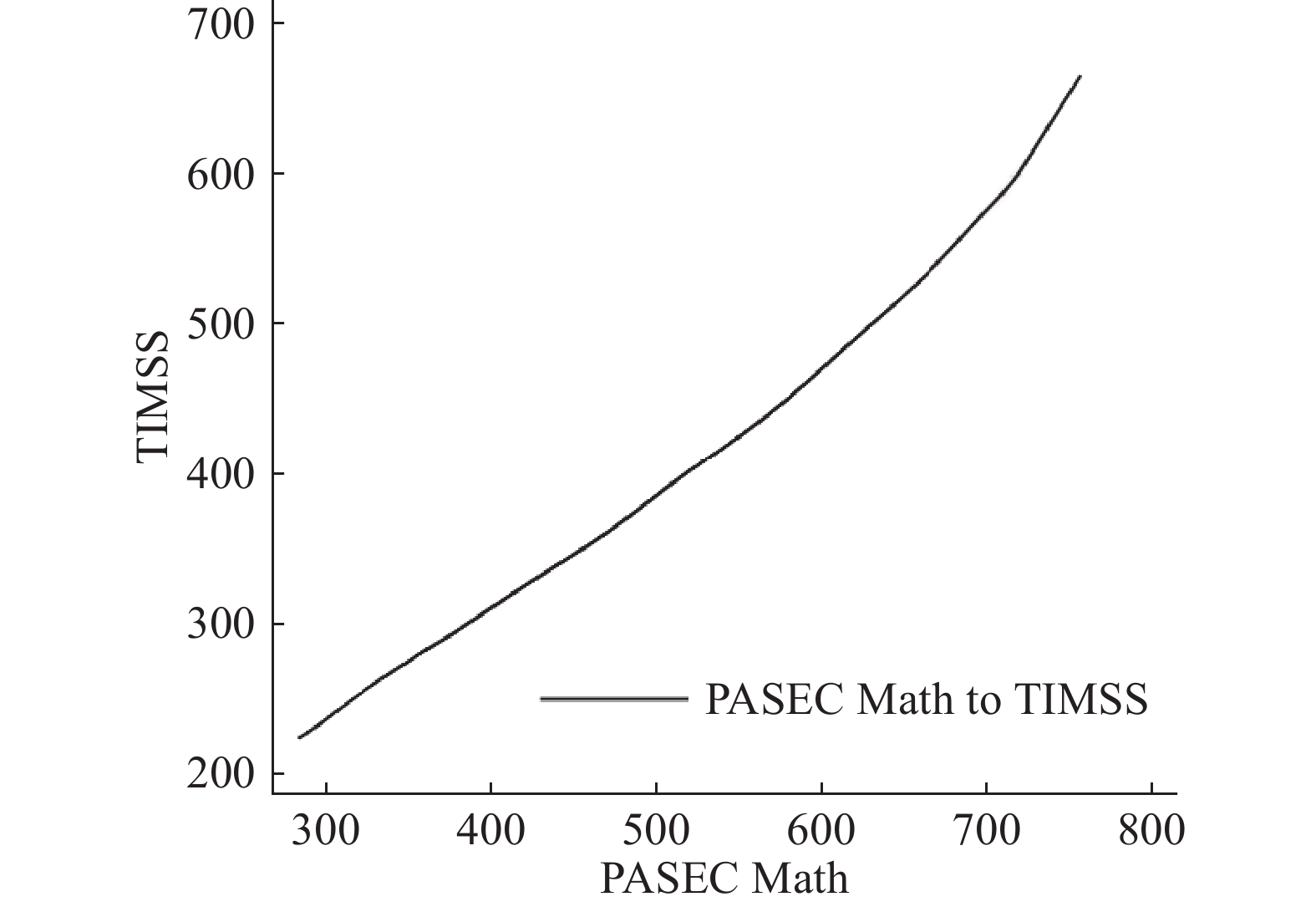
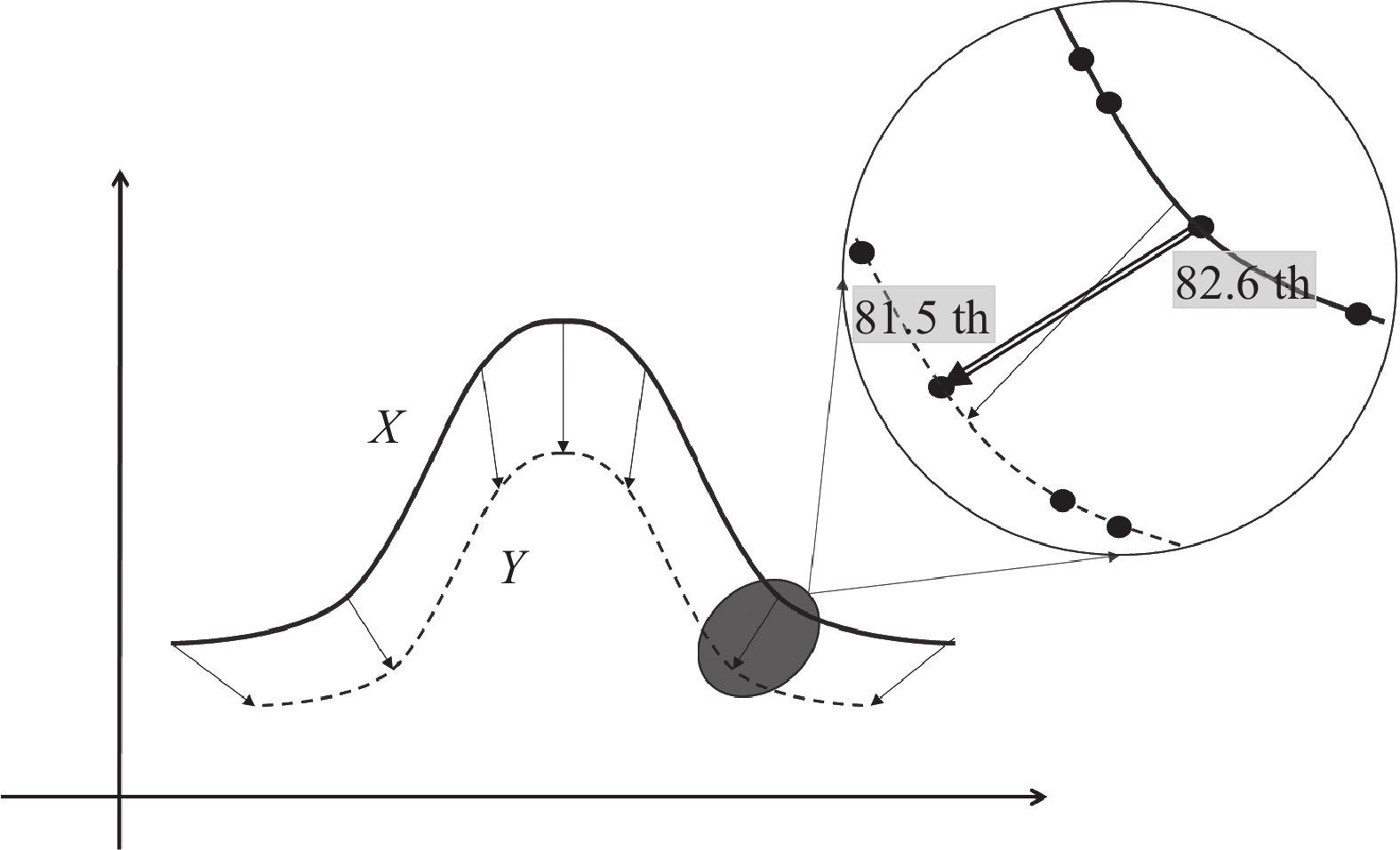
"
"
| HLO数据库(新版) | 全球人力资本估计(Global Human Capital Estimates) | 统一尺度下的学生获得数据 | |
| 方法文献 | Angrist et al. ( | Lim et al. ( | Gust et al. ( |
| 转换方法 | 线性转换辅以均值标准差转换 | 线性转换辅以高拟合补值 | 均值标准差转换辅以高拟合补值 |
| 元数据来源 | TIMSS、PIRLS、PISA、SACMEQ、PASEC、SERCE、TERCE、EGRA | TIMSS、PIRLS、PISA、SACMEQ、PASEC、PERCE、SERCE、TERCE、NAEP、NAS、智商(Intelligence Quotient,IQ)、 Barro–Lee数据 | TIMSS、PISA、SACMEQ、PASEC、SERCE、TERCE |
| 学段 | 小学和初中学生 | 5-9岁,10-14岁和15-19岁学生 | 以初中学生为主 |
| 测试科目 | 数学、科学、阅读 | 学习指数 | 数学和科学的得分均值 |
| 数据类型 | 国家均值 | 国家均值 | 国家均值 |
| 数据跨期与结构 | 2000-2017年非平衡面板 | 1990-2016年平衡面板 | 2018/2019年横截面 |
| 国家和地区数量 | 164 | 195 | 159 |
| 数据获取 | Gust et al.( |
"
| 方法文献 | Filmer et al. ( | Altinok & Diebolt ( | |
| 采用的函数形式 | 公式(27) | 公式(27) | |
| 元数据来源 | 学生认知技能 | 文章中:TIMSS或PISA 后续更新:教育质量全球数据库(Global Dataset on Education Quality (2020 Update)) | TIMSS、PIRLS、PISA、SACMEQ、PASEC、PERCE、SERCE、TERCE、EGRA、ASER |
| 受教育年限 | Barro–Lee 数据(25-29岁) | Barro–Lee 数据(15-64岁) | |
| 时间跨度 | 2010、2017、2018、2020年的非平衡面板数据 | 1970-2020年的平衡面板数据(5年间隔) | |
| 覆盖国家和地区数目 | 174个 | 120个 | |
| 数据获取 | |||
"
| 黄斌, 何沛芸, 朱宇, 魏易. (2022). 基于父母教育背景的中国家庭校外教育支出分化. 中国教育学刊, (04), 19- 28. | |
| 黄斌, 云如先. (2023). 教育发展何以强国——基于1960—2020年认知技能国际可比数据的实证分析. 教育研究, 44 (10), 125- 136. | |
| 黄斌, 云如先, 吴凯霖. (2024). 认知技能分布对国民经济增长的影响: 教育强国的新证据. 华东师范大学学报(教育科学版), 42 (9), 13- 32. | |
| 魏易. (2020). 校内还是校外: 中国基础教育阶段家庭教育支出现状研究. 华东师范大学学报(教育科学版), 38 (05), 103- 116. | |
| 周金燕. (2024). 探索非认知能力的投资规律: 跨学科的理论和证据. 教育经济评论, 9 (01), 21- 43. | |
| Altinok, N., Angrist, N., & Patrinos, H. A. (2018). Global Data Set on Education Quality (1965–2015). Policy Research working paper, Washington, D. C. : World Bank Group. | |
| Altinok, N., & Diebolt, C. (2024). Cliometrics of Learning-Adjusted Years of Schooling: Evidence from a New Dataset. Cliometrica, 18 (3), 691- 764. | |
| Altinok, N., Diebolt, C., & Demeulemeester, J. L. (2014). A New International Database on Education Quality: 1965–2010. Applied Economics, 46 (11), 1212- 1247. | |
| Altinok, N., & Murseli, H. (2007). International Database on Human Capital Quality. Economics Letters, 96 (2), 237- 244. | |
| Angrist, N., Djankov, S., Goldberg, P. K., & Patrinos, H. A. (2021). Measuring Human Capital Using Global Learning Data. Nature, 592 (7854), 403- 408. | |
| Angrist, N., Evans, D., Filmer, D. P., Glennerster, R., Rogers, F. H., & Sabarwal, S. (2020). How to Improve Education Outcomes Most Efficiently? A Comparison of 150 Interventions Using the New Learning-Adjusted Years of Schooling Metric. CDG Working Paper. | |
| Balaj, M., Henson, C. A., Aronsson, A., et al. (2024). Effects of Education on Adult Mortality: A Global Systematic Review and Meta-Analysis. The Lancet Public Health, 9 (3), e155- e165. | |
| Barro, R. J., & Lee, J. W.(1993). International Comparisons of Educational Attainment, Journal of Monetary Economics, 32(3), 363—394. | |
| Barro, R. J., & Lee, J.W. (2001). International Data on Educational Attainment: Updates and Implications. Oxford Economic Papers, 53 (3), 541- 563. | |
| Barro, R. J., & Lee, J.W. (2013). A New Data Set of Educational Attainment in the World, 1950–2010. Journal of Development Economics, 104 (September), 184- 198. | |
| Barro, R. J., & Lee, J. W.(2015). Education Matters: Global Schooling Gains from the 19th to the 21st Century. Oxford, UK: Oxford University Press. | |
| Bauer, R., Potančoková, M., Goujon, A., & K. C., S. (2012). Populations for 171 Countries by Age, Sex, and Level of Education around 2010: Harmonized Estimates of the Baseline Data for the Wittgenstein Centre Projections. IIASA Interim Report IR-12-016. | |
| Braun, H. I., & Holland, P. W. (1982). Observed-score Test Equating: A Mathematical Analysis of Some ETS Equating Procedures. In P. W. Holland & D. B. Rubin (Eds. ), Test equating (pp. 9-49). New York: Academic. | |
| Cohen, D., & Soto, M. (2007). Growth and Human Capital: Good Data, Good Results. Journal of Economic Growth, 12 (1), 51- 76. | |
| Das, J., & Zajonc, T. (2010). India Shining and Bharat Drowning: Comparing Two Indian States to the Worldwide Distribution in Mathematics Achievement. Journal of Development Economics, 92 (2), 175- 187. | |
| De La Fuente, Á., & Doménech, R. (2006). Human Capital in Growth Regressions: How Much Difference Does Data Quality Make? Journal of the European Economic Association, 4(1), 1—36. | |
| De La Fuente, Á., & Doménech, R. (2015). Educational Attainment in the OECD, 1960–2010. Updated Series and a Comparison with Other Sources. Economics of Education Review, 48 (October), 56- 74. | |
| De La Fuente, Á., & Doménech, R. (2024). Cross-Country Data on Skills and the Quality of Schooling: A Selective Survey. Journal of Economic Surveys, 38 (1), 3- 26. | |
| Égert, B., De La Maisonneuve, C. & Turner, D. (2024). A New Macroeconomic Measure of Human Capital Exploiting PISA and PIAAC: Linking Education Policies to Productivity. Education Economics, 32(6),7451—761. | |
| Filmer, D., Rogers, H., Angrist, N., & Sabarwal, S. (2020). Learning-Adjusted Years of Schooling (LAYS): Defining a New Macro Measure of Education. Economics of Education Review, 77 (August), 101971. | |
| Gethin. (2023). Distributional Growth Accounting: Education and the Reduction of Global Poverty, 1980-2022. Job Market Paper. | |
| Glawe, L., & Wagner, H. (2022). Is Schooling the Same as Learning? – The Impact of the Learning-Adjusted Years of Schooling on Growth in a Dynamic Panel Data Framework. World Development, 151 (March), 105773. | |
| Goujon, A., K. C., S., Speringer, M., et al. (2016). A Harmonized Dataset on Global Educational Attainment Between 1970 and 2060 – an Analytical Window into Recent Trends and Future Prospects in Human Capital Development. Journal of Demographic Economics, 82 (3), 315- 363. | |
| Gust, S., Hanushek, E. A., & Woessmann, L. (2024). Global Universal Basic Skills: Current Deficits and Implications for World Development. Journal of Development Economics, 166 (January), 103205. | |
| Hanushek, E. A. (2003). The Failure of Input-Based Schooling Policies. Economic Journal, 113 (485), 64- 98. | |
| Hanushek, E. A., & Kimko, D. D. (2000). Schooling, Labor-Force Quality, and the Growth of Nations. American Economic Review, 90 (5), 1184- 1208. | |
| Hanushek, E. A., & Woessmann, L. (2008). The Role of Cognitive Skills in Economic Development. Journal of Economic Literature, 46 (3), 607- 668. | |
| Hanushek, E. A., & Woessmann, L. (2012a). Do Better Schools Lead to More Growth? Cognitive Skills, Economic Outcomes, and Causation. Journal of Economic Growth, 17 (4), 267- 321. | |
| Hanushek, E. A., & Woessmann, L. (2012b). Schooling, Educational Achievement, and the Latin American Growth Puzzle. Journal of Development Economics, 99 (2), 497- 512. | |
| Hanushek, E. A., & Woessmann, L. (2015). Universal Basic Skills: What Countries Stand to Gain. Organisation for Economic Co-operation and Development, Paris. | |
| Hanushek, E. A., & Zhang, L. (2009). Quality‐Consistent Estimates of International Schooling and Skill Gradients. Journal of Human Capital, 3 (2), 107- 143. | |
| Hastedt, D., & Desa, D. (2015). Linking Errors Between Two Populations and Tests: A Case Study in International Surveys in Education. Practical Assessment, Research, and Evaluation, 20(1), 14. | |
| Holland, P. W., & Thayer, D. T. (2000). Univariate and Bivariate Loglinear Models for Discrete Test Score Distributions. Journal of Educational and Behavioral Statistics, 25 (2), 133- 183. | |
| Kaarsen, N. (2014). Cross-Country Differences in the Quality of Schooling. Journal of Development Economics, 107 (March), 215- 224. | |
| Kolen, M. J. (1984). Effectiveness of Analytic Smoothing in Equipercentile Equating. Journal of Educational Statistics, 9 (1), 25- 44. | |
| Kolen, M. J., & Brennan, R. L. (2014). Test Equating, Scaling, and Linking: Methods and Practices. New York: Springer. | |
| Krueger, A. B., & Lindahl, M. (2001). Education for Growth: Why and for Whom? Journal of Economic Literature, 39 (4), 1101—1136. | |
| Lim, S. S., Updike, R. L., Kaldjian, A. S., et al. (2018). Measuring Human Capital: A Systematic Analysis of 195 Countries and Territories, 1990–2016. The Lancet, 392 (10154), 1217- 1234. | |
| Lucas, R. (1988). On the Mechanics of Economic Development. Journal of Monetary Economics, 22 (1), 3- 42. | |
| Lutz, W., Goujon, A., K. C., S., & Sanderson, W. C. (2007). Reconstruction of Populations by Age, Sex and Level of Educational Attainment for 120 Countries for 1970-2000. Vienna Yearbook of Population Research, 193—235. | |
| Martellini, P., Schoellman, T. & Sockin, J. (2024). The Global Distributionof College Graduate Quality. Journal of Political Economy, 132 (2), 434- 483. | |
| Patel, D., & Sandefur, J. (2020). A Rosetta Stone for Human Capital. CGD Working Paper. | |
| Patrinos, H. A., & Angrist, N. (2018). Global Dataset on Education Quality: A Review and Update (2000-2017). Policy Research working paper, Washington, D. C. : World Bank Group. | |
| Pritchett, L. (2013). The Rebirth of Education: Schooling ain't Learning. Washington, D. C. : CGD Books. | |
| Reardon, S. F., Kalogrides, D., & Ho, A. D. (2021). Validation Methods for Aggregate-Level Test Scale Linking: A Case Study Mapping School District Test Score Distributions to a Common Scale. Journal of Educational and Behavioral Statistics, 46 (2), 138- 167. | |
| Reiter, C., Özdemir, C., Yildiz, D., Goujon, A., Guimaraes, R., & Lutz, W. (2020). The Demography of Skills-Adjusted Human Capital. Working Paper. | |
| Romer, P. (1986). Increasing Returns and Long-run Growth. Journal of Political Economy, 96 (5), 1002- 1037. | |
| Sandefur, J. (2018). Internationally Comparable Mathematics Dcores for Fourteen African Countries. Economics of Education Review, 62 (February), 267- 286. | |
| Schoellman, T. (2012). Education Quality and Development Accounting. The Review of Economic Studies, 79 (1), 388- 417. | |
| Schultz, T. M. (1961). Investment in Human Capital. American Economic Review, 51 (1), 1- 17. | |
| Singh, A. (2014). Emergence and Evolution of Learning Gaps across Countries: Linked Panel Evidence from Ethiopia, India, Peru and Vietnam. CSAE working paper. | |
| Speringer, M., Goujon, A., K. C., S., Potančoková, M., Reiter, C., Jurasszovich, S., & Eder, J. (2019). Global Reconstruction of Educational Attainment, 1950 to 2015: Methodology and Assessment. VID Working Paper. |
| [1] | Yingzi Qu, Sha Fan. The Rise of Robots and the Skill Demand Structure in Chinese Labor Market: Evidence from the Chinese Recruitment Website [J]. Journal of East China Normal University(Educationa, 2025, 43(4): 70-103. |
| [2] | Wanpeng Lei, Jing Xie. Can Running Schools by Group Promote the Development of Urban-ruralStudents’ Non-cognitive Skills? [J]. Journal of East China Normal University(Educational Sciences), 2024, 42(9): 103-115. |
| [3] | Bin Huang, Ruxian Yun, Kailin Wu. Impact of Cognitive Skills Distribution on National Economic Growth: New Empirical Evidence from the Building of a Powerful Country in Education [J]. Journal of East China Normal University(Educational Sciences), 2024, 42(9): 13-32. |
| [4] | Yong Zhao. Fundamental Issues in Educational Assessment [J]. Journal of East China Normal University(Educational Sciences), 2021, 39(4): 1-14. |
| Viewed | ||||||
|
Full text |
|
|||||
|
Abstract |
|
|||||
