
 中国人文社会科学核心期刊
Journal of East China Normal University(Educationa ›› 2025, Vol. 43 ›› Issue (10): 44-63.doi: 10.16382/j.cnki.1000-5560.2025.10.004
Previous Articles Next Articles
Hui Liu1, Xiaoying Cai2, Yaxuan Xu1, Xue Han3, Dejiang Zhu4, Peng Zhang5
Online:2025-10-01
Published:2025-10-09
Hui Liu, Xiaoying Cai, Yaxuan Xu, Xue Han, Dejiang Zhu, Peng Zhang. Can Big Idea-based Teaching Enhance Students’ Competencies?A Design Experiment Based on the “Optimization” Unit in Elementary Mathematics[J]. Journal of East China Normal University(Educationa, 2025, 43(10): 44-63.

"

"
| 维度 | 要素 | 常规教学的特征 | 大概念教学的特征 |
| 单元结构 | 线索 | 主题 | 大概念 |
| 序列 | 并行 | 进阶 | |
| 单元目标 | 层次 | 低阶 | 高阶 |
| 形态 | 分列 | 整合 | |
| 单元评价 | 总结性评价 | 相似 | 多元 |
| 形成性评价 | 封闭 | 开放 | |
| 单元过程 | 组织 | 相加 | 相乘 |
| 行为 | 验证 | 理解 |
"
"
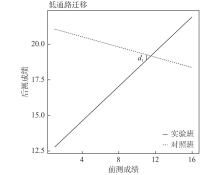
| 常数项 | 期末成绩 | 前测成绩 | 实验组别 | 迁移类型 | 前测成绩 实验组别 | 迁移类型 实验组别 | F | df | ||
| 主效应 模型 | −12.81(3.97)** | 0.26(0.05)*** | 0.22(0.13) | 1.79(0.85)* | 5.72(0.84)*** | — | — | 23.72 | 4,151 | 0.39 |
| 交互效应 模型 | −11.29(3.86)** | 0.28(0.05)*** | −0.18(0.17) | −4.77(2.82) | 7.87(1.12)*** | 0.79(0.23)*** | −4.31(1.59)*** | 20.69 | 6,149 | 0.45 |
"
"
| 埃里克森, 兰宁. (2018). 以概念为本的课程与教学: 培养核心素养的绝佳实践(鲁效孔译). 上海: 华东师范大学出版社. | |
| 安桂清. (2013). 以学为中心的课例研究. 教师教育研究, 25 (02), 72- 77. | |
| 奥苏贝尔. (2018). 意义学习新论——获得与保持知识的认知观(毛伟译). 杭州: 浙江教育出版社. | |
| 珀金斯. (2015). 为未知而教, 为未来而学(杨彦捷译). 杭州: 浙江人民出版社. | |
| 布兰思福特等. (2013). 人是如何学习的: 大脑、心理、经验及学校(扩展版)(程可拉等译). 上海: 华东师范大学出版社. | |
| 崔允漷. (2019). 学科核心素养呼唤大单元教学设计. 上海教育科研, (04), 1. | |
| 杜威. (2015). 我们如何思维(伍中友译). 北京: 新华出版社. | |
| 焦尔当. (2015). 学习的本质(杭零译). 上海: 华东师范大学出版社. | |
| 李刚, 吕立杰. (2018). 大概念课程设计: 指向学科核心素养落实的课程架构. 教育发展研究, 38 (Z2), 35- 42. | |
| 李凯, 吴刚平. (2022). 为素养而教: 大概念教学理论指向与教学意蕴. 比较教育研究, 44 (04), 62- 71. | |
| 刘徽. (2020). “大概念”视角下的单元整体教学构型——兼论素养导向的课堂变革. 教育研究, 41 (06), 64- 77. | |
| 刘徽. (2022). 大概念教学: 素养导向的单元整体设计. 北京: 教育科学出版社. | |
| 罗日叶. (2010). 为了整合学业获得: 情境的设计和开发(汪凌译). 上海: 华东师范大学出版社. | |
| 吕立杰. (2020). 大概念课程设计的内涵与实施. 教育研究, 41 (10), 53- 61. | |
| 麦克泰, 西尔维. (2021). 为深度学习而教: 促进学生参与意义建构的思维工具(丁旭译). 北京: 教育科学出版社. | |
| 斯特恩, 费拉多, 邓肯, 阿莱奥. (2023). 可迁移的学习: 为变化的世界设计课程(屠莉娅等译). 杭州: 浙江科学技术出版社. | |
| 索耶. (2010). 剑桥学习科学手册(徐晓东等译). 北京: 教育科学出版社. | |
| 汤蕾. (2016). 学习迁移理论在高中化学教学中的实践研究. 武汉: 华中师范大学硕士学位论文. | |
| 王宽明. (2021). 基于差异化教学的课程设计探索. 教育科学研究, (01), 48- 53. | |
| 威金斯, 麦克泰. (2018). 理解为先模式——单元教学设计指南(一)(盛群力等译). 福州: 福建教育出版社. | |
| 威金斯, 麦克泰. (2021). 理解为先模式——单元教学设计指南(二)(沈祖芸等译). 福州: 福建教育出版社. | |
| 威金斯, 麦克泰格. (2017). 追求理解的教学设计(第二版)(闫寒冰等译). 上海: 华东师范大学出版社. | |
| 威金斯, 麦克泰格. (2022). 基于设计的学校教育: 使命、行动与成就(闫寒冰主译). 上海: 华东师范大学出版社. | |
| 威廉. (2021). 融于教学的形成性评价(王少非译). 南京: 江苏凤凰科学技术出版社. | |
| 谢尔, 布鲁克斯, 特赖宁, 威尔逊, 考夫曼, 赫尔. (2021). 统一学习模式——从动机、认知及神经生物科学层面理解最佳教学(毛伟译). 杭州: 浙江大学出版社. | |
| 许玮, 陈航, 刘晓. (2023). 融入设计思维的科学大概念单元教学模式构建及应用研究. 全球教育展望, 52 (08), 13- 29. | |
| 于泽元, 那明明. (2023). 情境化学习: 内涵、价值及实施. 华东师范大学学报(教育科学版), 41 (01), 89- 97. | |
| 张华. (2023). 论课程核心素养: 走向“新三维目标”. 教育研究, 44 (09), 76- 85. | |
| 张良, 罗生全. (2021). 论“用以致学”: 指向素养发展的教学认识论. 华东师范大学学报(教育科学版), 39 (02), 40- 49. | |
| 张奇, 张庆翔, 张笑笑, 高超. (2023). 规则变型推理对远迁移问题解决的促进. 心理学报, 55 (01), 117- 128. | |
| 张侨平. (2021). 数学开放性问题和平行任务的设计: 处理数学学习差异的一种途径. 课程. 教材. 教法, 41 (01), 105- 109+137. | |
| 中华人民共和国教育部. (2020). 普通高中课程方案(2017年版2020年修订). 北京: 人民教育出版社. | |
| 中华人民共和国教育部. (2022). 义务教育课程方案(2022年版). 北京: 北京师范大学出版社. | |
| 佐藤学. (2010). 学校的挑战: 创建学习共同体(钟启泉译). 上海: 华东师范大学出版社. | |
| Anmarkrud, Ø., Andresen, A., & Bråten, I. (2019). Cognitive load and working memory in multimedia learning: Conceptual and measurement issues. Educational Psychologist, 54 (2), 61- 83. | |
| Bakker, A. (2018). Design Research in Education: A Practical Guide for Early Career Researchers. New York: Routledge. | |
| Brown, A. L. (1992). Design experiments: Theoretical and methodological challenges in creating complex interventions in classroom settings. The Journal of the Learning Sciences, 2 (2), 141- 178. | |
| Brünken, R. , Seufert, T. , & Paas, F. (2010). Measuring cognitive load, In J. L. Plass, R. Moreno & R. Brunken(Eds. ), Cognitive Load Theory (pp. 181-202). New York: Cambridge University Press. | |
| Chalmers, C., Carter, M., Cooper, T., & Nason, R. (2017). Implementing “big ideas” to advance the teaching and learning of Science, Technology, Engineering, and Mathematics(STEM). International Journal of Science and Mathematics Education, 15 (S1), 25- 43. | |
| Cobb, P. (2001). Supporting the improvement of learning and teaching in social and institutional context. In S. Carver & D. Klahr (Eds. ), Cognition and Instruction: Twenty-five Years of Progress (pp. 455–478). Mahwah: Lawrence Erlbaum Associates. | |
| Cobb, P., Confrey, J., diSessa, A., Lehrer, R., & Schauble, L. (2003). Design experiments in educational research. Educational Researcher, 32 (1), 9- 13. | |
| Collins, A. (1992). Toward a design science of education. In E. Scanlon & T. O’Shea (Eds. ), New Directions in Educational Technology (pp. 15-22). Berlin: Springer-Verlag. | |
| Collins, A., Joseph, D., & Bielaczyc, K. (2004). Design research: Theoretical and methodological issues. The Journal of the Learning Sciences, 13 (1), 15- 42. | |
| Confrey, J. , & Lachance, A. (2000). Transformative teaching experiments through conjecture-driven research design. In A. E. Kelly & R. A. Lesh (Eds. ), Handbook of Research Design in Mathematics and Science Education(pp. 231-265). Mahwah: Lawrence Erlbaum Associates. | |
| Fan, L., Qi, C., Liu, X., Wang, Y., & Lin, M. (2017). Does a transformation approach improve students’ ability in constructing auxiliary lines for solving geometric problems? An intervention-based study with two Chinese classrooms. Educational Studies in Mathematics, 96, 229- 248. | |
| Fosnot, C. T. (2007). Our teaching and learning philosophy. In C. T. Fosnot (Ed. ), Investigating Multiplication and Division Grade 3–5 (pp. 13–15). Portsmouth: Heinemann. | |
| Jaccard, J. , & Turrisi, R. (2003). Interaction Effects in Multiple Regression (2nd Ed.). Thousand Oaks: Sage Publications. | |
| Kali, Y. , & Hoadley, C. (2021). Design-based research methods in CSCL: Calibrating our epistemologies and ontologies. In U. Cress, C. Rose, A. Wise, & J. Oshima (Eds. ), International Handbook of Computer-supported Collaborative Learning(pp. 479-496). Switzerland: Springer Nature Switzerland AG. | |
| Kalyuga, S., & Singh, A. (2016). Rethinking the boundaries of cognitive load theory in complex learning. Educational Psychology Review, 28 (4), 831- 852. | |
| Kapur, M. (2012). Productive failure in learning the concept of variance. Instructional Science, 40 (4), 651- 672. | |
| Keller, J. M. (1987). Development and use of the ARCS model of instructional design. Journal of Instructional Development, 10 (3), 2- 10. | |
| Lewis, D. R. , Carlson, S. , Riesbeck, C. , Lu, K. , Gerber, E. , & Easterday, M. (2020). The logic of effective iteration in design-based research. In M. Gresalfi & I. S. Horn (Eds. ), The Interdisciplinarity of the Learning Sciences, 14th International Conference of the Learning Sciences (ICLS) 2020, Volume 2 (pp. 1149-1156). Nashville: International Society of the Learning Sciences. | |
| Marschall, C. & French, R. (2018). Concept-based Inquiry in Action: Strategies to Promote Transferable Understanding. Thousand Oaks: Corwin. | |
| McTighe, J. , & Wiggins, G. (2013). Essential Questions: Opening Doors to Student Understanding. Alexandria: ASCD. | |
| Oakes, J. (1985). Keeping Track: How Schools Structure Inequality. New Haven: Yale University Press. | |
| Olson, J. K. (2008). Concept-focused teaching: Using big ideas to guide instruction in science. Science and Children, 46 (4), 45- 49. | |
| Perkins, D. N., & Salomon, G. (1988). Teaching for transfer. Educational Leadership, 46 (1), 22- 32. | |
| Perkins, D. N. , & Salomon, G. (1992). Transfer of learning. In T. Husén & T. N. Postlethwaite (Eds. ), International Encyclopedia of Education (2nd ed. , pp. 1–13). Oxford: Pergamon Press. | |
| Roumell, E. (2019). Priming adult learners for learning transfer: Beyond content and delivery. Adult Learning, 30 (1), 15- 22. | |
| Sandoval, W. A. (2004). Developing learning theory by refining conjectures embodied in educational designs. Educational Psychologist, 39 (4), 213- 223. | |
| Seel, N. M. , Lehmann, T. , Blumschein, P. , & Podolskiy, O. A. (2017). Instructional Design for Learning: Theoretical Foundations. Rotterdam: Sense Publishers. | |
| Simon, H. A. (1969). The Sciences of the Artificial. Cambridge: MIT Press. | |
| Silverman, H. (2015). Designerly ways for action research. In H. Bradbury (Ed. ), The Sage Handbook of Action Research (pp. 716–723). Thousand Oaks: Sage Publications. | |
| Soderstrom, N. C., & Bjork, R. A. (2015). Learning versus performance: An integrative review. Psychological Science, 10 (2), 176- 199. | |
| Stylianides, A. J., & Stylianides, G. J. (2013). Seeking research-grounded solutions to problems of practice: Classroom-based interventions in mathematics education. ZDM, 45, 333- 341. | |
| Sweller, J., Van Merriënboer, J. J. & Paas, F. G. (1998). Cognitive architecture and instructional design. Educational Psychology Review, 10 (3), 251- 296. | |
| Tomlinson, C. A. (2017). How to Differentiate Instruction in Academically Diverse Classrooms. Alexandria: ASCD. | |
| Tomlinson, C. A. , & McTighe, J. (2006). Integrating Differentiated Instruction & Understanding by Design: Connecting Content and Kids. Alexandria: ASCD. | |
| Van Merriënboer, J. J. G., & Kirschner, P. A. (2018). Ten Steps to Complex Learning: A Systematic Approach to Four-component Instructional Design (3rd Ed.). New York: Routledge. |
| [1] | Yunhuo Cui, Wenye Zhou, Hao Lei, Hongrui Guo, Zihong Zhang, Shaofei Wang, Guiqing An, Gangping Wu. The Autonomous Construction of the Academic Discourse System for Basic Education Curriculum Reform in China [J]. Journal of East China Normal University(Educational Sciences), 2024, 42(11): 154-170. |
| [2] | Zeyuan Yu, Mingming Na. Situational Learning: Connotation, Value and Implementation [J]. Journal of East China Normal University(Educational Sciences), 2023, 41(1): 89-97. |
| [3] | Li Deng, Senyun Zhan. Who is More Likely to Succeed: A Comparative Study of Competencies-based Education Reform in China, the United States and Finland [J]. Journal of East China Normal University(Educational Sciences), 2022, 40(12): 38-49. |
| [4] | Song Huan, Wang Heng. The Mechanism of Training Transfer Promotion in School-based Training: A Moderated Mediation Model [J]. Journal of East China Normal University(Educationa, 2019, 37(2): 108-115. |
| [5] | LIU Hui, ZHANG Peng, PAN Jingjing. How to Make the Results of Academic Evaluation More Valid: Research on Adjustment Model Based on Latent Variable [J]. Journal of East China Normal University(Educationa, 2018, 36(3): 87-98+169. |
| [6] | ZHONG Baichang, LI Yi. Implementation of Key Competencies: Shift from Classification to Stratification [J]. Journal of East China Normal University(Educationa, 2018, 36(1): 55-63+161+162. |
| [7] | TSAI Ching-tien. Theoretical Foundation and School Education Cultivation of Core Competencies [J]. Journal of East China Normal University(Educationa, 2018, 36(1): 42-54+161. |
| [8] | CHU Hongqi. Transformation of Chinese Educational Development Mode: Path Selection and Endogenous Development [J]. Journal of East China Normal University(Educationa, 2018, 36(1): 1-14+159. |
| [9] | CUI Hong, ZHU Jiahua, ZHANG Xiuhong. An Analysis of STEAM Project Based Learning: A Perspective of Key Competencies [J]. Journal of East China Normal University(Educationa, 2017, 35(4): 54-61+135+136. |
| [10] | HU Weiping, SHOU Xin, CHEN Yonggang. Building the STEAM Education System in Primary and Secondary Schools [J]. Journal of East China Normal University(Educationa, 2017, 35(4): 31-39+134. |
| [11] | WEI Rui,LIU Sheng,SHI Man,ZHOU Ping-Yan,WANG Ying,CHEN You-Yi,LIU Xia,LIU Jian. Supporting 21st Century Competencies Education [J]. Journal of East China Normal University(Educationa, 2016, 34(3): 46-51. |
| [12] | LIU Sheng,WEI Rui,ZHOU Ping-Yan,SHI Man,WANG Ying,LIU Jian,CHEN You-Yi,LIU Xia. Curriculum, Teaching, Learning and Assessment for 21st Century Competencies [J]. Journal of East China Normal University(Educationa, 2016, 34(3): 38-45. |
| [13] | 1SHI Man;2,3LIU Cheng;4LIU Xia;5 ZHOU Pingyan;3 Chris Tan;3、5LIU Jian;6、3 WEI Rui. Analysis of 21st Century Competencies and Frameworks [J]. Journal of East China Normal University(Educationa, 2016, 34(3): 29-37. |
| [14] | ZHOU Ping-Yan,WEI Rui,LIU Sheng,SHI Man,CHEN You-Yi,LIU Xia,LIU Jian. Driving Forces under the Construction of 21st Century Competencies [J]. Journal of East China Normal University(Educationa, 2016, 34(3): 22-28. |
| [15] | LIU Jian1,2WEI Rui3,1LIU Cheng4,1LIU Xia5 FANG Tanxiang1 Chris Tan1. Research Design of EDUCATION FOR THE FUTURE: Global Experience of Developing 21st Century Skills and Competencies [J]. Journal of East China Normal University(Educationa, 2016, 34(3): 17-21. |
| Viewed | ||||||
|
Full text |
|
|||||
|
Abstract |
|
|||||
