华东师范大学学报(教育科学版) ›› 2026, Vol. 44 ›› Issue (9): 101-114.doi: 10.16382/j.cnki.1000-5560.2026.09.009

• 高等教育 • 上一篇    

我国工科毕业生就业趋势的多维分析:来自2009—2025年的证据

邱文琪1, 岳昌君2   

  1. 1. 西南大学教育学部,重庆 400715
    2. 北京大学教育经济研究所,北京 100871
  • 出版日期:2026-09-01 发布日期:2026-08-29
  • 基金资助:
    国家自然科学基金青年项目“技能匹配视角下我国工科毕业生的就业流动及其经济效应”(72304230);教育部人文社会科学重点研究基地重大课题“高校毕业生高质量就业的评价与对策研究”(22JJD880038);重庆市教育科学规划重点项目“重庆高等教育对推动形成新质生产力的作用和发展路径研究”(K24YD2020002)。

A Multidimensional Analysis of Employment Trends for Engineering Graduates in China: Evidence from 2009 to 2025

Wenqi Qiu1, Changjun Yue2   

  1. 1. Faculty of Education, Southwest University, Chongqing 400715, China
    2. Institute of Economics of Education, Peking University, Beijing 100871, China
  • Online:2026-09-01 Published:2026-08-29

摘要:

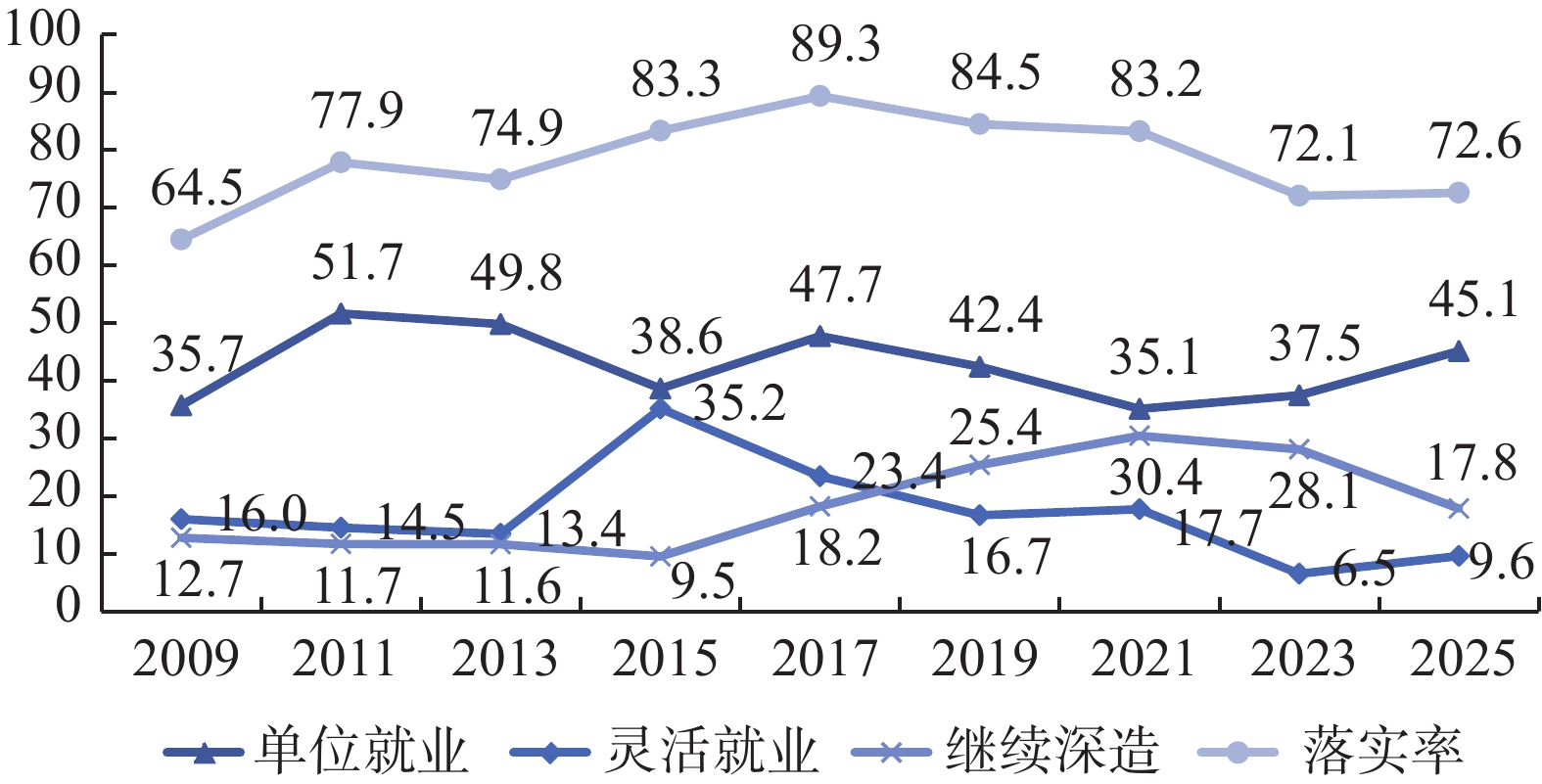
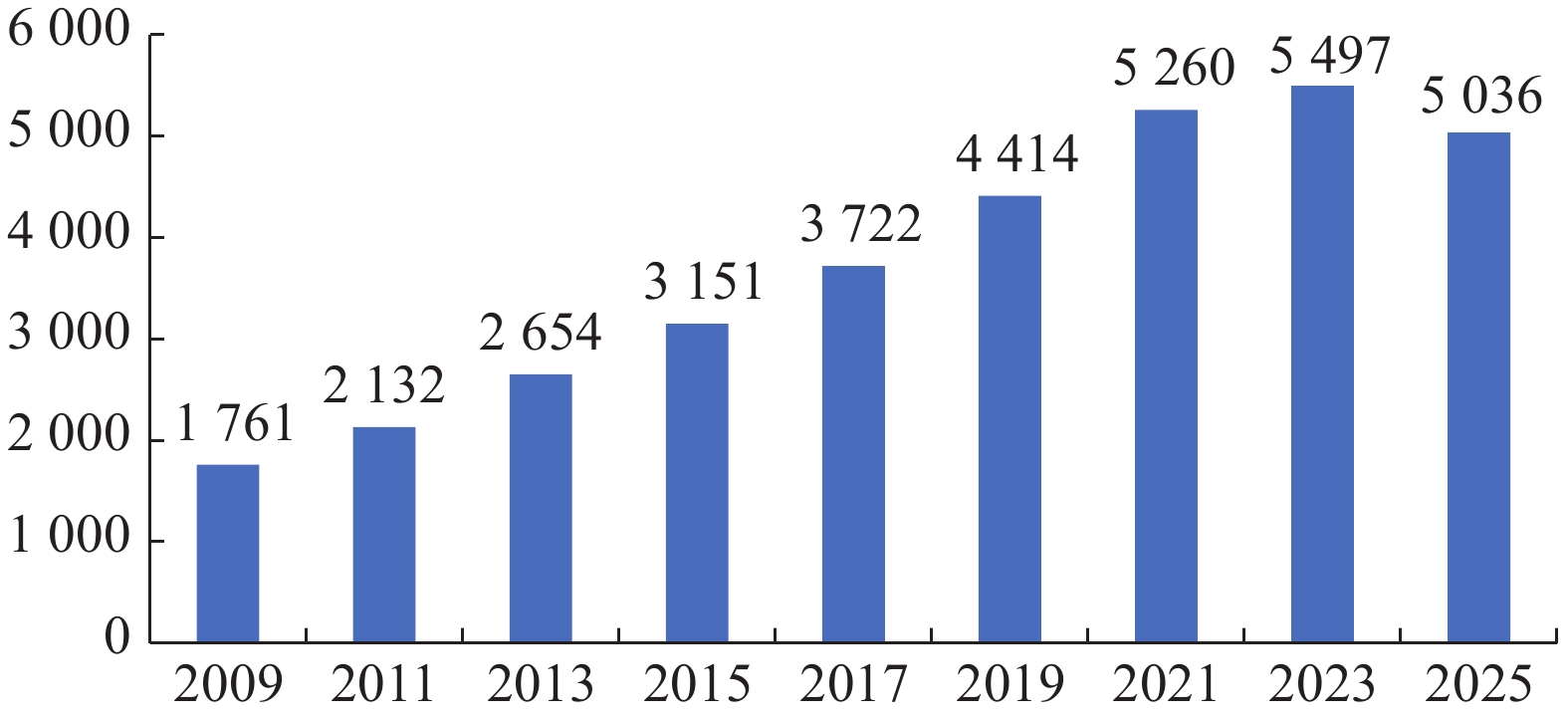
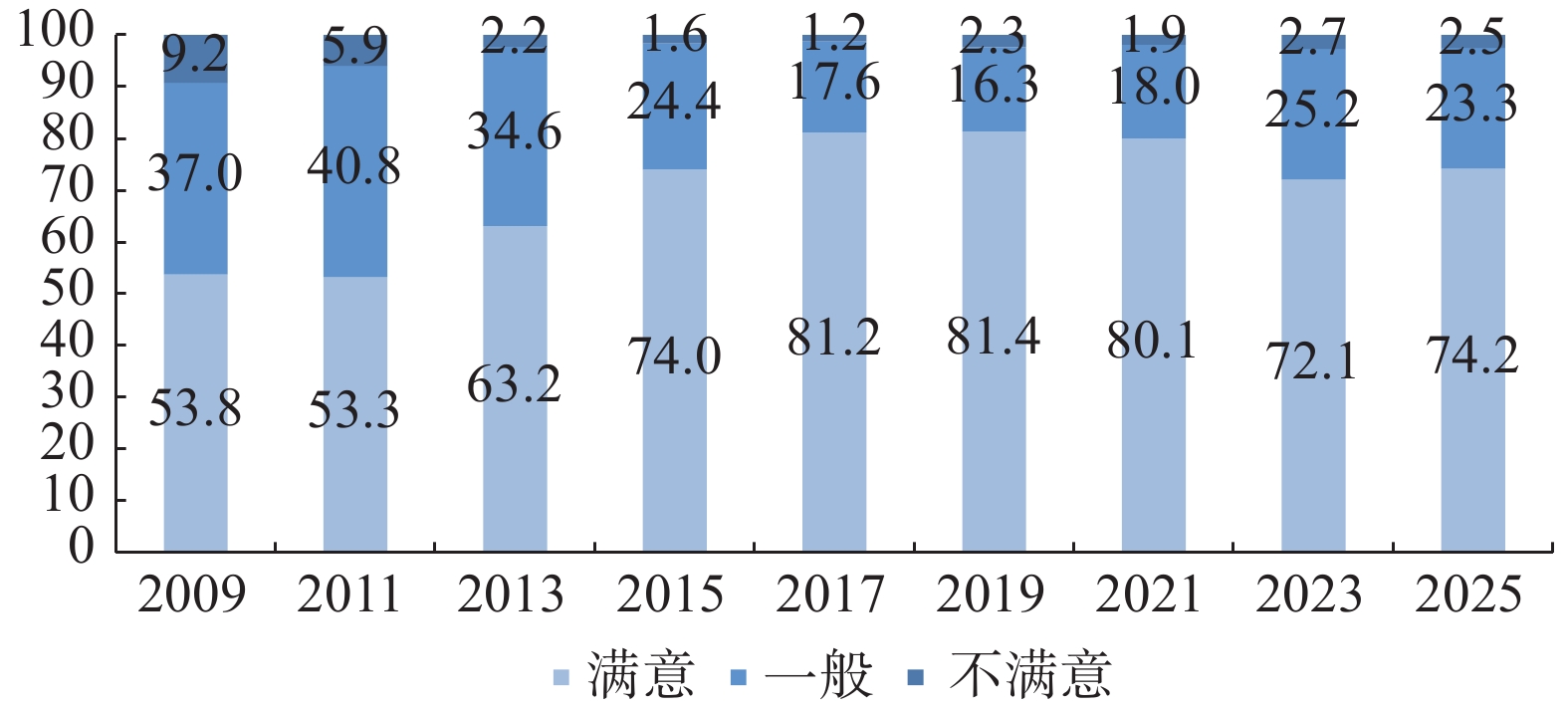
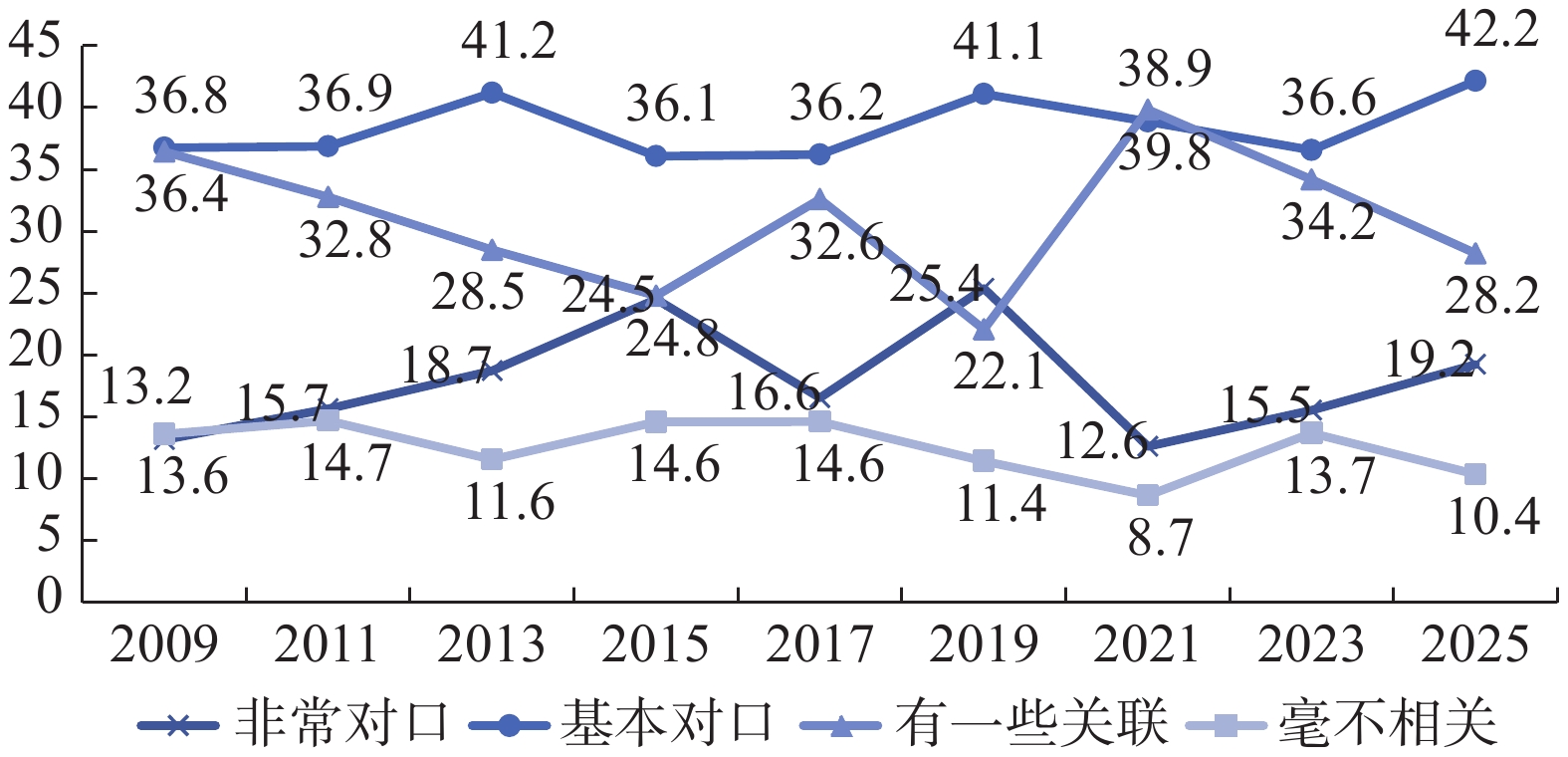
在我国教育、科技、人才一体推进的战略背景下,工科毕业生的就业是打通人才—科技—产业的关键环节。基于2009—2025年全国高校毕业生就业状况抽样调查数据,对工科毕业生进行多维事后分层加权后进行分析发现,工科毕业生的去向落实率呈先升后降的波动趋势,2017年达到峰值89.3%后回落至2025年72.6%;单位就业始终是最主要的毕业去向,继续深造的比例在2021年达到峰值30.4%峰值后回落。就业质量呈现出由持续改善到阶段性调整的特征,单位就业工科毕业生名义起薪在2023年达到最高5497元后回落至2025年的5036元,就业满意比例在2019年升至最高81.4%后于2025年降至74.2%。就业结构方面,制造业始终是工科毕业生就业的重要行业,建筑业、电力热力燃气及水的生产和供应业以及信息传输、软件和信息技术服务业长期位居前列,国有企业和民营企业是主要吸纳单位,专业技术人员始终是最主要的职业类型;就业地区以东部为主,中西部地区的吸纳比例趋于均衡,县及以下基层地点的就业比例有所上升;专业匹配和技能匹配度总体较高,求职意愿逐步转向发展因素与稳定性因素并重。学校类型、学历、专业与兴趣的匹配度是影响工科毕业生就业的重要因素。

关键词: 工科毕业生, 就业趋势, 毕业去向, 就业质量, 就业结构

Abstract:

Under China's strategic framework of integrated advancement in education, science and technology, and human resources, the employment of engineering graduates serves as a critical link connecting talent, technology, and industry. Based on the data from Chinese College Graduates Employment Survey (2009—2025), this study conducts a multidimensional post-stratification weighting analysis of engineering graduates and finds that their employment settlement rate followed a fluctuating pattern of first rising and then falling, peaking at 89.3% in 2017 before declining to 72.6% in 2025. Institutional employment consistently remained the dominant post-graduation destination, while the proportion pursuing further education peaked at 30.4% in 2021 and then declined. In terms of employment quality, engineering graduates exhibited a pattern of sustained improvement followed by a phase of adjustment: the nominal starting salary of institutionally employed engineering graduates reached 5,497 yuan in 2023 before falling to 5,036 yuan in 2025, while the proportion reporting job satisfaction rose to 81.4% in 2019 and then dropped to 74.2% in 2025. With regard to employment structure, manufacturing remained a major sector for engineering graduates, while construction; the production and supply of electricity, heat, gas, and water; and information transmission, software, and information technology services consistently ranked among the leading industries. State-owned enterprises and private enterprises were the principal employers, and professional and technical personnel remained the predominant occupational category. Spatially, employment was concentrated mainly in eastern China, while the shares absorbed by central and western China became more balanced, and the proportion employed in county-level and below grassroots locations increased. Overall, major-job matching and skill matching remained relatively high, and job preferences gradually shifted toward a balance between developmental considerations and concerns for stability. School type, educational attainment, and the alignment between major and interest are identified as crucial factors influencing engineering graduates’ employment outcomes.

Key words: engineering graduates, employment trends, post-graduation destination, employment quality, employment structure