
 中国人文社会科学核心期刊
华东师范大学学报(教育科学版) ›› 2025, Vol. 43 ›› Issue (6): 61-80.doi: 10.16382/j.cnki.1000-5560.2025.06.005
朱德全, 刘璐璐
出版日期:2025-06-01
发布日期:2025-05-19
基金资助:Dequan Zhu, Lulu Liu
Online:2025-06-01
Published:2025-05-19
摘要:
深化教育评价改革是新时代基础教育工作的重中之重。教育评价改革是“破”与“立”的辩证关系体,必须坚持破立并举、先立后破、不破不立的总体原则。本文立足基础教育实践视域,从基础教育评价改革“破”与“立”两方面展开实证研究,以期通过“破”除“唯”与“立”新“维”的双向发力,为基础教育评价改革提供助力和参考。一方面,通过对全国范围内
朱德全, 刘璐璐. “破五唯立四维”:新时代基础教育评价改革破立识别的实证研究[J]. 华东师范大学学报(教育科学版), 2025, 43(6): 61-80.
Dequan Zhu, Lulu Liu. “Breaking the Five-Only Criteria and Establishing Four Dimensions”: An Empirical Study on the Identification of the Breaking and Establishing in the Evaluation Reform of Basic Education in the New Era[J]. Journal of East China Normal University(Educationa, 2025, 43(6): 61-80.
表 1
问卷调查有效样本基本情况统计"
| 教育阶段 | 学前教育 | 小学教育 | 初中教育 | 高中教育 | 总计 | 有效样本 | ||||||||||
| 项目 | 人数 | 比例(%) | 人数 | 比例(%) | 人数 | 比例(%) | 人数 | 比例(%) | 人数 | 比例(%) | ||||||
| 60 | 4.43 | 524 | 38.67 | 399 | 29.45 | 372 | 27.45 | 1355 | 100 | 1355 | ||||||
| 年龄 | 30岁及以下 | 16 | 26.67 | 140 | 26.72 | 59 | 14.79 | 106 | 28.49 | 321 | 23.69 | 1355 | ||||
| 30—40岁 | 19 | 31.67 | 179 | 34.16 | 117 | 29.32 | 62 | 16.67 | 377 | 27.83 | ||||||
| 40—50岁 | 15 | 25 | 132 | 25.19 | 159 | 39.85 | 102 | 27.42 | 408 | 30.11 | ||||||
| 50岁及以上 | 10 | 16.67 | 73 | 13.93 | 64 | 16.04 | 102 | 27.42 | 249 | 18.38 | ||||||
| 岗位 | 管理层 | 23 | 38.33 | 77 | 14.69 | 81 | 20.3 | 80 | 21.51 | 261 | 19.26 | 1355 | ||||
| 办公人员 | 5 | 8.33 | 10 | 1.91 | 14 | 3.51 | 22 | 5.91 | 51 | 3.76 | ||||||
| 普通教学 | 20 | 33.33 | 266 | 50.76 | 224 | 56.14 | 206 | 55.38 | 716 | 52.84 | ||||||
| 教学兼班主任 | 12 | 20 | 171 | 32.63 | 80 | 20.02 | 64 | 17.2 | 327 | 24.13 | ||||||
| 教龄 | 5年以下 | 14 | 23.33 | 115 | 21.95 | 64 | 16.04 | 98 | 26.34 | 291 | 21.48 | 1355 | ||||
| 5—10年 | 12 | 20 | 125 | 23.85 | 53 | 13.28 | 32 | 8.6 | 222 | 16.38 | ||||||
| 10—20年 | 11 | 18.33 | 96 | 18.32 | 128 | 32.08 | 80 | 21.51 | 315 | 23.25 | ||||||
| 20年以上 | 23 | 38.33 | 188 | 35.88 | 154 | 38.6 | 162 | 43.55 | 527 | 38.89 | ||||||
| 职称 | 初级职称 | 28 | 46.67 | 271 | 51.72 | 133 | 33.33 | 126 | 33.87 | 558 | 41.18 | 1355 | ||||
| 中级职称 | 13 | 21.67 | 190 | 36.26 | 172 | 43.11 | 91 | 24.46 | 466 | 34.39 | ||||||
| 高级职称 | 15 | 25 | 60 | 11.45 | 87 | 21.8 | 131 | 35.22 | 293 | 21.62 | ||||||
| 正高级职称 | 4 | 6.67 | 3 | 0.57 | 7 | 1.75 | 24 | 6.45 | 38 | 2.80 | ||||||
表 2
两轮专家征询数据结果"
| 征询轮次 | 征询人数 | 平均权威系数 | 均值范围 | 标准差 | 变异系数 |
| 第一轮 | 15 | 0.747 | 4.000~4.450 | 0.557~0.865 | <0.5 |
| 第二轮 | 20 | 0.810 | 4.450~5.000 | 0.000~0.497 | <0.5 |
表 3
基础教育评价改革“立四维”价值体系"
| 一级维度 | 二级维度 | 解释与描述 |
| 立德 | 爱国主义 | 个体对祖国的积极、支持和热爱的态度 |
| 集体主义 | 个人利益应当服从集体、民族和国家利益的精神 | |
| 道德情操 | 个体的道德意识、道德品质和情感体验 | |
| 心理健康 | 个体的精神、情绪和意识的良好状态 | |
| 知法守法 | 个体对法律的认知和遵守 | |
| 立志 | 有大志 | 个体具有远大的志向或理想 |
| 有正志 | 个体具有正确、正当、端正的志向 | |
| 有担当 | 敢于、善于、乐于承担重任的坚韧品质 | |
| 有目标 | 能明确近期或短期行动的预期结果或标准 | |
| 有毅力 | 个体能够坚持不懈、克服障碍以达成目标的品质 | |
| 立能 | 有综合素养 | 养成德智体美劳全面发展的综合能力 |
| 能精业求知 | 精通所从事的职业以及对知识的持续追求 | |
| 善创新思考 | 探索和创造新颖独创的方法解决问题的思维过程 | |
| 有国际视野 | 具有全球眼光和国际视角 | |
| 能立身处世 | 能够在社会上自立以及与人和谐相处交往 | |
| 立行 | 发现行动力 | 具有好奇心和敏锐的观察力,能意识到存在的问题 |
| 动机行动力 | 推动个体产生行为活动的主观愿望和意图 | |
| 规划行动力 | 个体能根据目标合理规划、组织和安排时间与行动 | |
| 变革行动力 | 个体的行为活动产生效果,促进事物发生改变 | |
| 反思行动力 | 行动结束后的回顾再思考与总结经验教训 |
表 4
基础教育评价改革“破五唯”的描述性统计表"
| 平均值±标准差 | 中位数 | 标准误 | IQR | 峰度 | 偏度 | 变异系数(CV) | |
| 政策认知 | 3.490±0.862 | 3.500 | 0.023 | 1.100 | −0.561 | −0.107 | 24.692 % |
| 情意认同 | 4.294±0.665 | 4.320 | 0.018 | 1.000 | 0.987 | −0.916 | 15.494% |
| 行为趋向 | 3.681±0.983 | 3.933 | 0.027 | 1.333 | 0.346 | −0.863 | 26.696% |
表 5
不同背景的教师间的差异分析"
| 教育阶段 | 岗位 | 教龄 | 年龄 | 职称 | ||
| 政策认知 | F值 | 3.567 | 33.249 | 6.275 | 6.061 | 8.431 |
| ρ值 | 0.014* | 0.000*** | 0.000*** | 0.000*** | 0.000*** | |
| 情意认同 | F值 | 1.219 | 10.593 | 3.974 | 2.598 | 1.794 |
| ρ值 | 0.301 | 0.000*** | 0.008** | 0.051 | 0.146 | |
| 行为趋向 | F值 | 4.191 | 8.518 | 2.738 | 1.272 | 0.733 |
| ρ值 | 0.006** | 0.000*** | 0.042* | 0.282 | 0.532 |
表 6
不同岗位的教师的具体差异情况"
| 学校管理层 | 办公人员 | 教师 | 教师兼班主任 | ||
| 政策认知 (***ρ) | 平均值± 标准差 | 3.95±0.71 | 3.42±0.92 | 3.35±0.84 | 3.43±0.90 |
| 情意认同 (***ρ) | 平均值± 标准差 | 4.48±0.55 | 4.14±0.73 | 4.23±0.69 | 4.31±0.65 |
| 行为趋向 (***ρ) | 平均值± 标准差 | 3.73±0.89 | 3.21±1.08 | 3.62±1.01 | 3.85±0.94 |
表 7
不同教龄的教师的具体差异情况"
| 5年以下 | 5-10年 | 10-20年 | 20年以上 | ||
| 政策认知 (***ρ) | 平均值± 标准差 | 3.40±0.85 | 3.45±0.84 | 3.39±0.88 | 3.61±0.85 |
| 情意认同 (**ρ) | 平均值± 标准差 | 4.25±0.67 | 4.20±0.71 | 4.28±0.72 | 4.36±0.60 |
| 行为趋向 (*ρ) | 平均值± 标准差 | 3.63±1.09 | 3.62±1.03 | 3.61±1.00 | 3.78±0.88 |
表 8
不同教育阶段的教师的具体差异情况"
| 学前教育 | 小学教育 | 初中教育 | 高中教育 | ||
| 政策认知 (*ρ) | 平均值± 标准差 | 3.65±0.74 | 3.56±0.89 | 3.47±0.87 | 3.39±0.82 |
| 情意认同 | 平均值± 标准差 | 4.43±0.65 | 4.31±0.66 | 4.28±0.68 | 4.26±0.65 |
| 行为趋向 (**ρ) | 平均值± 标准差 | 4.06±0.84 | 3.72±1.00 | 3.61±1.02 | 3.64±0.93 |
表 9
政策认知、情意认同、行为趋向三维度的相关分析"
| 政策认知 | 情意认同 | 行为趋向 | ||
| 政策认知 | 相关系数 | 1 | ||
| ρ 值 | ||||
| 情意认同 | 相关系数 | 0.359*** | 1 | |
| ρ 值 | 0.000 | |||
| 行为趋向 | 相关系数 | 0.012 | 0.403*** | 1 |
| ρ值 | 0.652 | 0.000 |
表 10
中介作用分析结果"
| 第一步 | 第二步 | 第三步 | |
| 行为趋向 | 情意认同 | 行为趋向 | |
| 标准化回归系数β | 标准化回归系数β | 标准化回归系数β | |
| 年龄 | −0.151* | −0.091 | −0.122* |
| 岗位 | 0.052 | −0.012 | 0.056* |
| 教龄 | 0.187** | 0.137* | 0.143* |
| 教育阶段 | −0.076** | −0.007 | −0.073** |
| 职称 | 0.049 | −0.020 | 0.055 |
| 政策认知 | −0.071* | 0.353*** | −0.184*** |
| 情意认同 | 0.318*** | ||
| R2 | 0.022 | 0.131 | 0.110 |
| 调整R2 | 0.018 | 0.128 | 0.106 |
| F值 | F =5.070,p=0.000 | F=34.008,p=0.000 | F =23.831,p=0.000 |
| N |
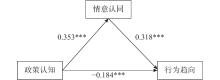
图 1
中介效应路径分析图"
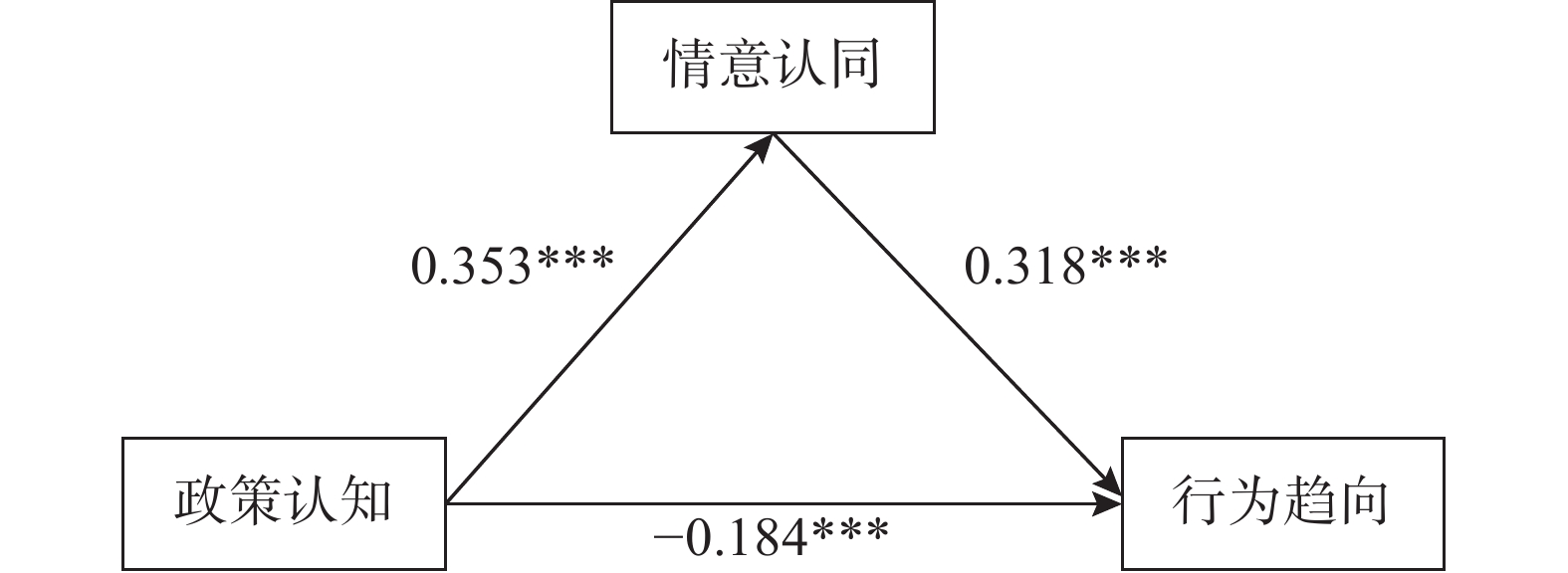
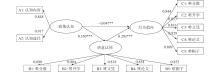
图 2
结构方程模型图"
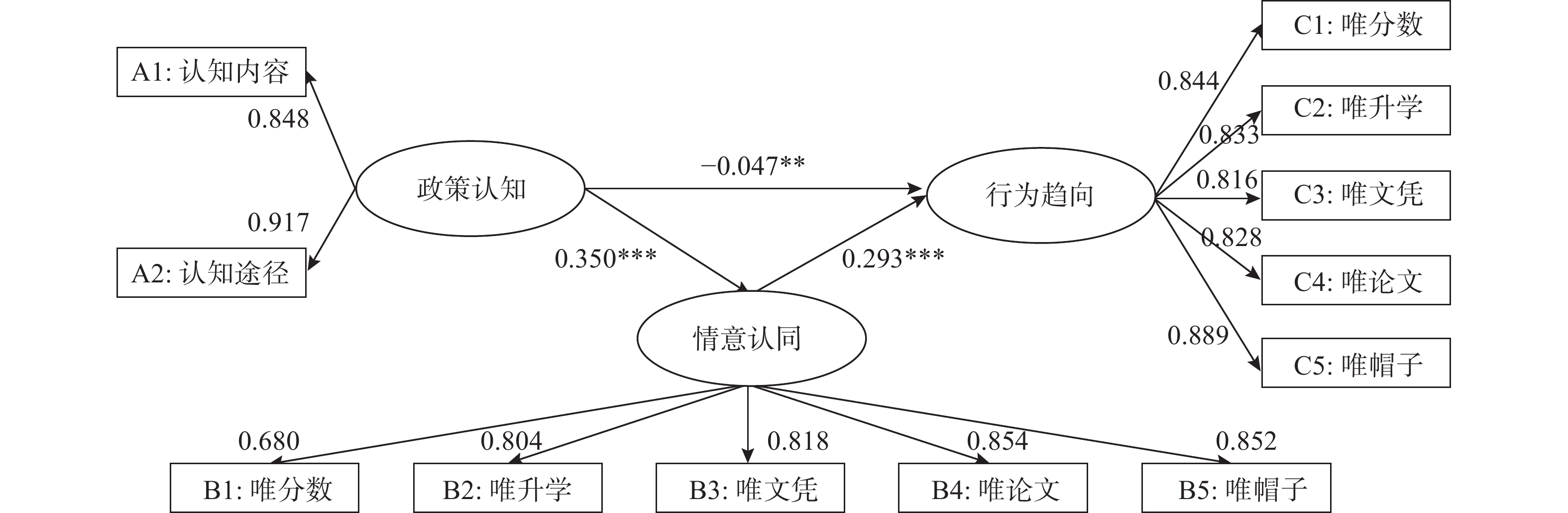
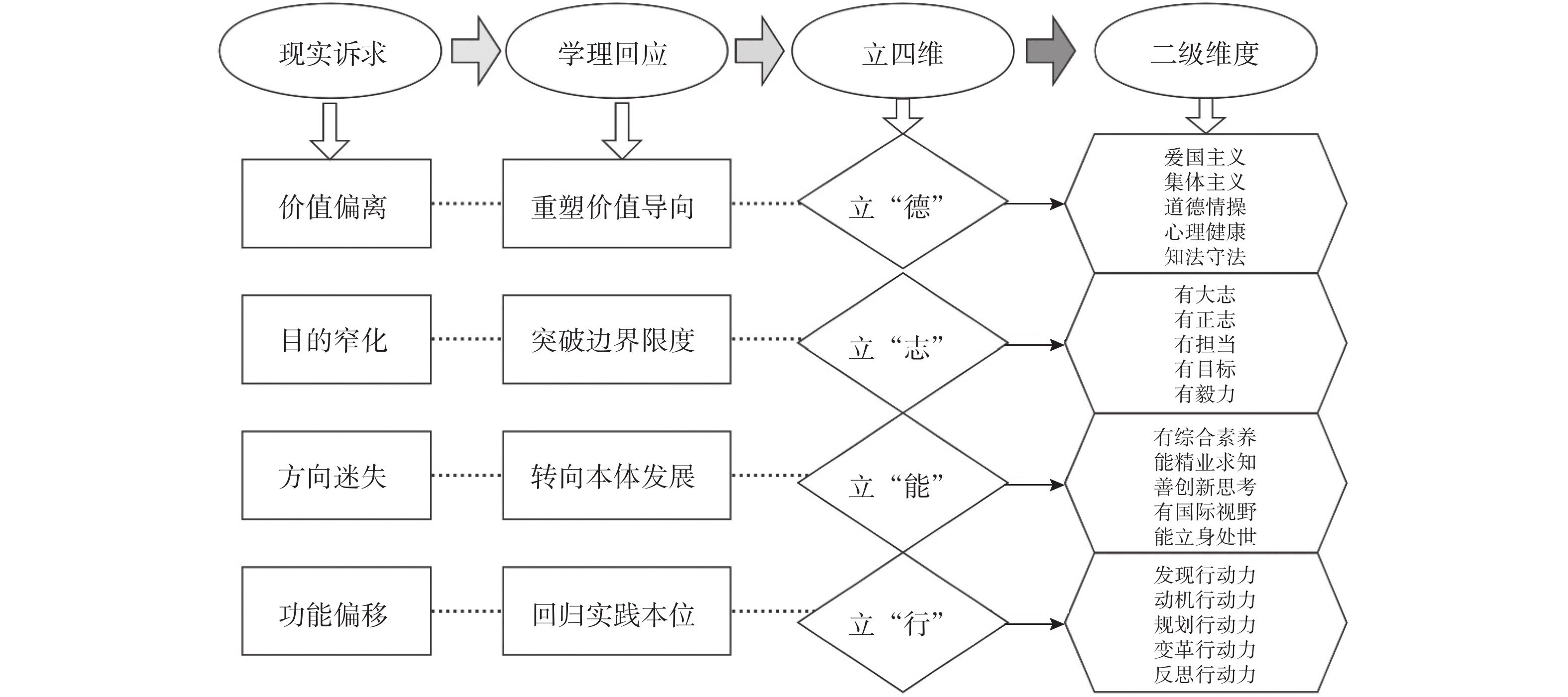
图 3
基础教育评价改革“立四维”价值体系的机理分析图"
| 布鲁姆. (1986). 教育目标分类学 第1分册 认知领域(罗黎辉, 译). 上海: 华东师范大学出版社. | |
| 布鲁纳. (2021). 教育的适合性(邵瑞珍, 译). 北京:人民教育出版社. | |
| 曹渡帆, 朱德全. (2024). 职业教育高质量发展赋能新质生产力的内在逻辑与“三融”路径. 西南民族大学学报(人文社会科学版), 45 (05), 202- 221. | |
| 陈春丽. (2024). 中国式现代化背景下职业教育“四有”好老师评价指标体系构建. 职业技术教育, 45 (05), 71- 75. | |
| 丁煌. (2002). 政策制定的科学性与政策执行的有效性. 南京社会科学, (01), 38- 44. | |
| 杜威. (2001). 民主主义与教育(王承绪, 译). 北京: 人民教育出版社. | |
| 付红杰, 刘红叶. (2023). 传统文化视域下儒家立志观的价值探寻. 文化创新比较研究, 7 (12), 181- 185. | |
| 傅承哲, 杨爱平. (2020). 港澳青年跨境就业创业政策的心理融合效应及其认知机制——基于行为公共管理的视角. 学术论坛, (01), 79- 89. | |
| 高敬. (2019). 教育实习对学前教育师范生职业认同的影响——“幼有所育”政策背景下的研究. 教育发展研究, 39 (08), 58- 66. | |
| 郭元祥. (2023). 知行合一: “知”“行”范畴的蕴含及其教育指引. 华中师范大学学报(人文社会科学版), 62 (05), 185- 194. | |
| 季诚钧. (2023). 以系统观推进基础教育评价改革. 教育发展研究, 43 (22), 3- 3. | |
| 蒋永福, 谷悦. (2023). 读书须先立志与正心: 中国先贤的读书心态. 新世纪图书馆, (09), 5- 9. | |
| 荆其诚. (1991). 简明心理学百科全书. 长沙: 湖南教育出版社. | |
| 黎靖德. (1986). 朱子语类. 北京: 中华书局. | |
| 李淮春. (1996). 马克思主义哲学全书.北京: 中国人民大学出版社. | |
| 李建华. (2011). 道德情感论. 北京: 北京大学出版社. | |
| 李婧玮. (2023). 五育融合视角下基础教育评价改革的困境与路径选择. 当代教育科学, (11), 56- 63. | |
| 廖艳辉, 王强. (2016). 基础教育阶段教师素养自我评价指标体系. 教学与管理, (09), 115- 117. | |
| 刘吉昌, 曾醒. (2020). 情感认同是铸牢中华民族共同体意识的核心要素. 中南民族大学学报(人文社会科学版), 40 (06), 11- 16. | |
| 刘建林. (2024). 强化新质生产力建设 持续推进教育高质量发展. 国家教育行政学院学报, (05), 22- 26. | |
| 刘晓明, 马春玲. (2018). 核心价值观培育必须重视情感认同. 人民论坛, (23), 136- 137. | |
| 刘振亮, 刘田田, 沐守宽. (2021). 遮掩效应的统计分析框架及其应用. 心理技术与应用, 9 (10), 610- 618. | |
| 刘志军, 熊杨敬. (2017). 基础教育学生评价生态的失衡与重构. 中国教育学刊, (09), 67- 70. | |
| 倪娟. (2024). 高质量基础教育评价体系的内涵、重点及实现策略. 人民教育, (10), 10- 14. | |
| 石中英. (2020). 回归教育本体——当前我国教育评价体系改革刍议. 教育研究, (09), 4- 15. | |
| 史秋衡. (2024). 促进学生成长是教育评价改革的根本目的——《全球教育评价研究报告》书评. 中国考试, (07), 103- 108. | |
| 苏启敏, 陶燕琴. (2024). 中国教育评价改革的演变、取向与趋势——基于国家政策文本的分析. 福建师范大学学报(哲学社会科学版), (03), 138- 153+172. | |
| 孙杰远. (2024). 教育强国背景下的基础教育变革: 可为、应为与何为. 学前教育研究, (01), 1- 11. | |
| 滕洋. (2023). 我国拔尖创新人才早期培养的实践探索、现实困境与优化策. 国家教育行政学院学报, (11), 20- 30. | |
| 王春枝, 斯琴. (2011). 德尔菲法中的数据统计处理方法及其应用研究. 内蒙古财经学院学报(综合版), 9 (04), 92- 96. | |
| 王辉, 李林山. (1990). 行政管理学概论. 天津: 天津人民出版社. | |
| 王文. (2022). 世界进入新的动荡变革期. 前线, (07), 30- 32. | |
| 王岩. (2003). 市场经济条件下集体主义的建构原则. 毛泽东邓小平理论研究, (03), 57- 61. | |
| 温忠麟, 叶宝娟. (2014). 中介效应分析: 方法和模型发展. 心理科学进展, 22 (05), 731- 745. | |
| 吴砥, 李环, 杨洒, 朱莎. (2023). 教育数字化转型背景下中小学生数字素养评价指标体系研究. 中国教育学刊, (07), 28- 33. | |
| 吴明隆. (2010). 问卷统计分析实务——SPSS操作与应用. 重庆: 重庆大学出版社. | |
| 习近平. (2022). 论党的青年工作. 北京: 中央文献出版社. | |
| 谢小蓉, 张辉蓉. (2022). 新时代基础教育学生评价的价值取向与发展路径. 中国教育科学(中英文), 5 (05), 27- 35. | |
| 徐蔼婷. (2006). 德尔菲法的应用及其难点. 中国统计, (09), 57- 59. | |
| 薛二勇, 李健. (2024). 教育强国建设进程中教师队伍建设的战略与路径. 民族教育研究, (02), 43- 51. | |
| 曾欢, 朱德全. (2024). 新时代党委领导与政府推进教育工作评价的目标检视. 民族教育研究, 35 (03), 52- 60. | |
| 张基惠. (2024). 新加坡基础教育考试评价改革及启示. 中国考试, (04), 80- 90. | |
| 张进良, 杨苗, 谈桂芬. (2023). 智能技术赋能基础教育评价改革的实然困境与路径选择. 中国远程教育, 43 (02), 18- 27. | |
| 张觉撰. (1995). 荀子译注. 上海: 上海古籍出版. | |
| 朱德全, 彭洪莉. (2023). 教师跨学科教学素养测评模型实证研究. 华东师范大学学报(教育科学版), 41 (02), 1- 13. | |
| Alkin, M. C., & King, J. A. (2017). Definitions of evaluation use and misuse, evaluation influence, and factors affecting use. American Journal of Evaluation, (03), 434- 450. | |
| Amabile, T. M. (1993). Motivational synergy: toward new conceptualizations of intrinsic and extrinsic motivation in the workplace. Human Resource Management Review, (03), 185- 201. | |
| Bicer, A., & Capraro, R. M., & Capraro, M. M. (2017). Integrated STEM assessment model. Eurasia Journal of Mathematics Science & Technology Education, (07), 3959- 3968. | |
| Carter, K. (1993). The place of story in the study of teaching and teacher education. Educational researcher, 22 (01), 5- 12. | |
| Christina, A. C. , & Anne, T. V. (2015). Evaluation use and decision-making in society: a tribute to marvin c. alkin. Information Age Publishing. | |
| Cohen, J. L. (2008). That's not treating you as a professional: teachers constructing complex professional identities through talk. Teachers and Teaching: Theory and Practice, (02), 79- 93. | |
| Conger, A. J. (1974). A revised definition for suppressor variables: A guide to their identification and Interpretation. Journal of Educational & Psychological Measurement, 34 (01), 35- 46. | |
| Dewey, J. (1922). Valuation and experimental knowledge. The Philosophical Review, 31 (4), 325- 351. | |
| Fischer, F. (1995). Evaluating Public Policy. Oxford University Press. | |
| Guba, E. G. , & Lincoln, Y. S. (1989). Fourth Generation Evaluation. Sage: Pubns. | |
| Jermolajeva, J., & Lchenkova, S. (2017). Professional roles as the structural component of professional ldentity of higher education teachers in samples of riga and smolensk. Economics and Culture, 14 (2), 5- 12. | |
| Patton, M. Q. (1994). Developmental Evaluation. American Journal of Evaluation, (03), 311- 319. | |
| Korthagen, F. A. J. (2004). In search of the essence of a good teacher: Towards a more holistic approach in teacher education. Teaching and Teacher Educaiton, 20 (01), 77- 97. | |
| Tochot, P., & Junpeng, P., & Makmee, P. (2012). Measurement model of evaluation utilization: external evaluation. Procedia-Social and Behavioral Sciences, (69), 1751- 1756. | |
| Lazarus, R. S. (1991). Emotion and Adaptation. Oxford: Oxford University Press. | |
| List, C. , & Pettit, P. (2011). Group Agency: The Possibility, Design, and Status of Corporate Agents. Oxford University Press. | |
| Mackinnon, D. P., Krull, J. L., & Lockwood, C. M. (2000). Equivalence of the mediation, confounding and suppression effect. Prevention Science, 1 (04), 173- 181. | |
| Parkin, A. J. (2014). Essential Cognitive Psychology. London: Psychology Press. | |
| Ryan, R. M., & Deci, E. L. (2000). Self-determination theory and the facilitation of intrinsic motivation, social development and well-being. American Psychologist, (55), 68- 78. |
| [1] | 肖煜, 靳天宇, 刘惠琴. 教育强国视域下的基础教育学制改革探析[J]. 华东师范大学学报(教育科学版), 2025, 43(5): 86-95. |
| [2] | [德]底特里希•本纳(Dietrich Benner). 现代教育学和社会教育学的起源和实用性的十大论点[J]. 华东师范大学学报(教育科学版), 2024, 42(9): 33-41. |
| [3] | 李政涛, 徐晓晓. 从“基础教育”到“基础教育学”:建构中国自主基础教育学知识体系[J]. 华东师范大学学报(教育科学版), 2024, 42(11): 146-153. |
| [4] | 李政涛. ChatGPT/生成式人工智能对基础教育之“基础”的颠覆与重置[J]. 华东师范大学学报(教育科学版), 2023, 41(7): 47-55. |
| [5] | 柏宏权, 王姣阳, 沈书生. 区域教育管理者对在线教学融入常态教学的意愿及其影响因素研究——江苏省中小学在线教学调查研究报告之五[J]. 华东师范大学学报(教育科学版), 2022, 40(4): 77-89. |
| [6] | 耿乐乐. 中国基础教育生均经费支出的公平性研究——基于Gini系数和Theil指数的测算[J]. 华东师范大学学报(教育科学版), 2022, 40(1): 60-73. |
| [7] | 时晨晨. 美国基础教育项目效果评估经验何在?——基于25项高质量评估研究的主题文本分析[J]. 华东师范大学学报(教育科学版), 2022, 40(1): 43-59. |
| [8] | 陈慧娟, 辛涛. 我国基础教育质量监测与评价体系的演进与未来走向[J]. 华东师范大学学报(教育科学版), 2021, 39(4): 42-52. |
| [9] | 张佳慧, 李峰, 辛涛. 基础教育质量指数构建的模式与途径[J]. 华东师范大学学报(教育科学版), 2021, 39(4): 30-41. |
| [10] | 李刚, 辛涛. 基础教育质量的内涵与监测评价理论模型[J]. 华东师范大学学报(教育科学版), 2021, 39(4): 15-29. |
| [11] | 魏易. 校内还是校外:中国基础教育阶段家庭教育支出现状研究[J]. 华东师范大学学报(教育科学版), 2020, 38(5): 103-116. |
| [12] | 项贤明. 七十年来我国两轮“减负”教育改革的历史透视[J]. 华东师范大学学报(教育科学版), 2019, 37(5): 67-79. |
| [13] | 陈纯槿, 顾小清. 义务教育年限延长与基础教育发展——基于PISA 2015数据的实证研究[J]. 华东师范大学学报(教育科学版), 2018, 36(5): 71-82+167+168. |
| [14] | 魏晓东, 于冰, 于海波. 美国STEAM教育的框架、特点及启示[J]. 华东师范大学学报(教育科学版), 2017, 35(4): 40-46+134+135. |
| [15] | 文军, 顾楚丹. 基础教育资源分配的城乡差异及其社会后果——基于中国教育统计数据的分析[J]. 华东师范大学学报(教育科学版), 2017, 35(2): 33-42+117. |
| 阅读次数 | ||||||
|
全文 |
|
|||||
|
摘要 |
|
|||||
