
 中国人文社会科学核心期刊
华东师范大学学报(教育科学版) ›› 2026, Vol. 44 ›› Issue (11): 64-78.doi: 10.16382/j.cnki.1000-5560.2026.11.006
王哲, 程超( ), 朱天润, 楼婧怡
出版日期:2026-11-01
发布日期:2026-10-24
Zhe Wang, Chao Cheng(), Tianrun Zhu, Jingyi Lou
Online:2026-11-01
Published:2026-10-24
摘要:
在信息过载、教育技术快速发展与课堂“减负”话语不断强化的背景下,认知负荷长期被视为需要控制和降低的对象。然而,理想困难框架表明,某些在学习过程中增加主观努力、降低即时表现的困难条件,反而可能促进长期保持和知识迁移。本文尝试在认知负荷理论与理想困难框架之间建立理论对话,重新思考认知负荷在学习中的功能。文章首先梳理内在认知负荷、外在认知负荷和生成性认知负荷的基本内涵及其与学习结果的关系,指出认知负荷并非天然具有消极意义,其作用取决于负荷是否超过学习者的认知承载上限,以及是否能够引发目标导向的有意义加工。随后,文章结合通道效应等典型学习情境,分析不同类型认知负荷在何种条件下可能引发理解困难。本文认为,认知负荷能否发挥理想困难功能,主要取决于负荷强度、加工性质、动机状态与成功反馈:负荷强度须处于学习者可成功加工的区间,困难类型应指向有意义加工过程,学习者需要具备愿意投入的动机状态,并能够获得可感知的成功反馈。基于此,文章主张应超越“负荷越低越好”或“困难越多越好”的二元对立,将认知负荷理解为一种既可能阻碍学习,也可能促进深度加工的动态条件。教学设计的关键不在于单纯降低或增加负荷,而在于根据学习者先验知识、任务复杂度和学习目标,对认知负荷进行精细化调节,使适度困难转化为促进深度学习与迁移的生产性摩擦。
王哲, 程超, 朱天润, 楼婧怡. 超越“认知减负”:“理想困难”视角下的认知负荷再思考[J]. 华东师范大学学报(教育科学版), 2026, 44(11): 64-78.
Zhe Wang, Chao Cheng, Tianrun Zhu, Jingyi Lou. Beyond Cognitive Load Reduction: Rethinking Cognitive Load from the Perspective of Desirable Difficulties[J]. Journal of East China Normal University(Educationa, 2026, 44(11): 64-78.
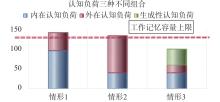
图 1
认知负荷三种不同组合示意图"
表 1
认知负荷向“理想困难”转化的操作性条件与教学决策框架"
| 负荷类型 | 可转化条件 | 失败风险 | 教学策略 | 评价指标 |
| 内在认知负荷 | 任务复杂度处于学习者可处理范围内;能够促进知识重组与图式建构;困难来源于材料本身的要素交互性 | 超出工作记忆容量导致认知过载;学习者无法完成理解与整合 | 分层呈现复杂内容;组块化组织知识;适度提高任务复杂度;利用文本阅读、自定步调学习等方式促进深加工 | 主观难度、完成时间、错误率、知识结构整合、图式建构程度、延迟保持、迁移 |
| 外在认知负荷 | 额外负荷能够激发兴趣、动机或更深入加工;负荷强度适中且不干扰核心学习目标 | 注意力被无关信息占据;工作记忆资源被消耗;形成干扰而非促进加工 | 谨慎使用诱惑性细节等趣味材料;利用情感化设计提升参与度;避免纯装饰性、无目标关联的信息干扰。 | 无关信息注视比例、注意转移次数、外在认知负荷评分、兴趣、投入、任务坚持、延迟保持、迁移 |
| 生成性认知负荷 | 加工活动直接服务于知识建构;学习者能够成功完成检索、解释、整合等活动 | 任务过难导致检索失败;持续挫败降低投入;生成活动流于形式 | 提取练习、自我解释、交错练习、间隔练习、支架支持;设计需要主动建构知识的任务 | 自我解释质量、检索成功率、绘图/概念图质量、推理深度、主观努力、任务坚持、知识重组与灵活应用、延迟保持、迁移 |
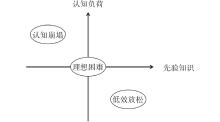
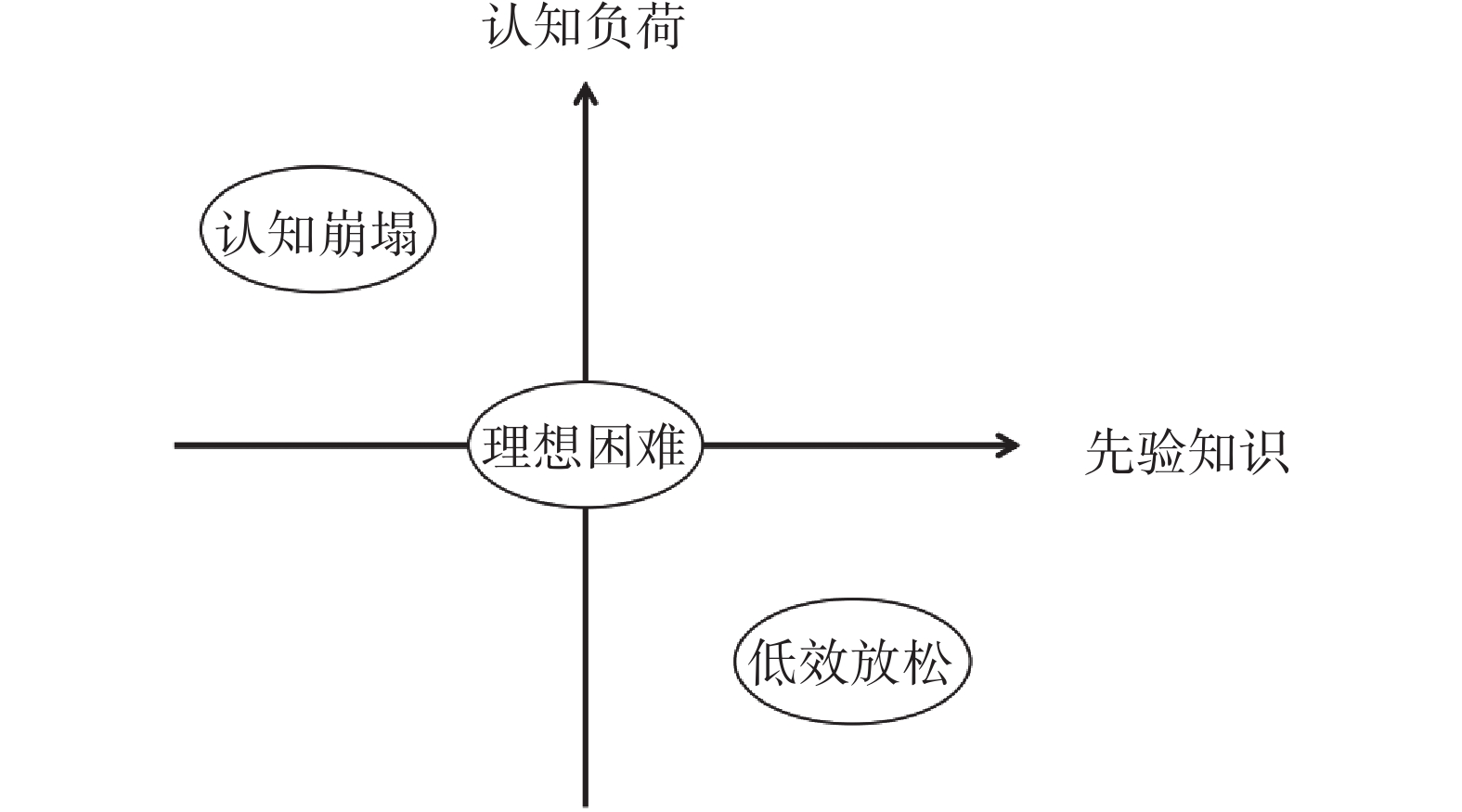
图 2
认知负荷强度、先验知识水平与深度学习结果关系的理论模型"
| 高德胜. (2026). 教育过程中的“学生声音”. 当代教育科学, (1), 3- 15. | |
|
高洁, 彭绍东. (2023). 矛盾与策略: 数字化学习中基于外在认知负荷的学习分析. 电化教育研究, 44 (1), 100- 105,115.
doi: 10.13811/j.cnki.eer.2023.01.014 |
|
|
顾琦一. (2020). 语言水平对二语学习者听力、阅读理解过程中认知负荷的影响. 外语教学, 41 (3), 78- 83.
doi: 10.16362/j.cnki.cn61-1023/h.2020.03.014 |
|
|
郭华. (2020). 如何理解“深度学习”. 四川师范大学学报(社会科学版), 47 (1), 89- 95.
doi: 10.13734/j.cnki.1000-5315.2020.01.010 |
|
|
佘建云, 闫白洋. (2022). 基于认知负荷理论探索真实情境下科学课程的教学设计. 课程·教材·教法, 42 (7), 140- 146.
doi: 10.19877/j.cnki.kcjcjf.2022.07.002 |
|
|
宋艳玲, 孟昭鹏, 闫雅娟. (2014). 从认知负荷视角探究翻转课堂——兼及翻转课堂的典型模式分析. 远程教育杂志, 32 (1), 105- 112.
doi: 10.15881/j.cnki.cn33-1304/g4.2014.01.015 |
|
| 杨哲, 钟生海. (2007). 基于认知负荷理论的网络课程设计研究. 现代远距离教育, (3), 64- 66. | |
| 张春莉. (1999). 减轻学生课业负担——一种认知负荷观. 教育理论与实践, (7), 55- 58. | |
|
张慕华, 祁彬斌, 黄志南. (2024). 沉浸式虚拟现实何以赋能科学实验学习——临场感与认知负荷的平衡. 远程教育杂志, 42 (5), 53- 64.
doi: 10.15881/j.cnki.cn33-1304/g4.2024.05.006 |
|
| 钟启泉. (2021). 深度学习: 课堂转型的标识. 全球教育展望, 50 (1), 14- 33. | |
|
Alter, A. L., & Oppenheimer, D. M. (2009). Uniting the Tribes of Fluency to Form a Metacognitive Nation. Personality and Social Psychology Review, 13 (3), 219- 235.
doi: 10.1177/1088868309341564 |
|
| Arnold, M., Goldschmitt, M., & Rigotti, T. (2023). Dealing with information overload: A comprehensive review. Frontiers in Psychology, 14, Article 1122200. | |
| Bisra, K., Liu, Q., Nesbit, J. C., Salimi, F., & Winne, P. H. (2018). Inducing Self-Explanation: a Meta-Analysis. Educational Psychology Review 30, 703–725. | |
| Bjork, R. A. (1994). Memory and metamemory considerations in the training of human beings. In J. Metcalfe & A. Shimamura (Eds.), Metacognition: Knowing about knowing (pp. 185–205). Cambridge, MA: MIT Press. | |
| Bjork, R. A. (1999). Assessing our own competence: Heuristics and illusions. In D. Gopher & A. Koriat (Eds.), Attention and performance XVII: Cognitive regulation of performance: Interaction of theory and application (pp. 435–459). Cambridge, MA: MIT Press. | |
|
Bjork, R. A., & Bjork, E. L. (2020). Desirable difficulties in theory and practice. Journal of Applied Research in Memory and Cognition, 9, 475- 479.
doi: 10.1016/j.jarmac.2020.09.003 |
|
|
Bjork, R. A., Dunlosky, J., & Kornell, N. (2013). Self-Regulated Learning: Beliefs, Techniques, and Illusions. Annual Review of Psychology, 64, 417- 444.
doi: 10.1146/annurev-psych-113011-143823 |
|
|
Blasiman, R. N., Dunlosky, J., & Rawson, K. A. (2017). The what, how much, and when of study strategies: Comparing intended versus actual study behaviour. Memory, 25 (6), 784- 792.
doi: 10.1080/09658211.2016.1221974 |
|
|
Chen, O., Castro-Alonso, J. C., Paas, F., & Sweller, J. (2018). Undesirable difficulty effects in the learning of high-element interactivity materials. Frontiers in Psychology, 9, 1483.
doi: 10.3389/fpsyg.2018.01483 |
|
|
Clariana, R. B., Wagner, D., & Roher Murphy, L. C. (2000). Applying a connectionist description of feedback timing. Educational Technology Research and Development, 48, 5- 22.
doi: 10.1007/BF02319855 |
|
|
De Croock, M. B. M., Van Merrienboer, J. J. G., & Paas, F. G. W. C. (1998). High versus low contextual interference in simulation-based training of troubleshooting skills: effects on transfer performance and invested mental effort. Computers in Human Behavior, 14, 249- 267.
doi: 10.1016/S0747-5632(98)00005-3 |
|
| Ellerton, P. (2022). On critical thinking and content knowledge: A critique of the assumptions of cognitive load theory. Thinking Skills and Creativity, 43, Article 100975. | |
|
Endres, T., Lovell, O., Morkunas, D., Rieβ, W., & Renkl, A. (2023). Can prior knowledge increase task complexity? Cases in which higher prior knowledge leads to higher intrinsic cognitive load. British Journal of Educational Psychology, 93, 305- 317.
doi: 10.1111/bjep.12563 |
|
|
Hattie, J., & Timperley, H. (2007). The Power of Feedback. Review of Educational Research, 77 (1), 81- 112.
doi: 10.3102/003465430298487 |
|
|
Holmes, W., & Tuomi, I. (2022). State of the art and practice in AI in education. European Journal of Education, 57 (4), 542- 570.
doi: 10.1111/ejed.12533 |
|
| Immordino-Yang, M. H. (2016). Emotions, learning, and the brain: Exploring the educational implications of affective neuroscience. New York: W. W. Norton & Company. | |
|
Inan, F. A., Crooks, S. M., Cheon, J., Ari, F., Flores, R., Kurucay, M. & Paniukov, D. (2015). The reverse modality effect: Examining student learning from interactive computer-based instruction. British Journal of Educational Technology, 46 (1), 123- 130.
doi: 10.1111/bjet.12129 |
|
|
Kang, S. H. K. (2016). Spaced Repetition Promotes Efficient and Effective Learning: Policy Implications for Instruction. Policy Insights from the Behavioral and Brain Sciences, 3 (1), 12- 19.
doi: 10.1177/2372732215624708 |
|
|
Ketzer-Nöltge, A., Schweppe, J., & Rummer, R. (2019). Is the seductive details effect moderated by mood? An eye-tracking study. Applied Cognitive Psychology, 33 (1), 62- 70.
doi: 10.1002/acp.3487 |
|
| Kim, M., & Sankey, D. (2022). The science of learning and development in education: A research-based approach to educational practice. Cambridge University Press. | |
|
Kim, M., Duncan, C., Yip, S., & Sankey, D. (2025). Beyond the theoretical and pedagogical constraints of cognitive load theory, and towards a new cognitive philosophy in education. Educational Philosophy and Theory, 57 (7), 662- 673.
doi: 10.1080/00131857.2024.2441389 |
|
| Koriat, A., & Bjork, R. A. (2005). Illusions of Competence in Monitoring One's Knowledge During Study. Journal of Experimental Psychology: Learning, Memory, and Cognition, 31(2), 187–194. | |
|
Lehmann, J., Goussios, C., & Seufert, T. (2019). The influence of seductive details on learning and transfer in multimedia learning. Applied Cognitive Psychology, 33 (1), 85- 94.
doi: 10.1002/acp.3509 |
|
| Mayer, R. E. (2009). Multimedia learning (2nd ed.). Cambridge University Press. | |
| Mayer, R. E. (Ed.). (2014). The Cambridge handbook of multimedia learning (2nd ed.). New York, NY: Cambridge University Press. | |
|
Mayer, R. E. (2021). Evidence-based principles for how to design effective instructional videos. Journal of Applied Research in Memory and Cognition, 10 (2), 229- 240.
doi: 10.1016/j.jarmac.2021.03.007 |
|
|
McCabe, D. P., & Castel, A. D. (2008). Seeing is believing: The effect of brain images on judgments of scientific reasoning. Cognition, 107 (1), 343- 352.
doi: 10.1016/j.cognition.2007.07.017 |
|
| McDaniel, M. A., & Butler, A. C. (2011). A contextual framework for understanding when difficulties are desirable. In A. S. Benjamin (Ed.), Successful remembering and successful forgetting: A festschrift in honor of Robert A. Bjork (pp. 175–198). New York: Psychology Press. https://doi.org/10.4324/9780203842539. | |
|
Miller, G. A. (1956). The magical number seven, plus or minus two: Some limits on our capacity for processing information. Psychological Review, 63 (2), 81- 97.
doi: 10.1037/h0043158 |
|
|
Moreno, R. (2006). Does the modality principle hold for different media? A test of the method-affects-learning hypothesis. Journal of Computer Assisted Learning, 22 (3), 149- 158.
doi: 10.1111/j.1365-2729.2006.00170.x |
|
|
Morita, A., & Fukuya, I. (2023). Impact of decorative pictures in learning materials: The effect of attention-grabbing features. Applied Cognitive Psychology, 37 (6), 1352- 1365.
doi: 10.1002/acp.4128 |
|
|
Paas, F., Renkl, A., & Sweller, J. (2003). Cognitive load theory and instructional design: Recent developments. Educational Psychologist, 38 (1), 1- 4.
doi: 10.1207/S15326985EP3801_1 |
|
|
Paas, F., & van Merriënboer, J. J. G. (1994). Instructional control of cognitive load in the training of complex cognitive tasks. Educational Psychology Review, 6, 351- 371.
doi: 10.1007/BF02213420 |
|
|
Paas, F., & van Merriënboer, J. J. G. (2020). Cognitive-load theory: Methods to manage working memory load in the learning of complex tasks. Current Directions in Psychological Science, 29, 394- 398.
doi: 10.1177/0963721420922183 |
|
|
Peterson, L., & Peterson, M. J. (1959). Short-term retention of individual verbal items. Journal of Experimental Psychology, 58 (3), 193- 198.
doi: 10.1037/h0049234 |
|
| Pyc, M. A., & Rawson, K. A. (2009). Testing the retrieval effort hypothesis: Does greater difficulty correctly recalling information lead to higher levels of memory? Journal of Memory and Language, 60, 437-447. | |
| Reif, F. (2010). Applying Cognitive Science to Education: Thinking and Learning in Scientific and Other Complex Domains. Cambridge, MA: MIT Press. | |
|
Rey, G. D. (2012). A review of research and a meta-analysis of the seductive detail effect. Educational Research Review, 7, 216- 237.
doi: 10.1016/j.edurev.2012.05.003 |
|
|
Roediger, H. L., III, & Karpicke, J. D. (2006a). The power of testing memory: basic research and implications for educational practice. Perspectives on Psychological Science, 1, 181- 210.
doi: 10.1111/j.1745-6916.2006.00012.x |
|
|
Roediger, H. L., III, & Karpicke, J. D. (2006b). Test-enhanced learning: Taking memory tests improves long-term retention. Psychological Science, 17 (3), 249- 255.
doi: 10.1111/j.1467-9280.2006.01693.x |
|
|
Schneider, S., Nebel, S., Beege, M., & Rey, G. D. (2018). Anthropomorphism in decorative pictures: Benefit or harm for learning?. Journal of Educational Psychology, 110 (2), 218- 232.
doi: 10.1037/edu0000207 |
|
|
Schweppe, J., & Rummer, R. (2016). Integrating written text and graphics as a desirable difficulty in longterm multimedia learning. Computers in Human Behavior, 60, 131- 137.
doi: 10.1016/j.chb.2016.02.035 |
|
|
Segers, E., Verhoeven, L., & Hulstijn-Hendrikse, N. (2008). Cognitive processes in children’s multimedia text learning. Applied Cognitive Psychology, 22 (3), 375- 387.
doi: 10.1002/acp.1413 |
|
|
Seufert, T. (2018). The interplay between self-regulation in learning and cognitive load. Educational Research Review, 24, 116- 129.
doi: 10.1016/j.edurev.2018.03.004 |
|
|
Seufert, T. (2020). Building bridges between self-regulation and cognitive load—An invitation for a broad and differentiated attempt. Educational Psychology Review, 32, 1151- 1162.
doi: 10.1007/s10648-020-09574-6 |
|
|
She, H. C., & Chen, Y. Z. (2009). The impact of multimedia effect on science learning: evidence from eye movements. Computers & Education, 53 (4), 1297- 1307.
doi: 10.1016/j.compedu.2009.06.012 |
|
|
Shute, V. J. (2008). Focus on formative feedback. Review of Educational Research, 78, 153- 189.
doi: 10.3102/0034654307313795 |
|
|
Soderstrom, N. C., & Bjork, R. A. (2015). Learning versus performance: An integrative review. Perspectives on Psychological Science, 10, 176- 199.
doi: 10.1177/1745691615569000 |
|
|
Sundararajan, N., & Adesope, O. (2020). Keep it coherent: A meta-analysis of the seductive details effect. Educational Psychology Review, 32, 707- 734.
doi: 10.1007/s10648-020-09522-4 |
|
|
Sweller, J. (1988). Cognitive load during problem solving: Effects on learning. Cognitive Science, 12 (2), 257- 285.
doi: 10.1207/s15516709cog1202_4 |
|
|
Sweller, J. (1994). Cognitive load theory, learning difficulty, and instructional design. Learning and Instruction, 4 (4), 295- 312.
doi: 10.1016/0959-4752(94)90003-5 |
|
|
Sweller, J. (2010). Element interactivity and intrinsic, extraneous, and germane cognitive load. Educational Psychology Review, 22 (2), 123- 138.
doi: 10.1007/s10648-010-9128-5 |
|
|
Sweller, J., & Chandler, P. (1994). Why some material is difficult to learn. Cognition and Instruction, 12 (3), 185- 233.
doi: 10.1207/s1532690xci1203_1 |
|
| Sweller, J., Ayres, P., & Kalyuga, S. (2011). Cognitive load theory. New York: Springer. | |
|
Sweller, J., van Merriënboer, J. J. G., & Paas, F. G. W. C. (1998). Cognitive architecture and instructional design. Educational Psychology Review, 10 (3), 251- 296.
doi: 10.1023/A:1022193728205 |
|
|
Sweller, J., van Merriënboer, J. J. G., & Paas, F. (2019). Cognitive architecture and instructional design: 20 years later. Educational Psychology Review, 31 (2), 261- 292.
doi: 10.1007/s10648-019-09465-5 |
|
|
van den Broek, G. S. E., Segers, E., & Verhoeven, L. (2014). Effects of text modality in multimedia presentations on written and oral performance. Journal of Computer Assisted Learning, 30, 438- 449.
doi: 10.1111/jcal.12058 |
|
|
van Merriënboer, J. J., & Sweller, J. (2010). Cognitive load theory in health professional education: design principles and strategies. Medical Education, 44, 85- 93.
doi: 10.1111/j.1365-2923.2009.03498.x |
|
|
Witteman, M. J., & Segers, E. (2010). The modality effect tested in children in a user-paced multimedia environment. Journal of Computer Assisted Learning, 26 (2), 132- 142.
doi: 10.1111/j.1365-2729.2009.00335.x |
|
|
Wong, R. M., & Adesope, O. O. (2021). Meta-analysis of emotional designs in multimedia learning: A replication and extension study. Educational Psychology Review, 33, 357- 385.
doi: 10.1007/s10648-020-09545-x |
|
|
Yang, C., Luo, L., Vadillo, M. A., Yu, R., & Shanks, D. R. (2021). Testing (quizzing) boosts classroom learning: A systematic and meta-analytic review. Psychological Bulletin, 147, 399- 435.
doi: 10.1037/bul0000309 |
|
|
Zepeda, C. D., Martin, R. S., & Butler, A. C. (2020). Motivational Strategies to Engage Learners in Desirable Difficulties. Journal of Applied Research in Memory and Cognition, 9 (4), 468- 474.
doi: 10.1016/j.jarmac.2020.08.007 |
| [1] | 黄昌勤, 钟益华, 王希哲, 韩中美, 魏同权. 从单智能体到多智能体:大模型智能体支持下的激励型学习活动设计与实证研究[J]. 华东师范大学学报(教育科学版), 2025, 43(5): 44-56. |
| [2] | 郑东辉, 叶盛楠. 课堂评价促进学生的深度学习吗?——基于县域中小学 |
| [3] | 李新, 郭元祥, 容翠, [加]吉莉安•贾德森(Gillian Judson). 知识、想象力与深度学习——与吉莉安•贾德森教授关于基兰•伊根的研究的对话[J]. 华东师范大学学报(教育科学版), 2024, 42(6): 125-136. |
| [4] | 陈明选, 周亮. 数智化时代的深度学习:从浅层记忆走向深度理解[J]. 华东师范大学学报(教育科学版), 2023, 41(8): 53-62. |
| [5] | 翟雪松, 许家奇, 王永固. 在线教育中的学习情感计算研究——基于多源数据融合视角[J]. 华东师范大学学报(教育科学版), 2022, 40(9): 32-44. |
| [6] | 姚佳佳, 李艳, 潘金晶, 程萌萌. 同伴对话反馈对大学生在线深度学习的影响研究[J]. 华东师范大学学报(教育科学版), 2022, 40(3): 112-126. |
| [7] | 胡航, 米雪, 李雅馨, 郎启娥. 深度学习品质刻画:评测工具的开发与应用——基于四城市小学生数学学习的实证研究[J]. 华东师范大学学报(教育科学版), 2021, 39(11): 73-85. |
| [8] | 辛自强, 林崇德. 认知负荷与认知技能和图式获得的关系及其教学意义[J]. 华东师范大学学报(教育科学版), 2002, 20(4): 55-60, 77. |
| 阅读次数 | ||||||
|
全文 |
|
|||||
|
摘要 |
|
|||||
