华东师范大学学报(教育科学版) ›› 2026, Vol. 44 ›› Issue (8): 51-66.doi: 10.16382/j.cnki.1000-5560.2026.08.003

• 先锋论文选 • 上一篇    下一篇

《基于多智能体模拟的教师轮岗政策效应研究——来自“教育生态系统”模型的仿真证据》内容详介及研究与写作过程披露声明

郭沛, 黄婧琦, 翟锦, 周越   

  1. 内蒙古师范大学教育学院,呼和浩特 010022
  • 接受日期:2026-07-09 出版日期:2026-08-01 发布日期:2026-07-22
  • 基金资助:
    内蒙古自治区研究生科研创新项目 “基于 DeepSeek 大模型的教师教研分步引导式智能体开发”(项目编号:KC2025020S)。

“Research on the Effects of Teacher Rotation Policy Based on Multi-Agent Simulation: Simulation Evidence from an Educational Ecosystem Model”: A Detailed Exposition and a Disclosure Statement of the Research and Writing Process

Pei Guo, JingQi Huang, Jin Zhai, Yue Zhou   

  1. College of Education, Inner Mongolia Normal University, Hohhot 010022, China
  • Accepted:2026-07-09 Online:2026-08-01 Published:2026-07-22

摘要:

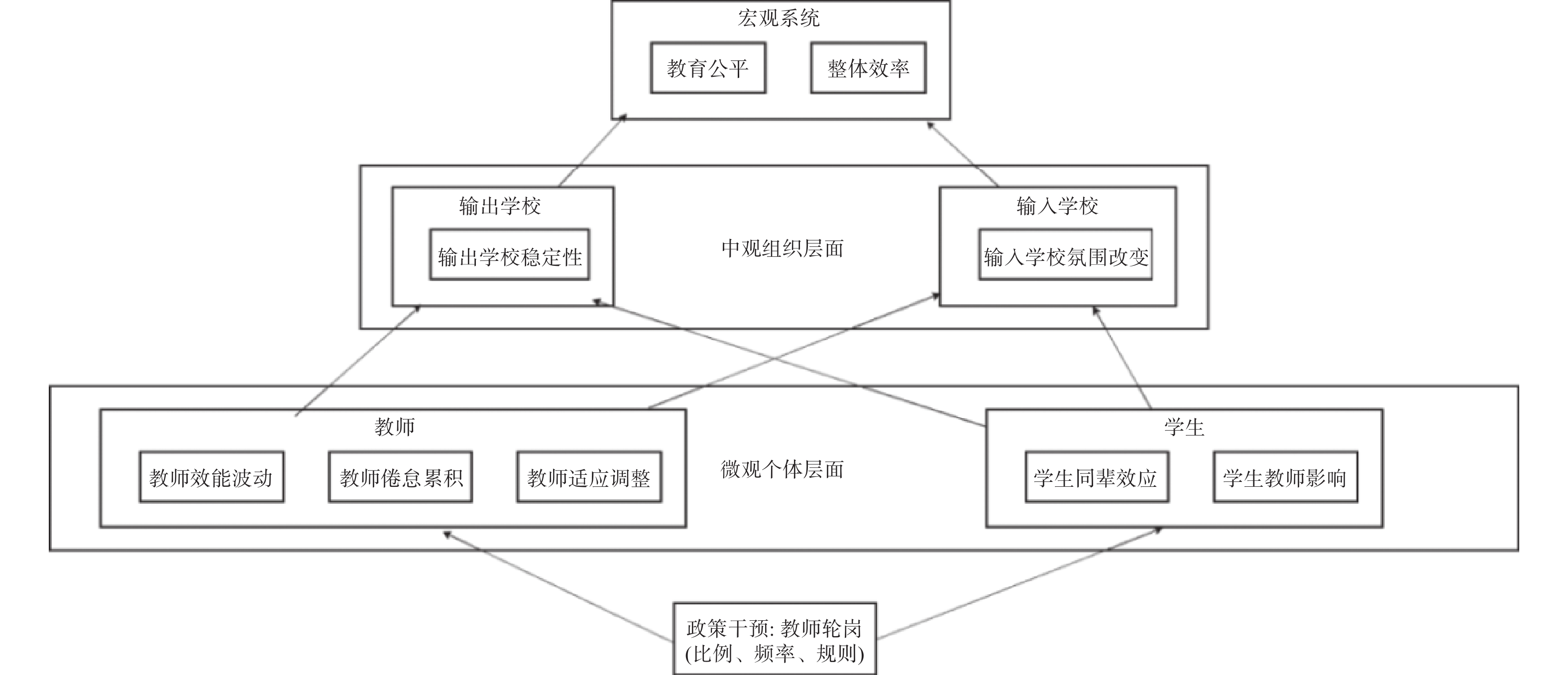
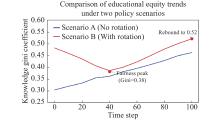
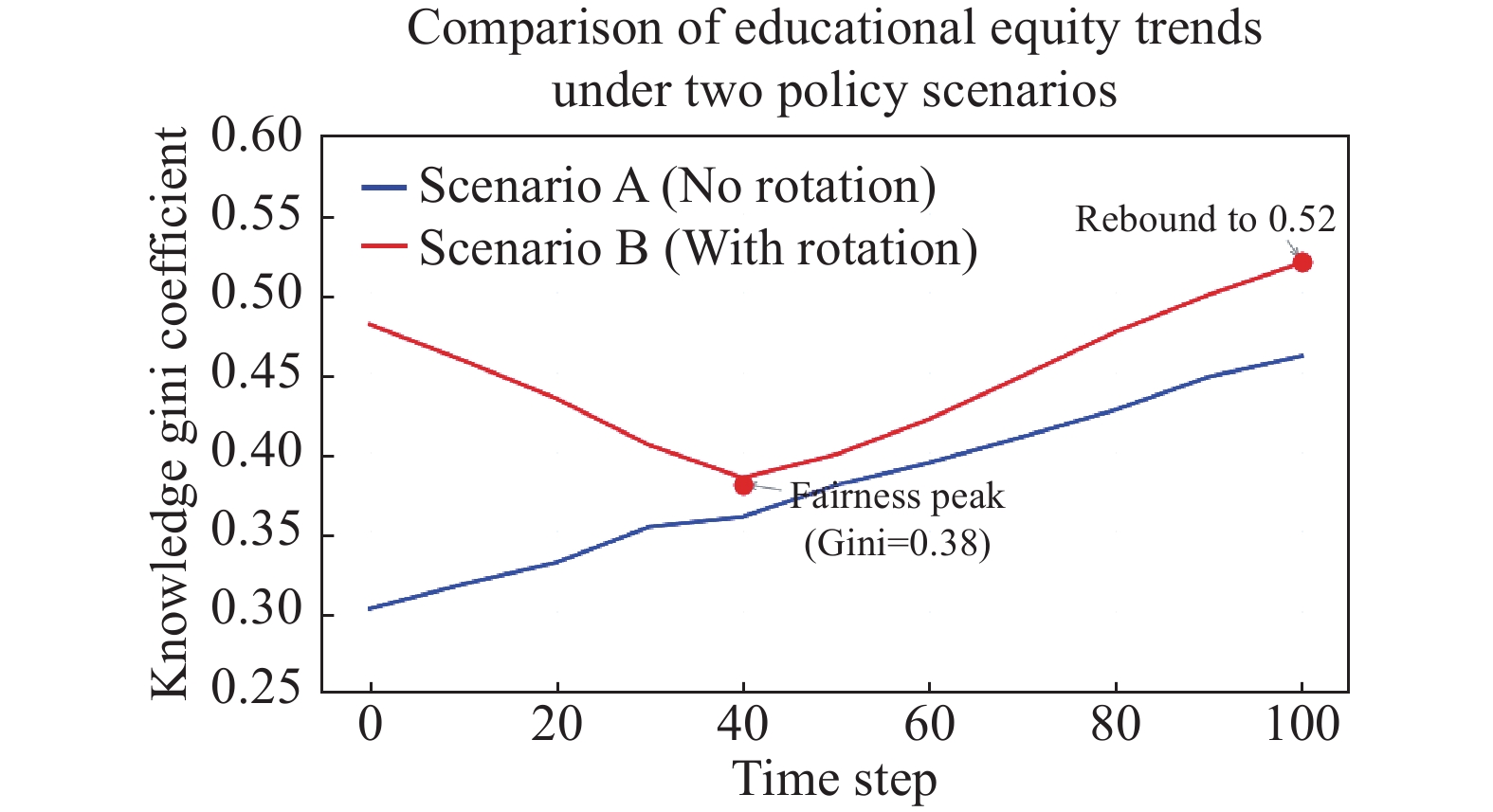
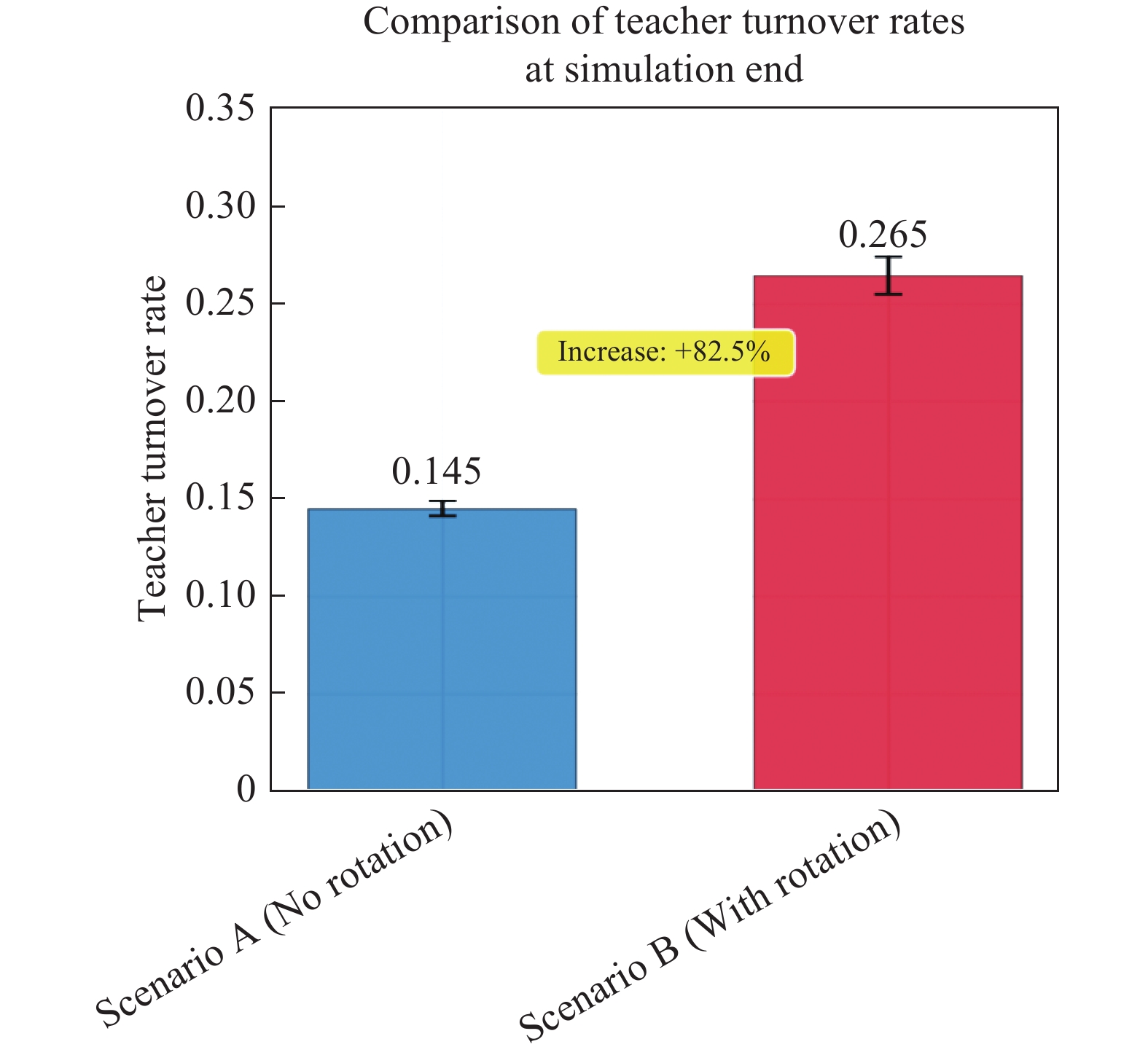
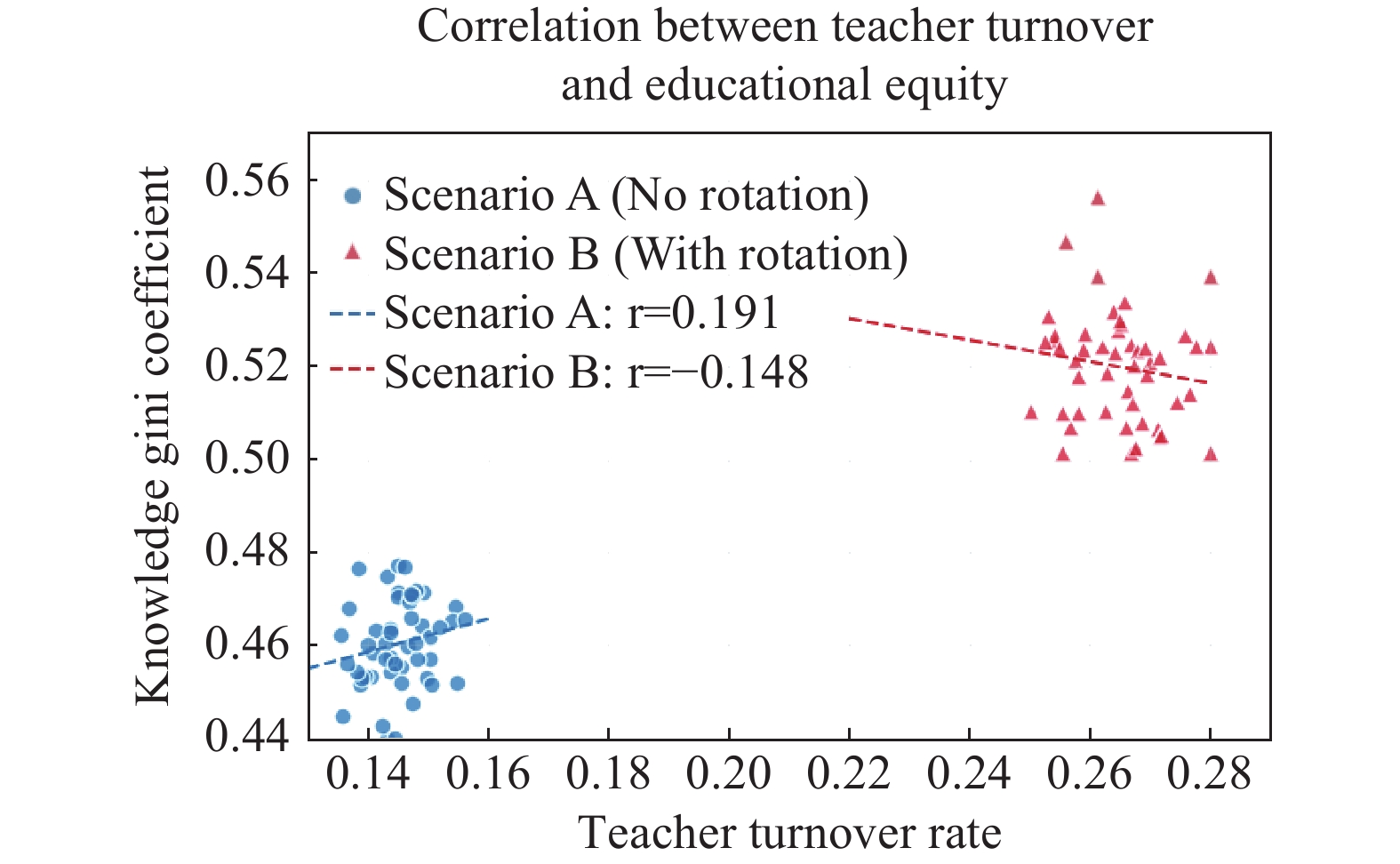
本文系全球首个 “AI一作” 大型社会实验“人机共创先锋论文榜”论文之一。传统教育政策研究难以评估宏观政策长期动态与系统性影响,本研究采用基于多智能体模拟(ABM)范式构建EduEcosystem计算实验室,设置学生、教师与学校三类异质性智能体,融合社会学、心理学交互规则开展仿真推演教师轮岗政策效应,结果显示:政策在短期内可显著降低知识基尼系数、改善教育公平,但同步造成教师流失率大幅上涨(增幅 82.5%)、整体学业水平下滑;长期视角下教师职业倦怠持续累积,政策公平效益逐步衰减,出现“公平性反弹”反直觉现象。上述实践表明,ABM可作为教育政策计算实验室,预判政策长期非线性效应,为教育决策科学化提供方法论支撑。本研究围绕教师轮岗政策多智能体仿真构建 “研究者原创构思 —AI 工具辅助产出 — 人工深度修正校验 — 多轮迭代完善” 的人机协同研究流程,明确区分人与人工智能的研究贡献:人类作者自主提出公平性反弹核心研究猜想,搭建原创多层动态理论框架,优化仿真模型核心函数,设计全套统计检验与参数敏感性分析,主导全部理论创新、结果解读与政策建议提炼;DeepSeek 系列模型仅负责文献初稿撰写、仿真代码生成、可视化制图、文本润色及英译等事务性辅助工作。本研究通过完整披露 AI 使用细节,为人机协作学术成果署名机制探讨提供实践样本;同时针对模型知识滞后、专业理论理解浅层化等缺陷,建立文献溯源、数据复算、理论逻辑核验、仿真可重复性保障、隐私与版权合规等全方位质控体系。研究发现,以人为核心的人机协同模式能够高效推进复杂教育系统仿真研究,完整透明的过程说明、清晰的人机权责划分、严谨的人工审核流程,是 AI 赋能教育科研环境下维护学术诚信、完善学术规范的重要基础。

关键词: 多智能体模拟, 教师轮岗, 教育公平, 政策仿真, 复杂系统

Abstract:

This paper is one of the publications featured in the “Human-AI Co-Creation Pioneer Papers Ranking”, which is part of the Panoramic Report on the World’s First Large-Scale Social Experiment of “AI as the First Author”.Traditional research on educational policies struggles to evaluate the long-term dynamics and systematic impacts of macro-level policies. This study constructs an EduEcosystem computational laboratory based on the Agent-Based Modelling (ABM) paradigm. Three types of heterogeneous agents—students, teachers and schools—are established, and interaction rules derived from sociology and psychology are integrated to simulate and deduce the effects of the teacher rotation policy. The results reveal that the policy can markedly reduce the knowledge Gini coefficient and promote educational equity in the short run, yet it simultaneously triggers a sharp rise in teacher turnover rate (an increase of 82.5%) and a decline in overall academic performance. From a long-term perspective, teachers’ occupational burnout accumulates continuously, the equity benefits of the policy gradually diminish, and a counterintuitive “equity rebound” phenomenon emerges. The above practice verifies that ABM can serve as a computational laboratory for educational policies to predict the long-term nonlinear effects of policies, providing methodological support for scientific educational decision-making. Focusing on the multi-agent simulation of the teacher rotation policy, this study constructs a human-AI collaborative research workflow consisting of “original conceptualization by researchers, auxiliary output by AI tools, in-depth manual revision and verification, and multi-round iterative improvement”, and clearly distinguishes the research contributions of human authors and artificial intelligence. Human authors independently put forward the core research conjecture of fairness rebound, build an original multi-layer dynamic theoretical framework, optimize the core functions of the simulation model, design a full set of statistical tests and parameter sensitivity analyses, and lead all theoretical innovations, result interpretations and extraction of policy recommendations. The DeepSeek series models are only responsible for auxiliary clerical tasks including drafting literature manuscripts, generating simulation codes, producing visual charts, polishing texts and English translation. By fully disclosing the detailed application of AI, this study provides a practical sample for discussions on the authorship mechanism of academic outcomes generated through human-AI collaboration. Meanwhile, to address inherent limitations of AI such as outdated knowledge and superficial comprehension of specialized theories, a comprehensive quality control system is established, covering literature tracing, data recalculation, theoretical logic verification, guarantee of simulation reproducibility, as well as privacy and copyright compliance. The research reveals that the human-centered human-AI collaboration paradigm can efficiently advance simulation research on complex educational systems. Complete and transparent process disclosure, clear division of responsibilities between humans and AI, and rigorous manual review procedures serve as critical foundations for safeguarding academic integrity and refining academic norms under the context of AI-empowered educational research.

Key words: multi-agent simulation, teacher rotation, educational equity, policy simulation, complex system