华东师范大学学报(教育科学版) ›› 2026, Vol. 44 ›› Issue (8): 96-109.doi: 10.16382/j.cnki.1000-5560.2026.08.006

• 先锋论文选 • 上一篇    下一篇

《从“孤岛”到“共识”:基于生成式多智能体社会模拟的教育改革观点演化机制研究》内容详介及研究与写作过程披露声明

冯骐   

  1. 华东师范大学信息化治理办公室,上海 200062
  • 接受日期:2026-07-07 出版日期:2026-08-01 发布日期:2026-07-22

“From ‘Islands’ to ‘Consensus’: A Study on the Evolutionary Mechanism of Education Reform Opinions Based on Generative Multi-Agent Social Simulation”: A Detailed Exposition and a Disclosure Statement of the Research and Writing Process

Qi Feng   

  1. Information Technology Services, East China Normal University, Shanghai 200062, China
  • Accepted:2026-07-07 Online:2026-08-01 Published:2026-07-22

摘要:

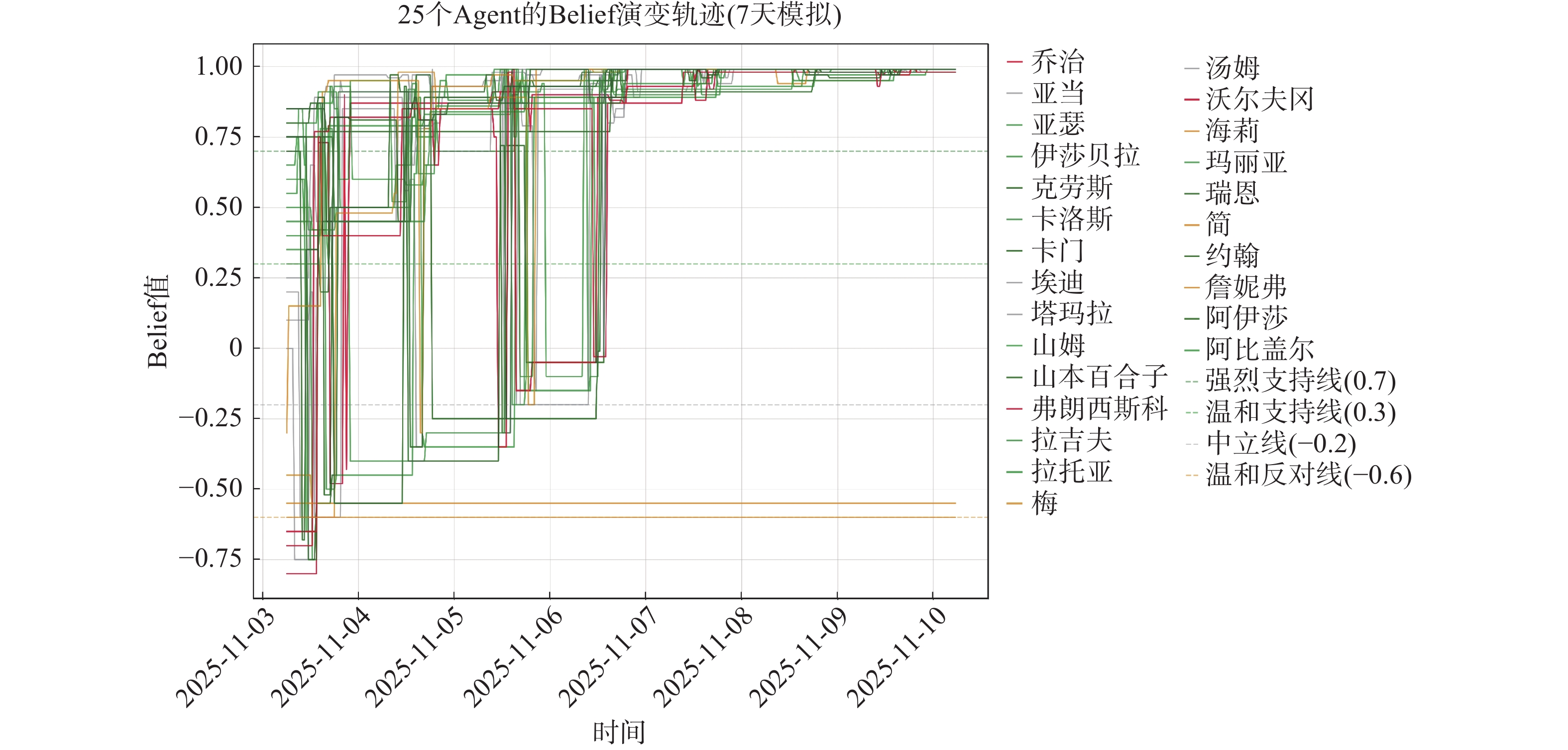
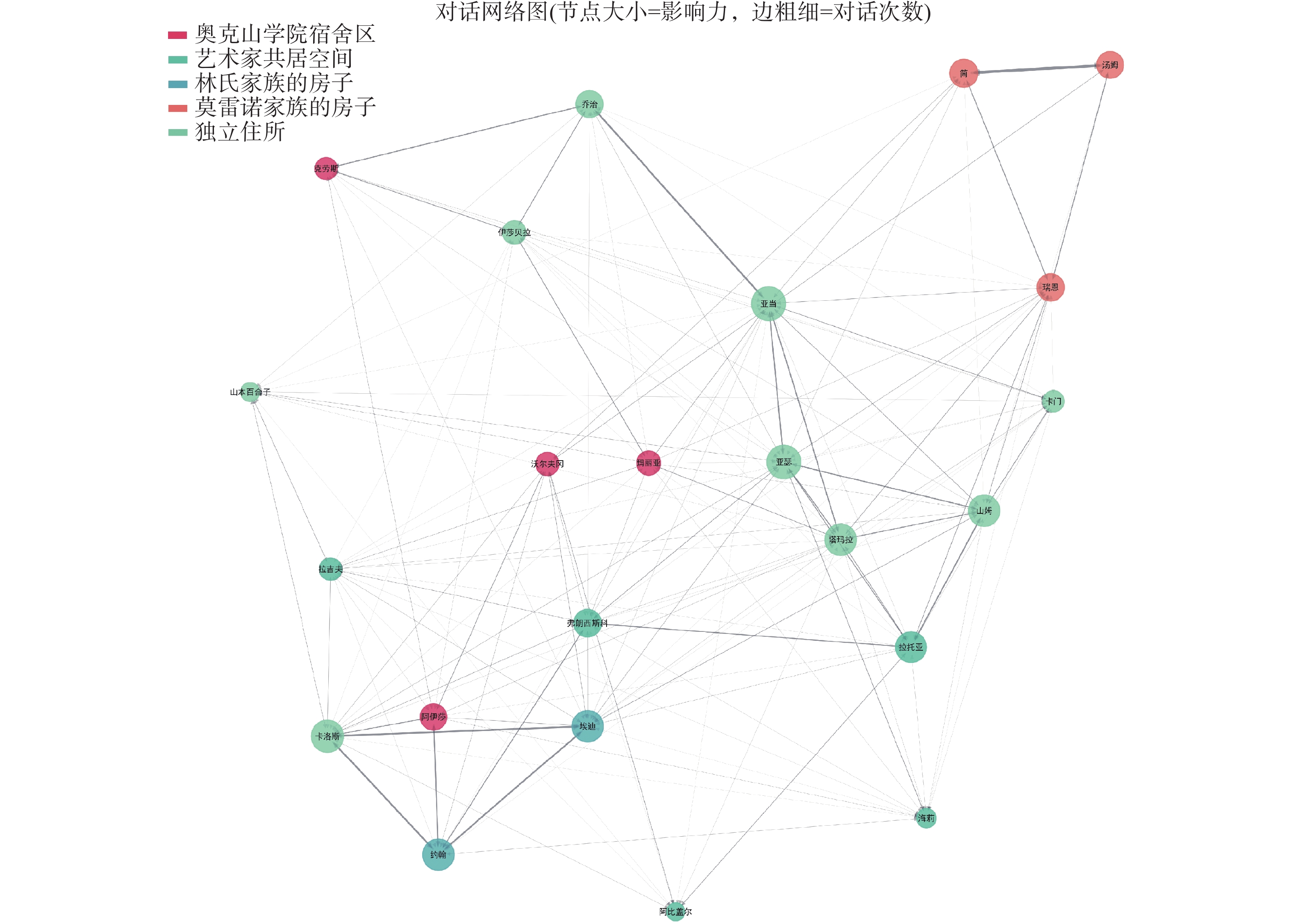
本文系全球首个 “AI一作”大型社会实验“人机共创先锋论文榜”论文之一。教育改革的成功既依赖政策本身的科学性,也取决于利益相关者能否形成广泛的认知共识。然而,传统的社会调查难以捕捉观点演化的动态过程,基于规则的仿真模型又缺乏对复杂语义和认知机制的刻画。本研究引入“生成式多智能体社会模拟”范式,构建了一个包含25个具有独立人格、记忆和反思能力的智能体的虚拟教育社区。通过模拟为期7天的“项目式学习”政策推行过程,本研究揭示了教育改革观点从“认知孤岛”走向“社会共识”的微观-宏观涌现机制。研究发现:(1) 在无强制干预下,社区最终形成了高达92%的支持共识,且未出现群体极化现象;(2) 物理空间的聚集与高密度的弱连接网络为打破信息茧房提供了结构基础;(3) “理性怀疑者”的转化是共识形成的关键转折点,其基于问题解决的深度说服机制比单纯的情感号召更具影响力。本研究引入 Harness Engineering 工程化方法论,搭建 “规约前馈 — 智能执行 — 验证反馈 — 闭环迭代” 的人机协作体系,清晰界定了人类作者与人工智能的贡献边界:人类主体承担研究问题原创界定、实验顶层规约设计、学术价值最终判断与全流程质量管控的核心职责,人工智能则完成实验代码开发、智能体模拟驱动、数据统计分析与论文初稿撰写等执行性工作,以期推动学术共同体对人机协作成果署名规范的讨论。在此基础上,本文从技术偏差系统应对、多维度事实核查、学术逻辑验证、可重复性保障、科研伦理与版权合规等维度,系统呈现了人机协作教育研究的全链条质量控制方案。研究表明,工程化的人机协作框架能够有效拓展教育研究的方法边界,提升复杂教育问题的研究效率;而透明化的过程披露、清晰化的贡献界定与严格化的质量管控,是人工智能时代教育学术规范建构的核心支柱。

关键词: 生成式智能体, 社会模拟, 教育改革, 观点演化, 共识机制, 大语言模型, 计算教育学

Abstract:

This paper is among the works featured on the “Pioneer List of Human-AI Co-Created Papers” derived from the world’s first large-scale social experiment with an AI listed as the first author. The success of educational reform hinges not only on the scientific rigor of relevant policies but also on whether broad cognitive consensus can be forged among stakeholders. Nevertheless, conventional social surveys fail to capture the dynamic evolution of public opinions, while rule-based simulation models lack capacity to characterize complex semantics and cognitive mechanisms. This study introduces the paradigm of generative multi-agent social simulation and constructs a virtual educational community consisting of 25 agents endowed with independent personalities, memory functions and reflective capabilities. By simulating a 7-day rollout process of the project-based learning (PBL) policy, this paper reveals the micro-to-macro emergence mechanism through which fragmented isolated perceptions of educational reform converge into widespread social consensus. The key findings are as follows: (1) Without mandatory intervention, the community ultimately reached a supportive consensus rate as high as 92%, with no group polarization observed; (2) Physical spatial aggregation and high-density weak-tie networks lay a structural foundation for breaking echo chambers; (3) The conversion of rational skeptics constitutes the critical turning point of consensus formation, and their problem-solving-oriented in-depth persuasion mechanism exerts stronger influence than simple emotional appeals. Adopting the Harness Engineering methodological framework, this research establishes a human-AI collaborative workflow featuring “pre-specification feedforward – intelligent execution – verification feedback – closed-loop iteration”, and clearly delineates the contribution boundaries between human authors and artificial intelligence. Human researchers bear core responsibilities including original definition of research questions, top-level specification design of experiments, final evaluation of academic value, and full-process quality control. Artificial intelligence undertakes executive tasks such as experimental coding, multi-agent simulation operation, statistical data analysis, and first draft composition of manuscripts, aiming to spark discussions within the academic community on authorship norms for human-AI collaborative outputs. Furthermore, this paper systematically presents a full-chain quality control scheme for human-AI collaborative educational research from multiple dimensions: systematic mitigation of technical bias, multi-dimensional factual verification, academic logic validation, reproducibility assurance, as well as research ethics and copyright compliance. The results demonstrate that an engineered human-AI collaborative framework can effectively expand the methodological boundaries of educational research and improve research efficiency when tackling complex educational issues. Meanwhile, transparent process disclosure, clarified contribution attribution and rigorous quality management serve as the core pillars for constructing academic norms in education amid the artificial intelligence era.

Key words: generative agents, social simulation, education reform, opinion dynamics, consensus mechanism, large language models, computational education science