
 中国人文社会科学核心期刊
华东师范大学学报(教育科学版) ›› 2026, Vol. 44 ›› Issue (2): 43-60.doi: 10.16382/j.cnki.1000-5560.2026.02.003
方芳, 娄益, 陈剑
出版日期:2026-02-01
发布日期:2026-01-26
基金资助:Fang Fang, Yi Lou, Jian Chen
Online:2026-02-01
Published:2026-01-26
摘要:
构建符合时代发展要求、兼顾科学性与可操作性的青少年创新能力测量指标体系是实现我国创新人才识别、推动拔尖创新人才自主培养的重要抓手。鉴于以往研究在指标效度上存在不一致性,研究利用元分析方法对WOS数据库中与青少年创新能力测量指标及影响因素相关的45篇定量文献、
方芳, 娄益, 陈剑. 基于定量文献的青少年创新能力测量指标的元分析[J]. 华东师范大学学报(教育科学版), 2026, 44(2): 43-60.
Fang Fang, Yi Lou, Jian Chen. A Meta-Analysis of Measurement Indicators for Adolescent Innovation Capability Based on Quantitative Literature[J]. Journal of East China Normal University(Educationa, 2026, 44(2): 43-60.
表 1
创新能力表现指标内容示例"
| 核心维度 | 具体指标内容 | 代表性学者 |
| 创新思维 | 发散性思维:流利性,灵活性,独创性,敏捷性,广阔性 | Torrance ( Guilford ( Torrance ( 张春莉等( Ritter等( Alves-Oliveira等(2021) 李文福等( |
| 聚合性思维:定式打破,资源快速调用 | ||
| 自我监控:反思,调节,评价 | ||
| 认知技能:问题发现,信息收集,概念选择,概念整合,想法评估 | ||
| 创新人格 | 工作风格:工作中讲究理性、准备性和严格性,知觉敏锐 | Guilford( Plucker等( OECD( 张冬梅等( 徐红等( |
| 协作:协作意识,协作技能,协作情感 | ||
| 意志:自律性,目的性,承担合理风险的意愿 | ||
| 创新产品 | 新颖性:原创的,令人惊叹的,具有发展性的 | Reis等( Averill( Lai等( Alves等( |
| 实用性:有价值的,有逻辑性的,有效的 | ||
| 精细性与综合性:有序的,精妙的,复杂的,可理解的,具有美学吸引力的 |
表 2
青少年创新能力综合分析框架"
| 维度 | 二级指标 | 指标含义 |
| 学习敏捷能力 (learning agility) | 速度(speed) | 接收、处理和响应信息时的速率 |
| 选择性注意 (selective attention) | 面对众多刺激时,有意识地将注意力集中于某些特定的刺激或信息上,同时忽略其他非相关的刺激 | |
| 敏捷性(agility) | 从经验中高效学习并应用所学的能力 | |
| 问题解决能力 (problem solving) | 定势打破能力 (freedom from functional fixedness) | 超越既有的思维模式和习惯,探索新的可能性和创新解决方案的能力 |
| 思维流畅性(fluency) | 产生想法的数量及思维的丰富性 | |
| 独创性(originality) | 产生的想法具有新颖性,与众不同 | |
| 精细性(elaboration) | 思考的复杂性与深度及表达想法时的翔实程度 | |
| 灵活性(flexibility) | 在解决问题时使用不同类别的能力 | |
| 实践操作能力 (practical skills) | 管理能力(manage) | 组织和统筹各类要素以达成特定目标的过程 |
| 资源利用(use resources) | 有效地识别、获取、使用和维护各种资源 | |
| 开发与实践 (develop and realize) | 选择和使用一系列技能,以批判性地做出决策并实现计划的结果 | |
| 审查与反思(review) | 对已有行为、决策进行系统的评估并持续改进 | |
| 任务完成度 (task completion) | 任务执行的成功率和完成情况 | |
| 团队协作能力 (cooperation) | 共情能力(empathy) | 能够换位思考,体验他人正在经历的情绪及反应的能力 |
| 概念整合能力 (conceptual integration) | 将不同来源的信息、概念或框架结合起来,以构建新的意义和理解的能力 | |
| 提出问题能力 (problem posing) | 问题提出的数量和质量 | |
| 抗挫折能力 (frustration tolerance) | 情绪稳定 (emotional stability) | 在面对压力、挑战或变化时,能够保持情绪平衡和控制情绪反应 |
| 尝试错误(trial and error) | 尝试不同的行动或解决方案,并根据结果来评估其有效性 | |
| 复原力/韧性(resilience) | 在面临挑战或威胁的情况下成功应对创伤经历,取得积极成果 |
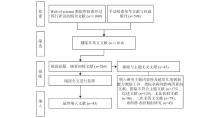
图 1
文献纳入流程图"
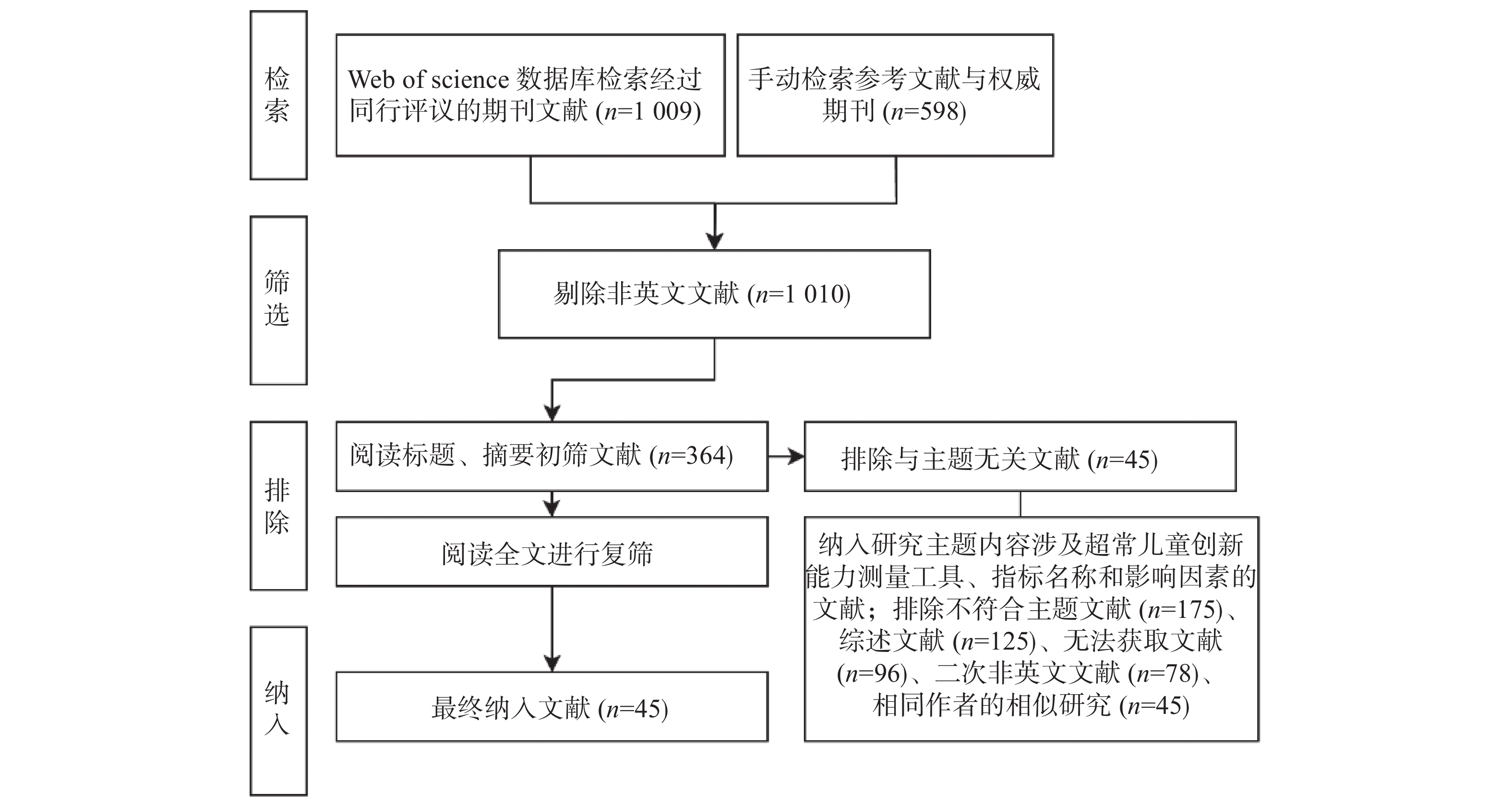
图 2
发表偏倚漏斗图"
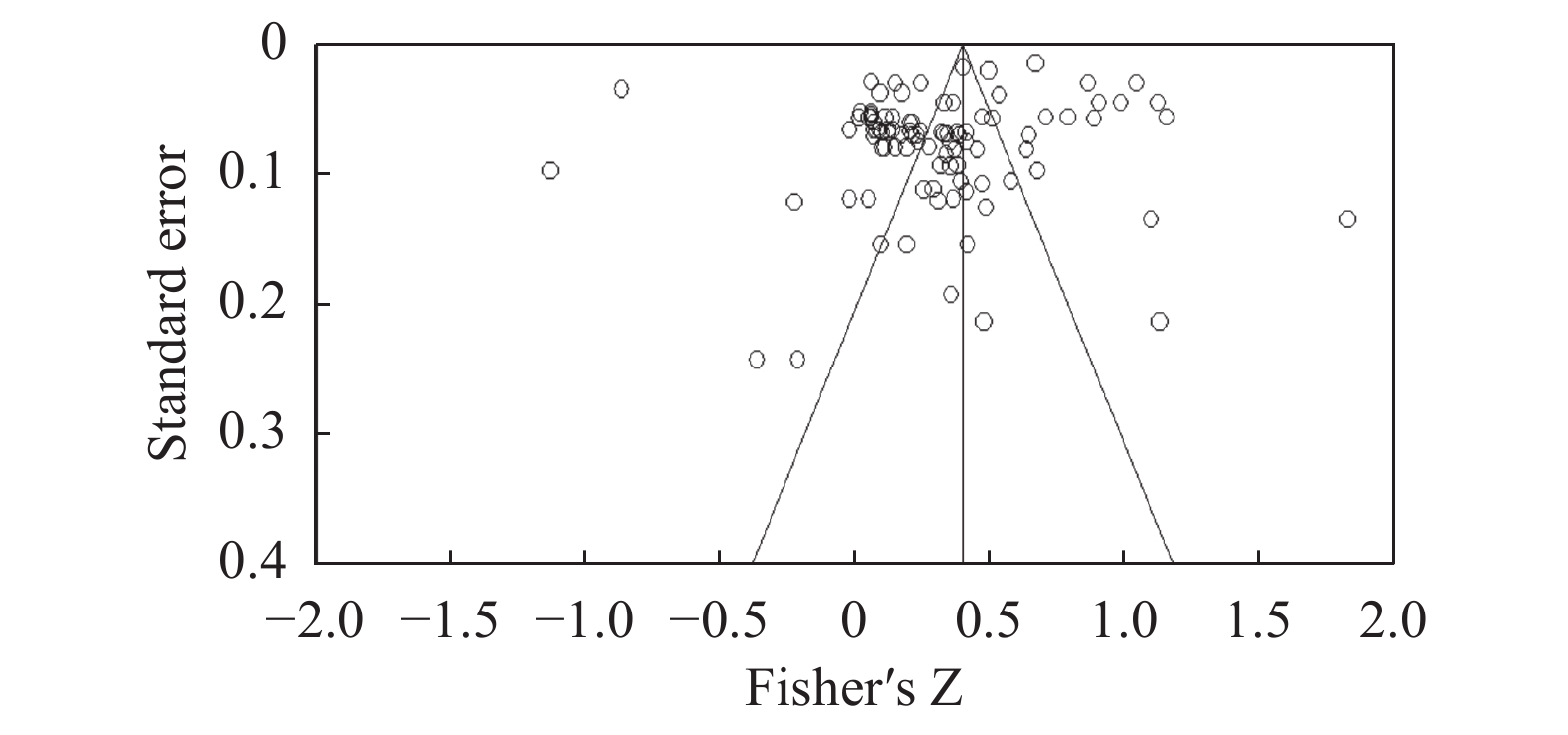
表 3
青少年创新能力影响因素及其元分析统计结果"
| 变量 | K | N | 综合效应值r | 95%的置信区间 | 双尾检验 | ||||
| 下限 | 上限 | Z值 | P值 | ||||||
| 学习敏捷能力 | 速度 | 5 | 767 | 0.254 | 0.186 | 0.319 | 7.113 | 0.001 | |
| 选择性注意 | 6 | 0.242 | −0.085 | 0.523 | 1.456 | 0.145 | |||
| 敏捷性 | 8 | 0.233 | 0.174 | 0.291 | 7.514 | 0.001 | |||
| 问题解决能力 | 定势打破能力 | 4 | 1988 | 0.512 | 0.271 | 0.693 | 3.851 | 0.001 | |
| 思维流畅性 | 8 | 0.556 | 0.606 | 0.657 | 34.242 | 0.001 | |||
| 独创性 | 4 | 634 | 0.518 | 0.140 | 0.764 | 2.597 | 0.009 | ||
| 精细性 | 4 | 0.257 | 0.208 | 0.304 | 10.016 | 0.001 | |||
| 灵活性 | 8 | 0.368 | 0.187 | 0.526 | 3.831 | 0.001 | |||
| 实践操作能力 | 管理能力 | 4 | 0.380 | 0.002 | 0.663 | 1.969 | 0.049 | ||
| 资源利用 | 2 | 419 | 0.346 | −0.245 | 0.749 | 1.157 | 0.247 | ||
| 开发与实践 | 4 | 0.402 | −0.054 | 0.719 | 1.740 | 0.082 | |||
| 审查与反思 | 3 | 423 | 0.353 | 0.266 | 0.434 | 7.498 | 0.001 | ||
| 任务完成度 | 10 | 0.385 | 0.155 | 0.575 | 3.191 | 0.001 | |||
| 团队协作能力 | 共情能力 | 6 | 2008 | 0.200 | 0.012 | 0.374 | 2.088 | 0.037 | |
| 概念整合能力 | 7 | 0.146 | −0.037 | 0.319 | 1.565 | 0.118 | |||
| 提出问题能力 | 4 | 0.384 | 0.097 | 0.612 | 2.578 | 0.010 | |||
| 抗挫折能力 | 情绪稳定 | 4 | −0.237 | −0.710 | 0.383 | −0.733 | 0.463 | ||
| 尝试错误 | 3 | 855 | 0.410 | 0.116 | 0.638 | 2.677 | 0.007 | ||
| 韧性 | 3 | 950 | 0.415 | 0.009 | 0.704 | 1.999 | 0.046 | ||
表 4
五个维度的能力对青少年创新能力的检验结果"
| 变量 | K | N | 综合效应值r | 95%的置信区间 | 双尾检验 | |||
| 下限 | 上限 | Z值 | P值 | |||||
| 学习敏捷能力 | 13 | 0.242 | 0.198 | 0.286 | 10.337 | 0.000 | ||
| 问题解决能力 | 28 | 0.432 | 0.306 | 0.543 | 6.210 | 0.000 | ||
| 实践操作能力 | 17 | 0.317 | 0.144 | 0.471 | 3.507 | 0.000 | ||
| 团队协作能力 | 10 | 0.277 | 0.090 | 0.444 | 9.000 | 0.000 | ||
| 抗挫折能力 | 6 | 1805 | 0.413 | 0.199 | 0.589 | 5.000 | 0.000 | |
表 5
样本平均年龄调节效应分析结果"
| 分类 | 斜率 | 标准误 | 95%的置信区间 | Z值 | P值 |
| 学习敏捷能力 | −0.068 | 0.017 | −0.101~−0.035 | −4.073 | 0.000 |
| 问题解决能力 | −0.018 | 0.363 | −0.043~1.381 | −0.546 | 0.585 |
| 实践操作能力 | 0.390 | 0.333 | −0.263~1.042 | −0.082 | 0.935 |
| 团队协作能力 | 0.034 | 0.565 | −1.074~1.141 | 0.395 | 0.693 |
| 抗挫折能力 | −0.120 | 0.060 | −0.238~−0.002 | −1.986 | 0.047 |
表 6
性别调节效应分析结果⑤"
| 分类 | 斜率 | 标准误 | 95%的置信区间 | Z值 | P值 |
| 学习敏捷能力 | 0.001 | 0.001 | −0.001~0.004 | 0.900 | 0.368 |
| 问题解决能力 | 0.432 | 0.101 | −0.234~0.630 | 0.599 | 0.549 |
| 实践操作能力 | 0.140 | 0.184 | −0.220~0.501 | 1.444 | 0.149 |
| 团队协作能力 | 0.146 | 0.089 | −0.028~0.321 | 2.297 | 0.022 |
| 抗挫折能力 | — | — | — | — | — |
表 7
测量工具类型调节效应分析结果"
| 变量 | 测量类型 | K | N | r | 95%的置信区间 | 组间异质性检验 | |||
| 下限 | 上限 | Q-value | P值 | ||||||
| 学习敏捷能力 | 传统测验 | 8 | 0.253 | 0.181 | 0.322 | 1.107 | 0.293 | ||
| 智能化评估 | 5 | 588 | 0.082 | −0.234 | 0.382 | ||||
| 问题解决能力 | 传统测验 | 17 | 0.494 | 0.311 | 0.641 | 2.652 | 0.103 | ||
| 智能化评估 | 11 | 0.334 | 0.263 | 0.402 | |||||
| 实践操作能力 | 传统测验 | 7 | 1842 | 0.222 | 0.102 | 0.336 | 1.155 | 0.283 | |
| 智能化评估 | 10 | 0.366 | 0.124 | 0.567 | |||||
| 团队协作能力 | 传统测验 | 4 | 0.115 | 0.013 | 0.214 | 5.261 | 0.022 | ||
| 智能化评估 | 6 | 0.367 | 0.177 | 0.531 | |||||
| 抗挫折能力 | 传统测验 | 2 | 466 | 0.100 | −0.057 | 0.252 | 7.225 | 0.007 | |
| 智能化评估 | 4 | 0.466 | 0.250 | 0.638 | |||||
表 8
文化差异调节效应分析结果"
| 变量 | 文化类型 | K | N | r | 95%的置信区间 | 组间异质性检验 | |||
| 下限 | 上限 | Q-value | P值 | ||||||
| 学习敏捷能力 | 东方文化 | 3 | 302 | 0.082 | −0.234 | 0.382 | 1.107 | 0.293 | |
| 西方文化 | 10 | 0.253 | 0.181 | 0.322 | |||||
| 问题解决能力 | 东方文化 | 11 | 0.406 | 0.204 | 0.576 | 0.014 | 0.906 | ||
| 西方文化 | 15 | 0.421 | 0.254 | 0.564 | |||||
| 实践操作能力 | 东方文化 | 8 | 1827 | 0.224 | 0.114 | 0.328 | 1.214 | 0.270 | |
| 西方文化 | 9 | 0.393 | 0.100 | 0.624 | |||||
| 团队协作能力 | 东方文化 | 8 | 0.273 | 0.044 | 0.475 | 0.005 | 0.941 | ||
| 西方文化 | 2 | 0.291 | −0.165 | 0.645 | |||||
| 抗挫折能力 | 东方文化 | 4 | 0.388 | 0.184 | 0.560 | 0.044 | 0.834 | ||
| 西方文化 | 2 | 466 | 0.459 | −0.269 | 0.853 | ||||
表 9
青少年创新能力测量指标体系"
| 维度 | 指标 | 具体含义 |
| 学习敏捷能力 | 速度 | 接收、处理和响应信息时的速率 |
| 敏捷性 | 从经验中高效学习并应用所学的能力 | |
| 问题解决能力 | 定势打破能力 | 超越既有的思维模式和习惯,探索新的可能性和创新解决方案的能力 |
| 思维流畅性 | 产生想法的数量及思维的丰富性 | |
| 独创性 | 产生的想法具有新颖性,与众不同 | |
| 精细性 | 思考的复杂性与深度及表达想法时的翔实程度 | |
| 灵活性 | 在解决问题时使用不同类别的能力 | |
| 实践操作能力 | 管理能力 | 组织和统筹各类要素以达成特定目标的过程 |
| 审查与反思 | 对已有行为、决策进行系统的评估并持续改进 | |
| 任务完成度 | 任务执行的成功率和完成情况 | |
| 团队协作能力 | 共情能力 | 能够换位思考,体验他人正在经历的情绪及反应的能力 |
| 提出问题能力 | 问题提出的数量和质量 | |
| 抗挫折能力 | 尝试错误 | 尝试不同的行动或解决方案,并根据结果来评估其有效性 |
| 复原力/韧性 | 在面临挑战或威胁的情况下成功应对创伤经历,取得积极成果 |
| 贡喆, 刘昌, 沈汪兵. (2016). 有关创造力测量的一些思考. 心理科学进展, 24 (01), 31- 45. | |
| 胡朗宁, 吕立杰. (2024). 学生创造力评估: 国际经验及未来展望. 外国教育研究, 51 (04), 63- 80. | |
| 李刚, 赵佳琦, 郑泽琳. (2023). 面向未来的下一代评估设计——基于OECD《创新评估以测量与支持复杂能力》报告的思考. 开放教育研究, 29 (06), 34- 41. | |
| 李文福, 王康程, 陈井婷, 刘传新, 邱江. (2025). 基于远距离联想测验的聚合思维脑机制研究. 心理发展与教育, 41 (01), 22- 31. | |
| 李志义, 潘超. (2024). 面向工业4.0的高等工程教育横贯能力培养. 高等工程教育研究, 205 (02), 12- 17. | |
| 米哈里·希斯赞特. (2015). 创造力: 心流与创新心理学. 杭州: 浙江人民出版社. | |
| 任志洪, 赖丽足. (2023). 心理学元分析方法: 理论、案例与操作. 北京: 中国人民大学出版社. | |
| 徐红, 陆如萍, 魏春丽. (2023). 超常儿童创新潜能识别与评价的校本研究. 现代特殊教育, 456 (09), 17- 20. | |
| 徐瑾劼, 安德烈亚斯·施莱歇尔. (2024). 数智时代学生创造力发展的全球洞察——基于PISA 2022创造性思维测评结果的分析. 开放教育研究, 30 (04), 11- 19. | |
| 臧玲玲. (2020). 构建新的学习生态系统——OECD学习框架2030述评与反思. 比较教育研究, 42 (01), 11- 18+32. | |
| 翟雪松, 束永红. (2018). 创新能力的内涵、测量与培养——访美国教育传播与技术协会前主席布拉德·霍坎森教授. 开放教育研究, 24 (05), 4- 10. | |
| 詹泽慧, 季瑜, 梅虎李, 通德, 李圆敏. (2023). 打开创新人才培养的“黑箱”: 创新性问题解决的过程模型与技术赋能. 现代远程教育研究, 35 (05), 75- 85+103. | |
| 张春莉, 程黎, 王本陆, 王艳芝. (2018). 青少年创新素质模型的理论构建. 北京教育学院学报, 32 (03), 28- 34. | |
| 张冬梅, 刘晓鸣, 刘禹, 徐雁龙. (2021). 构建青少年创新素质测评与训练新模式. 中国科学院院刊, 36 (07), 779- 786. | |
| 张凤娟, 洪灵芝, 张忠炉. (2022). 情绪类型与整体-局部加工方式对创造性思维的影响. 心理研究, 15 (06), 507- 514. | |
| 张亚利, 李森, 俞国良. (2019). 自尊与社交焦虑的关系: 基于中国学生群体的元分析. 心理科学进展, 27 (06), 1005- 1018. | |
| 周达, 李河霖. (2025). 国际视域下数学创造力的评价与培养——基于2013—2023年文献的分析. 比较教育学报, 355 (01), 160- 174. | |
| Abdulla, A. M., Paek, S. H., Cramond, B., & Runco, M. A. (2020). Problem finding and creativity: A meta-analytic review. Psychology of Aesthetics, Creativity, and the Arts, 14(1), 3—14. | |
| Abrahams, I. & Reiss, M. J. (2012). Practical work: Its effectiveness in primary and secondary schools in England. Journal of Research in Science Teaching, 49 (8), 1035- 1055. | |
| ALVES, N. D. C., von Wangenheim, C. G., & Martins-Pacheco, L. H. (2021). Assessing product creativity in computing education: A systematic mapping study. Informatics in Education, 20 (1), 19- 45. | |
| Alves‐Oliveira, P., Arriaga, P., Xavier, C., Hoffman, G., & Paiva, A. (2022). Creativity Landscapes: Systematic Review Spanning 70 Years of Creativity Interventions for Children. Journal of Creative Behavior, 56 (1), 16- 40. | |
| Amabile, T. M. (1982). Social psychology of creativity: A consensual assessment technique. Journal of Personality and Social Psychology, 43 (5), 997- 1013. | |
| Averill, J. R. (1999). Individual Differences in Emotional Creativity: Structure and Correlates. Journal of Personality, 67 (2), 331- 371. | |
| Baer, J., & Kaufman, J. C. (2005). Bridging generality and specificity: The amusement park theoretical (APT) model of creativity. Roeper review, 27(3), 158—163. | |
| Besemer, S. P., & O'Quin, K. (1986) Analyzing creative products: refinement and test of a judging instrument. The Journal of Creative Behavior, 20(2), 115—126. | |
| Boden, M. (1990). The creative mind: Myths and mechanisms. London: George Weidenfeld and Nicolson. | |
| Campbell, D. T. (1960). Blind variation and selective retentions in creative thought as in other knowledge processes. Psychological Review, 67 (6), 380- 400. | |
| Chen, X. J., Cheung, H. Y., Fan, X. T., & Wu, J. (2018). Factors related to resilience of academically gifted students in the Chinese cultural and educational environment. Psychology in the Schools, 55 (2), 107- 119. | |
| Csikszentmihalyi, M. (1988). Society, culture and person: A systems view of creativity. In R J Sternberg (Ed.). The Nature of Creativity. N.Y.: Cambridge University Press, 325—339. | |
| Davis M. A. (2009). Understanding the relationship between mood and creativity: A meta-analysis. Organizational Behavior and Human Decision Processes, 108 (1), 25- 38. | |
| Derue, D. S., Ashford, S. J., & Myers, C. G. (2012). Learning agility: in search of conceptual clarity and theoretical grounding. Industrial and Organizational Psychology, 5 (3), 258- 279. | |
| De Dreu, C. K. W., Baas, M., & Nijstad, B. A. (2008). Hedonic tone and activation level in the mood- creativity link: Toward a dual pathway to creativity model. Journal of Personality and Social Psychology, 94 (5), 739- 756. | |
| DeYoung, C. G., Flanders, J. L., & Peterson, J. B. (2008). Cognitive abilities involved in insight problem solving: An individual differences model. Creativity Research Journal, 20 (3), 278- 290. | |
| Egger, M., Smith, G. D., Schneider, M., & Minder, C. (1997). Bias in meta-analysis detected by a simple, graphical test. British Medical Journal, 315 (7109), 629- 634. | |
| Farkas D., Denham S. L., Bendixen A., & Winkler I. (2016). Assessing the validity of subjective reports in the auditory streaming paradigm. Journal of the Acoustical Society of America, 139 (4), 1762- 1772. | |
| Farr, J. L., and Ford, C. M. (1990). Individual innovation. In M. A. West & J. L. Farr (Eds. ), Innovation and creativity at work: Psychological and organizational strategies(pp. 63-80). UK, Chichester: Wiley. | |
| Feist, G. J. (1998). A meta-analysis of personality in scientific and artistic creativity. Personality and Social Psychology Review, 2 (4), 290- 309. | |
| Gardner, H. (1993). Creating Minds. N.Y.: Basic Books. | |
| Gauselmann, P., Frings, C., Schmidt, M., & Tempel, T. (2023). Protecting against mental impasses: Evidence of selective retrieval mitigating the impact of fixation in creative problem-solving. Cognition, 239, 105547. | |
| Getzels, J. W., & Jackson, P. W. (1962). Creativity and intelligence: explorations with gifted Students. Oxford: Wiley. | |
| Gignac, G. E., & Szodorai, E. T. (2016). Effect size guidelines for individual differences researchers. Personality and Individual Differences, 102, 74- 78. | |
| Gu, C., Hu, B. Y., Ngwira, F. F., Jing, Z. & Zhou, Z. (2016). The effect of general creative personality and freedom of task choice on adolescents' social creativity. The Journal of Creative Behavior, 50 (2), 132- 149. | |
| Guckelsberger, C., Salge, C., & Colton, S. (2017). Addressing the “why?” in computational creativity: A non-anthropocentric, minimal model of intentional creative agency. In International Conference on Computational Creativity 2017. Association for Computational Creativity (ACC). | |
| Guilford, J. P. (1950). Creativity. American Psychologist, 5 (9), 444- 454. | |
| Guilford, J. P. (1967). Some theoretical views of creativity. Contemporary Approaches to Psychology, 419—459. | |
| He, W. J., & Wong, W. C. (2021), Gender differences in the distribution of creativity scores: Domain-specific patterns in divergent thinking and creative problem solving. Frontiers in Psychology, 12, 626911. | |
| Ho, M. Y., Cheung, F. M., You, J., Kam, C., Zhang, X., & Kliewer, W. (2013). The moderating role of emotional stability in the relationship between exposure to violence and anxiety and depression. Personality and Individual Differences, 55 (6), 634- 639. | |
| Hülsheger, U., Anderson, N., & Salgado, J. (2010). Selecting for innovation: What's good for job performance doesn't need to be good for innovative performance. In 14th Congress of the European Association of Work and Organizational Psychology Santiago (pp. 13-16). | |
| Jo, Y., & Hong, A. J. (2022). Impact of agile learning on innovative behavior: a moderated mediation model of employee engagement and perceived organizational support. Frontiers in Psychology, 13, 900830. | |
| Kaufman, J. C., & Beghetto, R. A. (2009). Beyond big and little: The Four C Model of Creativity. Review of general psychology, 13(1), 1—12. | |
| Kozbelt, B. A., Beghetto, R. A., & Runco, M. A. (2010). Theories of creativity. In J. C. Kaufman & R. J. Sternberg (Eds. ), The Cambridge Handbook of Creativity: 20-47. New York: Cambridge University Press. | |
| Kunio, Shirahada., & Kazuma, Hamazaki. (2013). Trial and error mindset of R&D personnel and its relationship to organizational creative climate. Technological Forecasting and Social Change, 80(6),1108—1118. | |
| Lai, E. R., Yarbro, J., DiCerbo, K., & De Geest, E. (2018). Skills for today: What we know about teaching and assessing creativity. London: Pearson. | |
| Lassig, C. J. (2013). Approaches to creativity: How adolescents engage in the creative process. Thinking Skills and Creativity, 10, 3- 12. | |
| Lunke, K., & Meier, B. (2016). Disentangling the impact of artistic creativity on creative thinking, working memory, attention, and intelligence: Evidence for domain-specific relationships with a new self-report questionnaire. Frontiers in Psychology, 7, 1089. | |
| Luthar S S, Cicchetti D & Becker B. (2000). The construct of resilience: a critical evaluation and guidelines for future work. Child Development, 71 (3), 543- 562. | |
| Ma, H. H. (2009). The effect size of variables associated with creativity: A meta-analysis. Creativity Research Journal, 21 (1), 30- 42. | |
| Mednick, S. (1962). The associative basis of the creative process. Psychological Review, 69 (3), 220- 232. | |
| Mednick, S. A. (1968). The remote associates test. The Journal of Creative Behavior, 2 (3), 213- 214. | |
| OECD (2019). PISA 2018 results (Volume I): What students know and can Do. Retrieved from https://doi.org/10.1787/5f07c754-en. | |
| OECD (2023). PISA 2022 Assessment and analytical framework. Retrieved from https://doi.org/10.1787/dfe0bf9c-en. | |
| OECD (2023). Innovating assessments to measure and support complex skills. Retrieved from https://www.oecd-ilibrary.org/sites/e5f3e341-en/1/3/2/2/index.html?itemId=/content/publication/e5f3e341-en&_csp_=f8cd08a73f7411a73eba225857184a20&itemIGO=oecd&itemContentType=book. | |
| Osborn, A. (1963). Applied imagination: Principles and procedures of creative thinking. New York: Scribner's. | |
| Plucker, J. A., Kaufman, J. C., & Beghetto, R. A. (2010). What we know about creativity: Part of the 4Cs research series. Washington, DC: P21 Partnership for 21st Century Skill. | |
| Reis, S. M., & Renzulli, J. S. (1991). The assessment of creative products in programs for gifted and talented students. Gifted Child Quarterly, 35 (3), 128- 134. | |
| Rinn, A. N., & Bishop, J. (2015). Gifted adults: A systematic review and analysis of the literature. Gifted Child Quarterly, 59 (4), 213- 235. | |
| Ritter, S. M., Gu, X., Crijns, M., & Biekens, P. (2020). Fostering students’ creative thinking skills by means of a one-year creativity training program. PLoS One, 15 (3), e0229773. | |
| Rosenthal, R. (1979). The file drawer problem and tolerance for null results. Psychological Bulletin, 86 (3), 638- 641. | |
| Rosenthal, R. (1991). Meta-analytic procedures for social research. Sage Publications, Inc. | |
| Simonton, D. K. (2000). Creativity: Cognitive, personal, developmental, and social aspects. American psychologist, 55(1), 151—158. | |
| Shute, V. J. (2011). Stealth assessment in computer-based games to support learning. Computer Games and Instruction, 55 (2), 503- 524. | |
| Sternberg, R. J., & Lubart, T. I. (1991). An investment theory of creativity and its development. Human development, 34(1), 1—31. | |
| Stolte, M., García, T., Van Luit, J. E. H., Oranje, B., & Kroesbergen, E. H. (2020). The contribution of executive functions in predicting mathematical creativity in typical elementary school classes: A twofold role for updating. Journal of Intelligence, 8 (2), 26. | |
| Storme, M., Celik, P., & Myszkowski, N. (2021). Creativity and unethicality: A systematic review and meta-analysis. Psychology of Aesthetics, Creativity, and the Arts, 15(4), 664—672. | |
| Tan, C. (2020). A Confucian interpretation of creativity. The Journal of Creative Behavior, 54 (3), 636- 645. | |
| Tidikis, V., Ash, I. K., & Collier, A. F. (2017). The Interaction of Emotional Valence and Arousal on Attentional Breadth and Creative Task Performance. Creativity Research Journal, 29(3), 313—330. | |
| Torrance, E. P. (1966). Torrance tests of creative thinking: Norms technical manual (Research Edition). Princeton: Personnel Press. | |
| Torrance E. P. (1987). Future career image as a predictor of creative achievement in a 22-year longitudinal study. Psychological Reports, 60 (2), 574- 574. | |
| Treffinger, D. J., Selby, E. C., & Schoonover, P. F. (2012). Creativity in the person: Contemporary perspectives. LEARNing Landscapes, 6 (1), 409- 419. | |
| Van Hooijdonk, M., Mainhard, T., Kroesbergen, E. H., & Van Tartwijk, J. (2022). Examining the assessment of creativity with generalizability theory: An analysis of creative problem-solving assessment tasks. Thinking Skills and Creativity, 43, 100994. | |
| Wang, L., & Jiang, N. (2022). Managing students’ creativity in music education–the mediating role of frustration tolerance and moderating role of emotion regulation. Frontiers in Psychology, 13, 843531. | |
| Woodman, R. W., & Schoenfeldt, L. F. (1990). An interactionist model of creative behavior. The Journal of Creative Behavior, 24(1), 11—20. | |
| Yang, H., & Yang, S. (2016). Sympathy fuels creativity: The beneficial effects of sympathy on originality. Thinking Skills and Creativity, 21, 132- 143. | |
| Zhou, P. (2023). Harmonizing the mind: Music education, education neurosciences, and frustration tolerance enhance creativity in Thailand. Eurasian Journal of Educational Research, 105, 159—178. |
| [1] | 杨茂庆, 黄茂林. 青少年价值观类型与家庭背景的关系:基于潜在剖面分析[J]. 华东师范大学学报(教育科学版), 2025, 43(4): 41-52. |
| [2] | 张军凤, 云如先. 青少年的成长型思维可以有效培养吗?——基于一所农村学校为期三年的干预追踪调查[J]. 华东师范大学学报(教育科学版), 2025, 43(4): 53-69. |
| [3] | 马思腾, 褚宏启. 学生参与学校治理对其创新能力的影响[J]. 华东师范大学学报(教育科学版), 2025, 43(3): 110-123. |
| [4] | 袁振国, 黄忠敬, 王纮, 王翔宇, 张静. 中国青少年社会与情感能力发展水平报告——基于第二轮SSES测评数据[J]. 华东师范大学学报(教育科学版), 2024, 42(5): 1-32. |
| [5] | 邵志芳, 唐一鹏, 张静. 中国青少年社会与情感能力第二轮测评技术报告[J]. 华东师范大学学报(教育科学版), 2024, 42(5): 58-71. |
| [6] | 雷浩, 杨春明. 数字教材与纸质教材,哪个更有利于学生学习?[J]. 华东师范大学学报(教育科学版), 2024, 42(12): 99-115. |
| [7] | 赵勇. 国际拔尖创新人才培养的新理念与新趋势[J]. 华东师范大学学报(教育科学版), 2023, 41(5): 1-15. |
| [8] | 黄忠敬, 尚凯悦, 张静. 成长型思维如何影响学生社会与情感能力的发展?——基于OECD社会与情感能力测评的实证分析[J]. 华东师范大学学报(教育科学版), 2023, 41(4): 22-32. |
| [9] | 何妍, 袁柯曼, 张明明, 边玉芳. 父母控制亚型及其对青少年适应的影响:基于潜在转变分析[J]. 华东师范大学学报(教育科学版), 2023, 41(1): 25-39. |
| [10] | 雷浩, 李雪. 数字工具支持的教学对学生学习结果有何影响?——来自137项实验与准实验的元分析证据[J]. 华东师范大学学报(教育科学版), 2022, 40(11): 92-109. |
| [11] | 张静. 智商与情商哪个对学习更重要?[J]. 华东师范大学学报(教育科学版), 2022, 40(11): 69-79. |
| [12] | 成刚, 杜思慧, 余倩. “望子成龙”有效吗?——基于亲子教育期望偏差对学业成绩的影响研究[J]. 华东师范大学学报(教育科学版), 2022, 40(1): 74-87. |
| [13] | 袁振国, 黄忠敬, 李婧娟, 张静. 中国青少年社会与情感能力发展水平报告[J]. 华东师范大学学报(教育科学版), 2021, 39(9): 1-32. |
| [14] | 方超, 黄斌. 体育锻炼能够促进青少年的认知能力发展吗?——基于中国教育追踪调查数据的实证研究[J]. 华东师范大学学报(教育科学版), 2021, 39(3): 84-98. |
| [15] | [美]罗伯特•斯莱文, 张志强, 庄腾腾. 证据驱动的教育改革如何推动教育发展[J]. 华东师范大学学报(教育科学版), 2021, 39(3): 14-22. |
| 阅读次数 | ||||||
|
全文 |
|
|||||
|
摘要 |
|
|||||
