
 中国人文社会科学核心期刊
华东师范大学学报(教育科学版) ›› 2026, Vol. 44 ›› Issue (3): 40-56.doi: 10.16382/j.cnki.1000-5560.2026.03.004
张婧婧1, 于玻2, 曾安3
出版日期:2026-03-01
发布日期:2026-03-02
Jingjing Zhang1, Bo Yu2, An Zeng3
Online:2026-03-01
Published:2026-03-02
摘要:
在线课程的发展已成为推动全球高等教育数字化转型的重要支撑,其学科与区域发展模式呈现出复杂的动态演化特征。本研究基于2012-2022年间覆盖57个国家和地区、965所高校和研究机构的共计168,115条课程数据,采用复杂网络分析方法,并结合比较优势与产品空间理论,构建全球数字化课程空间,系统探讨在线课程建设的学科与区域发展的邻近效应。研究发现,全球数字化课程空间呈现显著的“核心—边缘”结构。长期来看,高校课程发展依赖邻近性原则,倾向于优先建设与已有优势课程类似的课程;而短期内则表现出更强的多元化倾向。从区域层面来看,课程数字化转型水平与国家经济发展程度高度相关,美国在传统学科与新兴技术领域持续保持显著优势,而发展中国家在计算机科学与新兴技术领域相对薄弱。此外,课程空间的结构显著影响高校与区域的数字化转型路径,制约课程升级的效率。本研究指出,各高校需要通过优化课程体系以强化学科比较优势,进而推动高校教育数字化转型。
张婧婧, 于玻, 曾安. 数字化转型视域下全球在线课程十年建设:学科与区域发展的邻近效应[J]. 华东师范大学学报(教育科学版), 2026, 44(3): 40-56.
Jingjing Zhang, Bo Yu, An Zeng. Ten Years of Global Online Course Development in the Context of Digital Transformation: Proximity Effects in Disciplinary and Regional Growth[J]. Journal of East China Normal University(Educationa, 2026, 44(3): 40-56.
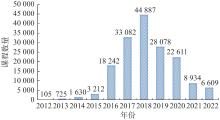
图 1
课程数量逐年分布统计图"
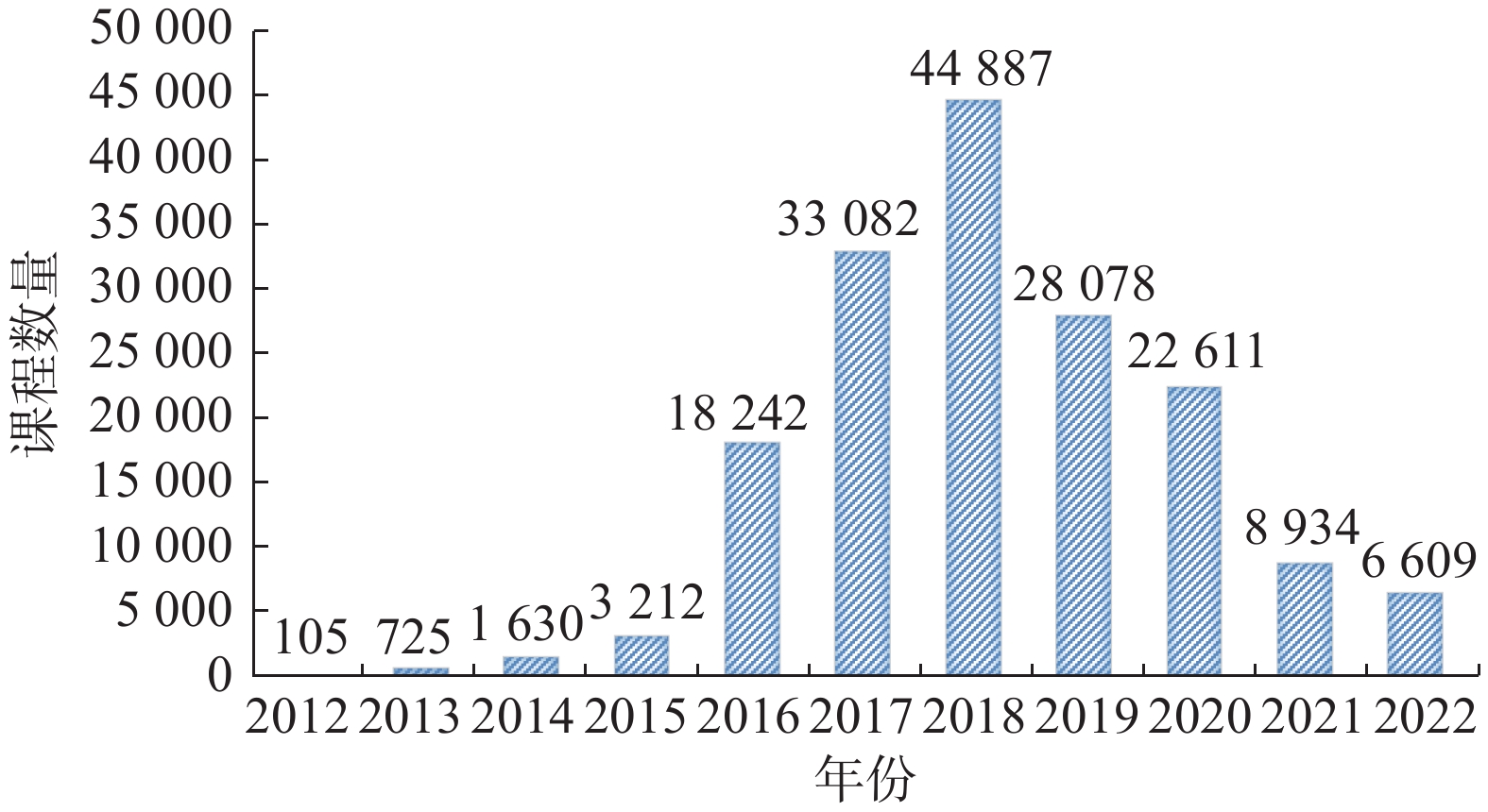
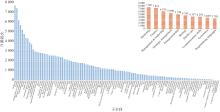
图 2
各子学科包含的课程数量"
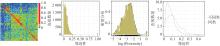
图 3
课程空间邻近性热力图(左1);邻近性分布图(左2、左3);同类与不同类学科邻近性分布对比图(右)"
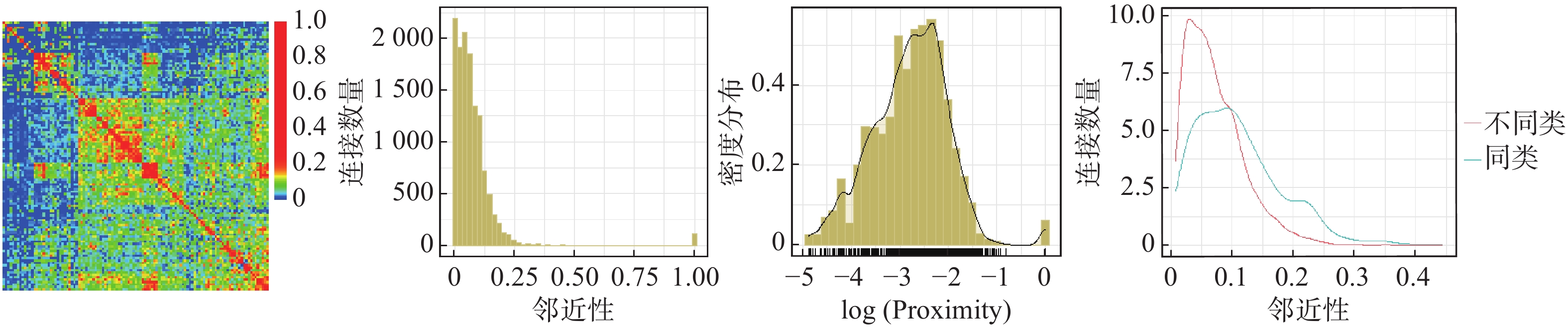
表 1
平均邻近性及组间/组内比值表"
| 艺术与 设计 | 商科 | 计算机 科学 | 数据 科学 | 教育学 | 工程学 | 健康 与医药 | 人文 学科 | 数学 | 个人 发展 | 编程 | 自然 科学 | 社会 科学 | 组间/组内 | |
| 艺术与设计 | 0.111 | 0.068 | 0.057 | 0.075 | 0.065 | 0.061 | 0.074 | 0.077 | 0.070 | 0.114 | 0.058 | 0.072 | 0.088 | 0.679 |
| 商科 | 0.098 | 0.070 | 0.079 | 0.057 | 0.061 | 0.063 | 0.057 | 0.057 | 0.101 | 0.067 | 0.060 | 0.076 | 0.767 | |
| 计算机科学 | 0.102 | 0.102 | 0.058 | 0.097 | 0.059 | 0.058 | 0.103 | 0.069 | 0.104 | 0.077 | 0.064 | 0.737 | ||
| 数据科学 | 0.126 | 0.069 | 0.090 | 0.058 | 0.060 | 0.091 | 0.080 | 0.104 | 0.079 | 0.079 | 0.600 | |||
| 教育学 | 0.127 | 0.055 | 0.082 | 0.068 | 0.063 | 0.107 | 0.058 | 0.076 | 0.085 | 0.592 | ||||
| 工程学 | 0.136 | 0.036 | 0.054 | 0.116 | 0.059 | 0.077 | 0.101 | 0.057 | 0.551 | |||||
| 健康与医药 | 0.134 | 0.072 | 0.052 | 0.089 | 0.054 | 0.075 | 0.101 | 0.562 | ||||||
| 人文学科 | 0.084 | 0.067 | 0.082 | 0.056 | 0.075 | 0.086 | 0.900 | |||||||
| 数学 | 0.110 | 0.065 | 0.072 | 0.100 | 0.064 | 0.690 | ||||||||
| 个人发展 | 0.219 | 0.061 | 0.077 | 0.105 | 0.345 | |||||||||
| 编程 | 0.127 | 0.066 | 0.059 | 0.595 | ||||||||||
| 自然科学 | 0.103 | 0.084 | 0.735 | |||||||||||
| 社会科学 | 0.118 | 0.636 |

图 4
课程空间的最大生成树(左);阈值及其平均度分布图(中);课程空间的网络结构图(右)"
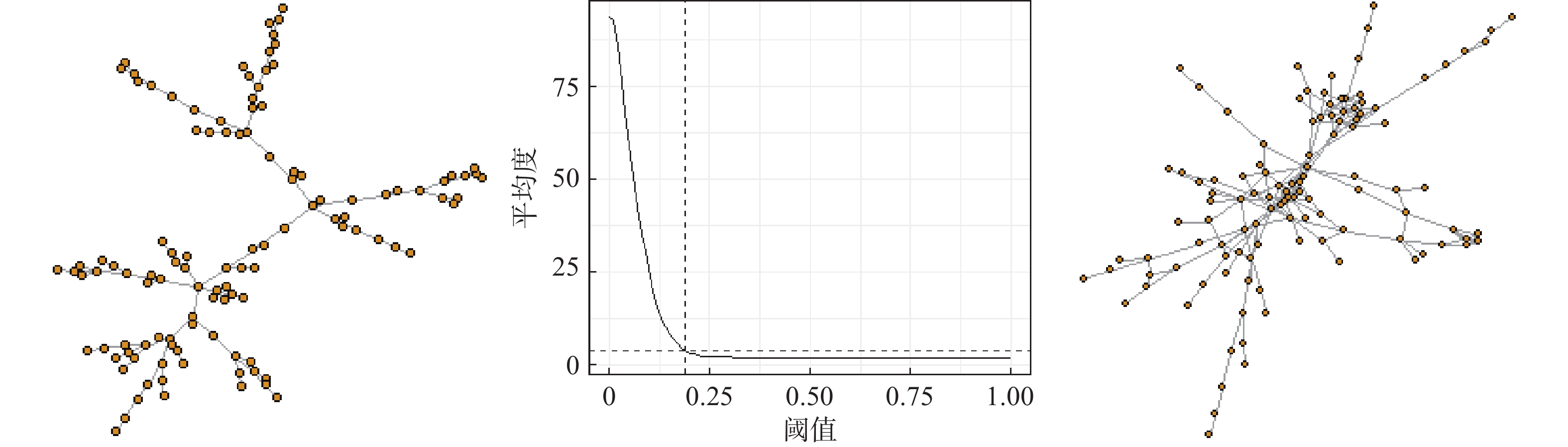
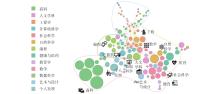
图 5
课程空间网络图"
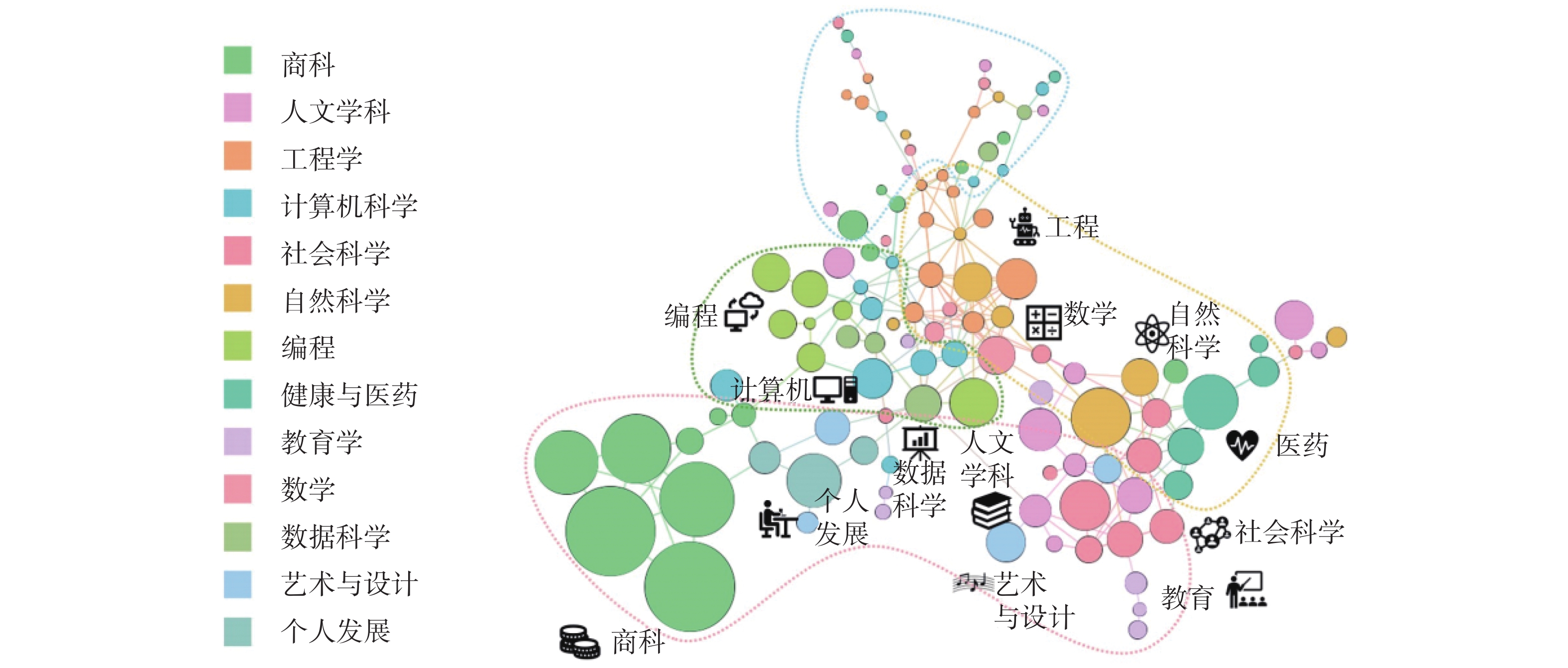

图 6
未发展型课程与转型课程密度分布图(左);开发因子分布图(右)"

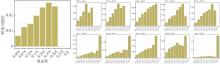
图 7
2012-2022年整体转化可能性直方图(左);逐年转化可能性直方图(右)"
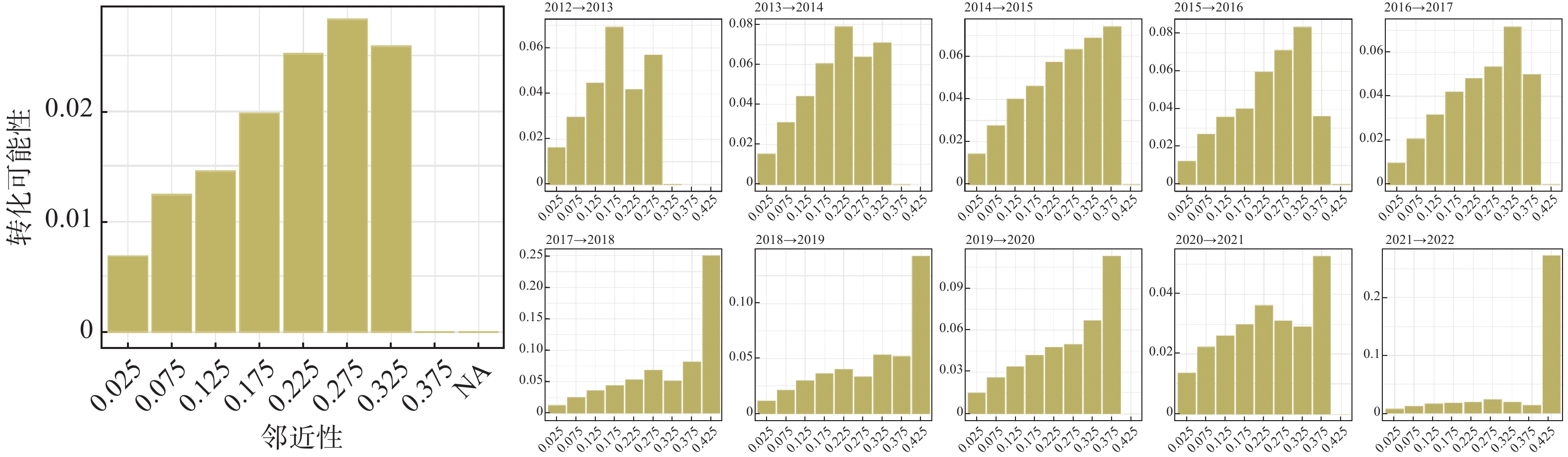
表 2
MOOCs显性比较优势与国家发展水平相关性"
| RCA>1课程数 | 网络中高校数 | 国家GDP | ||
| RCA>1课程数 | Pearson 相关性 | 1 | 0.704** | 0.575** |
| 显著性(双侧) | 0.000 | 0.000 | ||
| 网络中高校数 | Pearson 相关性 | 1 | 0.776** | |
| 显著性(双侧) | 0.000 | |||
| 国家GDP | Pearson 相关性 | 1 | ||
| 显著性(双侧) | ||||

图 8
课程空间网络中的显性比较优势课程"

图 9
全球2012-2022年课程空间演化"
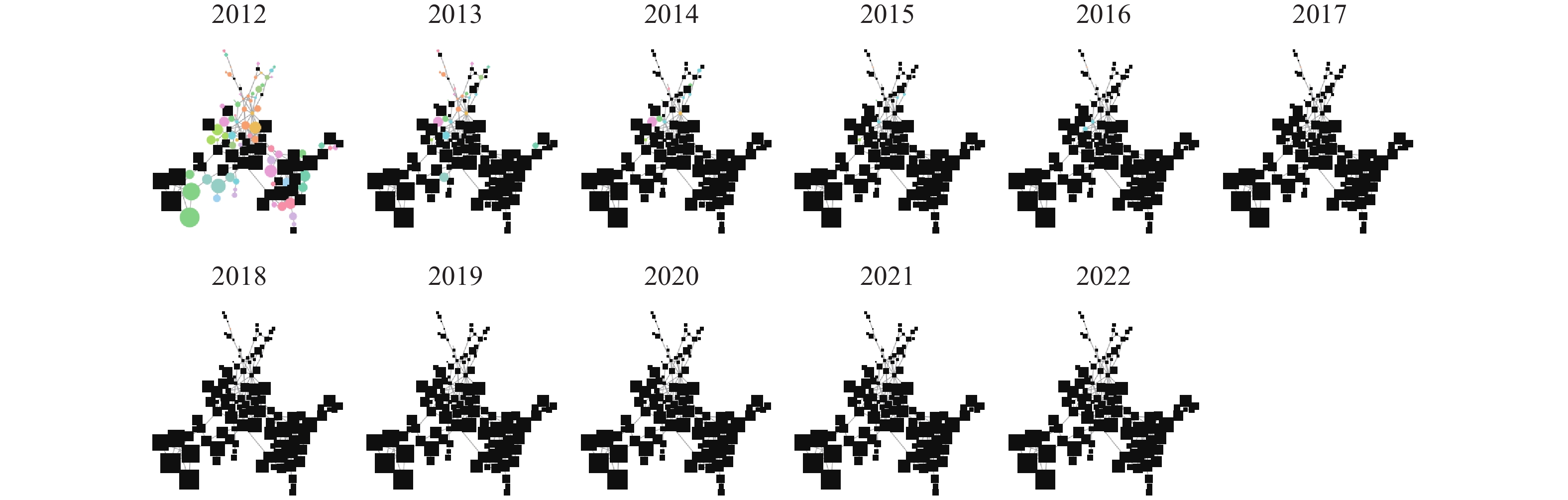
图 10
澳大利亚2012-2022年课程空间演化"
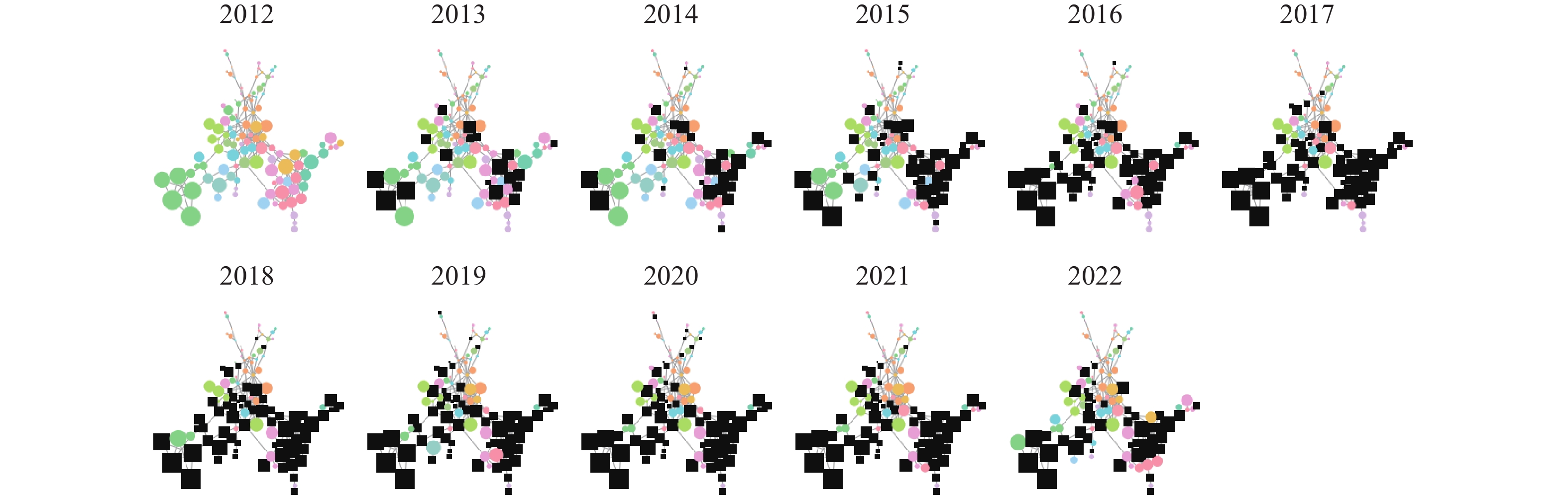
图 11
中国(大陆)2012-2022年课程空间演化"
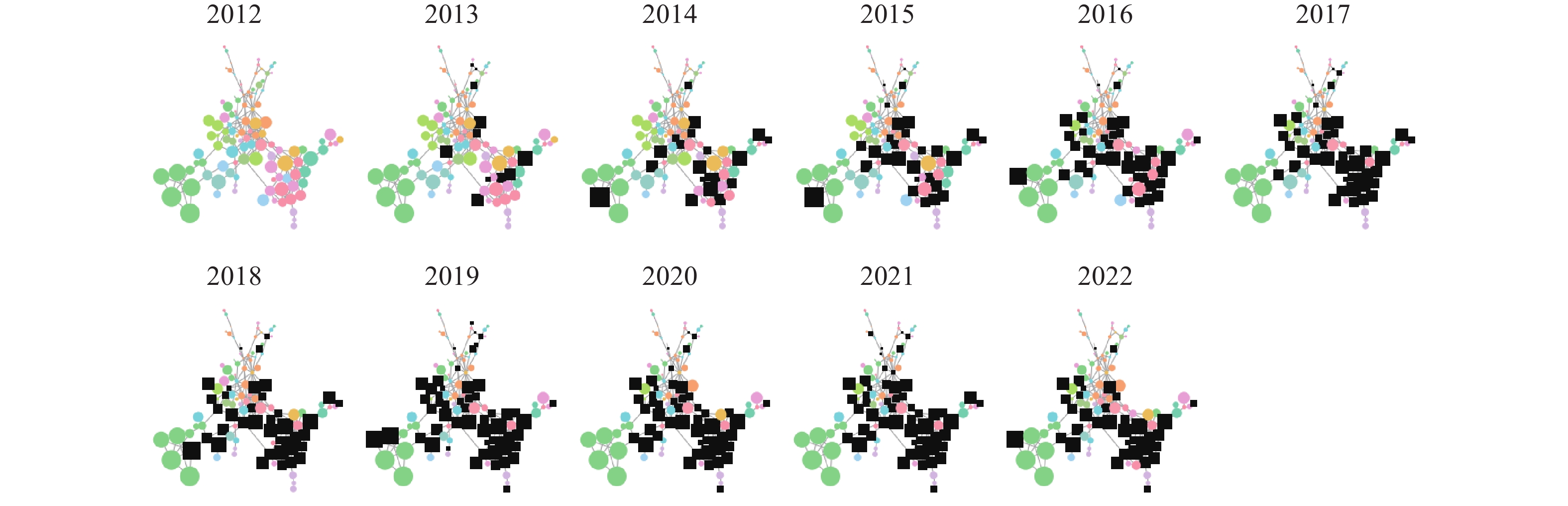
图 12
俄罗斯2012-2022年课程空间演化"
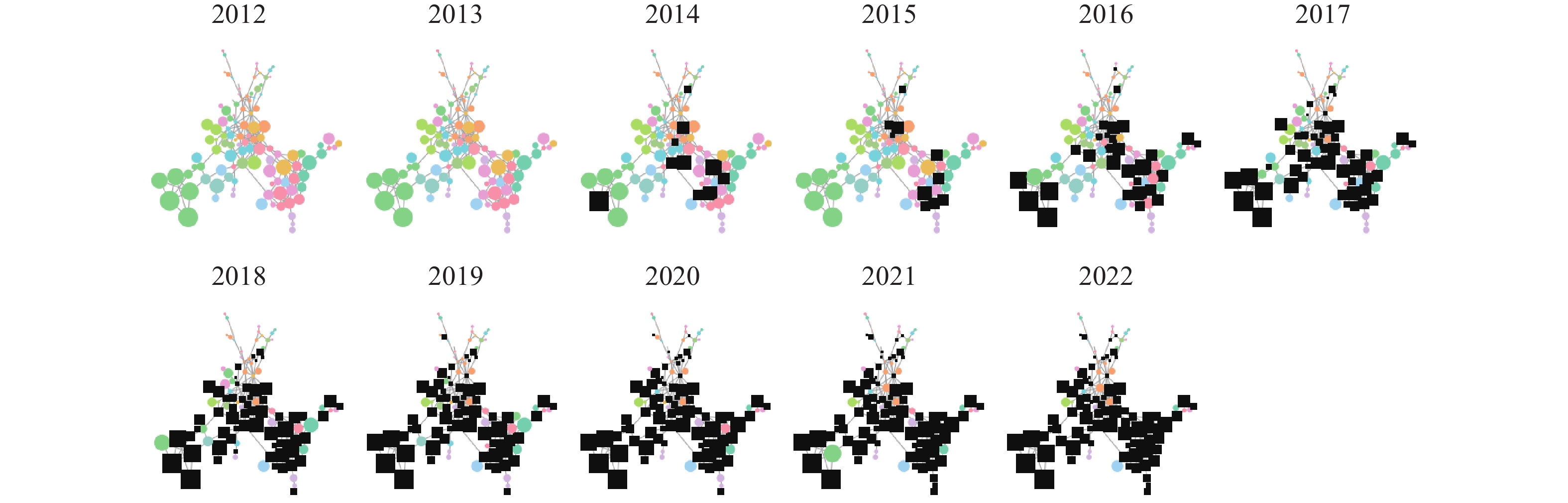
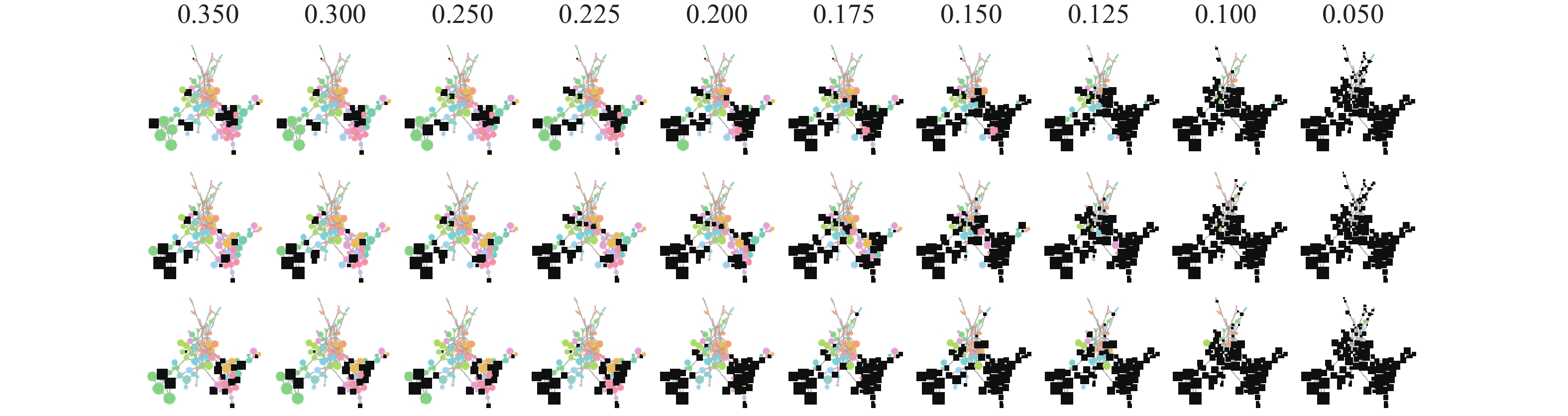
图 13
马来西亚、秘鲁和爱尔兰近邻扩散"
| 北京师范大学中国教育与社会发展研究院“一带一路”国家教育发展研究课题组. (2017). 国际开放教育资源发展研究报告. 北京师范大学智慧学习研究院. | |
| 陈丽, 王怀波, 孙洪涛, & 刘春萱. (2017). 中国MOOCs的回归与高等学校教学服务模式变革方向. 中国电化教育(08), 1—6. | |
| 陈淼, 燕良轼. (2019). “慕课”的知识传播模式及其发展. 湖南师范大学教育科学学报(02), 106—111. | |
| 陈肖庚, 王顶明. (2013). MOOC的发展历程与主要特征分析. 现代教育技术(11), 5—10. | |
| 程建钢, 崔依冉, 李梅, 韩锡斌. (2022). 高等教育教学数字化转型的核心要素分析——基于学校、专业与课程的视角. 中国电化教育(07), 31—36. | |
| 程书强. (2016). 供给侧结构性改革视角下高等教育改革思路. 国家教育行政学院学报(08), 12—16. | |
| 狄增如. (2011). 系统科学视角下的复杂网络研究. 上海理工大学学报, 33 (2), 111- 116. | |
| 段世飞. (2024). 高等教育国际化数字变革的国际经验与本土行动. 贵州师范大学学报(社会科学版)(04), 107—118. | |
| 韩锡斌, 朱永海, 程建钢. (2014). MOOCs在全球高等教育引发海啸的根源分析. 北京大学教育评论, 12 (03), 160- 172. | |
| 贺灿飞, 董瑶, 周沂. (2016). 中国对外贸易产品空间路径演化. 地理学报, 71 (06), 970- 983. | |
| 黄奕宇. (2021). 传播学视阈下我国慕课教育问题与优化策略. 高教探索(04), 72—77. | |
| 李金华. (2009). 网络研究三部曲: 图论、社会网络分析与复杂网络理论. 华南师范大学学报(社会科学版)(02), 136—138. | |
| 李明华. (2015). MOOCs视角的未来学校及治理——孔夫子办学模式的回归. 开放教育研究, 21 (03), 11- 20. | |
| 李树英. (2018). 未来的大学和大学的未来: 大学发展的国际前瞻. 大学教育科学(03), 20—24. | |
| 李晓虹, 张婷婷, 王梓宁. (2024). 我国高等教育数字化转型建设路径的定性比较分析. 远程教育杂志(01), 32—40. | |
| 李晓明, 张绒. (2017). 慕课: 理想性、现实性及其对高等教育的潜在影响. 电化教育研究, 38 (02), 62- 65. | |
| 李晓明. (2019). 中国慕课现象: 六年实践与认识. 中国大学教学(11), 10—12. | |
| 李秀, 陆军, 牛颂杰, 李鸣超, 刘敬晗. (2024). 人工智能时代计算机基础课程建设与教育教学思考. 清华大学教育研究(02), 42—49+70. | |
| 李玉华. (2016). 我国高等教育供给侧改革研究. 教育探索(05), 71—76. | |
| 李志民. (2016). MOOC: 信息化时代高等教育变革的机遇和挑战. 中国高校科技(09), 4—6. | |
| 梁林梅, 夏颖越. (2016). 美国高校在线教育: 现状、阻碍、动因与启示——基于斯隆联盟十二年调查报告的分析. 开放教育研究(01), 27—36. | |
| 刘亚西, 计国君. (2024). 从世界到国家: 用战略思维创造高等教育国际公共价值. 江苏高教(02), 28—37. | |
| 罗海丰. (2004). 区域经济与高等教育非均衡发展的对策研究. 辽宁教育研究(05), 16—18. | |
| 马海燕, 于孟雨. (2018). 产品复杂度、产品密度与产业升级——基于产品空间理论的研究. 财贸经济, 39 (03), 123- 137. | |
| 马芸, 郑燕林, 史慧姗. (2017). 国内高校MOOC的学科分布现状研究. 现代远距离教育(1), 11—19. | |
| 缪静敏, 王宇, 汪琼. (2022). 欧洲慕课发展趋势及启示. 中国远程教育(05), 34—40. | |
| 潘懋元. (1999). 21世纪: 可持续发展的中国高等教育──兼论中国高等教育大众化问题. 教育科学研究(02), 3—10. | |
| 庞丽娟, 杨小敏. (2016). 关于教育供给侧结构性改革的思考和建议. 国家教育行政学院学报(10), 12—16. | |
| 钱小龙, 黄蓓蓓. (2019). 大学慕课可持续商业模式的扎根研究. 高教发展与评估(05), 119. | |
| 邱伟华. (2017). 高等教育慕课的价值创造与盈利模式. 现代远程教育研究(04), 39—49. | |
| 人民日报. (2024年4月23日). 推动“慕课出海”迈向“2.0”. http://www.moe.gov.cn/jyb_xwfb/s5147/202404/t20240423_1127073.html. | |
| 尚俊杰, 曹培杰. (2017). “互联网+”与高等教育变革——我国高等教育信息化发展战略初探. 北京大学教育评论(01), 173—182. | |
| 世界慕课与在线教育联盟秘书处. (2023a). 各国谋划和实施高等教育数字化战略——《无限的可能: 世界高等教育数字化发展报告》节选二. 中国教育信息化(01), 9—23. | |
| 世界慕课与在线教育联盟秘书处. (2023b). 国际组织倡导推动高等教育数字化治理变革——《无限的可能: 世界高等教育数字化发展报告》节选三. 中国教育信息化(01), 24—35. | |
| 世界慕课与在线教育联盟秘书处. (2023c). 高等教育数字化变革与挑战——《无限的可能: 世界高等教育数字化发展报告》节选五. 中国教育信息化(01), 44—60. | |
| 童顺平. (2019). 试论高校人才培养供给侧结构性改革. 黑龙江高教研究, 37 (11), 1- 6. | |
| 王朋娇, 李娜, 刘雅文 & 孟祥宇. (2017). 传播学视野下MOOC在中国传播影响因素分析及对策研究. 现代远距离教育(01), 20—28. | |
| 王威. (2015). 耶鲁大学在线教育战略解读——基于耶鲁大学在线教育委员会2014年度报告的分析. 成人教育(03), 6—8. | |
| 吴砥, 李玲, 吴龙凯, 尉小荣. (2023). 高等教育数字化转型的国际比较研究. 国家教育行政学院学报(04), 27—36. | |
| 吴屹. (2020). 一流学科发展视域下高校课程建设探究. 教育观察, 9 (01), 60- 61+105. | |
| 谢幼如, 李草茵, 李成军, 邱艺. (2024). 智能时代高校数字课程: 内涵、形态与构建. 电化教育研究(11), 5—12. | |
| 徐继存, 段兆兵, 陈琼. (2002). 论课程资源及其开发与利用. 学科教育(02), 1—5. | |
| 徐晓飞, 战德臣, 张策. (2021). 关于高校慕课建设规范及应用的思考. 中国大学教学, (05), 85- 91. | |
| 严全治, 苗文燕. (2006). 区域高等教育与经济非均衡发展实证研究. 教育发展研究(23), 62—65. | |
| 杨玲, 杨海平. (2015). 我国高等教育MOOC平台及技术问题研究. 科技与出版(05), 14—17. | |
| 杨满福, 焦建利. (2014). 大教学、大数据、大变革——edX首门“慕课”研究报告的分析与启示. 电化教育研究, 35 (06), 34- 37+50. | |
| 余南平, 张翌然. (2023). ChatGPT/生成式人工智能对教育的影响: 大国博弈新边疆. 华东师范大学学报(教育科学版)(07), 15—25. | |
| 余胜泉, 汪晓凤. (2017). “互联网+”时代的教育供给转型与变革. 开放教育研究, 23 (01), 29- 36. | |
| 袁莉, 斯蒂芬·鲍威尔, 比尔·奥利弗, 马红亮. (2014). 后MOOC时代: 高校在线教育的可持续发展. 开放教育研究(03), 44—52. | |
| 袁松鹤, 刘选. (2014). 中国大学MOOC实践现状及共有问题——来自中国大学MOOC实践报告. 现代远程教育研究(04), 3—12+22. | |
| 张婧婧, 高明, 张汉杰. (2019). 跨学科课程体系多样性与聚合性评价研究——以MOOCs为例. 复旦教育论坛, 17 (05), 47- 54. | |
| 张婧婧, 杨业宏, 王烨宇, 陈丽. (2019). 国际视野中的在线交互与网络分析: 回顾与展望. 电化教育研究, 40 (10), 26- 34. | |
| 张其仔, 李颢. (2013). 产业政策是应遵循还是违背比较优势? 经济管理, 35(10), 27—37. | |
| 赵磊, 朱泓. (2016). MOOC: 高等教育课程市场之破坏性创新. 中国电化教育(09), 59—65. | |
| 郑燕林, 李卢一. (2015). MOOC有效教学的实施路径选择——基于国外MOOC教师的视角. 现代远程教育研究(03), 43—52. | |
| 钟秉林, 方芳. (2016). 一流本科教育是“双一流”建设的重要内涵. 中国大学教学(04), 4—8. | |
| 钟秉林. (2007). 国际视野中的创新型人才培养. 中国高等教育(Z1), 37—40. | |
| 周光礼. (2016). “双一流”建设中的学术突破——论大学学科、专业、课程一体化建设. 教育研究, 37 (05), 72- 76. | |
| 周涛, 柏文洁, 汪秉宏, 刘之景, 严钢. (2005). 复杂网络研究概述. 物理, (1), 31- 36. | |
| 朱永海, 韩锡斌, 杨娟, 程建钢. (2014). 高等教育借助在线发展已成不可逆转的趋势——美国在线教育11年系列报告的综合分析及启示. 清华大学教育研究(04), 92—100. | |
| 祝智庭, 戴岭, 胡姣. (2023). AIGC技术赋能高等教育数字化转型的新思路. 中国高教研究(06), 12—19+34. | |
|
Balassa, B. (1965). Trade Liberalisation and “Revealed” Comparative Advantage1. The Manchester School, 33 (2), 99- 123.
doi: 10.1111/j.1467-9957.1965.tb00050.x |
|
|
Balassa, B. (1986). Comparative Advantage in Manufactured Goods: A Reappraisal. The Review of Economics and Statistics, 68, 315- 319.
doi: 10.2307/1925512 |
|
| Bar-Yam, Y. (2002). General Features of Complex Systems. UNESCO - Encyclopedia Life Support Systems. | |
|
Grossman, G. M., & Helpman, E. (1991). Quality Ladders in the Theory of Growth. The Review of Economic Studies, 58 (1), 43- 61.
doi: 10.2307/2298044 |
|
| Hausmann, R., & Klinger, B. (2007). The Structure of the Product Space and the Evolution of Comparative Advantage. CID Working Paper, 146. | |
|
Hidalgo, C. A., & Hausmann, R. (2009). The building blocks of economic complexity. Proceedings of the National Academy of Sciences, 106 (26), 10570- 10575.
doi: 10.1073/pnas.0900943106 |
|
|
Hidalgo, C. A., Klinger, B., Barabási, A. L., & Hausmann, R. (2007). The Product Space Conditions the Development of Nations. Science, 317 (5837), 482- 487.
doi: 10.1126/science.1144581 |
|
| Hirschman, A. O. (1958). The Strategy of Economic Development. New Haven: Yale University Press. | |
| Limpert, E., Stahel, W. A., & Abbt, A. M. (2001). Log-normal distributions across the sciences: keys and clues. Bioscience, 51 (5), 341- 352. | |
| National Center for Education Statistics. (2023). Table 3. Number and percentage distribution of students enrolled at Title IV institutions, by control of institution, student level, level of institution, distance education status of student, and distance education status of institution: United States, fall 2023. Retrieved 2025-12-27, from https://nces.ed.gov/ipeds/search/viewtable?tableId=36439. | |
| Zakharova, N., & Yudintseva, A. (2019). Online Education: Prospects of Development in Russia. Universal Journal of Educational Research. https://doi.org/10.13189/ujer.2019.071803. | |
| Statista. (2025). Online education – worldwide. https://www.statista.com/outlook/emo/online-education/worldwide (检索日期: 2025-12-27 |
| [1] | 朱永新. 数智重塑教育未来——新教育实验“建设数码社区”的理论与实践[J]. 华东师范大学学报(教育科学版), 2026, 44(1): 1-21. |
| [2] | 屈曼祺, 李宝敏, 宫玲玲. 数字化转型背景下教师课程领导力发展影响机制研究[J]. 华东师范大学学报(教育科学版), 2025, 43(7): 96-107. |
| [3] | 李栋. 中国教育学理论体系的建构[J]. 华东师范大学学报(教育科学版), 2025, 43(6): 21-37. |
| [4] | 李政涛. 概念研究为什么重要?——构筑教育学建设与发展的概念基石[J]. 华东师范大学学报(教育科学版), 2024, 42(8): 1-8. |
| [5] | 张丹, [英]苏珊•罗伯森. 交叉学科研究的机遇与陷阱——张丹与苏珊•罗伯森的对话[J]. 华东师范大学学报(教育科学版), 2024, 42(7): 114-126. |
| [6] | 刘皛. 高等教育高质量发展与国家区域发展战略[J]. 华东师范大学学报(教育科学版), 2024, 42(10): 98-109. |
| [7] | 杨欣. 教育数字化转型中的算法权力及其规制[J]. 华东师范大学学报(教育科学版), 2024, 42(1): 114-126. |
| [8] | 田小红, 季益龙, 周跃良. 教师能力结构再造:教育数字化转型的关键支撑[J]. 华东师范大学学报(教育科学版), 2023, 41(3): 91-100. |
| [9] | 尚俊杰, 李秀晗. 教育数字化转型的困难和应对策略[J]. 华东师范大学学报(教育科学版), 2023, 41(3): 72-81. |
| [10] | 余胜泉. 教育数字化转型的关键路径[J]. 华东师范大学学报(教育科学版), 2023, 41(3): 62-71. |
| [11] | 江波, 丁莹雯, 魏雨昂. 教育数字化转型的核心技术引擎:可信教育人工智能[J]. 华东师范大学学报(教育科学版), 2023, 41(3): 52-61. |
| [12] | 靳彤, 李亚芬. 理解数字化时代的学校公共空间——教育数字化转型的实践难题[J]. 华东师范大学学报(教育科学版), 2023, 41(3): 45-51. |
| [13] | 蔡连玉, 金明飞, 周跃良. 教育数字化转型的本质:从技术整合到人机融合[J]. 华东师范大学学报(教育科学版), 2023, 41(3): 36-44. |
| [14] | 吴永和, 许秋璇, 王珠珠. 教育数字化转型成熟度模型研究[J]. 华东师范大学学报(教育科学版), 2023, 41(3): 25-35. |
| [15] | 祝智庭, 戴岭. 设计智慧驱动下教育数字化转型的目标向度、指导原则和实践路径[J]. 华东师范大学学报(教育科学版), 2023, 41(3): 12-24. |
| 阅读次数 | ||||||
|
全文 |
|
|||||
|
摘要 |
|
|||||
