|
安同良, 魏婕. (2023). 中国经济学走向何处: 复杂经济学视域下新经济发展对中国经济学的重构. 中国工业经济, 12, 5- 23.
|
|
陈诗一. (2022). 低碳经济. 经济研究, 57 (06), 12- 18.
|
|
杜鹏, 赵秉钰, 孙粒, 等. (2023). 新时代科研范式变革的内涵及应对. 中国科学院院刊, 38 (07), 991- 1000.
|
|
樊丽明. (2020). “新文科”: 时代需求与建设重点. 中国大学教学, 5, 4- 8.
|
|
高奇琦. (2020). 智能革命与国家治理现代化初探. 中国社会科学, 7, 81- 102+205—206.
|
|
洪永淼, 邱东, 罗良清. (2025). 经济测度与经济统计学面临的挑战与机遇. 统计研究, 42 (01), 4- 17.
|
|
洪永淼, 汪寿阳. (2023). 人工智能新近发展及其对经济学研究范式的影响. 中国科学院院刊, 38 (03), 353- 357.
|
|
洪永淼, 汪寿阳. (2024). ChatGPT与大模型将对经济学研究范式产生什么影响? 计量经济学报, 4(01), 1—25.
|
|
胡志华, 李姚娜, 黄有方. (2022). 融合“数智”科技推动新文科建设的七大议题. 山东大学学报(哲学社会科学版), 6, 165- 172.
|
|
计拓. (2024). 应用型人才培养视域下高校法学教育策略——评《法学教育改革的探索与实践》. 教育发展研究, 44 (07), 86.
|
|
江波, 丁莹雯, 魏雨昂. (2023). 教育数字化转型的核心技术引擎: 可信教育人工智能. 华东师范大学学报(教育科学版), 41 (03), 52- 61.
|
|
金碚. (2018). 关于“高质量发展”的经济学研究. 中国工业经济, 4, 5- 18.
|
|
李立国, 薛新龙. (2018). 建立以人才培养定位为基础的高等教育分类体系. 教育研究, 39 (03), 62- 69.
|
|
刘三女牙, 郝晓晗, 李卿. (2024). 教育科研新范式: 人工智能驱动的教育科学研究. 教育研究, 45 (03), 147- 159.
|
|
孟培嘉. (2025). AI深度赋能教育行业. 中国证券报, 2025-02-11 (A06).
|
|
彭小爽, 周勇. (2023). 大变局中的民族复兴与新文科教育演变——以早期七十年历史经验为例. 教育发展研究, 43 (5), 53- 59.
|
|
史秋衡, 任可欣. (2023). 我国大学生就业能力内涵及其影响因素探析——基于应用型高校与研究型高校的对比. 华东师范大学学报(教育科学版), 41 (08), 1- 12.
|
|
田贤鹏, 姜淑杰. (2022). 新文科背景下的跨学科协同育人: 内涵特征、逻辑演变与路径选择. 教育发展研究, 42 (21), 35- 42.
|
|
王震宇, 薛妍燕, 邓理. (2020). 跨越边界的思考: 新文科视角下的社会科学实验室探索. 中国高教研究, 12, 61- 68.
|
|
张爱军, 师琦. (2019). 人工智能与网络社会情绪的规制. 理论与改革, 4, 34- 46.
|
|
郑石明. (2019). 世界一流大学跨学科人才培养模式比较及其启示. 教育研究, 40 (05), 113- 122.
|
|
周洪宇, 李宇阳. (2023). 生成式人工智能技术ChatGPT与教育治理现代化. 华东师范大学学报(教育科学版), 41 (07), 36- 46.
|
|
卓泽林. (2024). 研究型大学赋能高水平科技自立自强的困境与突破. 教育研究, 45 (11), 26- 38.
|
|
Acemoglu, D. (2008). Introduction to modern economic growth. Princeton University Press.
|
|
Acemoglu, D., & Restrepo, P. (2020). Robots and jobs: Evidence from US labor markets. Journal of Political Economy, 128 (6), 2188- 2244.
|
|
Autor, D. H. (2015). Why are there still so many jobs? The history and future of workplace automation. Journal of Economic Perspectives, 29 (3), 3- 30.
|
|
Autor, D., Goldin, C., & Katz, L. F. (2020). Extending the race between education and technology. AEA Papers and Proceedings, 110, 347- 351.
|
|
Bianchini, S., Müller, M., & Pelletier, P. (2022). Artificial intelligence in science: An emerging general method of invention. Research Policy, 51 (10), 104604.
|
|
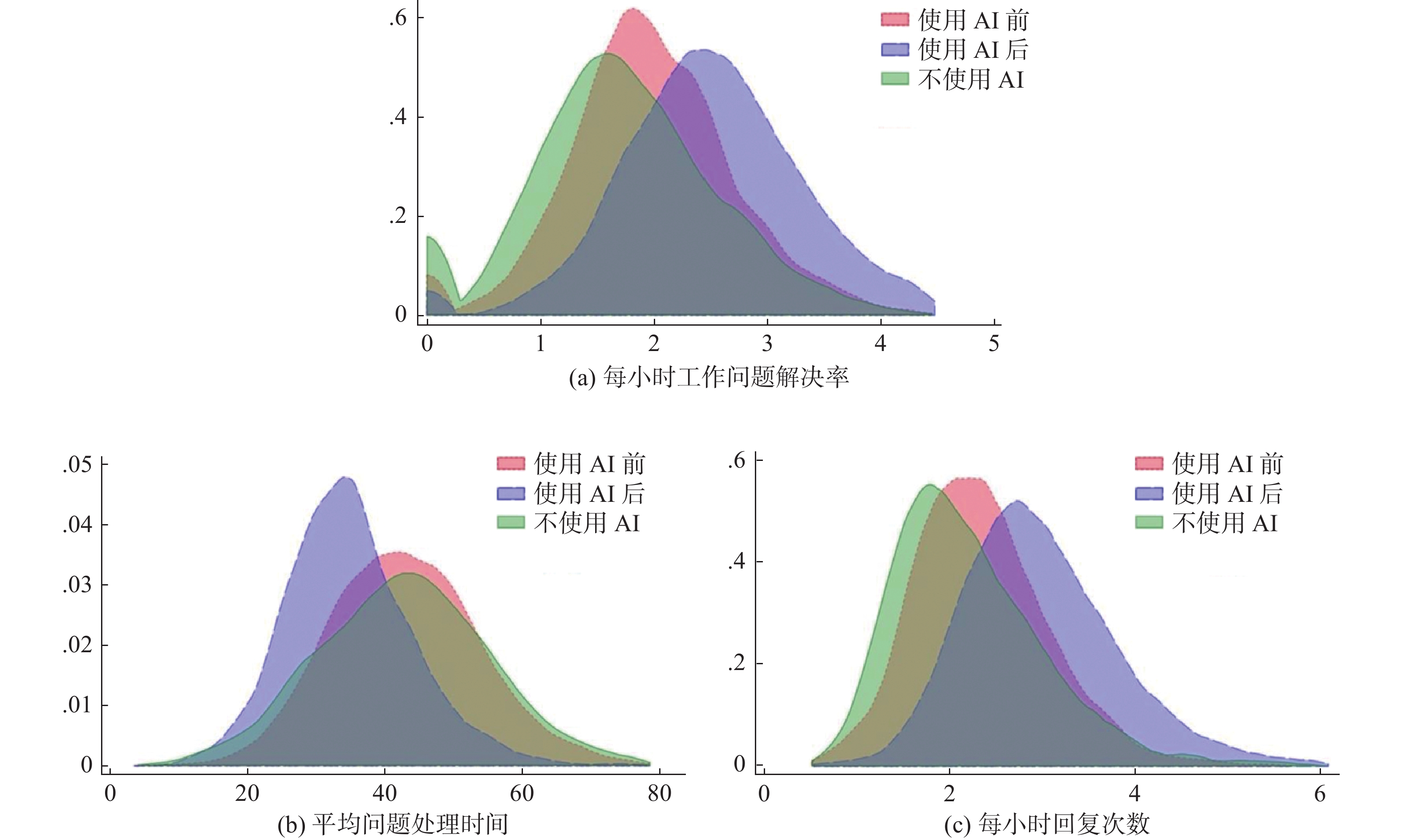
Brynjolfsson, E., Li, D., & Raymond, L. (2025). Generative AI at work. The Quarterly Journal of Economics, qjae044.
|
|
Cath, C., Wachter, S., Mittelstadt, B., Taddeo, M., & Floridi, L. (2018). Artificial intelligence and the ‘good society’: The US, EU, and UK approach. Science and Engineering Ethics, 24 (2), 505- 528.
|
|
Darvishi, A., Khosravi, H., Sadiq, S., Gašević, D., & Siemens, G. (2024). Impact of AI assistance on student agency. Computers & Education, 210, 104967.
|
|
Einav, L., & Levin, J. (2014). Economics in the age of big data. Science, 346 (6210), 1243089.
|
|
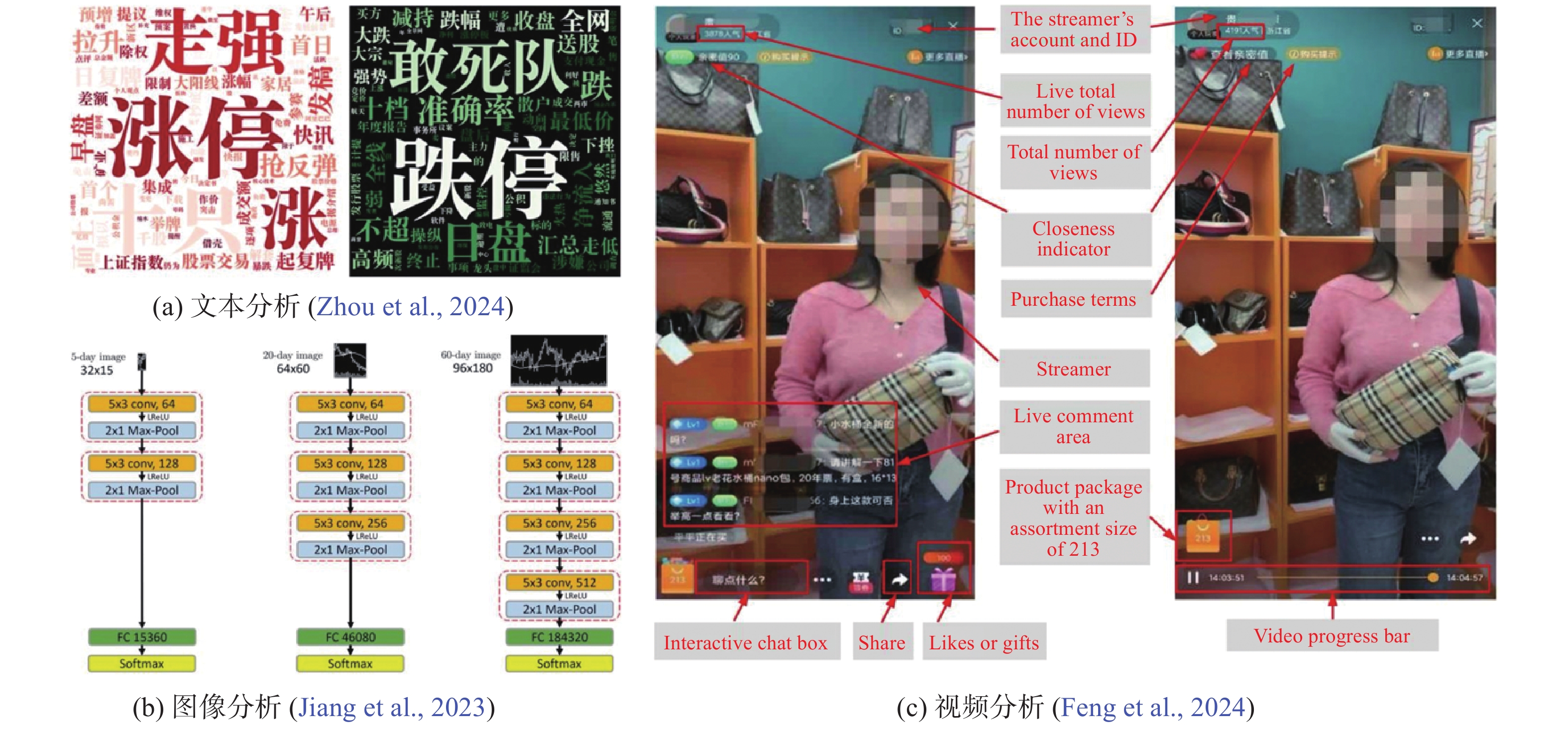
Feng, X., Rong, Y., Tian, X., et al. (2024). When persuasion is too persuasive: An empirical analysis of product returns in livestream e-commerce. Production and Operations Management, 10591478231224949.
|
|
Grove, W. A., & Wu, S. (2007). The search for economics talent: Doctoral completion and research productivity. American Economic Review, 97 (2), 506- 511.
|
|
Hong, H. Y., Chen, M. J., Chang, C. H., Tseng, L. T., & Chai, C. S. (2025). AI-supported idea-developing discourse to foster professional agency within Teacher Communities for STEAM lesson design in Knowledge Building environment. Computers & Education, 105241.
|
|
Jiang, J., Kelly, B., & Xiu, D. (2023). (Re‐) Imag (in) ing price trends. The Journal of Finance, 78 (6), 3193- 3249.
|
|
Kadan, O., Madureira, L., Wang, R., & Zach, T. (2012). Analysts' industry expertise. Journal of Accounting and Economics, 54 (2-3), 95- 120.
|
|
Korinek, A. (2023). Generative AI for economic research: Use cases and implications for economists. Journal of Economic Literature, 61 (4), 1281- 1317.
|
|
Kraemer, M. U. G., Tsui, J. L. H., Chang, S. Y., et al. (2025). Artificial intelligence for modelling infectious disease epidemics. Nature, 638 (8051), 623- 635.
|
|
Lee, D., & Yeo, S. (2022). Developing an AI-based chatbot for practicing responsive teaching in mathematics. Computers & Education, 191, 104646.
|
|
Li, Z., Pardos, Z. A., & Ren, C. (2024). Aligning open educational resources to new taxonomies: How AI technologies can help and in which scenarios. Computers & Education, 216, 105027.
|
|
Lu, Y., & Zhou, Y. (2021). A review on the economics of artificial intelligence. Journal of Economic Surveys, 35 (4), 1045- 1072.
|
|
Mariani, M. M., Machado, I., Magrelli, V., et al. (2023). Artificial intelligence in innovation research: A systematic review, conceptual framework, and future research directions. Technovation, 122, 102623.
|
|
Reichstein, M., Benson, V., Blunk, J., et al. (2025). Early warning of complex climate risk with integrated artificial intelligence. Nature Communications, 16 (1), 2564.
|
|
Varian, H. R. (2014). Big data: New tricks for econometrics. Journal of Economic Perspectives, 28 (2), 3- 28.
|
|
Wang, X., Liu, Q., Pang, H., Tan, S. C., Lei, J., Wallace, M. P., & Li, L. (2023). What matters in AI-supported learning: A study of human-AI interactions in language learning using cluster analysis and epistemic network analysis. Computers & Education, 194, 104703.
|
|
World Economic Forum. (2025). The Future of Jobs Report 2025. Geneva.
|
|
Zhang, Z., Qian, Z., Chen, M., et al. (2025). Worldwide rooftop photovoltaic electricity generation may mitigate global warming. Nature Climate Change, 1—10.
|
|
Zhong, B., & Liu, X. (2024). Evaluating AI literacy of secondary students: Framework and scale development. Computers & Education, 105230.
|
|
Zhou, Y., Fan, J., & Xue, L. (2024). How much can machines learn finance from Chinese text data? Management Science, 70(12), 8962—8987.
|

 中国人文社会科学核心期刊