
 中国人文社会科学核心期刊
华东师范大学学报(教育科学版) ›› 2025, Vol. 43 ›› Issue (8): 16-29.doi: 10.16382/j.cnki.1000-5560.2025.08.002
西蒙·马金森(Simon Marginson)
接受日期:2025-04-18
出版日期:2025-08-01
发布日期:2025-07-31
Simon Marginson
Accepted:2025-04-18
Online:2025-08-01
Published:2025-07-31
摘要:
过去三十年间,一个依靠自下而上学术合作、通过学术期刊出版与文献计量学体系加以规范的全球科学网络体系逐步形成,并在自然科学领域确立了认知上的领导地位。全球科学体系具有开放性,正在全面发展并不断强化多极化格局。全球科学与国家利益之间既存在协同作用,也伴随紧张关系。自2010年代以来,地缘政治冲突和国家利益的强化对国际科研合作造成了冲击,同时全球科学的发展潜能也受到既有全球科学制度框架的限制:该体系主要由英语国家的高校及其科学家所主导,并几乎完全局限于英文学术成果。这导致后殖民时代全球科研能力分布的广泛性,与新殖民主义制度下的学术与文化权力的等级结构之间存在着根本性的失调。这些因素共同引发了对全球知识未来的深刻思考。建立一个多语种翻译机制,实现知识内容的多元化,将有助于巩固全球科学体系。
西蒙·马金森(Simon Marginson). 全球科学中的权力配置[J]. 华东师范大学学报(教育科学版), 2025, 43(8): 16-29.
Simon Marginson. Configurations of Power in Global Science[J]. Journal of East China Normal University(Educationa, 2025, 43(8): 16-29.
图 1
能够获取互联网连接的世界人口比例(1990—2023) 注:根据世界银行数据制作(2025)。1995年之前,世界人口中连接互联网的比例低于0.5%。"
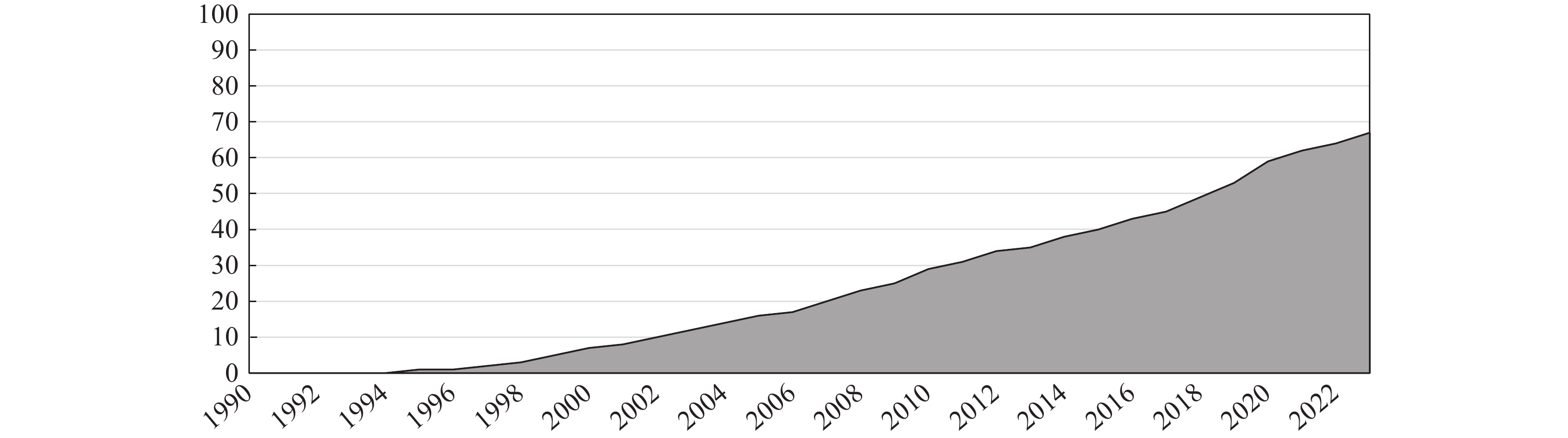
图 2
1996—2022年Scopus数据库中国际合作署名文章的数量和比例(%) 注:根据NSB(2024)数据制作而成。因2003年数据编制方式改变,整个时期的比较受到干扰。"
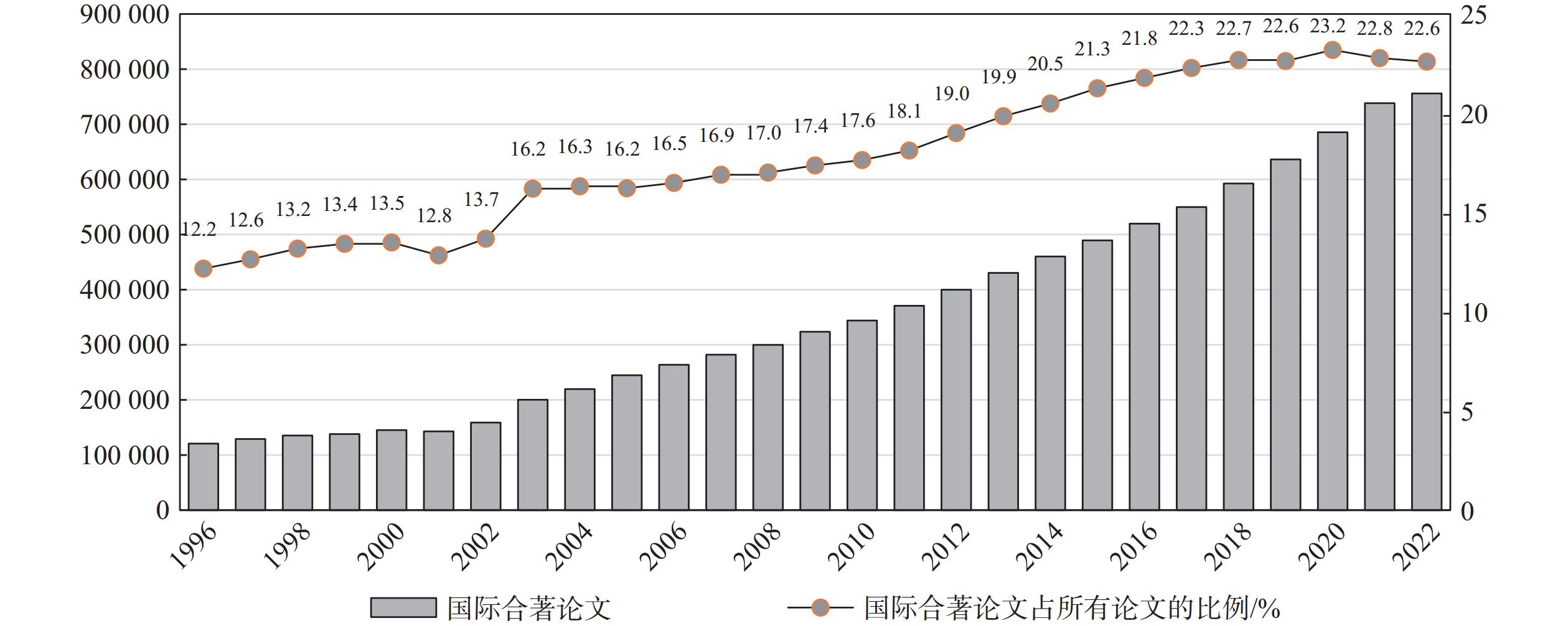
表 1
全球科学体系与国家科学体系之间的区别与关系"
| 全球科学体系 | 国家科学体系 | |
| 核心组成 | 编码的、全球合法的知识、人员、网络化交流、规范 | 主要由国家主导并提供资源的科学活动制度结构 |
| 促进条件 | 全球通讯、资源、机构和(通常是国家的)机构/ 政策/规则 | 足够的政治和经济稳定性及对科学活动的政策承诺 |
| 主要功能 | 英文新共享知识的生产、编码与合法化、流通(包含/排除功能) | 科学的法律、政治、财务条件。新的国家知识、新的知识应用 |
| 边界 | 世界社会,但只有部分知识和知识生产者被纳入 | 民族国家,由国家政策和资金支持意愿设定活动的界限 |
| 规范中心 | 没有规范中心。一个分散的学科共同体,成员共享知识 | 规范上以国家及其机构为中心 |
| 实践规范 | 默顿的科学规范:普遍主义、共享性(科学是公共产品)、无私性、组织化怀疑主义 | 科学服务于国家目标,如安全、繁荣和国家全球竞 争力 |
| 增长动力 | 不断扩展至所有可能的网络连接,强化现有连接(“边缘”) | 增长动力较弱,主要由国家政策、资金和行业对研究的采纳决定 |
| 社会关系 | 专业组织、论坛和网络中的科学家同行 | 政府机构、研究组织和机构、国家及地方层面联系网络中的科学家 |
| 规章制度 | 全球同行科学规范的本地自我监管(主导科学国家的规范) | 国家法律、官方监管、政策、融资系统、文化规范 |
| 劳动分工 | 全球科学的知识潜力促进了国家系统建设和国家资金支持 | 国家科学提供全球科学所需的机构、人员和资源 |
表 2
2019—2022年高引用科学领域的领先大学(基于Web of Science引用排名前5%的论文排序)"
| 大学 | 国家 | 前5%论文 | 所有论文 | 领域内前5%论文比例 | 国际论文* | 国际论文占所有论文的比例 |
| 哈佛大学 | 美国 | 4,223 | 36,654 | 11.5% | 52,451 | 55.4% |
| 浙江大学 | 中国 | 2,331 | 37,457 | 6.2% | 19,648 | 29.3% |
| 清华大学 | 中国 | 2,068 | 24,574 | 8.4% | 18,267 | 35.0% |
| 上海交通大学 | 中国 | 2,045 | 35,373 | 5.8% | 19,393 | 29.5% |
| 斯坦福大学 | 美国 | 2,030 | 18,017 | 11.3% | 21,986 | 48.3% |
| 华中科技大学 | 中国 | 1,801 | 27,549 | 6.5% | 11,490 | 25.0% |
| 多伦多大学 | 加拿大 | 1,760 | 25,439 | 6.9% | 33,703 | 60.9% |
| 牛津大学 | 英国 | 1,739 | 17,206 | 10.1% | 34,141 | 72.1% |
| 中南大学 | 中国 | 1,549 | 27,615 | 5.6% | 10,810 | 23.8% |
| 北京大学 | 中国 | 1,545 | 22,496 | 6.9% | 17,361 | 35.3% |
| 四川大学 | 中国 | 1,488 | 29,536 | 5.0% | 9,972 | 21.8% |
| 伦敦大学学院 | 英国 | 1,476 | 16,712 | 8.8% | 27,562 | 73.3% |
| 中国科学院大学 | 中国 | 1,462 | 22,661 | 6.5% | 25,796 | 25.7% |
| 密歇根大学 | 美国 | 1,459 | 20,004 | 7.3% | 19,508 | 42.1% |
| 剑桥大学 | 英国 | 1,449 | 14,524 | 10.0% | 28,022 | 72.3% |
| 中山大学 | 中国 | 1,440 | 25,858 | 5.6% | 14,883 | 28.9% |
| 宾夕法尼亚大学 | 美国 | 1,439 | 17,207 | 8.4% | 17,087 | 40.5% |
| 约翰·霍普金斯大学 | 美国 | 1,437 | 18,841 | 7.6% | 22,991 | 47.0% |
| 麻省理工学院 | 美国 | 1,375 | 10,254 | 13.4% | 18,297 | 59.0% |
| 西安交通大学 | 中国 | 1,349 | 24,574 | 5.5% | 12,488 | 29.4% |
| 武汉大学 | 中国 | 1,347 | 20,191 | 6.7% | 9,600 | 26.8% |
| 新加坡国立大学 | 新加坡 | 1,289 | 14,154 | 9.1% | 25,591 | 73.3% |
| 复旦大学 | 中国 | 1,281 | 23,067 | 5.6% | 12,760 | 28.2% |
| 哈尔滨工业大学 | 中国 | 1,272 | 21,190 | 6.0% | 8,615 | 24.3% |
| 康奈尔大学 | 美国 | 1,270 | 13,983 | 9.1% | 17,038 | 50.0% |
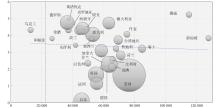
图 3
2003—2022年科学产出增长率低于世界平均值(年均5.38%)的国家(地区) 注:根据世界银行(2025)、美国国家科学委员会(2024)、统计时报(2024年)的数据绘制。本图展示各国(地区)科学论文的年均增长量与各国(地区)人均GDP(购买力平价)的对比。虚线表示2022年世界人均GDP的平均水平(现价20,694美元)。球体大小表示2022年的科学论文总量。仅包括2022年发表超过5,000篇论文的国家(地区)。"
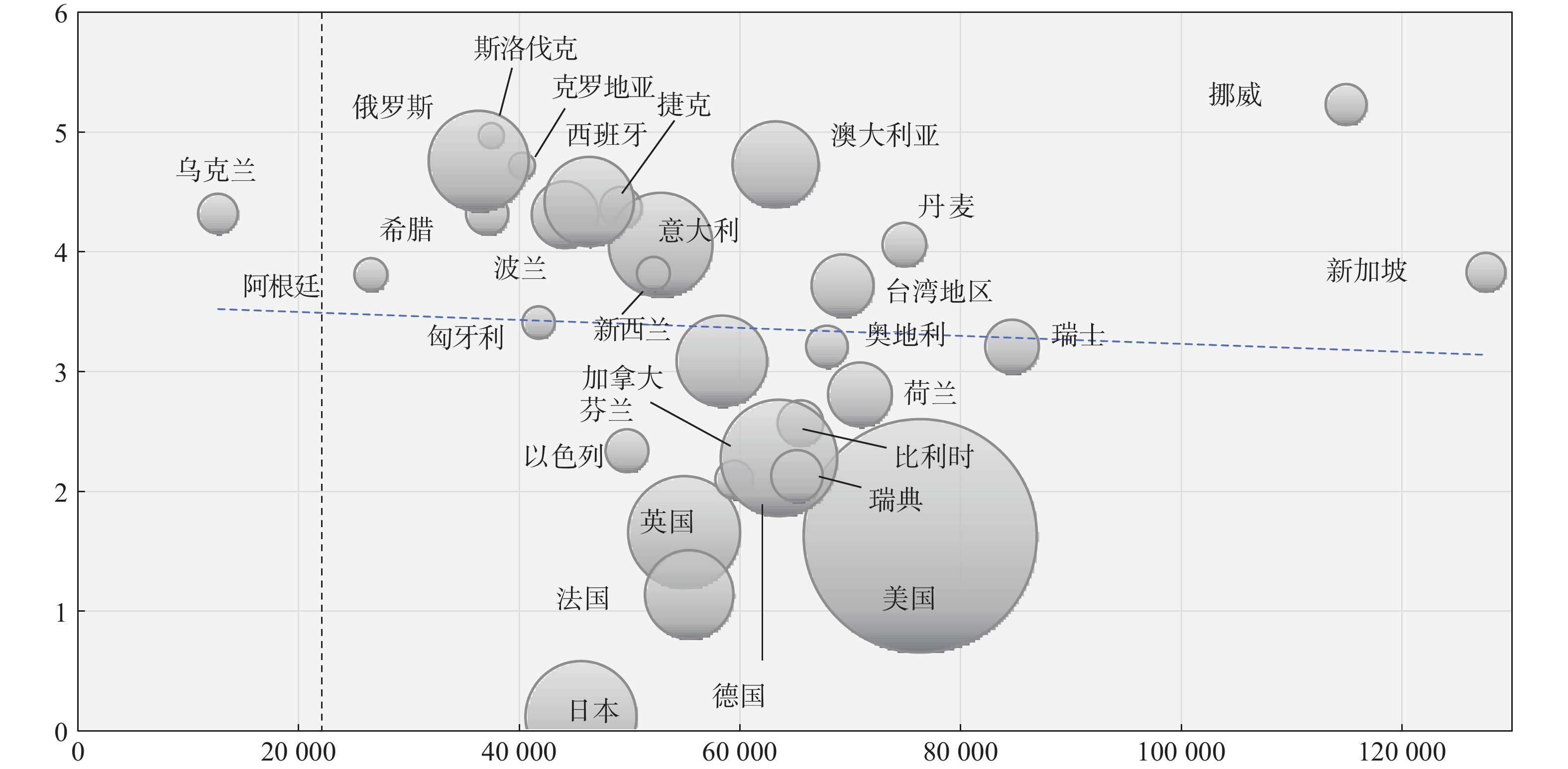
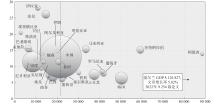
图 4
2003—2022年科学产出增长率高于世界平均值(年均5.38%)的国家(地区) 注:根据世界银行(2025)、美国国家科学委员会(2024)、统计时报(2024年)的数据绘制。世界平均GDP $20,694(按PPP计算),仅包括2022年发表超过5,000篇论文的国家(地区)。"
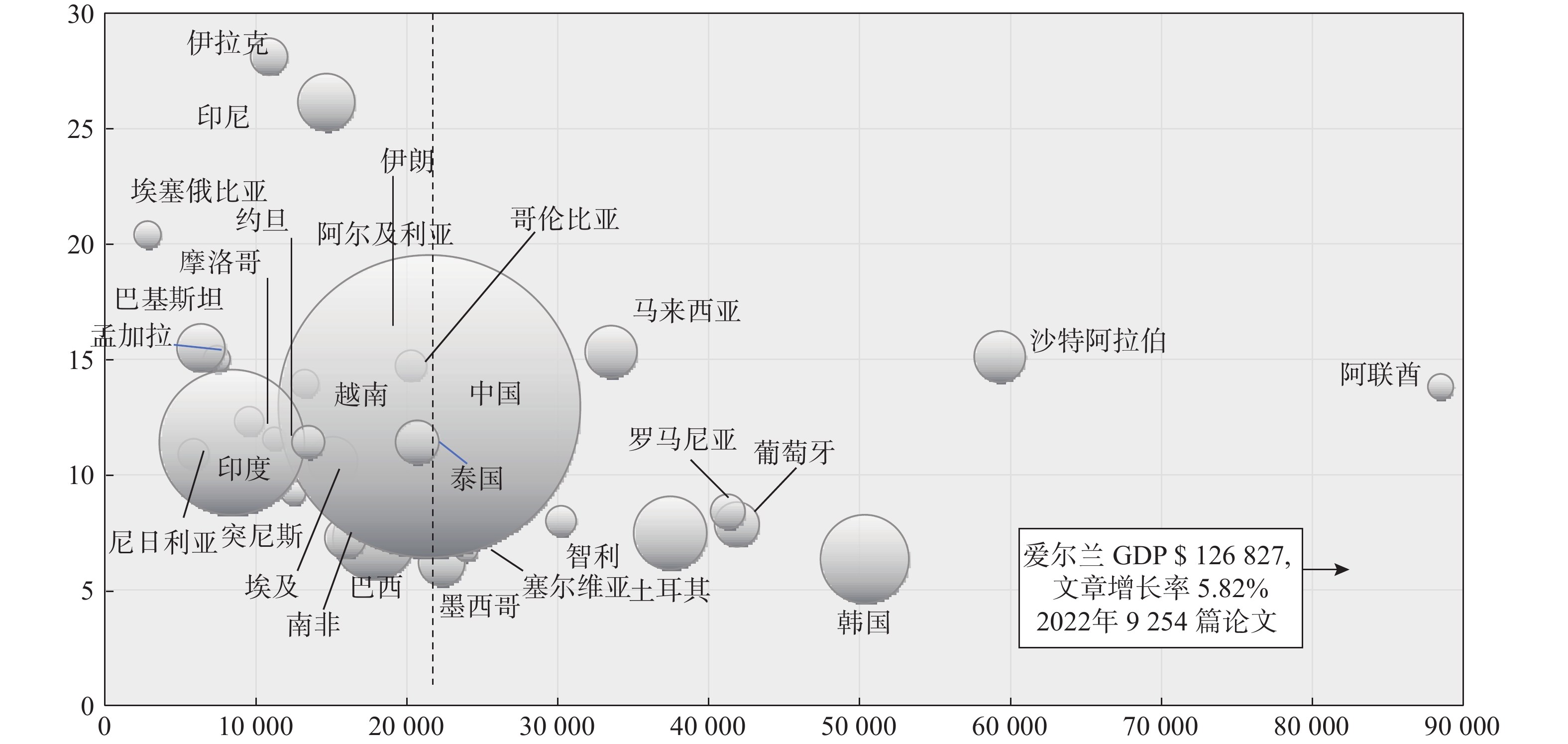
表 3
2019—2022年莱顿排名:按学科划分的科学研究领先大学"
| 大学 | 系统 | (1)物理科学与工程学TOP5% 论文数量 | 大学 | 系统 | (2)数学与计算机科学TOP5% 论文数量 |
| 清华大学 | 中国 | 1,160 | 电子科技大学 | 中国 | 480 |
| 浙江大学 | 中国 | 871 | 清华大学 | 中国 | 416 |
| 上海交通大学 | 中国 | 865 | 西安电子科技大学 | 中国 | 305 |
| 哈尔滨工业大学 | 中国 | 792 | 哈尔滨工业大学 | 中国 | 303 |
| 中国科学技术大学 | 中国 | 772 | 武汉大学 | 中国 | 283 |
| 华中科技大学 | 中国 | 761 | 华中科技大学 | 中国 | 282 |
| 天津大学 | 中国 | 752 | 上海交通大学 | 中国 | 272 |
| 西安交通大学 | 中国 | 750 | 东南大学 | 中国 | 263 |
| 中国科学院大学 | 中国 | 703 | 浙江大学 | 中国 | 260 |
| 中南大学 | 中国 | 649 | 北京航空航天大学 | 中国 | 255 |
| 重庆大学 | 中国 | 604 | 西北工业大学 | 中国 | 239 |
| 湖南大学 | 中国 | 591 | 西安交通大学 | 中国 | 227 |
| 西北工业大学 | 中国 | 576 | 南洋理工大学 | 新加坡 | 225 |
| 麻省理工学院 | 美国 | 569 | 北京信息科技大学 | 中国 | 221 |
| (3)生物医学与健康科学TOP5% 论文数量 | (4)生命与地球科学TOP5% 论文数量 | ||||
| 哈佛大学 | 美国 | 3,039 | 中国农业大学 | 中国 | 451 |
| 多伦多大学 | 加拿大 | 1,108 | 西北农林科技大学 | 中国 | 388 |
| 约翰霍普金斯大学 | 美国 | 1,099 | 浙江大学 | 中国 | 387 |
| 斯坦福大学 | 美国 | 1,018 | 中国科学院大学 | 中国 | 365 |
| 宾夕法尼亚大学 | 美国 | 1,002 | 瓦赫宁根大学 | 荷兰 | 302 |
| 加利福尼亚大学旧金山分校 | 美国 | 888 | 南京农业大学 | 中国 | 285 |
| 伦敦大学学院 | 英国 | 839 | 华中农业大学 | 中国 | 248 |
| 牛津大学 | 英国 | 823 | 清华大学 | 中国 | 246 |
| 密歇根大学 | 美国 | 807 | 北京大学 | 中国 | 243 |
| 耶鲁大学 | 美国 | 748 | 武汉大学 | 中国 | 240 |
| 上海交通大学 | 中国 | 742 | 加利福尼亚大学 戴维斯分校 | 美国 | 228 |
| 浙江大学 | 中国 | 734 | 佛罗里达大学 | 美国 | 226 |
| 中山大学 | 中国 | 715 | 北京师范大学 | 中国 | 225 |
| 加利福尼亚大学 圣地亚哥分校 | 美国 | 711 | 哈佛大学 | 美国 | 213 |
表 4
主要计量学数据库在全球大学排名中的作用"
| 排名机构 | 与发表相关的指标比例(%) | 数据库 |
| 上海交通大学世界大学学术排名(中国) | 70.0 | Clarivate Analytics的Web of Science |
| 泰晤士高等教育世界大学排名(英国) | 38.5* | Elsevier的Scopus |
| QS世界大学排名(英国) | 20.0* | Elsevier的Scopus |
| 莱顿排名(荷兰) | 100.0 | Clarivate Analytics的Web of Science |
| 全球最佳大学排名(美国) | 72.5 | Clarivate Analytics的Web of Science |
| ARWU (Academic Ranking of World Universities). (2025). 2024 Academic Ranking of World Universities. Retrieved April 16, 2025, from https://www.shanghairanking.com/rankings/arwu/2024. | |
| Baker, D. & Powell, J. (2024). Global Mega-Science: Universities, research collaboration and knowledge production. Stanford, Stanford University Press. | |
| Beigel, F. (2014). Introduction: Current tensions and trends in the world scientific system. Current Sociology, 62(5), 617—25. | |
| Birnholtz, J. (2007). When do researchers collaborate? Toward a model of collaboration propensity. Journal of the American Society for Information Science and Technology, 58(14), 2226—2239. | |
| Castells, M. (2000). The rise of the network society. Volume I of The information age: Economy, society and culture. 2nd edition, Oxford: Blackwell. | |
| Chen, K., Zhang, Y. & Fu, X. (2019). International research collaboration: An emerging domain of innovation studies? Research Policy, 48(1), 149—168. | |
| Choi, S. (2012). Core-periphery, new clusters, or rising stars? International scientific collaboration among ‘Advanced’ countries in the era of globalization. Scientometrics, 90(1), 25—41. | |
| de Sousa Santos, B. (2007). Beyond abyssal thinking: From global lines to ecologies of knowledges. Review (Fernand Braudel Center), 30(1), 45—89. | |
| Elsevier. (2024). Scopus source title list. Retrieved April 16, 2025, from https://www.elsevier.com/solutions/scopus/how-scopus-works/content. | |
| Ethnologue. (2018). Languages of the world. Retrieved April 16, 2025, from https://www.ethnologue.com. | |
| Fonseca, M. (2016). Gramsci’s critique of civil society: Towards a new concept of hegemony. New York: Routledge. | |
| Georghiou, L. (1998). Global Cooperation in Research. Research Policy, 27(6), 611—626. | |
| Graf, H. , & Kalthaus, M. (2018). International research networks: Determinants of country embeddedness. Research Policy, 47(7), 1198—1214. | |
| Klavans, R. & Boyack,K. W. (2017). The research focus of nations: Economic vs. Altruistic Motivations. PLoS ONE, 12(1), e0169383. | |
| Leiden University. (2025). CWTS Leiden ranking 2024. Retrieved April 16, 2025, from https://www.leidenranking.com/ranking/2023/list. | |
| Luhmann, N. (2012). Theory of society. Volume I, Stanford: Stanford University Press. | |
| Lukes, S. (2021). Power: A radical view. 3rd edition, London: Bloomsbury. | |
| Marginson, S. (2014). University rankings and social science. European Journal of Education, 49(1), 45—59. | |
| Marginson, S. (2022a). All things are in Flux: China in global science. Higher Education, 83(4), 881—910. | |
| Marginson, S. (2022b). Global science and national comparisons: Beyond Bibliometrics and Scientometrics. Comparative Education, 58(2), 125—146. | |
| Marginson, S. (2022c). Globalization in higher education: The good, the bad and the ugly. in F. Rizvi, B. Lingard, & R. Rinne (eds), Reimagining globalization and education, 11—30. London: Routledge. | |
| Marginson, S. (2022d). Space and scale in higher education: The glonacal agency heuristic revisited. Higher Education, 84 (6), 1365—1395. | |
| Marginson, S. (2022e). What drives global science? The four competing narratives. Studies in Higher Education, 47(8), 1566—1584. | |
| Marginson, S. (forthcoming). The changing dynamics of space and scale: The university between nationalism and globalism. in K. Brogger, H. Moscovitz & S. Robertson, World yearbook of education. Cheltenham: Edward Elgar [details TBA]. | |
| May, R. (1997). The scientific wealth of nations. Science, 275, 793—796. | |
| Mbembe, J. (2016). Decolonising the university: New directions. Arts and Humanities in Higher Education, 15(1), 29—45. | |
| Melin, G. (2000). Pragmatism and self-organization: Research collaboration on the individual level. Research Policy, 29, 31—40. | |
| Merton, R. (1942/1973). The normative structure of science. in R. Merton (ed), The sociology of science: Theoretical and empirical investigations, 267—278, Chicago: University of Chicago Press. | |
| NSB (National Science Board). (2024). Science and engineering indicators: Publications output: U. S. trends and international comparisons. Retrieved April 16, 2025, from https://ncses.nsf.gov/pubs/nsb202333/downloads. | |
| Nyamnjoh, F. (2019). Decolonising the university in Africa. In F. Nyamnjoh, Oxford research encyclopedia of politics. Oxford: Oxford University Press. | |
| OECD (Organisation for Economic Cooperation and Development). (2023). Education at a glance, Paris: OECD. | |
| Olechnicka, A. , Ploszaj, P. & Celinska-Janowicz, D. (2019). The geography of scientific collaboration, London: Routledge. | |
| Powell, J. J. W. , Baker, D. P. & Fernandez, F. eds. (2017). The century of science: The global triumph of the research university. Vol. 33, International Perspectives on Education and Society, Leeds: Emerald Publishing Limited. | |
| QS. (2025). QS World University Rankings 2024. Retrieved April 16, 2025, from https://www.topuniversities.com/world-university-rankings/2024. | |
| Sa, C. & Sabzalieva, E. (2018). Scientific nationalism in a globalising world, in B. Cantwell, H. Coates, & R. King (eds), Handbook on the politics of higher education, 149—166, Cheltenham: Edward Elgar. | |
| Stein, S. (2021). Critical internationalisation studies at an impasse: Making space for complexity, uncertainty, and complicity in a time of global challenges. Studies in Higher Education, 46(9), 1771—1784. | |
| Tahamtan, I. & Bornmann,L. (2019). What do citation counts measure? An updated review of studies on citations in scientific documents published between 2006 and 2018. Scientometrics, 121, 1635—1684. | |
| THE (Times Higher Education). (2024) . World University Rankings 2024. Retrieved April 16, 2025, from https://www.timeshighereducation.com/world-university-rankings/2024/world-ranking. | |
| UlrichsWeb. (2021). Retrieved April 16, 2025, from http://ulrichsweb.serialssolutions.com. | |
| Vera-Baceta, M., Thelwal, M. & Kousha, K. K. (2019). Web of Science and Scopus language coverage. Scientometrics, 121, 1803—1813. | |
| Vessuri, H. , Guedon, J-C. & Cetto, A. (2014). Excellence or quality? Impact of the current competition regime on science and scientific publishing in Latin America and its implications for development. Current Sociology, 62(5), 647—665. | |
| Wagner, C. & Leydesdorff, L. (2005). Network structure, self-organization, and the growth of international collaboration in science. Research Policy, 34(10), 1608—1618. | |
| Wagner, C., H. Park, & Leydesdorff, L. (2015). The continuing growth of global cooperation networks in research: A conundrum for national governments. PLoS ONE, 10(7), e0131816. | |
| Wagner, C. , Whetsell, T. & Leydesdorff, L. (2017). Growth of international collaboration in science: Revisiting six specialties. Scientometrics, 110(3), 1633—1652. | |
| Winkler, A. , Glanzel, W. , Levin, S. & Stephan, P. (2015). The diffusion of the internet and the increased propensity of teams to transcend institutional and national borders. Revue Économique, 66(1), 115—142. | |
| World Bank. (2025). Indicators. Retrieved April 16, 2025, from https://data.worldbank.org/indicator. | |
| WoS (Web of Science). (2024). Web of Science Core Collection. Retrieved April 16, 2025, from https://mjl.clarivate.com/collection-list-downloads. |
| [1] | 阎光才. 大科学的发展轨迹与科学组织的变革[J]. 华东师范大学学报(教育科学版), 2025, 43(8): 1-15. |
| [2] | 夏之晨, 杨帆. 大科学与大学科学家的角色——以斯坦福国家加速器实验室(SLAC)为例[J]. 华东师范大学学报(教育科学版), 2025, 43(8): 105-117. |
| [3] | 张东海. 二战后美国联邦科技政策的转向与研究型大学的崛起与发展——兼及对中国研究型大学发展的思考[J]. 华东师范大学学报(教育科学版), 2025, 43(8): 118-128. |
| [4] | 沈文钦. “中心-边缘”格局下中国社会科学的本土化-国际化张力:一个历史比较分析[J]. 华东师范大学学报(教育科学版), 2025, 43(6): 1-20. |
| [5] | 李栋. 中国教育学理论体系的建构[J]. 华东师范大学学报(教育科学版), 2025, 43(6): 21-37. |
| [6] | 闵维方. 创新研究方法 提高教育科学研究水平[J]. 华东师范大学学报(教育科学版), 2025, 43(5): 1-15. |
| [7] | 刘婷婷, 金明磊, 蔡连玉. 高职院校“双师型”教师专业能力建设之困与解:基于大规模语料的质性研究[J]. 华东师范大学学报(教育科学版), 2025, 43(4): 116-125. |
| [8] | 马思腾, 褚宏启. 学生参与学校治理对其创新能力的影响[J]. 华东师范大学学报(教育科学版), 2025, 43(3): 110-123. |
| [9] | 郭丛斌, 武玮, 任静. 新高考改革背景下高中科学教育能否影响学生高考科目选择——基于STEM管道理论的实证研究[J]. 华东师范大学学报(教育科学版), 2025, 43(3): 95-109. |
| [10] | 温晓情, 冯建军. 中国特色教育学标识性概念建构[J]. 华东师范大学学报(教育科学版), 2025, 43(2): 10-18. |
| [11] | 张华峰, 史静寰, 郭菲. 求知、修身与发展的统合:国际比较视野下中国学生的学习特点分析[J]. 华东师范大学学报(教育科学版), 2025, 43(2): 19-33. |
| [12] | 吴重涵, 朱重旺, 王茜. 交叉学科导向的现代家庭教育知识生产[J]. 华东师范大学学报(教育科学版), 2025, 43(2): 78-89. |
| [13] | 卢晓东. 遮蔽、澄明与“双减”:创新人才涌现的 哲学基础与关键[J]. 华东师范大学学报(教育科学版), 2025, 43(1): 1-16. |
| [14] | 卓泽林. 研究型大学赋能区域创新发展的理论审思与策略——以粤港澳大湾区为例[J]. 华东师范大学学报(教育科学版), 2025, 43(1): 67-80. |
| [15] | 李政涛. 概念研究为什么重要?——构筑教育学建设与发展的概念基石[J]. 华东师范大学学报(教育科学版), 2024, 42(8): 1-8. |
| 阅读次数 | ||||||
|
全文 |
|
|||||
|
摘要 |
|
|||||
